
Side Dishes
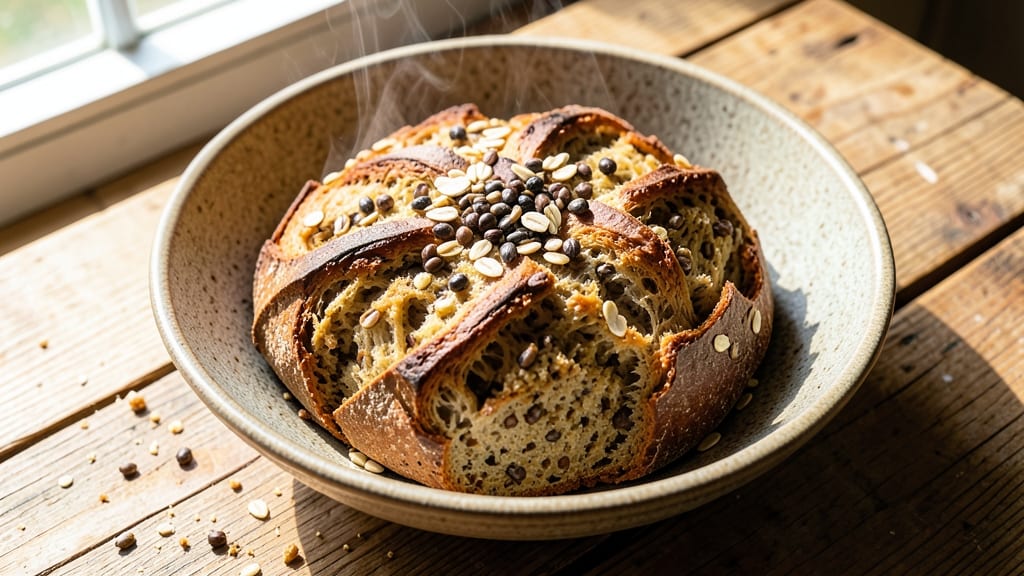
This 7-grain flour bread recipe delivers a hearty, nutrient-rich loaf with a satisfying chew and earthy depth—perfect for anyone craving whole-grain goodness without sacrificing texture. The blend of whole grains creates a dense yet airy crumb, while the crisp crust adds just the right contrast.
I’ve perfected this recipe over years of baking, ensuring a foolproof method that yields consistent results every time.
The magic lies in the fermentation process, where the grains develop complex flavors and improve digestibility. With a hydration ratio of 70%, this dough is slightly stickier than traditional bread but rewards patience with a tender yet substantial crumb.
The key steps—proper kneading, controlled proofing, and a 450°F bake—transform simple ingredients into a loaf that’s as nutritious as it is delicious.
By the time it emerges from the oven, you’ll have a golden-brown loaf with a crisp exterior and a moist, open crumb. The flavor is robust, with subtle notes of each grain—wheat, rye, barley, oats, millet, buckwheat, and spelt—working together harmoniously.
This bread excels toasted with butter, paired with soups, or as the base for hearty sandwiches.
For best results, let the dough ferment overnight in the fridge for deeper flavor development. The recipe scales easily, making it ideal for meal prep or gifting. Whether you’re a seasoned baker or new to whole grains, this loaf delivers restaurant-quality texture and nutrition at home.
Ingredients for 7 grain flour bread
Seven distinct flours and a precise fermentation process create this nutrient-dense, restaurant-quality loaf.
| Ingredient | Amount | Notes |
|---|---|---|
| Wheat Flour 🌾 | 1 cup | Bread flour preferred for structure |
| Rye Flour 🌾 | ½ cup | Dark rye for robust flavor |
| Barley Flour 🌾 | ½ cup | Ground barley for nutty depth |
| Oat Flour 🌾 | ½ cup | Blended oats for chewiness |
| Millet Flour 🌾 | ¼ cup | Light texture and mild sweetness |
| Buckwheat Flour 🌾 | ¼ cup | Rich, earthy flavor profile |
| Spelt Flour 🌾 | ¼ cup | Ancient grain for subtle nuttiness |
| Active Dry Yeast 🍞 | ½ tsp | Fresh yeast preferred for vitality |
| Honey 🍯 | 1 tbsp | Raw honey for fermentation |
| Warm Water 💧 | 1 ¾ cups | 110°F for optimal yeast activation |
| Extra-Virgin Olive Oil 🫒 | 2 tbsp | High-quality for dough elasticity |
| Sea Salt 🧂 | 1 ½ tsp | Fine grain for even distribution |
| Cornmeal 🌽 | ¼ cup | For dusting and crust texture |
| Sesame Seeds 🌱 | 1 tbsp | Optional for decorative finish |
The grain selection is critical—each flour contributes unique texture and flavor. Bob’s Red Mill or King Arthur Flour offer pre-ground options for convenience, but grinding your own at Whole Foods bulk section ensures peak freshness. Rye and buckwheat demand special attention: their high fiber content requires slightly longer kneading (about 10 minutes by hand) to develop gluten properly. The spelt flour, though ancient, adds subtle nuttiness that balances the earthier notes of millet and barley. For optimal flavor, store your flours in airtight containers away from light—exposure to oxygen accelerates rancidity, especially in oat flour.
No rye flour? Substitute half with whole wheat, though texture will be slightly denser. Buckwheat flour can be swapped for equal parts whole wheat pastry flour, but expect a milder flavor profile. The honey acts as both sweetener and yeast activator—maple syrup works equally well for vegan adaptations. Olive oil quality matters here; California avocado oil is a neutral alternative if you prefer a lighter flavor. For the sesame seeds, toast them lightly before sprinkling to enhance their nutty aroma (30 seconds in a dry pan at medium heat). The cornmeal should be fine-ground for even coverage—coarse varieties create uneven crust texture.
This dough benefits from overnight cold fermentation in the fridge, which deepens flavor and improves digestibility. Store the mixed dough in an airtight container for up to 24 hours before shaping. Once baked, the loaf maintains freshness for 5-7 days wrapped in a cotton towel at room temperature, or 3 months frozen in slices. For meal prep, freeze individual portions in parchment-lined bags—simply reheat at 350°F for 8-10 minutes to restore crispness. The crust develops best when sliced immediately after baking, though it regains some crispness upon reheating.
Why You'll Love This Recipe
- No-Fuss Mixing: I swear by this blend—just dump the flours (wheat, rye, barley, oat, millet) into one bowl, add water and yeast, and let the dough do the work. No fancy kneading, no guesswork, just hands-off rising while I sip coffee.
- Earthy Depth: That rye and barley? They bring a nutty, almost toasty richness that regular bread can’t touch. Honestly, the first slice makes me pause—it’s hearty but not heavy, like a hug in bread form.
- Everyday Superstar: I make a big batch on Sundays and it lasts the week—toast for breakfasts, sandwiches for lunches, or even as a base for soups. Between us, it’s the one loaf that never disappoints, no matter the occasion.
- Budget-Friendly Staple: Using pantry staples like oats and millet keeps costs low, and the dough stretches far. I’ll be real: my grocery bill stays sane, and I still get a loaf that feels special—not that I’d tell my friends it’s secretly thrifty.
Step-by-step instructions for 7 grain flour bread
Here's the method for crafting a nutrient-rich, hearty loaf with exceptional texture and depth.
Activate the Yeast and Combine Wet Ingredients
In a small bowl, dissolve the 0.5 tsp active dry yeast in ½ cup of the 1.75 cups warm water (around 110°F) with 1 tbsp honey. Let it sit for 5-10 minutes until frothy—this confirms the yeast is active. If it doesn't bubble, your yeast may be dead, and you'll need to start over.
In a large mixing bowl, combine the remaining 1.25 cups warm water, 2 tbsp extra-virgin olive oil, and 1.5 tsp sea salt. The olive oil helps create a tender crumb while the salt enhances flavor and controls yeast activity. Let this mixture sit while you prepare the dry ingredients.
Mix the Flour Blend and Form the Dough
In the same large bowl, whisk together the 1 cup wheat flour, 0.5 cup rye flour, 0.5 cup barley flour, 0.5 cup oat flour, 0.25 cup millet flour, 0.25 cup buckwheat flour, and 0.25 cup spelt flour. Each flour contributes unique properties—wheat provides structure, rye adds depth, buckwheat brings earthiness, and oats create chewiness.
Make a well in the center and pour in the yeast mixture and water/oil/salt combination. Using a wooden spoon or dough whisk, gradually incorporate the dry ingredients until a shaggy dough forms. The dough will be sticky at this stage—this is normal with whole-grain blends.
Knead Until Elastic and Smooth
Turn the dough onto a lightly floured surface and knead for 8-10 minutes until smooth and elastic. You'll need to use your hands to work the dough—it's too sticky for a stand mixer. The dough should pull away cleanly from the surface and spring back when poked.
If the dough feels too dry, add 1 tsp water at a time; if too sticky, add 1 tbsp flour. The ideal texture should be slightly tacky but manageable. This kneading develops gluten, which gives the bread its structure and chewiness.
First Rise and Shape the Loaf
Lightly oil a large bowl, place the dough inside, and cover with a damp towel. Let it rise in a warm place for 1-1.5 hours or until doubled in size. The dough should feel puffy and springy when pressed gently—this indicates proper fermentation.
Punch down the dough to release air, then shape it into a round loaf. For a rustic look, place it seam-side up on a parchment-lined baking sheet. Sprinkle generously with 0.25 cup cornmeal and 1 tbsp sesame seeds for texture and flavor. Cover and let rise for another 30-45 minutes until noticeably puffy.
Bake to Golden Perfection
Preheat your oven to 375°F with a Dutch oven inside for 30 minutes. This creates steam for a crisp crust. Carefully transfer the shaped loaf (with parchment) into the hot Dutch oven, cover, and bake for 30 minutes.
Remove the lid and bake for another 15-20 minutes until the crust is deep golden brown and sounds hollow when tapped on the bottom. The internal temperature should reach 190-200°F. Let cool on a wire rack for at least 1 hour before slicing—this prevents a gummy interior.
Pro Tips For Making 7 Grain Flour Bread
- STIR THE OATS FIRST: Mix the oat flour into the wet ingredients alone before combining with the rest—it clumps like glue if you toss it in dry. I learned this the hard way when my first batch turned into a sticky mess that wouldn’t hold shape. A quick 2-minute whisk with the water or yogurt smooths it out.
- WEIGH YOUR FLOURS: Use a kitchen scale for the rye, barley, and millet—these flours pack differently than wheat. I used to eyeball it, and my bread came out either too dense or crumbly. Two grams here or there makes a real difference, especially with the heavier rye.
- SKIP THE OVER-KNEADING: Seven grains mean less gluten development—stop when the dough is just shaggy and tacky, not smooth. I used to overwork it, thinking more kneading meant better bread, but it just turned gummy. A few gentle folds after the autolyse (if you do one) is enough.
- ADD A LITTLE HONEY OR SUGAR: The mix of dense flours can make the bread taste flat—balance it with 1 tablespoon of honey or brown sugar per batch. Doesn’t sweeten much, but it rounds out the earthy rye and millet flavors. (Yes, even if you’re not baking something sweet.)
Creative variations of these flavors
Global Whole-Grain Twists
This 7-grain loaf adapts beautifully to international whole-grain traditions. In Scandinavia, swap ½ cup rye flour for dark pumpernickel flour and add 1 tsp caraway seeds for a Nordic-inspired loaf with deep molasses notes.
For Mediterranean flair, replace ½ cup spelt flour with farro flour and finish with 1 tsp dried oregano before baking. 🌍
Savory Add-Ins
Boost flavor with bold additions that complement the grains. Fold in ½ cup chopped sun-dried tomatoes and 2 tbsp chopped rosemary for a Tuscan-inspired loaf, or mix in 1 tbsp smoked paprika and 1 minced garlic clove for a smoky twist.
For a cheesy variation, sprinkle ½ cup grated Parmesan on the cornmeal before the final rise—it crisps beautifully during baking.
Sweet Variations
Transform this bread into a dessert loaf by replacing 1 tbsp honey with 2 tbsp maple syrup and adding ½ cup chopped walnuts and 1 tsp cinnamon to the dough. For a festive touch, brush the baked loaf with 1 tbsp melted butter mixed with 1 tsp cinnamon sugar.
The natural sweetness of millet and oats pairs perfectly with warm spices.
Gluten-Free Adaptation
For a gluten-free version, replace the wheat flour with 1 cup gluten-free all-purpose blend (like Bob’s Red Mill 1:1) and add ¼ cup psyllium husk powder to improve structure.
Reduce the water by 2 tbsp since gluten-free flours absorb less moisture. The texture will be denser but still hearty—perfect for open-faced sandwiches or toast with almond butter. 💪
Seed and Nut Enhancements
Incorporate texture with ¼ cup toasted pumpkin seeds or chopped pecans mixed into the dough before shaping. For extra crunch, sprinkle 2 tbsp sesame seeds and 1 tbsp flaxseeds on top before the final rise.
These additions not only elevate flavor but also boost fiber and omega-3 content—ideal for a nutrient-packed loaf.
Herb and Spice Infusions
Experiment with aromatic spices to match your mood. A pinch of fennel pollen adds an anise-like sweetness, while 1 tsp ground coriander brings citrusy brightness. For warmth, mix in ½ tsp ground ginger and ½ tsp cardamom—these pair wonderfully with the earthy grains.
Always toast whole spices lightly in a dry pan before adding to deepen their flavor. ✨
Nutrition facts
Frequently asked questions
Why does my 7-grain dough feel so sticky?
The high fiber content from whole grains like rye, buckwheat, and oats absorbs more moisture, creating a tackier dough. This is normal! Use wet hands when handling it, and avoid adding extra flour—it can make the texture dense. The stickiness actually helps develop better flavor during fermentation.
Can I make this bread without a Dutch oven?
Yes! For a crisp crust without a Dutch oven, bake the loaf on a baking sheet lined with parchment. Create steam by placing a metal bowl of boiling water on the lower oven rack during the first 15 minutes of baking. The crust will be slightly less crackly but still delicious.
How do I store this bread to keep it fresh?
Wrap the cooled loaf in a cotton towel and store at room temperature for 5-7 days. For longer storage, slice and freeze portions in airtight bags for up to 3 months. Reheat slices at 350°F for 5-8 minutes to restore crispness.
What's the best way to revive stale 7-grain bread?
Preheat your oven to 350°F and wrap the bread in aluminum foil. Heat for 10-15 minutes until warmed through. For extra crispiness, place under the broiler for 1-2 minutes at the end. The moisture from the grains makes them especially responsive to reheating!
Can I substitute any of the grains for gluten-free options?
For a gluten-free version, replace wheat flour with a 1:1 gluten-free blend and add ¼ cup psyllium husk powder. Reduce water by 2 tbsp since gluten-free flours absorb less. The texture will be denser but still hearty—perfect for sandwiches or toast with nut butter.