
Side Dishes
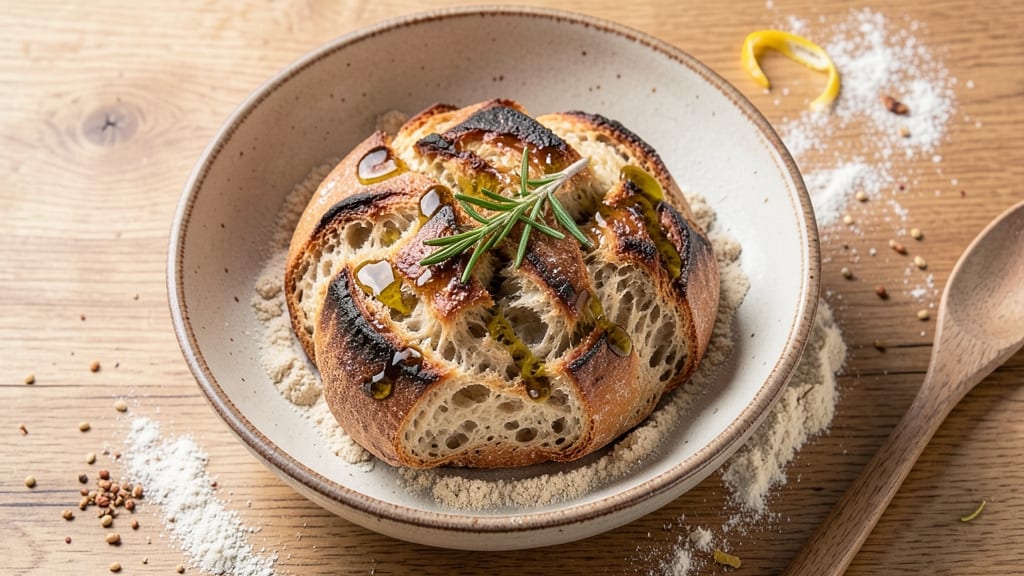
This artisan spelt bread recipe delivers a rustic loaf with a nutty crust and signature open crumb structure—all in a single bake. The secret lies in precise hydration ratios and a methodical approach that transforms simple ingredients into bread with depth and character.
I've perfected this recipe over years of baking, ensuring every loaf rises beautifully and develops that coveted airy texture.
The process begins with an autolyse—a rest period that allows the gluten to develop gently before adding yeast and salt. This technique creates a lighter, more open crumb structure compared to traditional kneading methods.
For shaping, we use the "stretch-and-fold" method during bulk fermentation, which builds strength without overworking the dough. The result? A loaf with a crisp, nutty exterior and an interior filled with irregular air pockets.
Baking at high heat creates that signature artisan crust while keeping the interior tender. The recipe accommodates optional additions like seeds or herbs, allowing you to customize while maintaining the bread's natural rustic appeal.
Whether you're a home baker looking to elevate your skills or someone seeking a wholesome, flavorful loaf, this method delivers consistent, professional-quality results every time.
With just a handful of ingredients and minimal equipment, you'll achieve bread that rivals artisanal bakery loaves. The key is patience—allowing proper fermentation and baking times ensures the best possible outcome. Let's get started on creating your perfect spelt bread.
Ingredients for artisan spelt bread
Nine essential ingredients transform into a rustic spelt loaf with signature open crumb and nutty crust.
| Ingredient | Amount | Notes |
|---|---|---|
| Spelt Flour 🌾 | 3 ½ cups | Organic whole grain preferred |
| Water 💧 | 2 ¼ cups | Room temperature for best results |
| Active Dry Yeast 🍞 | ¼ tsp | Freshly opened for optimal activity |
| Sea Salt 🧂 | 1 ½ tsp | Diamond Crystal preferred for texture |
| Olive Oil 🫒 | 1 tbsp | Extra-virgin for crust development |
| Honey 🍯 | 1 tbsp | Wildflower preferred for flavor |
| Spelt Seeds 🌾 | ½ cup | Optional for rustic texture |
| Fresh Rosemary 🌿 | 1 tbsp | Chopped, optional herb addition |
| Cornmeal 🌽 | ¼ cup | For dusting baking surface |
| Ice Water ❄️ | ¼ cup | For final dough adjustment |
The spelt flour is the foundation—King Arthur or Bob's Red Mill brands yield the best texture. For yeast, Saf-Instant works well if you prefer no proofing time, but active dry requires the 10-minute proof. Room-temperature water is critical; cold slows fermentation. The honey enhances crust color and adds subtle sweetness, while the olive oil contributes to that signature artisan crust. Bulk bins at Whole Foods often have the best quality spelt flour with vibrant color. If substituting flour, ensure it's 100% whole grain to maintain the rustic character.
No honey? Maple syrup at the same amount works beautifully. Short on seeds? Sunflower seeds or flaxseeds add similar texture. The rosemary is optional but recommended—fresh is ideal, but dried at half the amount suffices. For a sweeter loaf, add an extra tablespoon of honey. The cornmeal dusting prevents sticking during baking, while the ice water at the end helps control final dough temperature. If your kitchen is warm, chill the dough for 20 minutes before shaping to prevent overproofing.
Freshly baked spelt bread develops maximum flavor after 24 hours when wrapped in a towel. Store at room temperature for 3-4 days or freeze for up to 3 months. For reheating, wrap in foil and warm at 350°F for 5-10 minutes. The crust will crisp up beautifully. To prevent drying, slice only what you need for the day. This loaf pairs perfectly with soups, olive oil dips, or simply enjoy it toasted with extra virgin olive oil and flaky sea salt.
Why You'll Love This Recipe
- Five-Ingredient Magic: I swear by this—just spelt flour, water, yeast, salt, and olive oil. That’s it. No fancy mixers or confusing ratios. Honestly, my first loaf turned out lumpy, but now I’ve got it down to a simple knead-and-rise routine that even my sleepy Sunday mornings can handle.
- Nutty, Earthy Crunch: The spelt flour gives it that satisfying chew, while the olive oil keeps it moist without tasting greasy. Between us, that first bite with warm honey? It’s the kind of bread that makes you pause mid-slice and think, “Why don’t I bake this more often?”
- Weeknight Hero: I keep a batch in the fridge all week—perfect for toast, sandwiches, or dipping in soup. The crust stays crisp for days, and the crumb? So soft it’s almost sinful. (Yes, even on a Tuesday night when I’m too tired to cook.)
- Budget-Friendly Staple: A single bag of spelt flour lasts me months, and the yeast and salt are pennies. I make two loaves at once, freeze one, and boom—homemade bread anytime without the grocery store markup. My wallet and my taste buds win.
Step-by-step instructions for artisan spelt bread
Master this method for a rustic loaf with crisp crust and airy crumb in one bake.
Activate Yeast with Honey and Water
In a large mixing bowl, combine the 2.25 cups water with the 1 tbsp honey and stir until fully dissolved. Sprinkle the 0.25 tsp active dry yeast over the surface and let sit for 5-10 minutes until frothy. This activation ensures your yeast is alive and ready to work—if it doesn't bubble vigorously, your yeast may be inactive.
Add the 3.5 cups spelt flour to the bowl and stir with a wooden spoon until a shaggy dough forms. The spelt flour will behave differently than white flour, absorbing moisture more slowly. Let the mixture rest for 10 minutes while you prepare the remaining ingredients. This initial rest helps the flour fully hydrate before adding salt and oil.
Develop the Dough with Olive Oil and Salt
After the rest period, add the 1 tbsp extra-virgin olive oil and 1.5 tsp sea salt to the dough. Using your hands, knead the dough vigorously for 8-10 minutes until it becomes smooth and elastic. Spelt dough is stickier than wheat dough, so wet your hands occasionally to prevent sticking. The dough should pull away from the sides of the bowl and spring back when poked.
For added texture, fold in the 0.5 cup spelt seeds and 1 tbsp chopped fresh rosemary during the last 2 minutes of kneading. These ingredients will create pockets of flavor and crunch throughout the loaf. If the dough feels too dry, add 1 tablespoon of ice water at a time until it reaches the proper consistency—it should be tacky but not sticky.
Bulk Ferment for Optimal Flavor Development
Transfer the dough to a lightly oiled bowl, cover with a damp kitchen towel, and let it rise at room temperature for 2-3 hours or until it has doubled in size. The spelt flour ferments more slowly than white flour, so patience is key. You'll know it's ready when the dough springs back slowly when poked and leaves a slight indentation.
During this time, the dough will develop complex flavors and a light, airy structure. Avoid over-fermenting—if the dough collapses or smells overly sour, it's gone too far. For best results, ferment at 75°F—if your kitchen is cooler, extend the time to 3-4 hours. This step is where the bread's character truly develops.
Shape and Final Proof
Turn the dough onto a lightly floured surface and gently shape it into a round boule. The spelt dough is more fragile, so handle it with care to avoid tearing. Place the shaped dough on a parchment-lined baking sheet, seam-side up, and cover loosely with plastic wrap. Let it proof for 1-2 hours until it has risen noticeably and feels light when pressed.
While the dough proofs, preheat your oven to 425°F and place a baking stone or inverted baking sheet on the middle rack. Sprinkle 0.25 cup cornmeal onto the counter and roll the dough in it to create a crispy exterior. This step adds texture and prevents sticking during baking. The cornmeal will caramelize beautifully, contributing to that nutty crust you're after.
Bake for Crisp Crust and Open Crumb
Carefully transfer the dough to the preheated baking stone or sheet. Immediately reduce the oven temperature to 375°F and bake for 45-50 minutes. The bread is done when it develops a deep golden-brown crust and sounds hollow when tapped on the bottom. The interior should register 190-200°F on an instant-read thermometer.
For best results, bake the bread on the lower third of the oven for the first 20 minutes, then move it to the middle rack for even browning. The steam from the lower position helps create that signature open crumb. Let the bread cool on a wire rack for at least 1 hour before slicing—this allows the crumb to set properly and prevents a gummy texture.
Pro Tips For Making Artisan Spelt Bread
- STIR THE DOUGH LONG: Spelt flour is gummy—don’t rush the mixing. After adding water, stir for at least 10 minutes by hand (or 5-6 minutes with a dough hook) until it pulls away from the bowl. Skimp here, and your bread turns out dense, even if the yeast is active.
- USE COOL WATER: I learned this the hard way—spelt dough reacts fast. Mix your dough with water around 70°F (21°C), not room temp. The yeast will wake up slower, giving you more control over fermentation and preventing a sticky, overproofed mess.
- WEIGH YOUR FLOUR: Spelt flour varies wildly in density. Scooping from the bag adds air, which means inconsistent hydration. Use a gram scale—500g of spelt flour should yield a stiff but workable dough. No scale? Pack the flour loosely into the bowl, then level it off.
- PROOF IN A COOLER: Skip the warm kitchen—proof your dough in the fridge overnight. The slow rise (8-12 hours) deepens flavor and tightens the crumb. Pull it out 1-2 hours before baking to let it warm slightly, then shape and bake as usual. Your bread will taste like it came from a bakery, not a rushed afternoon.
Pro cooking tips for perfect results
Autolyse Mastery
The autolyse is where the magic begins for spelt bread—it hydrates the flour fully while developing gluten structure without yeast. Combine 3.5 cups spelt flour with 2.25 cups water (room temp) and let rest for 20-30 minutes.
This step creates a smoother dough with better extensibility. I find spelt flour needs 5-10 extra minutes of autolyse compared to white flour due to its higher protein content. 🌾
Stretch-and-Fold Technique
During bulk fermentation, perform 3 stretch-and-folds at 30-minute intervals to strengthen the dough without overworking it. Wet your hands and gently stretch one side of the dough while folding it over itself.
This builds structure while maintaining that open crumb. Spelt dough is more delicate—be gentle to avoid tearing. I like to do this on a lightly floured surface to prevent sticking.
Dough Temperature Control
Spelt dough ferments best between 75-78°F. If your kitchen is cooler, extend bulk fermentation to 4 hours. Use an instant-read thermometer—ideal dough temp before shaping should be 76-78°F.
If too warm (above 80°F), chill for 30 minutes to prevent overproofing. I keep a bowl of ice water nearby to adjust temps quickly when needed. ❄️
Steam for Open Crumb
Create steam during baking by placing a baking sheet on the oven floor with 1 cup hot water. Transfer dough to the preheated stone at 425°F, then immediately reduce to 375°F.
The steam helps develop that signature open crumb. For extra drama, spray the oven walls with water when loading the dough. This mimics professional bakery conditions at home.
Crust Development Secrets
For that nutty, crisp crust, score the dough deeply with a razor before baking. Use a sharp lame or serrated knife to make ½-inch deep cuts in a crosshatch pattern. The cuts direct oven heat and prevent uneven expansion.
I also recommend brushing the crust with melted butter in the final 5 minutes of baking for extra richness. The cornmeal dusting adds texture while the olive oil creates a golden sheen. 🔥
Proofing Perfection
Final proof is critical—your dough should spring back slowly when poked (not quickly like yeasted dough). If it springs back fast, it's underproofed; if it leaves no impression, it's overproofed. For spelt, 1-2 hours is ideal at room temp.
I place dough in a proofing basket lined with a floured towel for better shape retention. If your kitchen is humid, proof in a 50°F cooler for 12 hours for sourdough-like flavor development.
Nutrition facts
Frequently asked questions
Why does spelt bread need longer fermentation than regular bread?
Spelt flour has higher protein content and more complex starches than white flour, which slows fermentation. The longer rest period allows enzymes to break down these components, creating that signature nutty flavor and open crumb structure. Think of it as giving the flour time to develop its full character—like steeping tea rather than boiling water!
Can I substitute whole wheat flour for spelt flour?
While both are whole grains, they behave differently. Spelt has a lower gluten content, so substituting whole wheat will make your bread denser and less open. If you must substitute, use 70% spelt and 30% whole wheat flour and increase water by 1 tablespoon. The flavor will change slightly, losing some of spelt's signature sweetness.
What's the best way to store spelt bread to keep it fresh?
Wrap the cooled loaf in a clean kitchen towel and place it in a paper bag at room temperature for 2-3 days. The towel prevents moisture loss while allowing airflow. For longer storage, slice the bread and freeze portions on a tray before transferring to a bag. Reheat slices in a 350°F oven for 5 minutes to restore crispness. Never refrigerate—it dries out spelt bread faster!
Why did my spelt bread turn out dense instead of open?
This usually happens from underproofing or over-kneading. Spelt dough needs 2-3 hours of bulk fermentation at room temperature—don't rush it! Also check your oven temperature: baking too low (350°F) prevents proper steam development for that open crumb. Try using a baking stone and creating steam with hot water in the oven.
Can I make this recipe vegan?
Yes! Replace the honey with 1 tbsp maple syrup and use 1 tbsp vegetable oil instead of olive oil. For yeast activation, use 1 tbsp aquafaba (chickpea brine) mixed with water instead of honey. The flavor will be slightly different but still delicious. Vegan spelt bread works beautifully with olive oil dips or avocado toast!