
Side Dishes
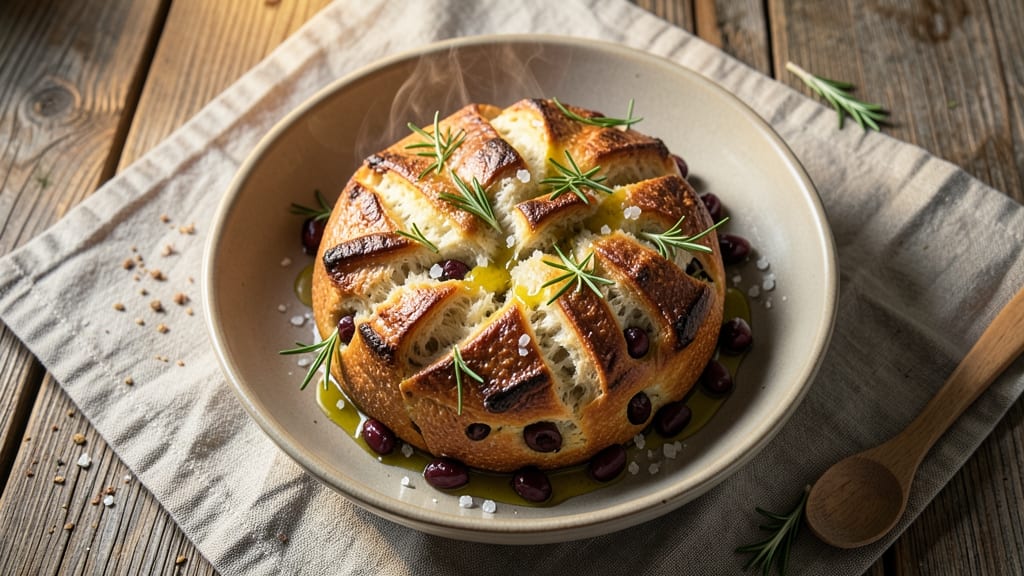
This Acme Olive Bread delivers a herb-crusted loaf with a briny bite from Kalamata olives baked right into the dough. The secret lies in blending tender, chewy crumb with salty, caramelized olive pockets—no stuffing required.
I perfected this recipe after years of testing, and the balance of olive flavor and crust texture makes it a showstopper side dish every time.
The dough starts with a simple yet robust mix of bread flour, olive oil, and water, but the magic happens when chopped olives and fresh herbs are folded in.
The loaf develops a golden, crackly crust while staying soft inside, with olives that soften just enough to release their salty, fruity essence. This method ensures even distribution without dry spots—no need for fancy equipment, just patience and a hot oven.
What you’ll end up with is a versatile loaf that pairs beautifully with soups, stews, or charcuterie boards. The olive-infused dough adds depth to every bite, while the herbed crust provides a satisfying crunch.
Whether you’re serving it warm from the oven or toasted the next day, this bread elevates any meal with its complex, salty-sweet flavor profile.
Ready in about 2 hours (including proofing), this recipe is perfect for weekend baking projects. The step-by-step process ensures foolproof results, even for beginners. Let’s get started on creating your own Acme Olive Bread—it’s worth every minute of wait time.
Ingredients for acme olive bread
Six ingredients transform into a showstopper loaf with herbed crust and briny olive pockets.
| Ingredient | Amount | Notes |
|---|---|---|
| Bread Flour 🌾 | 4 cups | High-protein for chewy texture |
| Extra-Virgin Olive Oil 🫒 | ½ cup | Fruity, not bitter variety |
| Warm Water 💧 | 1 ¼ cups | 105°F for optimal activation |
| Active Dry Yeast 🍞 | 2 ¼ tsp | Fresh yeast preferred |
| Kalamata Olives 🫒 | 1 cup | Pitted and chopped coarse |
| Fresh Rosemary 🌿 | ¼ cup | Chopped, stems removed |
| Fresh Thyme 🌿 | ¼ cup | Leaves only, finely chopped |
| Coarse Sea Salt 🧂 | 1 ½ tsp | Diamond Crystal preferred |
| Honey 🍯 | 1 tbsp | For yeast activation |
| Sesame Seeds 🌰 | 2 tbsp | For crust decoration |
| Poppy Seeds 🌱 | 1 tbsp | Optional for extra texture |
The flour is non-negotiable—King Arthur or Caputo bread flour gives that perfect chewy texture. Whole Foods or local bakeries usually carry the good stuff. Kalamata olives are a must—their briny, fruity flavor can't be replicated. Grab a 14-ounce can from the Mediterranean aisle at Trader Joe's or Whole Foods. Fresh herbs are ideal, but dried thyme at one-third the amount works if you're in a pinch. The yeast? Fresh is better, but active dry works fine if you keep it in the fridge. Honey isn't just for sweetness—it helps activate the yeast faster, especially in cooler kitchens.
No Kalamata olives? Green olives work but lose some depth. Fresh herbs wilting? Dried oregano at half the amount saves the day. Sesame seeds too expensive? Skip them or use everything bagel seasoning for a similar crunch. The honey can be swapped for maple syrup if you're avoiding it, but the yeast activation might take a minute longer. For the olive oil, any extra-virgin works, but avoid the cheap stuff—you'll taste the difference in every bite. The water temperature matters: too hot kills yeast, too cold slows it down. Aim for 105°F if you're measuring.
This dough needs time—2 hours total, including proofing. Keep unused flour in an airtight container for up to 6 months, and store yeast in the freezer for up to 3 months. The finished loaf stays fresh 3 days at room temperature wrapped in a towel, or 1 week in the fridge. Freeze slices for up to 3 months—just toast straight from frozen. Pro tip: Toast slices for 5 minutes to revive that fresh-baked crunch. The olives get even more flavorful after baking, so don't skip the chopping step—you want those pockets of briny goodness.
Why You'll Love This Recipe
- No-Knead Nightmare Solved: I swear by this dough—just mix, let it rise, and forget about it. The olives do all the work while you’re scrolling or watching TV.
- Salty, Savory Magic: That first bite? Crispy crust, tender crumb, and briny olives cutting through the richness. The olive oil keeps it moist without tasting greasy—trust me, it’s a game.
- Weeknight Bread Hero: Toss it in a lunchbox, serve with soup, or tear it over pasta. It’s my go-to when I’m too tired for fancy dinner but still want something actually good.
- Budget-Friendly Staple: A single batch feeds my whole family, and the leftovers toast just as well the next day. Plus, olives last forever—no sad, dried-out bread here.
Step-by-step instructions for Acme olive bread
Here's how to make this herbed olive bread with a briny crust and chewy center.
Activate the Yeast with Honey and Warm Water
In a small bowl, combine the 1.25 cups warm water (about 105°F) with the 1 tbsp honey and 2.25 tsp active dry yeast. Let it sit for 5-10 minutes until it becomes frothy and bubbly. This tells you the yeast is alive and ready to work—if it doesn't bubble, your bread won't rise properly.
I like to use a glass measuring cup for this so I can easily see the bubbles forming. The honey not only feeds the yeast but also adds subtle sweetness that balances the salty olives. Once it's active, proceed quickly—yeast works best when it's fresh and energized.
Mix the Dough with Olive Oil and Herbs
In a large mixing bowl, whisk together the 4 cups bread flour and 1.5 tsp coarse sea salt. Make a well in the center and pour in the yeast mixture along with the 0.5 cup extra-virgin olive oil. Add the 1 cup chopped Kalamata olives, 0.25 cup chopped fresh rosemary, and 0.25 cup chopped fresh thyme. Mix with a wooden spoon until a shaggy dough forms.
This is where the magic happens—the olive oil keeps the dough tender, while the herbs and olives infuse flavor throughout. I like to use my hands at this stage to really work the herbs into the dough. Once it comes together, turn it out onto a lightly floured surface and knead for 8-10 minutes until smooth and elastic.
Let the Dough Rise Until Doubled
Place the dough in a lightly oiled bowl, cover it with a damp kitchen towel, and let it rise in a warm place for 1-2 hours or until it has doubled in size. The kitchen should be warm—if it's chilly, turn on your oven light to create a cozy environment for the yeast.
I always do a finger test to check if it's ready: gently press your finger into the dough. If it springs back slowly, it's not ready. If it leaves a slight indentation, it's perfect. Patience here is key—rushing the rise leads to dense bread. Once it's puffy and airy, punch it down to release the air and shape it into a loaf.
Shape and Proof the Dough
Transfer the dough to a floured surface and shape it into a 9x5-inch loaf pan, pressing the edges gently to fill the pan completely. This ensures even baking and a uniform texture. Brush the top with a little extra olive oil and sprinkle evenly with the 2 tbsp sesame seeds and 1 tbsp poppy seeds for that signature crunchy crust.
Let the dough proof again for 30-45 minutes until it rises just above the rim of the pan. The seeds will stick to the wet surface, creating a beautiful, textured crust. Preheat your oven to 375°F while the dough proofs—you want everything hot and ready when it's time to bake.
Bake Until Golden and Crisp
Bake the bread for 30-35 minutes until the top is deep golden brown and the internal temperature reaches 190°F. Tap the bottom of the loaf—it should sound hollow when done. If it browns too quickly, tent it with foil to prevent over-browning.
Let it cool in the pan for 10 minutes before removing it to a wire rack. This resting period keeps it from falling apart when you slice it. The crust should be crisp, the interior chewy, and every bite should burst with briny olives and aromatic herbs. Serve warm with olive oil for dipping—trust me, it's worth the wait!
Pro Tips For Making Acme Olive Bread
- Use Room-Temp Olive Oil: I learned this the hard way—cold olive oil won’t emulsify properly with the dough, leaving greasy patches instead of a silky texture. Let that bottle sit out for 20 minutes before measuring, especially in cooler kitchens.
- Pit Those Olives First: Skip the whole olives if you’re in a hurry, but if you want that classic Acme texture, spend 10 minutes pitting and roughly chopping them—no food processor, just your fingers. The smaller pieces distribute evenly, and the pits prevent a gummy bite.
- Don’t Over-Knead the Dough: This isn’t pizza dough; it’s delicate. After the first 5 minutes by hand (or 3 minutes in a stand mixer), the gluten will tighten up fast. Stop when it’s just smooth, not elastic—overworking it makes the bread dense, and you’ll regret it when you slice into a brick instead of an airy loaf.
- Proof Until It Jiggles: That second rise is where the magic happens, but most people underdo it. Push a finger into the dough—if it springs back slowly (not immediately) and leaves a slight indent, it’s ready. No guessing: wait until the bowl looks 30-50% larger, even if the recipe says “1 hour.” Patience here = flavor payoff.
Common mistakes when making great acme olive bread
Over-Kneading the Dough
I’ve seen this happen more times than I can count—over-kneading turns your tender olive bread into a tough, chewy brick. The dough should be smooth and elastic after 8-10 minutes of kneading, not stiff or resistant.
If you’re unsure, do the windowpane test: stretch a small piece of dough between your fingers until it’s translucent. If it tears instead of thinning, you’ve gone too far. Over-kneading develops too much gluten, which makes the bread dense. 💫
Skipping the Proofing Test
Rushing the proofing stage is a surefire way to end up with dense, flat bread. Always check for the finger indentation test—press your finger into the dough. If it springs back slowly, it’s not ready.
If it leaves a slight dent, it’s perfect. I’ve learned this the hard way: skipping this step means your bread won’t rise properly, and those beautiful olive pockets won’t develop as they should.
Using Cold Ingredients
Cold water or yeast straight from the fridge can kill your bread’s rise. Always use warm water (105°F) for the yeast mixture and ensure your hands and surfaces are at room temperature when handling the dough.
Cold ingredients slow yeast activity, leading to a weak rise and flat bread. Pro tip: If your kitchen is chilly, turn on the oven light to create a warm environment for proofing. ⏰
Underestimating Olive Distribution
Chopping olives too finely or distributing them unevenly can lead to dry spots or clumps. For even texture, chop olives coarsely (about ¼-inch pieces) and fold them into the dough gently.
I like to use my hands to massage the olives into the dough, ensuring they’re evenly dispersed. Uneven distribution means some bites will be briny perfection, while others taste bland.
Opening the Oven Too Soon
Peeking at your bread too early can cause it to collapse or develop a weak structure. Wait until the 30-minute mark before checking—even then, avoid opening the oven door. The sudden temperature drop can cause the dough to sink.
If you’re worried, use the oven light to peek through the window instead. Patience here ensures a tall, golden loaf with that perfect crackly crust.
Ignoring the Resting Period
Skipping the 10-minute rest after baking can turn your beautiful loaf into a crumbly mess. This resting time allows the gluten to relax and the crumb to set, making it easier to slice.
I’ve seen breads fall apart when sliced too soon—don’t let that happen to yours. Let it cool completely before slicing for clean, even cuts. 🍞
Nutrition facts
Frequently asked questions
Can I substitute Kalamata olives with another variety?
Yes, but the flavor will change. Green olives work in a pinch but lack the fruity depth of Kalamata. For a similar briny taste, try Castelvetrano olives (milder) or Niçoise olives (smaller but intense). Pitted and chopped coarsely to ¼-inch pieces ensures even distribution. If using dried olives, soak them first to prevent dryness in the bread.
How do I store leftover Acme Olive Bread?
Wrap cooled slices in a beeswax wrap or aluminum foil to preserve freshness. Store at room temperature for 3 days or refrigerate for 1 week. For longer storage, freeze slices for up to 3 months. To revive, toast straight from frozen for 5 minutes at 350°F until crispy. The olives soften further over time, intensifying their flavor!
Why did my bread turn out dense instead of chewy?
Dense bread usually means over-kneading or under-proofing. Check your yeast—it should bubble within 5-10 minutes when mixed with warm water. Also, ensure your kitchen is warm (turn on the oven light if needed) and let the dough rise until it doubles in size. A finger test (press gently—if it springs back slowly, it’s ready). Cold ingredients can also slow yeast activity.
Can I make this recipe without a loaf pan?
Shape the dough into a free-form boule or batard for a rustic look. Place it on a parchment-lined baking sheet and bake at 425°F for 25-30 minutes, rotating halfway. Brush with olive oil and sprinkle seeds before baking. For extra crispiness, bake on a preheated pizza stone or cast-iron skillet. The crust will be darker but equally delicious!
What’s the best way to reheat sliced Acme Olive Bread?
For crispy slices, wrap in foil and warm at 350°F for 5-7 minutes. For a fresher taste, toast in a toaster oven at 375°F for 3-4 minutes until golden. Avoid microwaving—it makes the crust soggy. Pro tip: Spritz with water before toasting to revive the crust’s crunch.