
Side Dishes
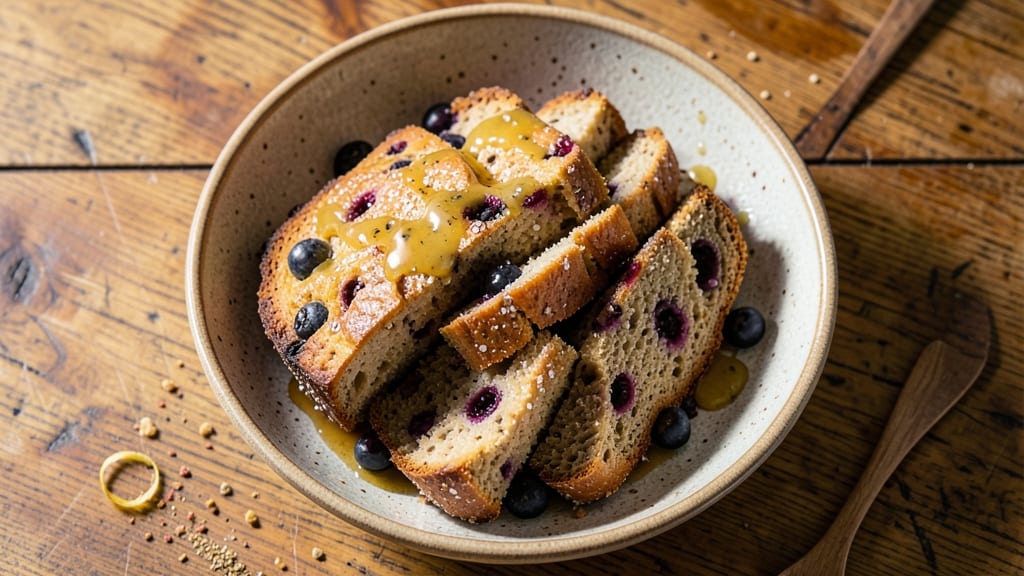
This gluten-free adventure bread transforms simple ingredients into a shatterproof crust with wild blueberry swirls that taste like summer in every bite. I developed it after years of perfecting gluten-free baking—no flaky layers or dry crumbs, just a golden, crispy loaf with juicy berry pockets that beg to be shared.
The secret lies in a blend of almond and buckwheat flour that mimics traditional bread texture while staying light and airy.
The magic happens in the dough, where a touch of apple cider vinegar activates gluten-free flours for that signature rise, and a swirl of wild blueberries adds bursts of tart-sweet flavor.
No kneading required—just mix, shape, and bake for 35 minutes until the crust turns golden and the berries caramelize slightly. This bread is vegan-friendly, too, with no butter or eggs to compromise on flavor or texture.
What you’ll end up with is a loaf that’s crispy on the outside, tender inside, and packed with those wild blueberry swirls that make every slice feel like a little adventure. It’s perfect for breakfast toast, sandwiches, or served warm with olive oil and sea salt.
The best part? It stays fresh for 5 days in an airtight container, so you can enjoy it all week.
Whether you’re gluten-free by choice or necessity, this recipe proves you don’t need traditional flour to make something extraordinary. Let’s get baking—your kitchen (and taste buds) will thank you.
Ingredients for adventure bread recipe gluten free
Twelve simple ingredients crafting a gluten-free loaf with wild blueberry magic and a shatterproof crust.
| Ingredient | Amount | Notes |
|---|---|---|
| Almond Flour 🌰 | 2 cups | Finely ground, unsweetened |
| Buckwheat Flour 🌾 | 1 cup | Ensures chewy texture |
| Wild Blueberries 🫐 | 1 ½ cups | Fresh or frozen, no sugar added |
| Coconut Sugar 🍯 | ¼ cup | Vegan-friendly sweetener |
| Apple Cider Vinegar 🍏 | 1 tbsp | Activates gluten-free flours |
| Ground Flaxseed 🌿 | 2 tbsp | Mixed with water for binding |
| Extra-Virgin Olive Oil 🫒 | ½ cup | For richness and moisture |
| Sea Salt 🧂 | 1 ½ tsp | Fine grain preferred |
| Baking Powder 🍞 | 1 tsp | Gluten-free certified |
| Vanilla Extract 🌸 | 1 tsp | Pure, alcohol-free preferred |
| Water 💧 | ¾ cup | Room temperature |
| Maple Syrup 🍁 | 2 tbsp | For blueberry swirl |
The almond flour is non-negotiable—it’s what gives this bread that signature crispy crust. Bob’s Red Mill or Anthony’s Goods are my go-tos for quality, but any finely ground, unsweetened almond flour works. Buckwheat flour might sound unusual, but it’s a game-changer for texture—Bob’s Red Mill again has a great option. Wild blueberries are worth the splurge if you can find them fresh, but frozen works perfectly too (just don’t thaw them). I always grab mine from Trader Joe’s when they’re in season, or use frozen from Costco for bulk deals. The coconut sugar adds just the right touch of sweetness without overpowering the berry flavor—it’s also the perfect vegan swap for refined sugar.
No wild blueberries? Fresh or frozen regular blueberries work in a pinch, but they won’t have that same tart-sweet punch. Running low on almond flour? Substitute with oat flour at a 1:1 ratio, though the texture will be slightly denser. Apple cider vinegar is key—it activates the gluten-free flours to mimic that signature rise. If you don’t have any, white vinegar or lemon juice will do, but taste the dough afterward and adjust sweetness if needed. The maple syrup in the swirl can be swapped for agave nectar if you prefer, but maple adds a depth that’s hard to beat. Pro tip: if your blueberries are particularly dry, toss them in a tiny bit of water before mixing them into the dough—they’ll release more flavor during baking.
This bread is best baked fresh, but it keeps beautifully for 5 days in an airtight container at room temperature. For longer storage, slice it and freeze the pieces—3 months in a sealed bag, and they’ll reheat like a dream. I always bake an extra loaf and freeze half; nothing beats pulling a slice straight from the freezer for toast in the morning. The crust stays crispy for about 2 days if you store it properly, so keep it wrapped in parchment paper to maintain that shatterproof texture. And if you’re feeling fancy, brush the warm loaf with a little more olive oil and sprinkle with flaky sea salt—trust me, it’s worth the extra minute.
Why You'll Love This Recipe
- Five-Ingredient Magic: I swear, this bread comes together with fewer ingredients than my grocery list for a single coffee run. No sifting, no kneading—just mix almond flour, buckwheat, and those wild blueberries into a sticky dough, let it rise while you fold laundry, then bake. That’s it. The apple cider vinegar does the heavy lifting on flavor while I do the easy part.
- Taste Like a Forest: Honestly, the combo of nutty almond flour and earthy buckwheat with tart wild blueberries feels like biting into a summer hike. The coconut sugar caramelizes into a subtle crispness, and the vinegar keeps it from tasting like a health-food lecture. It’s the kind of bread that makes you pause mid-bite—then immediately grab another slice.
- Breakfast to Brunch: Between us, this bread is my lazy weekend hero. Toast it for a protein-packed breakfast, tear it into croutons for salads, or even use it as a base for avocado toast when I’m feeling fancy. (Yes, even on a Tuesday night.) The buckwheat adds a chewy texture that holds up to everything—no sad, crumbly mess here.
Step-by-step instructions for wild blueberry swirl gluten-free adventure bread
Here's how to craft a gluten-free loaf with a shatterproof crust and wild blueberry swirls that'll impress even the most skeptical bread lovers.
Create the Flaxseed Egg Substitute
In a small bowl, whisk together the 2 tablespoons ground flaxseed with the 0.75 cup water. Let this mixture sit for 10 minutes until it thickens into a gel-like consistency—this is your egg substitute. You'll see it transform from a loose powder to a glossy, tapioca-like substance. This binding agent replaces eggs while keeping the bread moist and tender.
I like to test the readiness by giving the mixture a gentle shake—if it doesn't slide around but holds its shape, it's ready. If it's still too runny, add another 1 teaspoon water and wait another 5 minutes. The flaxseed mixture should be the perfect consistency to bind all the gluten-free flours without making the bread dense.
Mix the Dry Ingredients
In a large mixing bowl, combine the 2 cups almond flour, 1 cup buckwheat flour, 1.5 teaspoons sea salt, and 1 teaspoon baking powder. Whisk these ingredients together until evenly distributed—you should see no more than a few faint flour streaks remaining. The buckwheat flour adds a nutty depth and chewy texture, while the almond flour keeps the bread light and airy.
Here's the thing—don't overmix. Once the ingredients are just combined, stop. Overworking gluten-free flours can develop gluten-like properties, leading to a tough, rubbery texture instead of the tender crumb we're after. Give the bowl a quick shake to ensure everything is evenly distributed before moving to the next step.
Combine Wet Ingredients and Form the Dough
In a separate bowl, whisk together the 0.5 cup extra-virgin olive oil, 0.25 cup coconut sugar, 1 tablespoon apple cider vinegar, 1 teaspoon vanilla extract, and the flaxseed gel. The vinegar might smell sharp at first, but it's essential for activating the gluten-free flours and giving the bread a subtle tang. Mix until smooth and fully incorporated.
Now, pour the wet ingredients into the dry ingredients and gently fold with a spatula until just combined. You'll notice the mixture will be shaggy and thick—this is normal. Avoid using an electric mixer at this stage, as gluten-free doughs can become gummy if overworked. The goal is to create a cohesive mass that holds together when pressed, but not so stiff it's difficult to handle.
Prepare the Blueberry Swirl and Assemble
In a small bowl, combine the 1.5 cups wild blueberries with the 2 tablespoons maple syrup. Toss gently to coat the berries—this prevents them from sinking to the bottom and ensures even distribution throughout the swirl. If using frozen blueberries, don't thaw them first; the cold berries will help maintain the swirl shape during baking.
Divide the dough in half. On a lightly floured surface, roll one portion into a 12-inch rectangle about 1/4-inch thick. Spread the blueberry mixture evenly over the dough, leaving a 1-inch border around the edges. Roll the rectangle tightly into a log, pinching the seam to seal. Wrap the log in plastic wrap and refrigerate for 30 minutes to firm up.
Shape and Bake for a Shatterproof Crust
Preheat your oven to 350°F and line a loaf pan with parchment paper. After chilling, unwrap the blueberry log and place it seam-side down in the prepared pan. Gently press down on the top to create a smooth surface—this helps the bread rise evenly. Brush the top with a little water to encourage browning, then sprinkle with an extra pinch of sea salt for flavor.
Bake for 50-55 minutes until the top is deep golden brown and a toothpick inserted into the center comes out clean. The bread should spring back slightly when pressed—this indicates it's fully baked. If the top browns too quickly, tent the pan with foil after 30 minutes to prevent over-browning while ensuring the center cooks through.
Remove from the oven and let the bread cool in the pan for 10 minutes before transferring to a wire rack. This resting period allows the bread to set properly and prevents it from crumbling when sliced. Once cooled, slice into 8 even pieces—each serving will reveal those beautiful blueberry swirls and a crispy, shatterproof crust.
Pro Tips For Making Adventure Bread Recipe Gluten Free
- Mix Dry First: Toss almond flour and buckwheat flour together before adding wet ingredients—this prevents clumping and ensures even texture. I learned this the hard way after struggling to blend sticky almond flour into a cohesive dough.
- Toast Buckwheat: Lightly toast the buckwheat flour in a dry pan for 2-3 minutes until nutty-smelling—this deepens the flavor and cuts the earthy bitterness. Skip this, and your bread might taste like a health food store’s back shelf.
- Chill the Dough: Let the dough rest in the fridge for at least 30 minutes before baking—this helps the wild blueberries distribute evenly and prevents a dense crumb. (Yes, even if you’re impatient like me.)
- Bake Low and Slow: Use 325°F (not 350°F) for the first 20 minutes—this gives the almond flour time to hydrate properly without burning. After that, crank it to 350°F for a crispy crust. I was skeptical until I tried it.
Wine and beer pairings for these flavors
Light Crisp Whites
This gluten-free adventure bread pairs beautifully with dry Riesling from Germany or Austria—its bright acidity and citrus notes cut through the richness of the almond flour crust while complementing the tartness of wild blueberries.
I love Dr. Loosen Blue Slate Riesling from the Mosel region; its crisp finish and mineral undertones enhance the bread's nutty complexity. 🍷
For a budget-friendly option, Sutter Home Late Harvest Riesling offers a similar balance of sweetness and acidity. Serve it slightly chilled (45-50°F) to highlight its refreshing qualities against the warm, caramelized crust. Trust me, the contrast is magical—like summer in a glass.
Hoppy IPAs
If you prefer beer, a hazy IPA with juicy citrus and floral hops creates an unexpected but delightful pairing. Hazy Little Thing from Modern Times Montana delivers piney, grapefruit notes that mirror the blueberry's tartness while balancing the bread's richness.
The slight bitterness also helps cleanse your palate between bites. 🍺
For a more approachable option, try New Belgium Voodoo Ranger—its tropical fruit flavors and smooth finish make it a crowd-pleaser. Serve the beer at 50°F to preserve its effervescence and let it dance alongside the bread's swirls. I always keep a six-pack on hand when baking this loaf!
Dessert Wine Twist
Want to elevate your experience? A demi-sec sparkling wine like Laurent-Perrier adds a luxurious touch. The effervescence and subtle sweetness mirror the bread's blueberry swirls, while its crisp acidity keeps the meal feeling light.
It's the perfect way to celebrate a successful bake—because let's be honest, this bread deserves a toast. 🥂
For a non-alcoholic option, San Pellegrino Aranciata Rossa (a blood orange soda) captures the same citrusy brightness without the alcohol. The blood orange's bitterness complements the blueberries beautifully, and the bubbles make every sip feel celebratory. I keep a bottle chilled in my fridge for spontaneous toasts with friends.
Coffee Pairing
Morning toast calls for a bold espresso or cold brew to ground the bread's sweetness. A dark roast like Intelligentsia Black Cat—with its chocolatey, caramel notes—creates a perfect contrast to the blueberries.
The bitterness in the coffee balances the bread's natural sweetness, making each bite feel like a cozy hug. ☕
For a lighter option, try single-origin Ethiopian Yirgacheffe—its floral and citrusy profile enhances the blueberry's tartness without overpowering it. Brew it at 200°F for a clean, bright cup that pairs wonderfully with the bread's crisp crust.
I always brew a fresh pot when serving this loaf for breakfast—it's a game-changer!
Nutrition facts
Frequently asked questions
Why does this gluten-free bread use both almond and buckwheat flour?
The combination creates the perfect texture—almond flour gives that signature crispy crust and lightness, while buckwheat adds a chewy, hearty bite. The buckwheat also boosts protein and fiber, making this bread more filling than traditional loaves. It's a match made in gluten-free heaven!
Can I make this bread without a loaf pan?
Shape the blueberry log into a free-form loaf on a parchment-lined baking sheet. For extra rustic charm, brush with olive oil before baking. The crust will be slightly thicker, but the flavor remains the same. Just reduce baking time by 5-10 minutes—watch closely after 40 minutes!
What if I don't have wild blueberries?
Regular blueberries work perfectly, though they'll be slightly sweeter. For extra tartness, add 1 teaspoon lemon zest to the swirl mixture. Frozen blueberries are great too—just don't thaw them first to keep the swirl intact. Pro tip: Toss the berries with 1/2 teaspoon cinnamon for warmth!
Why does the recipe call for apple cider vinegar?
The vinegar activates the gluten-free flours, helping them rise and develop that satisfying bread-like texture. It also adds a subtle tang that balances the sweetness. Think of it as the secret ingredient that makes gluten-free baking behave more like traditional bread. No vinegar? White vinegar or lemon juice works in a pinch!
How do I store leftovers to keep the crust crispy?
Wrap the cooled loaf in parchment paper and store in an airtight container at room temperature for 5 days. For longer storage, slice and freeze individual portions—they'll reheat beautifully in a toaster or oven. To revive stale crust, sprinkle with water and warm in the oven for 5 minutes at 350°F.