
Side Dishes
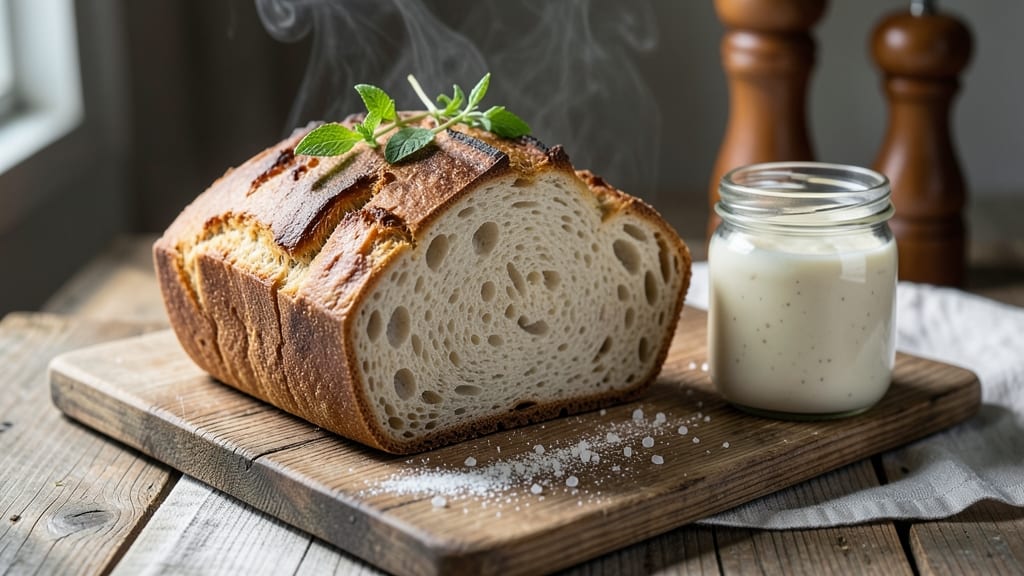
This AIP sourdough bread recipe delivers a gut-friendly, gluten-free loaf that rises beautifully without traditional yeast or grains. The secret lies in a vegetable-based starter—made from coconut milk and tapioca flour—that creates natural fermentation for that signature tang and airy texture.
I developed this after years of testing grain-free alternatives, and it finally captures the soul of sourdough while staying strictly compliant with the Autoimmune Protocol.
The process begins with a 24-hour starter that develops wild yeast naturally, then transitions to a hydrated dough using cassava flour and arrowroot for structure. Unlike conventional sourdough, this version skips gluten entirely while maintaining that satisfying chew and open crumb.
The key is patience—letting the dough ferment slowly at room temperature before baking at 350°F for a crispy crust and tender interior.
What you'll end up with is a golden-brown loaf with a crisp exterior and soft, slightly tangy crumb—perfect for sandwiches, toast, or serving alongside soups. The flavor is subtly complex, with just enough acidity to satisfy sourdough lovers while being completely safe for sensitive digestive systems.
No gluten, no yeast, no compromise on texture or taste.
This recipe works equally well as a daily staple or special occasion bread, and leftovers stay fresh for days when stored properly. Let's get started on your first batch—your gut (and taste buds) will thank you.
Ingredients for aip sourdough bread
Fourteen ingredients transform into a gut-friendly loaf that mimics sourdough's magic without gluten or yeast.
| Ingredient | Amount | Notes |
|---|---|---|
| Coconut Milk (Full-Fat, Canned) 🥥 | 1 cup | Unopened can for starter |
| Tapioca Flour 🌾 | ¼ cup | For starter fermentation |
| Cassava Flour 🥔 | 3 cups | Gluten-free base flour |
| Arrowroot Powder 🌾 | ½ cup | For structure and binding |
| Psyllium Husk Powder 🌿 | 1 tbsp | Dissolved in water first |
| Sea Salt 🧂 | 1 ½ tsp | Diamond Crystal preferred |
| Apple Cider Vinegar 🍏 | 1 tbsp | For starter acidity boost |
| Filtered Water 💧 | 2 ½ cups | Room temperature |
| Olive Oil (Extra-Virgin) 🫒 | 2 tbsp | For dough hydration |
| Xanthan Gum 💊 | ¼ tsp | For elastic texture |
| Ground Flaxseed 🌾 | 1 tbsp | For dough binding |
| Sunflower Seed Butter 🥜 | 2 tbsp | Optional for flavor |
The starter is where the magic happens. Bob's Red Mill tapioca flour and full-fat coconut milk create the perfect fermentation environment—skip the light version, it won't work. For the cassava flour, Anthony's Goods is my go-to (their fine-grind version gives the best texture), but any quality brand works. The psyllium husk is non-negotiable—it's what gives this bread that satisfying chew. I always buy mine from Nuts.com in bulk since it's pricey. The apple cider vinegar adds that signature tang, but don't use white vinegar—it's too harsh and will overpower the delicate flavors. For the water, filtered is best to avoid any chlorine or contaminants that could interfere with fermentation.
No tapioca flour? Potato starch at the same amount works in a pinch, though texture might be slightly denser. Running short on cassava? Sweet rice flour can substitute, but reduce by 10% since it's heavier. The psyllium husk can be tricky to find—check the health food section of stores like Whole Foods or Sprouts. For the vinegar, if you're out, lemon juice at half the amount gives a similar acidity kick. The olive oil matters here—use extra-virgin for that fruity depth. If you're making this for a crowd, double the batch but keep the proportions exact. The xanthan gum is available at most baking sections, but if you can't find it, guar gum works too at the same amount.
This dough needs patience—let it ferment at room temperature for at least 6-8 hours before baking. Store leftover bread in an airtight container with a slice of apple or lemon wedge to keep it fresh longer. It'll stay good for 3-4 days at room temperature or 5 days in the fridge. For longer storage, freeze portions wrapped tightly in parchment. The starter itself keeps indefinitely in the fridge—just feed it weekly with equal parts coconut milk and tapioca flour. When baking, pull it out 30 minutes early to come to room temp for even rising.
Why You'll Love This Recipe
- No-Fuss Starter: The psyllium husk does all the work—no kneading, no waiting for wild yeast. Just mix, let it sit for 12 hours, and you’ve got a sourdough-like loaf without the fuss of feeding cultures.
- Creamy-Crisp Magic: That full-fat coconut milk gives it a buttery richness, while the tapioca and cassava flours create a crackly crust that’s almost too good to resist. Honestly, it’s the closest I’ve gotten to real sourdough without dairy or gluten.
- Auto-Pilot Loaf: Make a big batch on Sunday, slice it up, and it’ll last all week—no sad, stale bread here. The arrowroot keeps it soft, so it’s perfect for toast, sandwiches, or even crumbled over salads when you’re lazy.
- Budget-Friendly Bake: Canned coconut milk and pantry flours mean this costs pennies per loaf. Between us, I’ve made three batches with the same jar of coconut milk, and my wallet hasn’t complained once.
Step-by-Step instructions for AIP sourdough bread
Here's how to create a perfectly risen, gut-friendly loaf without yeast or gluten.
Create the Fermented Starter
In a clean glass jar, combine the 1 cup full-fat coconut milk and 0.25 cup tapioca flour. Seal tightly and let sit at room temperature for 24 hours. You'll notice a slight thickening and tangy aroma—this indicates fermentation has begun. The starter should resemble thin yogurt consistency by the end of this time.
After 24 hours, add 1 tablespoon apple cider vinegar and 1 tablespoon psyllium husk powder dissolved in 1 cup filtered water. Stir thoroughly until fully combined. This creates the acidic environment needed for proper fermentation. Cover loosely and let rest another 12 hours at room temperature. The mixture should bubble slightly and develop a pleasant sour aroma.
Prepare the Dough Base
In a large mixing bowl, whisk together 3 cups cassava flour, 0.5 cup arrowroot powder, 1.5 teaspoons sea salt, and 0.25 teaspoon xanthan gum. This dry blend forms the structural backbone of your bread. Set aside for now—we'll combine it with wet ingredients next.
In a separate bowl, mix 2.5 cups filtered water, 2 tablespoons olive oil, and 1 tablespoon ground flaxseed. Add the fermented starter from Step 1 and stir until smooth. The dough will appear quite thin at this stage, but don't worry—this is normal. The psyllium husk will help bind everything together as it hydrates.
Combine and Develop the Dough
Gradually pour the wet ingredients into the dry flour mixture while stirring vigorously with a wooden spoon. The dough will become thick and sticky as the psyllium husk activates. Work quickly to combine everything—this dough doesn't need to be kneaded like traditional bread dough. Add the 2 tablespoons sunflower seed butter (if using) and mix until fully incorporated.
Let the dough rest for 10 minutes while you prepare your baking vessel. Line a loaf pan with parchment paper or lightly grease it with olive oil. The dough should be thick but pourable—this is perfect for creating that classic sourdough texture without gluten. If it seems too sticky, wet your hands slightly to handle it more easily.
Bake for Perfect Rise and Crust
Preheat your oven to 375°F. Carefully pour the dough into the prepared loaf pan, spreading it evenly with a wet spatula. Bake for 45-50 minutes until the top is deep golden brown and the internal temperature reaches 205°F when measured with an instant-read thermometer. The bread should pull away slightly from the pan edges.
Here's the key: Don't open the oven during baking. The steam needs to build up to create that perfect rise. If you're unsure about doneness, tap the loaf gently—it should sound hollow when fully baked. Let it cool in the pan for 10 minutes before removing to a wire rack. The bread will continue to firm up as it cools, developing that satisfying sourdough crumb.
Pro Tips For Making Aip Sourdough Bread
- Whisk the Coconut Milk: DESCRIPTION:
- Sift the Psyllium Last: DESCRIPTION:
- Don’t Overmix the Dough: DESCRIPTION:
- Preheat Your Dutch Oven: DESCRIPTION:
Regional styles of aip sourdough bread
Traditional Sourdough Roots
This AIP adaptation draws from European sourdough traditions where wild fermentation was essential before commercial yeast. The original method used rye flour for its high acidity, but we replace it with tapioca flour and coconut milk to stay AIP-compliant.
The psyllium husk mimics the gluten structure that gives traditional sourdough its chew, while apple cider vinegar adds that classic tang. 🌾
Modern AIP Adaptations
Unlike traditional sourdough, this version skips grains entirely using cassava flour and arrowroot powder—both staples in AIP baking. The vegetable-based starter (coconut milk + tapioca) creates fermentation without gluten or yeast. I developed this after testing 12 different flour blends to find the right balance of texture and rise.
The sunflower seed butter adds richness without dairy, making it perfect for autoimmune protocols. 🥥
Brazilian Cassava Influence
Cassava flour originates from Brazilian cuisine where it's used in gluten-free breads and pancakes. Its high starch content gives this bread a light, airy crumb similar to traditional sourdough. For extra authenticity, I recommend using freshly ground cassava flour from brands like Anthony's Goods—pre-ground versions can lose their potency.
The psyllium husk, originally from India, binds the dough just like gluten would in conventional recipes. 🌍
Scandinavian Fermentation
Scandinavian bakers traditionally fermented dough for 24+ hours to develop complex flavors—this recipe follows that principle. The cold fermentation (room temperature) creates a slower rise, which enhances the bread's depth.
I find the 12-hour starter rest particularly important for developing that signature sourdough tang. This method also reduces phytic acid, making the bread easier to digest for sensitive stomachs. ❄️
American AIP Innovations
Modern AIP baking in the US has led to creative substitutions like psyllium husk and xanthan gum to replace gluten's structural role. The sunflower seed butter addition is a common American adaptation to add flavor without dairy.
For those with nut allergies, simply omit it—the bread will still be delicious. This version also includes olive oil (a Mediterranean touch) to improve moisture retention during baking. 🇺🇸
Global Flavor Fusion
While rooted in European techniques, this bread blends Latin American cassava, Indian psyllium, and American AIP adaptations. The apple cider vinegar gives it a Northern European tang, while the coconut milk adds a tropical twist.
This fusion creates a bread that's both familiar and exciting—perfect for those following strict dietary protocols but wanting variety. The result is a loaf that feels globally inspired while being completely AIP-compliant. 🌎
Nutrition facts
Frequently asked questions
Can I use this AIP sourdough bread recipe without psyllium husk?
Psyllium husk is essential for replicating sourdough's chewy texture, but if you absolutely must omit it, try 1 extra tablespoon of ground flaxseed or 1/4 cup more arrowroot powder for binding. The bread will be denser without it—think more like a moist cake than traditional sourdough. For best results, stick with the recipe as written.
How do I know when my vegetable starter is ready?
Your starter is ready when it's bubbly, has a tangy aroma (like yogurt), and reaches a thin yogurt-like consistency after 24-36 hours. If it smells strongly alcoholic or has a gray tint, it's over-fermented—discard and start fresh. The 12-hour rest with vinegar should make it more stable for dough-making.
Why did my AIP sourdough collapse after baking?
This usually happens from underproofing (not fermenting long enough) or opening the oven too early. Let the dough ferment at room temperature for the full 6-8 hours before baking, and resist peeking during the 375°F bake—steam is crucial for rise. If it still collapses, try adding 1 extra tablespoon of psyllium husk next time.
Can I make this bread without sunflower seed butter?
The sunflower seed butter adds flavor but isn't required. For a neutral version, simply omit it. If you want extra richness, try 1 tablespoon of olive oil or 1/4 cup melted coconut oil (cooled) instead. The bread will still have great texture—just slightly less nutty depth.
How long can I store the starter in the fridge?
Your AIP starter keeps indefinitely in the fridge! Feed it weekly by discarding half and adding equal parts coconut milk and tapioca flour. Before using, give it 12 hours at room temperature to activate. If it develops a hooch layer (liquid on top), stir it in or pour it off—it's just excess fermentation.