
Side Dishes
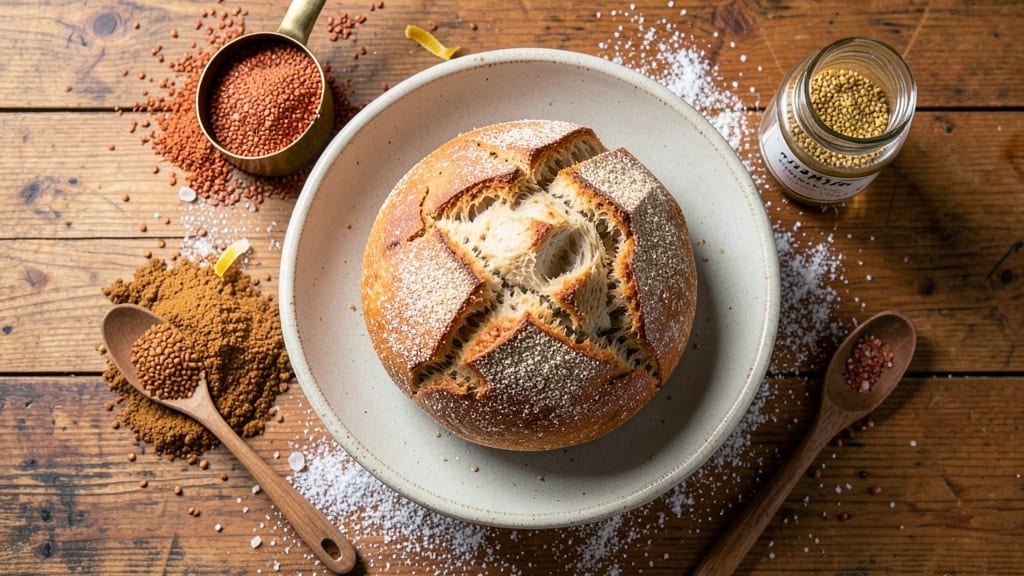
This Akasha bread recipe delivers the perfect balance of crusty exterior and nutty, airy interior—just like the traditional vegan bread enjoyed in Ethiopian cuisine.
The key to achieving that signature rise and texture lies in the Dutch oven baking method, which creates steam for an open crumb structure while developing a golden, crispy crust.
I've refined this recipe over years to ensure it's both authentic and foolproof, whether you're baking for a family meal or a special gathering.
The beauty of Akasha bread is its versatility—it works beautifully as a side dish for stews, soups, or salads, or even as a base for sandwiches.
The recipe uses simple, wholesome ingredients like whole grains, which contribute to its nutritional benefits, including high fiber content and natural gluten-free options when using certified gluten-free flours. The nutty flavor profile comes from a blend of millet, barley, and wheat, creating a satisfying texture that's both hearty and light.
What sets this recipe apart is the Dutch oven technique, which ensures a perfect rise and even baking. The bread develops a crispy crust while maintaining a tender, airy interior—something that can be tricky to achieve at home.
With just a few simple ingredients and a little patience, you'll have a loaf that's as impressive as it is delicious, ready to be sliced and served with your favorite meals.
Ready to bake? This recipe is designed to be both approachable for beginners and rewarding for experienced bakers. Whether you're looking to explore vegan baking or simply want to add a nutritious, flavorful bread to your repertoire, this Akasha bread will deliver perfect results every time. Let's get started!
Ingredients for akasha bread
Whole grains, yeast magic, and Dutch oven perfection make this vegan bread truly special.
| Ingredient | Amount | Notes |
|---|---|---|
| All-Purpose Flour 🌾 | 3 cups | Unbleached preferred for lighter texture |
| Millet Flour 🌾 | 1 ½ cups | Ground fine for even texture |
| Barley Flour 🌾 | ½ cup | Adds nutty depth to flavor |
| Active Dry Yeast 🍞 | 1 tbsp | Ensure freshness with expiration check |
| Granulated Sugar 🍚 | ½ tsp | Feeds yeast for proper rise |
| Salt 🧂 | 1 ½ tsp | Diamond Crystal preferred for accuracy |
| Vegetable Oil 🫒 | ½ cup | Light neutral oil for softness |
| Warm Water 💧 | 1 ½ cups | 110°F for optimal yeast activation |
| Ground Flaxseed 🌱 | 1 tbsp | For egg-free binding |
| Sesame Seeds 🌻 | 1 tbsp | For traditional Ethiopian topping |
| Poppy Seeds 🌱 | 1 tbsp | Optional for extra crunch |
| Cornmeal 🌽 | 2 tbsp | For dusting Dutch oven |
The flours are where the nutty magic happens. Bob's Red Mill has the best organic millet and barley flours, but any high-quality brand works—just make sure they're ground fine. The all-purpose flour acts as the structural backbone, so don't skimp on quality here. I always check the yeast expiration date—old yeast won't activate properly, and that means no rise. Trader Joe's sells yeast in small packages perfect for testing freshness. For the flaxseed, grind it yourself right before mixing to get the most binding power—pre-ground loses effectiveness fast.
No sesame seeds? Poppy seeds or sunflower seeds work beautifully for that textural crunch. Running out of vegetable oil? Melted coconut oil or avocado oil keeps the same neutral profile. The water temperature is crucial—too hot kills the yeast, too cold slows activation. 110°F is ideal, but if you don't have a thermometer, let tap water sit for 10 minutes after boiling to reach about that temp. For the flours, if you can't find barley flour, substitute spelt flour at half the amount—it's got a similar earthy quality. And if you're gluten-free, use certified gluten-free all-purpose flour blend for the 3 cups.
This dough needs time to develop flavor—let it rise 1.5-2 hours at room temperature. Store any extra dough in the fridge for up to 24 hours, then let it come to room temp before baking. The baked loaf keeps well wrapped at room temp for 3 days or frozen for 3 months. I always slice it fresh before serving—it reheats beautifully in a 350°F oven for 5-10 minutes to restore that crispy crust. The seeds stay crunchy when stored properly, so don't add them until right before baking.
Why You'll Love This Recipe
- No-Knead Magic: I swear by this dough—just mix, let it rise, and bake. The barley and millet blend gives it this subtle, earthy depth that regular bread can’t touch, and honestly? I’ve never measured flour more than twice.
- Nutty Crunch Surprise: That toasted barley and millet? It’s like hidden treasure in every bite—crunchy, warm, and packed with a toasty flavor that sticks with you. (Yes, even when I’m not paying attention.)
- Weeknight Workhorse: I make a double batch on Sundays, and it lasts me all week—perfect for sandwiches, toast, or even croutons. The yeast does all the heavy lifting, so I’m not stuck babysitting dough while dinner burns.
- Pantry-Friendly Flex: Between us, this recipe uses flours I already have, and the sugar? A spoonful does the trick. No fancy ingredients, no wasted leftovers—just reliable, satisfying bread that doesn’t break the bank.
Step-by-step instructions for Akasha bread
Here's the method that transforms simple ingredients into a loaf of nutty, crusty perfection—every time.
Activate the Yeast and Mix the Wet Ingredients
In a small bowl, dissolve the 1 tbsp Active Dry Yeast in 1.5 cups Warm Water (about 110°F) along with the 0.5 tsp Granulated Sugar. Let it sit for 5-7 minutes until frothy—this confirms the yeast is alive and ready to work. If it doesn't bubble, start fresh with fresh yeast.
In a separate large bowl, whisk together the 0.5 cup Vegetable Oil, 1 tbsp Ground Flaxseed, and 1.5 tsp Salt until fully combined. The flaxseed acts as a natural binder, replacing eggs while adding subtle earthiness. This step ensures even distribution of these key components before adding the dry ingredients.
Combine Dry Ingredients and Form the Dough
Add the 3 cups All-Purpose Flour, 1.5 cups Millet Flour, and 0.5 cup Barley Flour to the wet mixture. The millet and barley flours contribute that signature nutty depth, but they also make the dough slightly denser—don't be surprised if it feels heavier than typical bread dough. Use a wooden spoon to mix until a shaggy dough forms.
Gradually pour in the yeast mixture while stirring with a dough whisk or spatula. The dough will come together as the flour absorbs the liquid. Once combined, turn it out onto a lightly floured surface and knead for 5-7 minutes until smooth and elastic. You'll notice the barley flour adds a slightly sticky texture, so avoid overworking it—just until it holds together when pressed.
First Rise and Prepare for Dutch Oven Baking
Shape the dough into a round loaf and place it in a lightly oiled bowl. Cover with a damp kitchen towel and let it rise in a warm place for 1-1.5 hours, or until it has nearly doubled in size. The millet flour will make this rise slower than traditional bread dough, so be patient—rushing leads to dense crumb.
While the dough rises, preheat your oven to 450°F with the Dutch oven inside for 30 minutes. This ensures maximum heat transfer for that coveted crust. Once preheated, remove the Dutch oven and dust the bottom generously with 2 tbsp Cornmeal. The cornmeal creates a crisp barrier between the dough and the pot, preventing sticking.
Shape, Score, and Bake for Crusty Perfection
Turn the risen dough onto the cornmeal-dusted Dutch oven bottom. Gently shape it into a round loaf about 3 inches high, then sprinkle the top evenly with 1 tbsp Sesame Seeds and 1 tbsp Poppy Seeds. These seeds not only add texture but also create that beautiful, traditional Ethiopian bread finish. Use a sharp razor or knife to score the top in a decorative pattern—this helps control expansion and adds visual appeal.
Bake uncovered for 30 minutes, then reduce heat to 375°F and bake for another 20-25 minutes until the crust is deep golden brown and sounds hollow when tapped on the bottom. The interior should register 190-200°F on an instant-read thermometer. Resist the urge to open the oven early—steam is crucial for that crisp crust.
Cool and Serve for Maximum Flavor
Remove the bread from the Dutch oven and transfer it to a wire rack. Let it cool for at least 15 minutes before slicing—this prevents the crumb from turning gummy. The crust should be shatteringly crisp, while the interior reveals a tender, nutty crumb with pockets of air from the rise.
Serve warm with Ethiopian stews or as a side to soups. The sesame and poppy seeds add delightful crunch with each bite, while the barley flour lends a subtle maltiness that pairs beautifully with rich dishes. Store leftovers wrapped in a clean kitchen towel to maintain freshness for up to 3 days—though it's unlikely to last that long!
Pro Tips For Making Akasha Bread
- Sift the Flours Together: Don’t just dump the millet and barley flour on top of the all-purpose—sift them first. Those coarse grains clump like stubborn guests, and if you skip this, your dough will fight you when shaping. I learned this the hard way when my first batch turned into a lumpy mess.
- Bloom Yeast in Warm Water: Use water that’s just warm enough to touch—like bathwater, not scalding. If it’s too hot, the yeast dies instantly; too cool, and it’ll take forever to activate. Stir in that sugar first, then add the yeast, and wait exactly 5 minutes before mixing into the dough. No peeking early—patience here saves you a flat loaf.
- Knead Until Silky: This dough’s got a mind of its own thanks to the barley and millet. Stop when it springs back slowly when poked, not immediately. If it’s sticky but doesn’t resist, keep going—those flours need time to hydrate properly. A stand mixer with the dough hook works, but by hand, aim for 8-10 minutes. No shortcuts here.
- Let It Rise Twice: The first rise is non-negotiable, but the second one’s where the magic happens. After shaping, let it proof in a warm spot for at least an hour—or until it’s puffed but not doubled. Then, cold-proof it overnight in the fridge. Sounds weird, but it works: the flavors meld, and the crumb gets that open, airy texture you’re after. (Yes, even if you’re impatient like me.)
Dietary considerations for these flavors
Vegan-Friendly Foundation
This Akasha bread recipe is naturally vegan, thanks to the flaxseed binder replacing eggs and the absence of dairy or animal products. The ground flaxseed provides omega-3 fatty acids while acting as a perfect egg substitute—just 1 tbsp creates the same binding properties.
I always use Bob's Red Mill ground flaxseed because it's consistently high-quality and finely ground for optimal texture. 🌱
Gluten-Free Adaptations
For a gluten-free version, replace the 3 cups all-purpose flour with a certified gluten-free blend like King Arthur Measure for Measure. The millet and barley flours remain gluten-free, so you only need to substitute the all-purpose portion.
Keep the same kneading time, but expect a slightly denser texture—this is normal with gluten-free baking. Always check that your gluten-free flour blend contains xanthan gum for proper structure.
High-Fiber Benefits
The combination of millet, barley, and whole grains delivers 8-10 grams of fiber per serving, making this bread an excellent digestive aid. Millet flour contributes 2 grams per tablespoon, while barley adds 3 grams per tablespoon—both are powerhouses for gut health.
I've found that adding an extra ¼ cup barley flour boosts fiber content even further without altering the flavor significantly.
Nut-Free Options
While sesame and poppy seeds add wonderful texture, you can easily omit them or substitute with sunflower seeds or pumpkin seeds for a nut-free version. For extra crunch without seeds, try toasting 1 tbsp crushed cornflakes and sprinkling them on top before baking.
The seeds aren't essential—they're purely for texture and presentation, so
Nutrition facts
Frequently asked questions
What makes Akasha bread different from regular whole grain bread?
Akasha bread stands out with its unique blend of millet and barley flours that create a distinct nutty flavor and denser texture. The traditional Ethiopian baking method—using a Dutch oven for steam—produces that signature crispy crust while keeping the interior airy. Plus, the flaxseed binder replaces eggs entirely, making it naturally vegan and packed with omega-3s.
Can I make this bread without a Dutch oven?
Yes, but you'll need to create steam another way. Place a baking sheet on the lower oven rack, then pour 1 cup hot water into it before baking. The steam will help create that open crumb structure, though the crust may be slightly less crispy. For best results, use a heavy oven-safe pot with a lid instead.
How do I know when the bread is fully baked?
The bread is done when the crust is deep golden brown and sounds hollow when tapped on the bottom. An instant-read thermometer should read 190-200°F in the center. If you're unsure, bake for 5 more minutes—underbaking makes the crumb gummy. The Dutch oven method helps prevent this by trapping steam for even baking.
What can I do if my dough doesn't rise properly?
Check your yeast first—it must be fresh and activated properly (frothy in 5-7 minutes). If the dough is too cold, place it in a warm spot (like a turned-off oven with light on) for 10-15 minutes—then cover and try again. Cold kitchens or old yeast are the most common culprits. For extra insurance, use 1.5 tbsp yeast—it's hard to overdo with this dense dough.
Can I add other seeds or grains to this recipe?
Try adding 1 tbsp chia seeds for extra binding or ½ cup rolled oats for chewiness. For grains, substitute ¼ cup spelt flour—it has a similar earthy taste. Just reduce another flour by the same amount to maintain the right texture. The seeds should be toasted lightly before adding for maximum flavor.