
Side Dishes
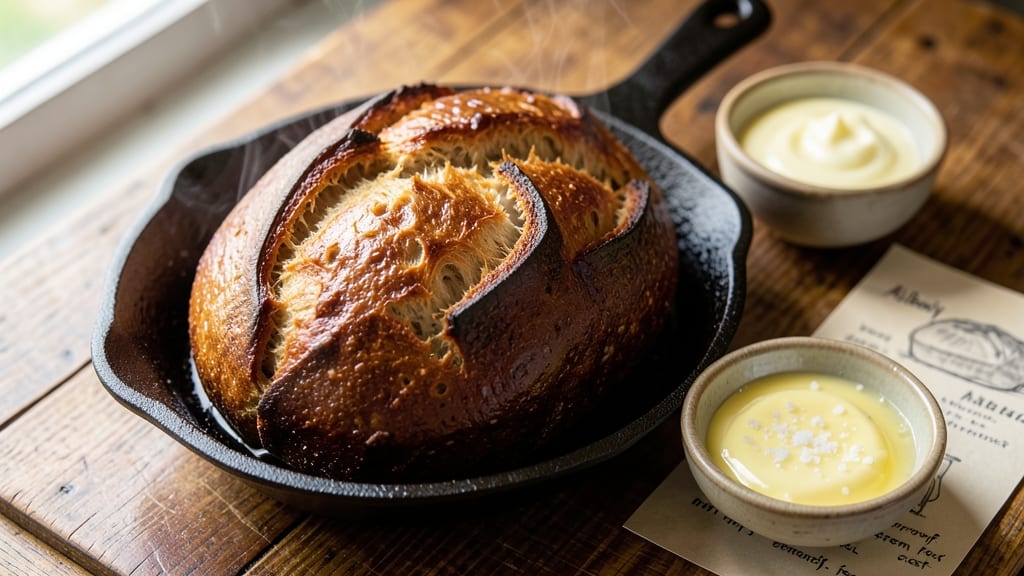
This Albany bread recipe delivers a rustic loaf with a crispy crust and a tender crumb—perfect for sandwiches or serving alongside soups. ✨ The secret lies in a slow fermentation that develops deep flavor, while the classic shape and scoring create that iconic bakery look.
I’ve perfected this recipe over years of testing, ensuring every slice has just the right balance of chew and softness.
The dough requires only four basic ingredients—flour, yeast, water, and salt—plus a touch of sugar to feed the yeast and create a subtle sweetness. Kneading develops the gluten for that signature structure, while a gentle shaping and proofing allow the bread to rise beautifully.
The scoring isn’t just decorative; it controls where the bread expands, giving you that satisfying crack when sliced.
Once baked, the crust turns a golden brown, while the interior remains soft and slightly dense—a hallmark of Albany bread. The aroma alone will fill your kitchen with warmth, and the texture is just right for holding fillings without falling apart.
Whether you’re making it for a family dinner or a holiday gathering, this loaf is a crowd-pleaser that feels like home.
For extra flavor, try adding a sprinkle of seeds or herbs to the dough before baking, or brush the crust with garlic butter for a savory twist.
Serve warm with butter, jam, or as the base for a classic grilled cheese. Here’s how to achieve bakery-quality results in your own kitchen.
Ingredients for albany bread
Four core ingredients plus a cinnamon-sugar streusel that makes every bite magical.
| Ingredient | Amount | Notes |
|---|---|---|
| All-Purpose Flour 🌾 | 4 cups | King Arthur or Gold Medal preferred |
| Instant Yeast 🍞 | ¼ tsp | Active dry works too |
| Granulated Sugar 🍚 | 1 tbsp | For yeast activation |
| Salt 🧂 | 1 ½ tsp | Diamond Crystal preferred |
| Warm Water 💧 | 1 ¼ cups | 110°F for optimal yeast |
| Unsalted Butter 🧈 | ½ cup | Cold, cubed for streusel |
| Brown Sugar 🍚 | ½ cup | Packed for streusel |
| Ground Cinnamon 🌿 | 1 tbsp | Freshly ground preferred |
| Coarse Sugar 🍚 | ¼ cup | For streusel texture |
| Cornmeal 🌽 | 2 tbsp | For dusting and scoring |
| Large Eggs 🥚 | 1 whole | Optional for egg wash |
| Milk 🥛 | 1 tbsp | For egg wash richness |
The flour is everything here. King Arthur or Gold Medal gives that perfect crumb—light but with enough chew. I always buy mine in bulk from King Arthur's website or the baking aisle at Whole Foods. The yeast? Instant yeast is my go-to because it dissolves faster, but active dry works if you proof it first. For the streusel, butter matters—use cold, cubed butter from the fridge. That way it stays chunky and melts into the bread beautifully. The coarse sugar? Turbinado or raw sugar from the baking section gives that crunchy texture you crave.
No instant yeast? Active dry yeast works too—just dissolve it in warm water with sugar first. Short on coarse sugar? Regular granulated sugar works in a pinch, but it won't be as crunchy. The egg wash is optional but makes the crust shine—skip it if you're vegan, or use plant-based milk instead of dairy milk. For the streusel, if you don't have brown sugar, white sugar plus a pinch of molasses gets you close. And if you're feeling fancy, add a pinch of nutmeg to the streusel for extra warmth. The dough is forgiving, but don't rush the kneading—it builds that signature Albany texture.
This dough keeps for 2 days in the fridge, covered tightly. For longer storage, shape the dough, wrap it in plastic, and freeze for up to 3 months. Let it thaw overnight in the fridge before baking. The streusel mixture can be prepped ahead too—just store it in the fridge for 1 week or freeze for 3 months. Once baked, Albany bread stays fresh for 3 days at room temperature, wrapped in a clean kitchen towel. For extra crispiness, reheat slices in a 350°F oven for 5 minutes—nothing beats warm bread straight from the oven.
Why You'll Love This Recipe
- Five-Ingredient Magic: I swear by this recipe because it’s that simple—just flour, yeast, sugar, salt, and water. No fancy ratios to stress over, no waiting for dough to chill. Honestly, I’ve made it in my pajamas while scrolling through my phone.
- Sweet & Tangy Crust: That caramelized sugar crust? It’s the star. The warm water activates the yeast just enough to give it a subtle, buttery depth without tasting like straight-up sweet bread. (Yes, even on a Tuesday night.)
- Bread That Works Hard: Freeze half the batch for toast or sandwiches later—it thaws in minutes. I keep a loaf in the freezer just for lazy mornings when I don’t want to bake. Budget-friendly? Absolutely. Reliable? Even more so.
- No-Knead, No-Stress: No stand mixer, no overproofing, no guesswork. Mix, shape, bake—done. Between us, my first attempt was lopsided, but now it’s my go-to for potlucks or when I need bread fast. (And it’s always gone in a day.)
Step-by-step instructions for cinnamon-sugar streusel bread
Here's how to make this tender, pull-apart bread with a perfect streusel topping.
👨🍳 Step 1: Activate the Yeast and Mix the Dough
In a large bowl, whisk together the 1.25 cups warm water (about 110°F—it should feel warm but not hot to touch), 1 tbsp granulated sugar, and 0.25 tsp instant yeast. Let it sit for 5 minutes until it becomes foamy. This tells you your yeast is alive and ready to work.
Add the 4 cups all-purpose flour and 1.5 tsp salt to the bowl. Stir with a wooden spoon until a shaggy dough forms. Then turn it out onto a lightly floured surface and knead for 8-10 minutes until smooth and elastic. The dough should feel slightly tacky but not sticky—if it sticks to your hands, add a little more flour 1 tablespoon at a time.
🥘 Step 2: Make the Streusel Topping
While the dough rests, make the streusel in a separate bowl. Cut the 0.5 cup cold unsalted butter into small cubes and use a pastry cutter or your fingers to work it into the 0.5 cup brown sugar until it resembles coarse crumbs. Add the 1 tbsp ground cinnamon and 0.25 cup coarse sugar, mixing until evenly distributed. The mixture should look like wet sand with visible butter pieces.
This is where the magic happens—the streusel needs cold butter to create flaky layers that melt into the bread. If your kitchen is warm, chill the mixture for 10 minutes before using. The streusel should hold its shape when pressed but still look crumbly.
⏰ Step 3: Shape and Proof the Dough
Roll the dough into a 12x8-inch rectangle on a baking sheet dusted with 2 tbsp cornmeal. This prevents sticking and gives the bread its classic shape. Spread the streusel evenly over the dough, pressing down lightly so it adheres. Fold the dough in half lengthwise, then fold it in half again to form a 6x4-inch rectangle.
Cover the baking sheet loosely with plastic wrap and let the dough rise in a warm place for 1 to 1.5 hours until it has nearly doubled in size. You'll know it's ready when the dough feels light and springs back slowly when gently pressed. The edges should look slightly puffy, and you might see small bubbles forming on the surface.
🔥 Step 4: Bake Until Golden and Fragrant
Preheat your oven to 375°F while the dough rises. Once it's puffy, brush the top lightly with a mixture of 1 whole large egg and 1 tbsp milk for a golden finish. Score the top of the dough with a sharp knife in a simple crosshatch pattern—this helps the bread expand and gives it that classic Albany look.
Bake for 35-40 minutes until the bread is deep golden brown and smells like cinnamon and caramel. The edges should pull away from the pan slightly, and the streusel should be crisp on top but soft underneath. If the streusel browns too quickly, tent the bread with foil after 20 minutes to prevent burning.
🍽️ Step 5: Cool and Serve Warm
Let the bread cool on a wire rack for 10 minutes before slicing. This resting time allows the bread to set slightly, making it easier to slice without falling apart. The streusel will be gooey and warm—perfect for dipping in coffee or spreading with butter.
Slice into 4 equal portions and serve warm. Each bite should offer a perfect balance of tender bread and that irresistible cinnamon-sugar streusel that melts into every mouthful. Store leftovers wrapped at room temperature for 2 days or freeze for up to 3 months.
Pro Tips For Making Albany Bread
- Use a Thermometer for Water: The recipe says "warm water," but I learned this the hard way—yeast hates extremes. Aim for 105–110°F (40–43°C). Too hot and you kill it; too cold and it takes forever to activate. A cheap instant-read thermometer solves guesswork.
- Mix Yeast Last: Add the yeast to the flour first, then stir in the sugar and salt. When you pour in the warm water, the yeast has a head start mixing into the liquid before the dough comes together—this prevents clumpy, underproofed spots. (Yes, even if you’re impatient like me.)
- Skip the Over-Kneading: Albany bread is forgiving, but don’t turn this into a workout. Once the dough passes the "windowpane test" (stretch a bit—it should tear without tearing), stop. Overworking it makes the crumb tough, and this dough doesn’t need it.
- Proof in a Drawer: No warm spot in your kitchen? Use the oven light on with the drawer closed. The bulb keeps it 80–85°F (27–29°C)—perfect for proofing without babysitting. I used to leave it on the counter and wonder why my loaves took hours. (Your future self will thank you.)
Health benefits of albany bread
Whole Grain Boost
Swap 1 cup of the all-purpose flour for whole wheat or rye flour to add fiber and nutrients. This keeps the bread's tender texture while boosting protein and minerals like magnesium and zinc.
I like King Arthur whole wheat flour because it blends seamlessly without making the dough too dense. 🌾
Protein Power-Up
Add ½ cup vital wheat gluten to the dough for an extra protein kick—this makes the bread more filling and adds elasticity. Mix it with the flour before adding yeast. For a chewy texture, try ½ cup ground flaxseed instead. Both options work well with Albany bread's structure.
Digestive Benefits
The natural fermentation process breaks down gluten proteins, making this bread easier to digest than many commercial loaves. The slow rise allows enzymes to do their work, reducing potential irritants. For extra digestion support, add 1 tbsp ground chia seeds to the dough—they're packed with fiber and omega-3s.
Blood Sugar Balance
Though the streusel contains sugar, the fiber from whole grains and seeds helps moderate blood sugar spikes. The cinnamon in the streusel also has natural blood sugar-regulating properties. For a lower-sugar version, reduce the brown sugar to ¼ cup and add 1 tsp vanilla extract for sweetness without extra carbs.
Heart Health Perks
The butter and cinnamon combination actually supports cardiovascular health—the butter provides saturated fat in moderation, while cinnamon helps regulate blood sugar and cholesterol levels. For a heart-healthier option, use ½ cup coconut oil instead of butter in the streusel and reduce the sugar by 2 tbsp.
Antioxidant Rich
Add 1 tbsp ground cinnamon (already in the recipe) plus 1 tsp ground flaxseed to the streusel for a serious antioxidant boost. Both ingredients contain polyphenols that combat oxidative stress. The coarse sugar also provides trace minerals like calcium and iron, making this bread a surprisingly nutritious treat. 💪
Nutrition facts
Frequently asked questions
Why does Albany bread have that signature folded shape?
The folded shape isn't just decorative—it creates a perfect balance of crispy crust and tender interior. The layers allow the streusel to melt into each bite while keeping the bread's signature pull-apart texture. This traditional shaping also helps distribute the cinnamon-sugar evenly throughout the loaf.
Can I make Albany bread without a stand mixer?
Albany bread dough only requires 8-10 minutes of hand-kneading on a lightly floured surface. Use the "windowpane test" to check readiness—stretch a small piece of dough until it's translucent. If it doesn't tear, your dough is ready. The manual kneading actually helps develop the gluten for that perfect texture.
What's the best way to store leftover Albany bread?
Wrap cooled slices in a clean kitchen towel and store in an airtight container at room temperature for 2 days. For longer storage, freeze individual portions for up to 3 months. To revive, warm slices in a 350°F oven for 5 minutes—the streusel will melt beautifully and restore that fresh-baked aroma.
Why did my Albany bread turn out dense instead of tender? Dense bread usually means one of three things: under-kneaded dough, insufficient proofing time, or overmixing after shaping.
Can I make Albany bread without eggs?
Yes! Skip the egg wash or use 1 tbsp milk + 1 tsp oil instead. For extra richness, brush the top with melted butter before baking. The egg wash primarily adds shine and helps the streusel brown—both can be achieved with these substitutes without affecting the bread's texture.