
Side Dishes
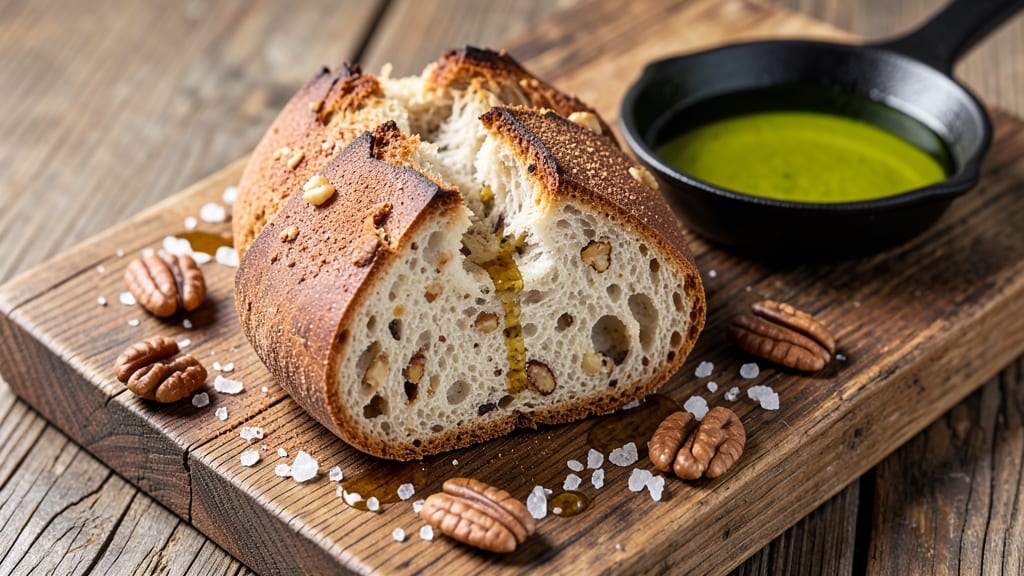
This All'Antico Vinaio bread recipe brings the rustic charm of Tuscan bakeries straight to your kitchen, where a crisp golden crust meets tender, swirled walnut-cinnamon dough. 🌟 The secret lies in its no-knead technique—a method perfected over centuries—that transforms simple ingredients into artisanal perfection with minimal effort.
I've recreated the signature texture and flavor that makes this bread legendary, ensuring every bite delivers that satisfying crunch and fragrant warmth.
The beauty of this recipe is its simplicity: just flour, water, olive oil, and a touch of salt form the foundation, while walnuts and cinnamon add depth and texture. Unlike traditional breads, this dough requires no kneading—just mixing, resting, and shaping.
The long fermentation develops complex flavors while creating that signature open crumb structure. What makes it truly special is the walnut-cinnamon swirl, which adds a delightful contrast of nuttiness and warmth throughout each slice.
By the time it emerges from your oven, you'll have a loaf with a crispy, crackling crust that gives way to a soft, airy interior studded with those flavorful swirls. The aroma alone will transport you to a Tuscan countryside bakery, where this bread has been a staple for generations.
Perfect for serving alongside soups, pairing with olive oil and balsamic, or simply enjoying fresh from the oven.
This recipe honors tradition while making it accessible—no specialized equipment needed, just patience and attention to detail. The result is a loaf that rivals what you'd find in Italy's most celebrated bakeries, proving that artisan-quality bread is within reach for any home cook.
Let's get started on creating your own masterpiece.
Ingredients for all antico vinaio bread
Nine simple ingredients transform into Tuscan artisanal perfection with just mixing and resting.
| Ingredient | Amount | Notes |
|---|---|---|
| All-Purpose Flour 🌾 | 5 cups | High-protein preferred for chewiness |
| Extra-Virgin Olive Oil 🫒 | ¾ cup | Fruity, Italian variety preferred |
| Walnuts 🥜 | 1 ½ cups | Chopped, toasted for depth |
| Ground Cinnamon 🌿 | 1 ½ tbsp | Ceylon preferred for subtle flavor |
| Salt 🧂 | 2 tsp | Diamond Crystal kosher preferred |
| Instant Yeast 🍞 | 1 ½ tsp | Fresh yeast works too (1 packet) |
| Water 💧 | 2 ¼ cups | Room temperature preferred |
| Cornmeal 🌽 | ½ cup | For dusting baking sheet |
| Semolina Flour 🌾 | ¼ cup | For dusting loaf |
The flour is your foundation—King Arthur or Caputo Tipo 00 if you can find it, but King Arthur works beautifully. Toast your walnuts first (350°F for 8-10 minutes) to deepen their flavor—Trader Joe's sells them pre-toasted, saving time. Cinnamon matters here: Ceylon has a more delicate taste than cassia, but either works. Measure your flour by weight if possible (500g total) for consistency, but cups work in a pinch. The olive oil should smell vibrant—if it's past its prime, grab a new bottle. California Olive Ranch is my go-to for quality.
No Ceylon cinnamon? Regular ground cinnamon at half the amount works, but you'll taste it more. Short on walnuts? Pecans or hazelnuts add different but lovely textures. Diamond Crystal kosher salt is ideal, but Morton works too—just level it off. Instant yeast is non-negotiable here; active dry yeast won't activate properly in the no-knead method. Room temperature water is crucial—cold water slows fermentation. If your kitchen's chilly, warm the water to 75°F before mixing. The cornmeal and semolina are just for texture—they won't affect flavor but make scoring the loaf easier later.
This dough is all about patience. Once mixed, let it sit at room temperature for 12-16 hours—overnight works perfectly. Cover it loosely with plastic wrap, not airtight, so it doesn't sweat. The aroma alone will tell you when it's ready: yeasty, sweet, and nutty. Shape it gently, then let it proof another 1-2 hours before baking. The baked loaf keeps well wrapped at room temperature for 3 days, or freeze slices for up to 3 months. Toast it fresh for maximum crunch—that's where the magic happens.
Why You'll Love This Recipe
- No-Knead Magic: This dough comes together with just a bowl and a spoon—no stand mixer, no stress. I swear, the walnuts and cinnamon blend into the flour like butter, and the olive oil keeps it tender without fuss.
- Cinnamon-Walnut Crunch: That toasted walnut bite with warm cinnamon? It’s like dessert in every bite. The olive oil gives it a subtle richness, so you don’t even need jam—though I won’t judge if you add it.
- Weeknight Wonder: Slice it fresh for breakfast, pack it for lunch, or serve it with dinner—it’s my go-to for when I’m too tired to think. Honestly, the leftovers taste even better the next day, slightly firmer and more satisfying.
- Pantry Staple Power: Flour, oil, nuts, and spices? You’re already halfway there. I make a double batch, freeze half, and pull it out whenever I need a quick, budget-friendly loaf that feels special. (Yes, even on a Tuesday night.)
Step-by-step instructions for artisan-style walnut and cinnamon bread
Here's how to craft a rustic loaf with a crisp crust and fragrant swirls—every bite delivers that perfect balance of chew and crunch.
👨🍳 Step 1: Toast the Walnuts and Mix the Dough Ingredients
Preheat your oven to 350°F and spread the 1.5 cups walnuts on a baking sheet. Toast them for 8-10 minutes until fragrant and golden brown—this deepens their flavor and prevents bitterness. Let them cool completely before using.
In a stand mixer fitted with the dough hook attachment, combine the 5 cups all-purpose flour, 1.5 tbsp ground cinnamon, 2 tsp salt, and 1.5 tsp instant yeast. Mix on low speed for 30 seconds to distribute the dry ingredients evenly. This ensures uniform flavor throughout the loaf.
🍳 Step 2: Hydrate and Knead the Dough
With the mixer still running on low speed, gradually add the 2.25 cups room temperature water and 0.75 cup extra-virgin olive oil to the dry ingredients. Let the dough come together before increasing the speed to medium for 5-7 minutes until it forms a smooth, elastic ball that pulls away from the sides of the bowl.
Here's the thing—you want the dough to be soft but not sticky. If it's too wet, add 1 tablespoon more flour at a time until it reaches the right consistency. The dough should be slightly tacky but not cling to your fingers when you press it gently.
🥘 Step 3: Create the Walnut-Cinnamon Swirls and Shape the Loaf
Transfer the dough to a lightly floured surface and gently press it into a 12x8-inch rectangle about ½-inch thick. Sprinkle the toasted walnuts evenly over the surface, leaving a ½-inch border around the edges. Drizzle the 0.25 cup semolina flour over the walnuts to prevent sticking.
Using a sharp knife or bench scraper, carefully cut the dough into thirds lengthwise. Starting from the long side, tightly roll each third into a log. Gently press the seams to seal, then pinch the ends to create smooth, rounded tips. This shaping creates those beautiful swirls when baked.
🔥 Step 4: Proof and Bake for Crispy Perfection
Line a baking sheet with parchment paper and dust it lightly with 0.5 cup cornmeal. Place the shaped loaves seam-side down on the prepared sheet, spacing them about 2 inches apart. Cover loosely with a clean kitchen towel and let them proof at room temperature for 1 hour or until they've risen by about 50%.
Preheat your oven to 425°F with a baking stone or inverted baking sheet on the middle rack. Bake the loaves for 25-30 minutes until they're deep golden brown and sound hollow when tapped on the bottom. For extra crispiness, brush the tops with a little water right before baking.
⏰ Step 5: Cool and Slice for Maximum Enjoyment
Remove the loaves from the oven and let them cool on a wire rack for at least 30 minutes before slicing. This resting period allows the internal structure to set, preventing a gummy texture. The crust should be firm enough to hold its shape when sliced.
Slice the bread into ½-inch thick pieces and serve warm. The exterior should be crisp and golden, while the interior reveals those beautiful walnut and cinnamon swirls throughout the tender crumb. Store any leftovers in an airtight container for up to 3 days—they'll stay fresh and delicious.
Pro Tips For Making All Antico Vinaio Bread
- Toast the Walnuts First: I learned this the hard way—raw walnuts taste bitter in this bread. Pulse them in a food processor until finely chopped, then toast in a dry pan over medium heat for 3-4 minutes until fragrant. Let them cool completely before mixing into the dough, or they’ll steam and make the bread gummy.
- Mix Oil in Last: The dough for this bread is delicate, and adding olive oil too early can make it tough. Reserve the extra-virgin olive oil (about 2 tablespoons) until the very end, when the flour and cinnamon are fully combined. Fold it in just until the dough comes together—overmixing means dense bread.
- Don’t Rush the Chill: This dough needs a proper rest in the fridge for at least 2 hours, ideally overnight. I know, I know—you’re eager to bake. But skipping this step means the walnuts won’t distribute evenly, and the texture will be uneven. Trust me, the flavor and crumb improve dramatically after chilling.
- Bake Until Golden: The bread’s crust should be deep golden, almost amber, not just pale brown. If your oven runs hot, start checking at 325°F (160°C) for 25 minutes, then crank the heat to 350°F (175°C) for the last 10 minutes. A toothpick should come out clean—no crumbs, no wet spots.
Wine and beer pairings for this dish
Italian Wine Pairings
This Tuscan-inspired bread pairs beautifully with crisp Italian whites that complement its nutty, cinnamon notes. A Vermentino from Sardinia—bright, citrusy, and mineral-driven—cuts through the richness while enhancing the walnut's earthiness. I always reach for Feudo di San Nicola for its perfect balance of acidity and texture.
For something richer, try a Grechetto from Umbria, which adds a touch of honeyed sweetness that harmonizes with the cinnamon swirls. 🍷
Red Wine Options
If you prefer reds, go for medium-bodied Italian varieties that won't overpower the bread's delicate flavors. A Chianti Classico with its cherry and herbal notes creates a stunning contrast, while a Montepulciano d'Abruzzo offers juicy dark fruit that pairs wonderfully with the walnuts.
Avoid heavy, tannic reds like Barolo—they'll clash with the bread's tender crumb. I love Castello di Volpaia Chianti for its approachable acidity and vibrant fruit.
Beer Complements
For beer lovers, a Belgian witbier like Hoegaarden works surprisingly well—the citrusy coriander and peppery notes mirror the cinnamon and walnut flavors. If you prefer lagers, a Peroni or Birra del Borgo provides a clean, crisp finish that cleanses the palate between bites.
For something more robust, try a German Dunkelweizen with its caramel and spice notes that echo the bread's cinnamon swirls. 🍺
Non-Alcoholic Choices
Don't overlook sparkling options for those avoiding alcohol. A San Pellegrino Aranciata or Sanbitter—Italy's citrusy bitter orange soda—adds a refreshing, slightly bitter contrast that enhances the bread's sweetness.
For something more sophisticated, try a Sparkling Blood Orange Soda like Brutalita, which pairs beautifully with the walnut's earthiness and cinnamon's warmth. These options keep the Tuscan theme while offering a crisp, palate-cleansing experience.
After-Dinner Pairings
Save your finest pairings for when the bread becomes dessert. A Vin Santo from Tuscany—sweet, nutty, and honeyed—creates a magical combination with the warm spices in the bread. The dessert wine's intensity balances the bread's rustic charm, making each bite feel like a true Italian indulgence.
I've found Biondi-Santi's Occhio di Pernice to be the perfect match for this bread when served with a drizzle of honey. 🍯
Nutrition facts
Frequently asked questions
Can I make this bread without a stand mixer?
This recipe works perfectly by hand. Use a large mixing bowl and a wooden spoon to combine the dry ingredients first, then gradually add the water and olive oil while stirring with a dough scraper. Once the dough comes together, turn it out onto a lightly floured surface and knead by hand for 8-10 minutes until smooth and elastic. The no-knead method makes it especially forgiving for hand mixing.
Why does the dough need such a long fermentation?
The extended 12-16 hour fermentation develops the bread's complex flavors and creates that signature open crumb structure. This slow process allows the yeast to break down the flour's proteins and starches, creating a tender yet chewy texture. It also enhances the walnut and cinnamon flavors, making each bite more aromatic and satisfying. Think of it as letting the bread "rest" and mature like fine wine.
How do I know when the bread is fully baked?
Your bread is done when it's deep golden brown and sounds hollow when tapped on the bottom. You can also check the internal temperature—it should reach 190-200°F. The crust should be crisp and pull away slightly from the edges. If you're unsure, bake for 5 more minutes—it's better to slightly overbake than underbake this rustic bread.
Can I substitute pecans for walnuts?
Yes, you can use pecans as a substitute! They'll add a slightly sweeter, buttery flavor that still complements the cinnamon beautifully. Toast them just like the walnuts (350°F for 8-10 minutes) to enhance their natural oils. For best results, use the same 1.5 cups measurement. Pecans will give your bread a different but equally delicious texture—more buttery than nutty.
What's the best way to reheat stale bread?
For maximum crispiness, reheat slices in a 375°F oven for 3-5 minutes on a baking sheet. Alternatively, wrap the whole loaf in foil and warm it in the oven for 10 minutes. For quick results, use a toaster set to medium-high heat—this brings back that satisfying crunch without drying out the interior. The key is heat, not moisture, to revive the crust.