
Main Courses
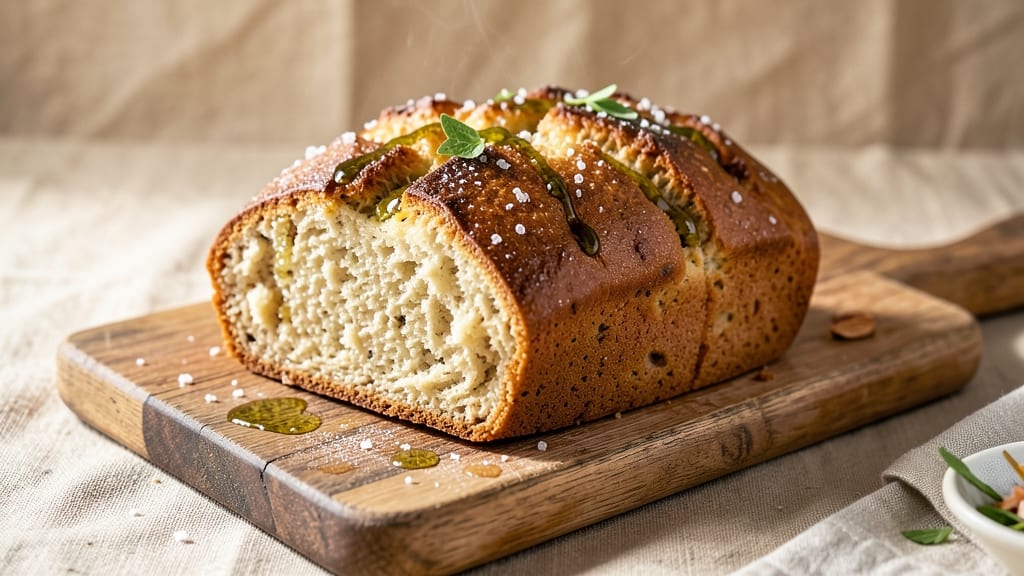
This gluten-free almond flour bread machine recipe delivers the perfect balance of a crusty crown and soft crumb—without a single grain of gluten. 💛 The secret lies in the right blend of almond flour, eggs, and a touch of psyllium husk for structure, all baked to golden perfection in your bread machine.
I developed this recipe after years of struggling with dense, crumbly gluten-free loaves, and it finally solves the puzzle of texture and flavor without compromise.
The beauty of this recipe is its simplicity—just five key ingredients and one-pot baking, yet the results are restaurant-worthy. Almond flour provides natural richness and a tender crumb, while the bread machine does all the hard work of kneading and baking.
No special equipment beyond your bread machine is needed, making this the ultimate foolproof gluten-free bread solution for busy weeknights or special occasions.
What you’ll end up with is a loaf that’s crisp on the outside and softly pillowy inside, with a nutty aroma that fills your kitchen. The crust develops a satisfying crackle, while the interior stays moist and fluffy—something most gluten-free breads struggle to achieve.
This recipe also works beautifully with optional add-ins like chia seeds, cinnamon, or even a drizzle of honey for extra flavor.
Whether you’re baking for dietary needs or simply love the nutty depth of almond flour, this method ensures consistent results every time. Let’s get started—your bread machine is about to make the best gluten-free loaf you’ve ever tasted.
Ingredients for almond flour bread machine recipe gluten free
Five simple ingredients transform your bread machine into a gluten-free goldmine—crusty crown, soft crumb, all without gluten!
| Ingredient | Amount | Notes |
|---|---|---|
| Almond Flour 🌰 | 2 ½ cups | Finely ground, blanched preferred |
| Large Eggs 🥚 | 4 whole | Room temperature for best mixing |
| Psyllium Husk Powder 🌿 | 1 tbsp | Key for gluten-free structure |
| Warm Water 💧 | ½ cup | Activates psyllium husk |
| Extra-Virgin Olive Oil 🫒 | 2 tbsp | Adds richness and moisture |
| Honey 🍯 | 2 tbsp | Natural sweetener for flavor |
| Sea Salt 🧂 | ½ tsp | Enhances all flavors |
| Chia Seeds (optional) 🌱 | 1 tbsp | Adds texture and nutrition |
| Cinnamon (optional) 🌿 | ½ tsp | Warm spice for depth |
Almond flour is the star here—Bob’s Red Mill or Anthony’s Goods are my go-tos for ultra-fine grind. The psyllium husk might be new to you, but trust me, it’s the secret weapon for that perfect gluten-free structure. Nuts.com sells it in bulk if you want to stock up. For the eggs, room temperature is key—they blend better and create a lighter crumb. If you’re avoiding honey, maple syrup works just as well. The chia seeds and cinnamon are purely optional, but they add a delightful texture and warmth that makes this loaf feel extra special.
No almond flour? Sunflower seed flour is a great 1:1 substitute, though the flavor will be slightly different. Short on eggs? Try flax eggs (3 tbsp ground flax + 9 tbsp water = 3 eggs). The psyllium husk is non-negotiable for structure—don’t skip it! If you’re using optional add-ins, measure them carefully. Too much chia can make the dough dry, while too little cinnamon won’t add enough flavor punch. The olive oil should be extra-virgin for that fruity richness, but regular works in a pinch. Just don’t use anything with a strong flavor like toasted sesame oil.
This dough is sensitive to humidity, so mix everything in your bread machine pan first, then let it rest for 10 minutes before baking. The loaf keeps well for 3-4 days wrapped in a clean kitchen towel to maintain freshness. For longer storage, slice and freeze—it reheats beautifully in a toaster or oven. The crust stays crisp for about 2 hours after baking, so if you’re not serving it immediately, cover it loosely with foil to keep it soft. Leftovers? Toss them in a baggie—they’re perfect for toast or French toast.
Why You'll Love This Recipe
- No-Fuss Mixing: I swear by the bread machine for this—just toss in almond flour, eggs, and psyllium husk powder, then let it do the work. The psyllium binds everything so well, I don’t even need to knead or fuss over gluten-free dough.
- Rich Nutty Depth: That almond flour isn’t just for texture—it adds a subtle, buttery richness that regular bread can’t match. A light drizzle of olive oil in the mix? Pure flavor upgrade.
- Weeknight Hero: Between us, this bread is my go-to for toast, sandwiches, or even French toast. It freezes like a dream, so I bake a batch on Sundays and pull out slices all month.
- Budget-Friendly Luxury: Almond flour’s pricey, but one batch stretches for days—think garlic toast, charcuterie boards, or even crumbs for meatballs. It’s fancy enough for guests but practical enough for my kids’ lunchboxes.
Step-by-step instructions for gluten-free almond flour bread machine magic
This isn't your typical gluten-free loaf—it's a golden-crusted, tender-crumb masterpiece your bread machine can deliver.
👨🍳 Step 1: Whisk Wet Ingredients to Perfect Emulsion
In a medium bowl, combine the 4 whole Large Eggs with the 2 tbsp Extra-Virgin Olive Oil and 2 tbsp Honey. Whisk vigorously for 2-3 minutes until the mixture lightens noticeably and becomes slightly frothy. This emulsification creates the bread's signature moist crumb—don't skip this step or you'll end up with dense, dry crumb.
Add the 0.5 cup Warm Water and 0.5 tsp Sea Salt to the egg mixture, whisking until fully incorporated. The water should be warm (about 100°F) to properly activate the psyllium husk later. If using, stir in the 1 tbsp Chia Seeds and 0.5 tsp Cinnamon now—they'll distribute evenly throughout the batter.
👨🍳 Step 2: Combine Dry Ingredients with Wet for Batter
In a separate bowl, sift together the 2.5 cups Almond Flour and 1 tbsp Psyllium Husk Powder. The psyllium is non-negotiable—it's what gives this bread its structure and chewiness. Gradually pour the wet ingredients into the dry ingredients while whisking continuously. You'll want to whisk for another 2-3 minutes until you achieve a smooth, thick batter that coats the back of your spoon.
Here's the thing—this batter should be noticeably thicker than traditional bread batter. If it looks too thin, let it sit for 5 minutes to thicken naturally. The psyllium needs time to fully hydrate and gel. If it's still too thin after 10 minutes, add 1 tablespoon more almond flour—but don't overdo it or your bread will be dense.
🍳 Step 3: Prepare Bread Machine for Gluten-Free Baking
Transfer the batter to your bread machine pan and spread it evenly using a rubber spatula. This is crucial for even baking—don't just dump it in the center. Wipe any excess batter from the sides of the pan with a damp paper towel to prevent sticking. Most bread machines have a "gluten-free" or "quick bread" setting—select this if available, otherwise use the "basic white bread" setting.
Real talk: gluten-free bread often sticks to pans. To prevent this, lightly grease the pan with a tiny bit of olive oil after adding the batter, then dust with a pinch of almond flour. I also recommend placing a piece of parchment paper on the bottom of the pan before adding the batter—it makes removal a breeze after baking.
⏰ Step 4: Bake with Precision Timing
Start the bread machine cycle and let it do its work. The baking time will typically be 1 hour 15 minutes to 1 hour 30 minutes, but your machine may vary. The key is to watch for visual cues: the bread will be done when the top is deep golden brown and a toothpick inserted into the center comes out clean (or with just a few moist crumbs).
Don't be tempted to open the lid during baking—this causes the bread to collapse and lose its structure. If your machine has a window, peek through it instead. When the cycle ends, immediately remove the bread from the pan using the parchment paper or a thin spatula. Let it cool on a wire rack for atstrong>15 minutes before slicing—this prevents a gummy texture.
🔥 Step 5: Achieve Crusty Crown with Optional Toasting
For that bakery-style crust, transfer the cooled loaf to a baking sheet and place it under your broiler for 1-2 minutes. Watch it closely—you want the top to develop a deep golden brown color with subtle toasted spots. This step is optional but makes a world of difference in texture and appearance.
Slice the bread with a serrated knife while it's still slightly warm for cleaner cuts. Each slice should reveal a tender crumb with a slight chewiness from the psyllium, and that beautiful golden crust we worked so hard for. Store any leftovers in an airtight container at room temperature for up to 3 days, or freeze for up to 3 months—it reheats beautifully in a toaster or oven.
Pro Tips For Making Almond Flour Bread Machine Recipe Gluten Free
- Mix the Psyllium First: Mix the psyllium husk powder with the warm water before adding it to the almond flour—this stops clumping and guarantees even hydration. I learned this the hard way when my first batch turned out gummy because the psyllium absorbed unevenly.
- Use Room-Temp Eggs: Cold eggs make the dough stiff and can cause the bread to sink. Let your eggs sit out for 30 minutes before measuring—this small step makes the dough smoother and helps the bread rise better.
- Skip the Overmixing: Almond flour is delicate, and overmixing turns the dough into a dense paste. Stir just until combined—about 10-12 turns with a spatula—then let the bread machine do the work.
- Add Olive Oil Last: Pour the extra-virgin olive oil after the dough comes together, then mix gently. This keeps the texture tender without making it greasy, and it prevents the almond flour from absorbing too much fat upfront.
Flavor customization for this dish
Sweet & Spiced Twist
Add 1 tsp vanilla extract and ½ tsp cinnamon to the wet ingredients for a fragrant, slightly sweet loaf that pairs perfectly with jam or butter. For extra warmth, fold in ¼ cup diced crystallized ginger or chopped dried apricots—they add natural sweetness and texture.
I love this version for breakfast, especially when toasted with almond butter. 🌿
Herb & Seed Boost
Swap the cinnamon for 1 tbsp dried rosemary or thyme and sprinkle 2 tbsp sunflower seeds into the batter for a savory option. The herbs infuse the almond flour with earthy depth, while the seeds provide a satisfying crunch.
This works beautifully as a base for sandwiches or with olive oil and balsamic vinegar. 🌱
Chocolate Chip Indulgence
Fold in ½ cup gluten-free chocolate chips (like Enjoy Life brand) for a dessert-style loaf that’s perfect for special occasions. Use dark chocolate for richness or milk chocolate for sweetness.
I recommend baking this version at 350°F for 5 minutes longer to ensure the chocolate melts slightly. Serve warm with whipped cream or a drizzle of honey. 🍫
Savory Garlic & Herb
For a savory loaf, replace the honey with 1 tbsp minced garlic and 1 tsp dried oregano. Add 1 tbsp grated Parmesan cheese to the dry ingredients for umami depth.
This version pairs wonderfully with soups, roasted vegetables, or as a base for garlic bread. The psyllium husk gives it enough structure to hold up to bold flavors. 🧄
Citrus Zest Brightener
Zest 1 lemon or orange and add it to the wet ingredients, along with ½ tsp ground cardamom for a bright, aromatic loaf. The citrus cuts through the richness of the almond flour while keeping the crumb tender.
This version feels extra special for brunch—try it with scrambled eggs or avocado toast. 🍊
Everything Bagel Seasoning
Sprinkle 1 tbsp everything bagel seasoning (like Schar brand) over the batter before baking for a flavor-packed loaf. The sesame seeds and poppy seeds add crunch, while the garlic and onion powders bring savory depth.
This is my go-to for sandwiches—it holds up perfectly to smoked salmon or cream cheese. 🥯
Nutrition facts
Frequently asked questions
Why does this recipe use psyllium husk?
The psyllium husk powder is the secret to gluten-free structure—it mimics gluten's elasticity and chewiness. Without it, your bread will be crumbly and dense. Think of it as the "glue" that holds the almond flour together while keeping the crumb tender. Just 1 tablespoon makes all the difference!
Can I make this without eggs?
Yes! Replace the 4 eggs with 4 flax eggs (4 tbsp ground flaxseed + 12 tbsp water, mixed and rested for 5 minutes). The batter will be slightly thicker, so let it sit for 10 minutes before baking to ensure proper hydration. The texture will be slightly denser but still delicious.
What if my bread machine doesn't have a gluten-free setting?
Use the "Basic White Bread" setting—just reduce the baking time by 10-15 minutes to prevent over-browning. Gluten-free bread burns faster, so watch closely after 1 hour. The key is checking for a deep golden color and clean toothpick test.
How do I fix a dense or gummy texture?
Overmixing or underbaking usually causes this. For next time: whisk wet ingredients for only 2-3 minutes (no need to overbeat) and bake until the center reaches 205°F. If it's already baked, try toasting slices at 350°F for 2-3 minutes to crisp up the texture.
Can I use this dough for sandwiches?
This bread holds up beautifully to fillings like avocado, smoked salmon, or hummus. For extra sturdiness, add 1 extra tablespoon psyllium husk to the dry ingredients. The nutty flavor also pairs perfectly with olive oil, balsamic, and fresh herbs for a Mediterranean-style sandwich.