
Main Courses
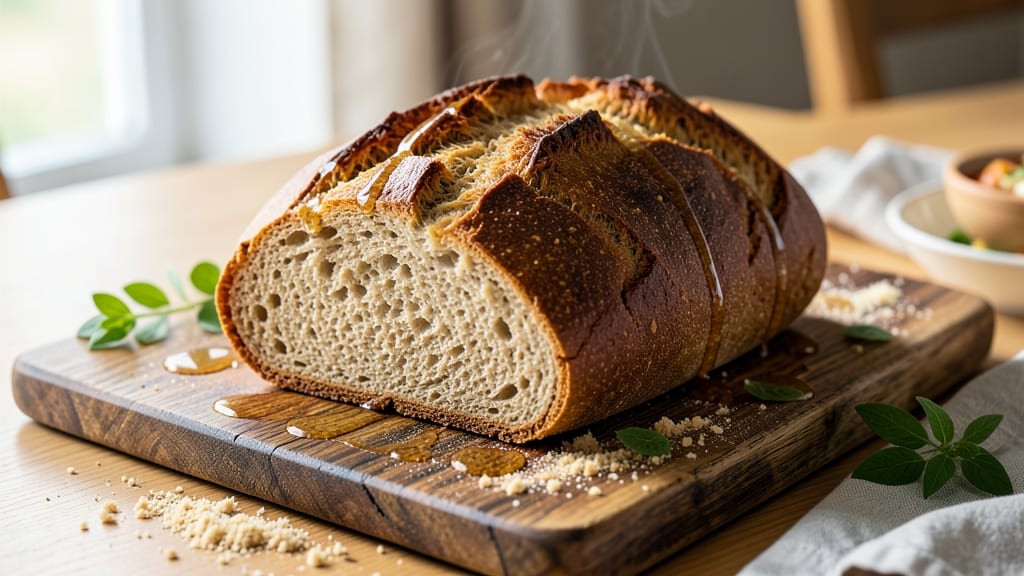
This almond flour bread recipe delivers a fluffy, golden loaf without yeast or rising time—perfect for gluten-free diets and busy schedules. 💛 The secret lies in a whipped egg white technique that creates air pockets, mimicking yeast's natural lift while keeping the texture tender and moist.
I developed this after struggling to find a yeast-free bread that didn't turn dense or crumbly.
What makes this recipe stand out is its simple 5-ingredient base (almond flour, eggs, baking powder, sweetener, and vanilla) that requires no yeast, no kneading, and just 35 minutes of active time. The bread bakes in a single 30-minute cycle, making it ideal for weeknight dinners or meal prep.
Unlike traditional breads, this version stays fresh for up to 5 days when stored properly.
The result is a light, slightly sweet loaf with a crisp crust and a crumb that's almost cake-like in texture. It's versatile enough to toast for breakfast, serve with soups, or use in sandwiches—without the heaviness of gluten.
The almond flour gives it a nutty depth while keeping it naturally grain-free and low-carb.
Best of all, this recipe is foolproof—no yeast means no waiting, and the almond flour ensures a rich, satisfying bite without the gummy texture of some gluten-free alternatives. Let's get baking!
Ingredients for almond flour bread recipe no yeast
Five core ingredients transform into a golden loaf without yeast or waiting.
| Ingredient | Amount | Notes |
|---|---|---|
| Almond Flour 🌰 | 3 cups | Finely ground, blanched preferred |
| Large Egg Whites 🥚 | 6 whole | Freshly separated, room temperature |
| Granulated Sweetener 🍯 | ½ cup | Coconut sugar or monk fruit blend |
| Pure Vanilla Extract 🌿 | 1 tbsp | High-quality, no alcohol preferred |
| Baking Powder 🧂 | 1 ½ tsp | Aluminum-free for best results |
| Fine Sea Salt 🧂 | ½ tsp | Diamond Crystal preferred |
| Unsweetened Almond Milk 🥛 | ½ cup | For binding, unsweetened variety |
| Xanthan Gum 🌾 | ¼ tsp | For gluten-free binding |
| Apple Cider Vinegar 🍎 | ½ tsp | For egg white stability |
| Olive Oil 🫒 | 1 tbsp | Extra-virgin for richness |
Almond flour is the foundation here. Bob's Red Mill or Anthony's Goods brands deliver the finest grind for optimal texture—avoid pre-milled store brands that often contain clumps. The flour should be stored in an airtight container in a cool, dark place to prevent rancidity. For best results, use freshly ground almond flour if possible, as pre-ground varieties can lose their delicate texture over time. The difference between blanched and unblanched matters too—blanched removes skins for a smoother texture, while unblanched adds subtle bitterness and darker color.
Egg whites are non-negotiable for that cloud-like rise. Pasture-raised eggs yield slightly richer whites, but any high-quality eggs work. The apple cider vinegar and olive oil are secret stabilizers—never skip them. For the sweetener, coconut sugar caramelizes beautifully, while monk fruit keeps it sugar-free. No vanilla extract? Vanilla bean paste works in a pinch, though it's thicker. The baking powder must be fresh—test by mixing with water; if it fizzes vigorously, it's good to go. Xanthan gum is crucial for gluten-free binding, though you can omit it if you have psyllium husk powder as an alternative.
This bread stays fresh for 5 days when wrapped tightly in parchment and stored at room temperature. For longer storage, freeze slices wrapped in plastic for up to 3 months. Toasting revives stale bread—just 3-4 minutes in a 400°F oven restores crispness. The loaf benefits from a 24-hour rest before slicing, allowing flavors to meld. Portion into single slices for easy meal prep—perfect for sandwiches or toast. Avoid storing in the fridge, as it accelerates staling.
Why You'll Love This Recipe
- No-Fuss Mixing: I swear by this—just whisk the egg whites, fold in the almond flour, and a splash of vanilla. No yeast, no waiting, no stress. The baking powder does all the work while I’m still scraping the bowl.
- Sweet & Nutty Magic: That vanilla-soaked almond flour? It’s like a cross between a buttery brioche and a mocha cake—rich but light, with a crumb so tender it disappears. Honestly, I’ve never missed regular bread this much.
- Weeknight Wonder: Slice it fresh for toast with jam, or stash slices in the freezer for grab-and-go breakfasts. Between us, this is the only bread I trust to not turn into hockey pucks by day three.
- Budget-Friendly Luxury: Almond flour’s pricey, but one batch stretches into toast, French toast, or crumbs for meatballs. I’ll be real: it’s not cheap, but it feels like a treat every time—no guilt, just satisfaction.
Step-by-step instructions for almond flour bread without yeast
This method delivers a light, airy loaf using simple science and precise technique.
👨🍳 Step 1: Whisk Egg Whites to Stiff Peaks
In a clean, grease-free mixing bowl, beat the 6 whole large egg whites with a stand mixer fitted with the whisk attachment. Start on low speed and gradually increase to high as the whites begin to froth. Beat for 5-7 minutes until the egg whites form stiff peaks that hold their shape when the whisk is lifted.
The key here is patience—don't rush this step. You're creating the structure that will replace yeast's rising action. The peaks should be glossy and stand upright, not just wobbly. If the bowl gets too warm, stop for 30 seconds to let it cool slightly before continuing.
👨🍳 Step 2: Combine Wet Ingredients
In a separate medium bowl, whisk together the 0.5 cup unsweetened almond milk, 0.5 cup granulated sweetener, 1 tbsp olive oil, 1 tbsp pure vanilla extract, 0.5 tsp apple cider vinegar, and 0.5 tsp fine sea salt. Mix until the sweetener is completely dissolved and the mixture is smooth.
This liquid batter forms the foundation of your bread. The vinegar reacts with the egg whites later to create additional lift, while the olive oil adds richness that balances the nutty almond flour. Let this mixture sit for 2 minutes while you prepare the dry ingredients.
👨🍳 Step 3: Mix Dry Ingredients with Wet
In a large mixing bowl, combine the 3 cups almond flour and 1.5 tsp baking powder. Whisk gently to distribute evenly. Create a well in the center and pour in the wet ingredient mixture. Using a rubber spatula, fold the wet and dry ingredients together just until combined—avoid overmixing, which can develop gluten and make the bread dense.
Gently fold in the stiff egg whites using a spatula, being careful not to deflate them. You'll see streaks of white throughout the batter, which is normal. The xanthan gum (0.25 tsp) will be incorporated here—it's crucial for binding the gluten-free flour. The batter should be thick but pourable.
🔥 Step 4: Bake in a Preheated Loaf Pan
Preheat your oven to 350°F. Lightly grease a 9x5-inch loaf pan with olive oil or line it with parchment paper for easy removal. Pour the batter into the prepared pan and smooth the top with a spatula. Bake for 40-45 minutes until the top is golden brown and a toothpick inserted into the center comes out clean.
Here's where timing matters: the bread is done when it springs back slowly when gently pressed in the center. If the top browns too quickly, tent loosely with foil after 20 minutes to prevent over-browning while allowing the center to cook through.
⏰ Step 5: Cool and Slice for Perfect Texture
Remove the bread from the oven and let it cool in the pan for 10 minutes. Then transfer it to a wire rack to cool completely for at least 30 minutes. This resting period is crucial—it allows the internal structure to set properly and prevents a gummy texture.
Slice the bread with a serrated knife for clean cuts. The interior should be light and airy with a slightly moist crumb, while the crust will be tender rather than hard. Store leftovers wrapped in the fridge for up to 5 days or freeze for longer storage.
Pro Tips For Making Almond Flour Bread Recipe No Yeast
- WHISK EGGS AT ROOM TEMP: Almond flour bread relies on egg whites for structure—cold whites won’t whip properly, and you’ll end up with a dense, gummy loaf. Pop them in a bowl of warm water for 5 minutes first, then whip until stiff peaks form. (Yes, even if you’re impatient like me.)
- SIFT THE FLOUR FIRST: Almond flour packs tightly, and clumps in your batter mean uneven texture. Give it a quick sift with the baking powder before mixing—this also lightens the batter without adding air. I learned this the hard way after pulling out a brick-like loaf.
- DON’T OVERMIX THE BATTER: Once you fold in the whipped egg whites, stop as soon as the streaks disappear. Overmixing deflates the air bubbles, and your bread will sink in the oven. Think "just combined," not "smooth like cake batter."
- BAKE LOW AND SLOW: Almond flour burns fast. Preheat to 325°F (not 350°F) and bake for 10 minutes before checking—this gives the center time to set without the top turning to charcoal. A toothpick should come out clean, but the edges might still look underdone. (Your future self will thank you.)
Best sauces and condiments for this recipe
Sweet Butter Glaze
Warm 2 tablespoons softened butter with 1 tablespoon granulated sweetener and 1 teaspoon vanilla extract in a small saucepan over low heat for 2 minutes. Brush this onto freshly baked slices while still warm—the sweetness complements the nutty almond flavor beautifully.
For extra richness, add a pinch of flaky sea salt before serving. 💛
Cream Cheese Spread
Mix 4 ounces softened cream cheese with 1 tablespoon lemon juice and ½ teaspoon garlic powder until smooth. Spread on toasted slices for a tangy, creamy contrast.
This works especially well with savory toppings like smoked salmon or avocado. Store leftovers in an airtight container for up to 3 days.
Honey-Lemon Drizzle
Combine 2 tablespoons raw honey with 1 teaspoon fresh lemon juice and a pinch of cayenne pepper for subtle heat. Drizzle over slices before serving—this adds moisture and a bright citrus note that cuts through the richness. For a sugar-free option, use monk fruit sweetener instead of honey. ✨
Garlic-Herb Oil
Infuse ¼ cup olive oil with 2 minced garlic cloves, 1 teaspoon chopped fresh rosemary, and ½ teaspoon dried thyme. Heat gently for 2 minutes**, then brush onto warm bread slices.
The aromatic herbs elevate the bread's natural nuttiness without overpowering it. Store the infused oil in a sealed jar for up to 1 week.
Chocolate-Dipped Ends
Melt 2 ounces dark chocolate (70% cocoa) with 1 teaspoon coconut oil over a double boiler. Dip the ends of sliced bread into the chocolate and place on parchment paper to set.
This adds a decadent touch perfect for dessert-style slices or breakfast toast. Keep unused chocolate in an airtight container at 68°F or below.
Spiced Almond Butter
Blend ¼ cup almond butter with ½ teaspoon cinnamon and a pinch of cardamom until smooth. Spread on toasted bread for a nutty, aromatic twist. The spices enhance the almond flour's natural flavor while adding warmth. Store in the fridge for up to 1 week in an airtight container.
Nutrition facts
Frequently asked questions
Why does this almond flour bread need egg whites instead of whole eggs?
The 6 egg whites create the light, airy texture that replaces yeast's rising action. Whole eggs would add too much fat, making the bread dense. Whipping them to stiff peaks incorporates air, which expands during baking for that classic bread structure. The whites also help bind the gluten-free almond flour without adding richness.
Can I make this bread without xanthan gum?
Yes, but your bread may be slightly crumbly. Replace the 0.25 tsp xanthan gum with 0.5 tsp psyllium husk powder or 1 tbsp ground flaxseed mixed with 3 tbsp water. These work as gluten-free binders. The texture will differ but still be delicious—just expect a denser crumb.
How do I prevent the bread from sticking to the pan?
Lightly grease your 9x5-inch loaf pan with olive oil or use parchment paper for easy removal. Avoid over-greasing, which can make the crust soggy. For extra insurance, dust the pan with 1 tsp almond flour before pouring the batter. The bread should release cleanly after 10 minutes of cooling in the pan.
Why did my bread turn out dense instead of fluffy?
Overmixing the batter or under-whipping the egg whites are common culprits. The egg whites must reach stiff peaks—if they're just soft peaks, the bread won't rise properly. Also, ensure your baking powder is fresh (test with water) and don't skip the 30-minute cooling time before slicing. A dense texture can also happen if the almond flour was too coarse.
Can I substitute almond milk with another liquid?
Yes, use 0.5 cup coconut milk (full-fat for best texture) or 0.5 cup water in a pinch. Avoid dairy milk—it can make the bread gummy. For a richer flavor, try cashew milk, but adjust the sweetener slightly since some brands are sweeter. The liquid helps bind the dry ingredients without altering the bread's structure.