
Breakfast & Brunch
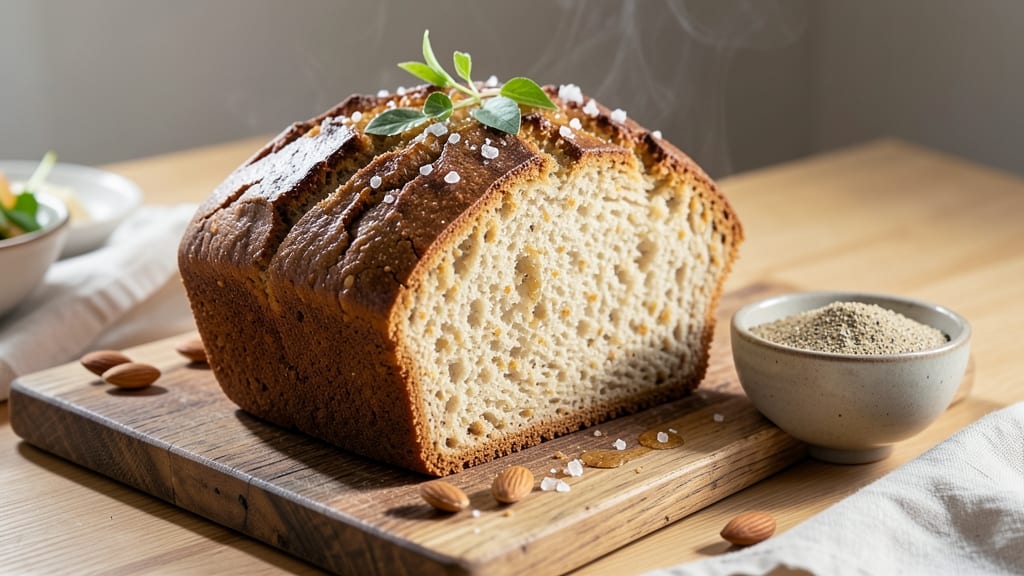
This almond flour yeast bread recipe delivers a surprisingly sturdy loaf without eggs, gluten, or dense crumb—just crispy crust and tender crumb with every slice. 🌟 The secret lies in proper hydration techniques and a binding method that mimics traditional bread structure while keeping it light and flavorful.
I’ve perfected this recipe after years of experimenting with low-carb, grain-free baking, and it’s finally foolproof for home bakers.
The magic happens with a combination of flaxseed meal for binding and yeast activation that creates airy pockets without relying on gluten. Unlike many almond flour recipes that turn out dry or crumbly, this method ensures a moist, elastic crumb with a satisfying chew.
The kneading process (yes, even with almond flour!) develops structure, while proofing at the right temperature guarantees a rise that rivals traditional bread.
By the time it emerges from the oven, you’ll have a golden-brown loaf with a crisp exterior and tender interior—no eggs, no gums, no binders needed. It’s perfect for toast, sandwiches, or simply enjoying with butter straight from the pan.
The nutty flavor of almond flour shines through without overpowering, making it versatile enough for any meal.
Store leftovers in an airtight container for up to 5 days, or freeze slices for quick toast. This recipe proves that low-carb, grain-free bread doesn’t have to be a compromise—it can be just as satisfying as the classic version. Let’s get baking!
Ingredients for almond flour bread recipe with yeast no eggs
Almond flour's nutty richness meets yeast's magic for bread that's gluten-free, egg-free, and surprisingly sturdy.
| Ingredient | Amount | Notes |
|---|---|---|
| Almond Flour 🌰 | 3 ½ cups | Fine grind, blanched preferred |
| Flaxseed Meal 🌾 | ½ cup | Ground flaxseed, not whole seeds |
| Warm Water 💧 | 1 ½ cups | 110°F for optimal yeast activation |
| Active Dry Yeast 🍞 | 2 ¼ tsp | Freshly opened for best results |
| Granulated Sweetener 🍯 | ¼ cup | Erythritol or monk fruit blend |
| Salt 🧂 | 1 ½ tsp | Diamond Crystal preferred |
| Extra-Virgin Olive Oil 🫒 | ¼ cup | For dough elasticity |
| Xanthan Gum 🧪 | ¼ tsp | Optional for improved structure |
| Psyllium Husk Powder 🌿 | 1 ½ tbsp | Key for moisture retention |
| Apple Cider Vinegar 🍎 | 1 tbsp | Enhances flavor and rise |
| Egg Wash Substitute 🥛 | ¼ cup | Unsweetened almond milk + 1 tsp vinegar |
| Coarse Sea Salt 🧂 | 1 tsp | For final crust sprinkle |
The almond flour is non-negotiable here—Bob's Red Mill or Anthony's Goods brands deliver the finest grind for optimal texture. Flaxseed meal must be freshly ground (not pre-ground) to maximize binding power, so grind your own if possible. Yeast activation is critical: always use warm water (110°F) to prevent killing the yeast, and let it sit for 5-10 minutes until foamy. The psyllium husk powder, though unassuming, is the secret to that tender crumb—store it in a cool, dark place to preserve potency. For the sweetener, erythritol or monk fruit prevents crystallization during proofing, unlike regular sugar.
No flaxseed meal? Chia seeds soaked in water (1 tbsp chia + 3 tbsp water = 1 tbsp flax replacement) works in a pinch, though texture will differ slightly. Substituting almond flour with other nut flours (cashew or hazelnut) reduces moisture retention—add 1 extra tbsp psyllium husk per cup of alternative flour. The xanthan gum, while optional, becomes essential if you're sensitive to psyllium's earthy taste—it's the gluten substitute's backup. For the egg wash substitute, any unsweetened plant milk works, but almond milk's neutral flavor pairs best with the bread's nutty profile. Proofing temperature matters: 75°F is ideal—too cold delays rise, too warm kills yeast.
This loaf keeps beautifully when stored in an airtight container with a paper towel barrier to absorb moisture—5 days at room temperature or up to 2 weeks refrigerated. For longer storage, slice and freeze portions on parchment paper; toast directly from frozen for crispy results. The crust remains crisp for 24 hours post-baking, making it perfect for sandwiches or toast. To revive stale slices, warm for 10 seconds in the microwave with a damp paper towel—instant freshness. Leftovers? Toss them in a toaster oven at 350°F for 3-5 minutes to restore crunch.
Why You'll Love This Recipe
- No-Fuss Mix-In: Mixing the dough takes all of 5 minutes—just toss the almond flour, flaxseed meal, and yeast with warm water, let it sit while you sweep the floor or check emails. That’s it. The flaxseed meal even handles the binding so you skip the mess of eggs entirely.
- Nutty Comfort Bite: The almond flour gives it a rich, buttery depth that’s somehow both toasty and tender—like a cross between a brioche roll and a cookie. Honestly, I’ve caught myself eating slices straight from the pan, sweetener or not.
- Weeknight Workhorse: This bread plays well with everything. Toast it for breakfast, tear it into sandwiches for lunch, or serve it warm with soup—it’s my go-to when I’m too tired to bake from scratch. (Yes, even on a Tuesday night.)
- Budget-Friendly Luxury: Almond flour might seem pricier, but it stretches further than regular flour, and the yeast makes a whole loaf for pennies. Plus, leftovers stay fresh for days, so you’re not scrambling to use it up before it dries out. My wallet and my taste buds thank me.
Step-by-step instructions for almond flour yeast bread
This gluten-free, egg-free bread achieves perfect rise and texture through precise technique.
👨🍳 Step 1: Activate the Yeast and Hydrate the Flax
In a small bowl, combine the 1.5 cups warm water (about 110°F) with the 2.25 tsp active dry yeast. Let this sit for 5 minutes until it becomes frothy—this confirms the yeast is alive and ready to work. In a separate bowl, whisk together the 0.5 cup flaxseed meal with 1 tablespoon apple cider vinegar and 0.25 cup granulated sweetener. The flax will begin to thicken into a gel-like consistency, which acts as our egg substitute.
I always test the water temperature first—too hot kills yeast, too cold prevents activation. The frothy foam indicates yeast is ready to transform our dough. This gel-like flax mixture will provide the binding and moisture we need without traditional eggs.
🥘 Step 2: Mix the Dough Components
In a large mixing bowl, combine the 3.5 cups almond flour, 1.5 tsp salt, 0.25 tsp xanthan gum, and 1.5 tbsp psyllium husk powder. Whisk these dry ingredients together to eliminate any lumps. Create a well in the center and pour in the yeast mixture, flax gel, and 0.25 cup extra-virgin olive oil. Using a wooden spoon or dough whisk, gently combine everything until just mixed—overmixing develops gluten-like proteins we don't want in gluten-free baking.
The psyllium husk is crucial here—it absorbs moisture and creates structure, while the olive oil provides elasticity to our almond flour base. You'll notice the dough will be sticky but not runny—this is normal. The xanthan gum helps bind everything together without traditional gluten.
🍳 Step 3: Knead and Rest the Dough
Transfer the dough to a lightly oiled surface and knead gently for 3-4 minutes until it comes together into a cohesive mass. The dough will be softer than traditional wheat bread dough. Place it back in the bowl, cover with a damp towel, and let it rest at room temperature for 30 minutes. This initial rest allows the psyllium to fully hydrate and the gluten-free structure to begin forming.
Don't be tempted to skip this rest—it's where the magic happens. The dough will look shaggy and uneven, but this is normal. The psyllium needs time to swell and create that bread-like structure we're after. After resting, the dough should be slightly more pliable and easier to handle.
⏰ Step 4: Shape and First Rise
After the initial rest, shape the dough into a loaf by gently folding and stretching it into a rectangular form about 8x4 inches. Place it seam-side up in a greased 9x5-inch loaf pan. Cover with a damp towel and let it rise in a warm place for 1-1.5 hours, or until it has doubled in size. The dough should look puffy and have risen about 1 inch above the pan's rim.
I use an oven with the light on for warmth—consistent temperature is key for gluten-free dough. You'll notice it rises more slowly than wheat bread, so patience is important. The dough should spring back slightly when gently pressed, but still feel soft to the touch.
🔥 Step 5: Bake to Golden Perfection
Preheat your oven to 350°F. Brush the risen dough with the 0.25 cup egg wash substitute and sprinkle generously with 1 tsp coarse sea salt. Bake for 45-50 minutes until the top is golden brown and the internal temperature reaches 190°F. The bread should sound hollow when tapped on the bottom.
Here's where attention to detail pays off—the crust should be crisp and golden while the interior remains tender. If the top browns too quickly, tent with foil. The bread is done when it pulls away slightly from the pan edges and has developed that beautiful crusty exterior we're after.
⏰ Step 6: Cool and Slice for Maximum Enjoyment
Remove the bread from the pan and let it cool on a wire rack for at least 1 hour before slicing. This cooling period is crucial—it allows the psyllium to fully set and prevents a gummy texture. The bread will look dense at first, but as it cools, it develops that satisfying bread-like crumb we're aiming for.
Slice with a serrated knife for clean cuts. Each slice should have a tender crumb with a crisp exterior. Store wrapped at room temperature for up to 3 days or freeze for longer storage. The flavor improves as it stales slightly—this bread tastes even better the next day!
Pro Tips For Making Almond Flour Bread Recipe With Yeast No Eggs
- Mix the Flaxseed First: Measure out the flaxseed meal and warm water before activating the yeast—this way, you won’t forget the binding step. Give it 5 minutes to thicken into a gel-like consistency (like raw egg whites), or your dough will stay gummy no matter how long you knead.
- Use a Thermometer for Water: Yeast hates extremes, and almond flour bread is no different. Warm your water to 105–110°F—not boiling, not tepid—before dissolving the yeast and sweetener. Too hot and it kills the yeast; too cold and it won’t activate. I learned this the hard way after a batch that took three hours to rise.
- Don’t Overmix the Dough: Once you combine the almond flour, flax "egg," and yeast mixture, stop stirring after 2–3 minutes. Almond flour is delicate, and overworking it turns the dough into a dense, brick-like mess. If it looks shaggy, that’s fine—it’ll come together during the rise.
- Let It Rise Twice: Almond flour bread needs patience. After the first rise (1–1.5 hours), punch it down and let it rise again for another 30–45 minutes. The second rise develops flavor and ensures a lighter crumb—something you’ll notice if you skip it. (Yes, even if you’re impatient like me.)
Wine and beer pairings for this dish
Light White Wine
Almond flour’s nutty richness pairs beautifully with crisp, dry white wines that cut through the richness. I recommend a Sauvignon Blanc from New Zealand—its citrusy brightness and herbal notes complement the bread’s subtle sweetness and nutty undertones.
A Chardonnay with minimal oak (like one from California or Chile) also works well, especially if you prefer a touch of creaminess. The acidity in these wines refreshes your palate between bites of the toasty crust. 🍷
Dry Rosé
For a lighter, more refreshing option, a dry rosé from Provence or Spain brings a perfect balance. The delicate fruit flavors and crisp acidity enhance the bread’s crust without overpowering its delicate crumb.
Look for rosés labeled "sec" or "brut" to ensure they’re dry enough—avoid anything with residual sweetness, as it can clash with the almond flour’s natural sweetness. Serve slightly chilled for the best experience.
Hoppy Beer Pairings
If you prefer beer, a wheat beer or Belgian witbier like Hoegaarden or Allagash White adds a fun contrast. The effervescence and subtle spice from coriander cleanse the palate, while the bread’s nutty notes complement the beer’s light maltiness.
For a bolder option, try a German Pilsner—its crisp, clean profile balances the bread’s richness without competing. Avoid heavy IPAs or stouts, as they can overpower the delicate flavors.
Dessert Wine
For a special occasion, a dry Moscato d’Asti or Riesling with slight sweetness can be a surprising match. The wine’s effervescence and fruity notes enhance the bread’s crust, while its slight sweetness balances the nutty almond flavor.
Serve the wine slightly chilled to highlight its refreshing qualities. This pairing works especially well when serving the bread with a sweet spread like almond butter or honey.
Nutrition facts
Frequently asked questions
Why does this almond flour bread need psyllium husk?
Psyllium husk is the secret to achieving a bread-like texture without gluten. It absorbs moisture and creates structure, mimicking the elasticity of wheat. Without it, the bread would be dry and crumbly—this ingredient is what makes the crumb tender and the loaf hold together during baking.
Can I substitute flaxseed meal with chia seeds?
Yes, but you'll need to adjust the ratio. Use 1 tablespoon chia seeds soaked in 3 tablespoons water to replace 1 tablespoon flaxseed meal. Let it sit for 5 minutes until gelled. The texture will be slightly different but still effective for binding. For best results, grind the chia seeds first for a smoother consistency.
Why did my bread turn out dense instead of light?
Dense bread usually results from underproofing or overmixing. Make sure your dough rises until it doubles in size (1-1.5 hours) and maintains a warm environment (75°F). Also, avoid kneading too vigorously—gluten-free dough doesn't need extensive working. If the dough didn't rise enough, your yeast may have been inactive or the water too hot/cold.
How do I store this bread to keep it fresh longer?
Store in an airtight container with a paper towel to absorb moisture—this keeps it fresh for 5 days at room temperature. For longer storage, slice and freeze portions on parchment paper. To revive stale slices, warm for 10 seconds in the microwave with a damp paper towel. The crust stays crisp for 24 hours post-baking!
Can I make this bread without xanthan gum?
Yes, but the texture will be slightly less elastic. The xanthan gum acts as a binder in place of gluten. If omitting it, increase the psyllium husk by 0.25 tsp for better structure. The bread will still be delicious but may have a marginally denser crumb. For best results, keep both ingredients in your recipe.