
Side Dishes
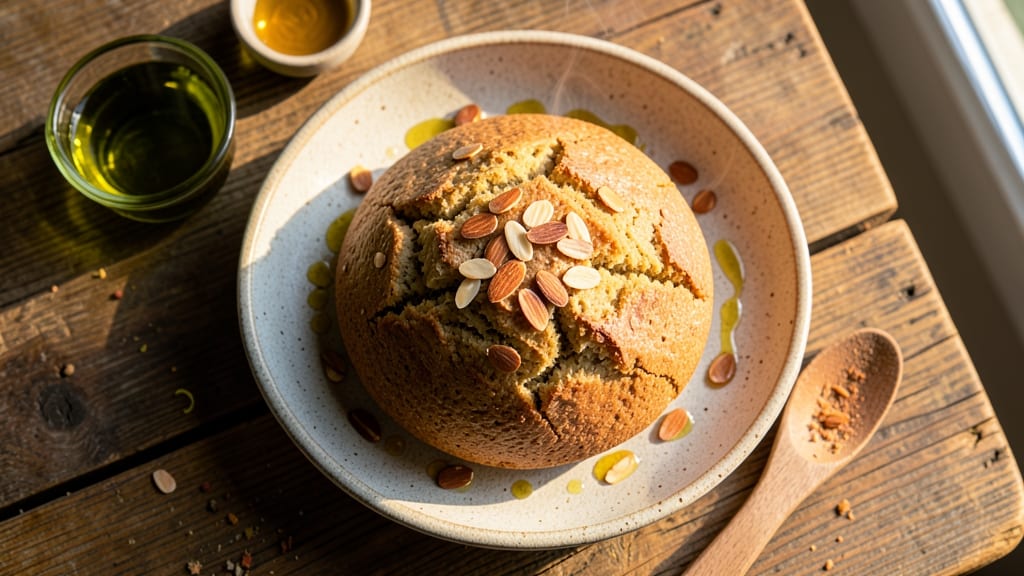
This almond flour soda bread recipe transforms simple ingredients into a nutty, airy loaf that requires no yeast, no kneading, and no dairy. The secret lies in almond flour's ability to create a tender crumb while maintaining a crisp, golden crust—perfect for gluten-free or grain-sensitive diets.
I developed this version after struggling to find a vegan soda bread that didn't turn dense or crumbly.
The beauty of this recipe is its simplicity: just 6 ingredients come together with minimal effort, yet deliver restaurant-quality results. The baking soda creates lift, while the almond flour adds richness and a subtle crunch.
Unlike traditional soda bread, this version stays moist for days without drying out, making it ideal for sandwiches or toast.
What you'll end up with is a loaf that's crisp on the outside, soft and fluffy inside, with a delicate nutty flavor that pairs beautifully with soups, cheeses, or jam.
The absence of yeast means no waiting for proofing—just mix, bake, and enjoy. This is comfort food reimagined for modern dietary needs.
For extra flavor, try topping with sesame seeds or flaky salt before baking. The bread keeps well at room temperature for 3 days or frozen for up to 3 months, making it perfect for meal prep. Let's get baking!
Ingredients for almond flour soda bread
Six ingredients transform into a gluten-free loaf with nutty aroma and perfect crispness.
| Ingredient | Amount | Notes |
|---|---|---|
| Almond Flour 🌰 | 2 ½ cups | Finely ground, unsweetened preferred |
| All-Purpose Flour 🌾 | ½ cup | Gluten-free blend if needed |
| Baking Soda 🧂 | 1 tbsp | Freshly opened for best rise |
| Apple Cider Vinegar 🍎 | 1 tbsp | White vinegar substitute works |
| Extra-Virgin Olive Oil 🫒 | ½ cup | Cold-pressed for optimal flavor |
| Filtered Water 💧 | ¾ cup | Room temperature preferred |
| Sesame Seeds 🌻 | 2 tbsp | Toasted for enhanced flavor |
| Flaky Sea Salt 🧂 | 1 ½ tsp | Diamond Crystal preferred |
The almond flour is the foundation—Bob's Red Mill or Anthony's Goods brands deliver the finest grind for optimal texture. Avoid pre-ground flour from bulk bins, as it often contains almond skins that create grit. For the vinegar, Bragg's apple cider vinegar adds subtle sweetness, but any raw vinegar works. The baking soda must be fresh; old baking soda loses its leavening power, resulting in a dense loaf. Store almond flour in the freezer to prevent rancidity, which can turn your bread bitter.
No almond flour? Hazelnut flour or cashew flour can substitute at a 1:1 ratio, though texture will differ slightly. Substitute the vinegar with lemon juice at half the amount for a tangier profile. For the olive oil, avocado oil maintains a neutral flavor, while walnut oil adds depth but can overpower. The sesame seeds can be omitted if nut-free, but they add a delightful crunch. If you prefer a sweeter loaf, add 1 tbsp maple syrup to the wet ingredients.
The dough keeps in the fridge for 3 days wrapped in a damp towel, but it's best baked immediately for peak freshness. For longer storage, wrap the cooled loaf in parchment and foil, then freeze for up to 3 months. To reheat, wrap in a damp towel and warm in a 350°F oven for 10 minutes. Slice with a serrated knife for clean cuts. This bread freezes beautifully—perfect for meal prep when you need a quick, nutritious option.
Why You'll Love This Recipe
- No-Mix Fuss: Mixing this bread is like whispering to flour—just dump, stir, and let the baking soda and vinegar do their magic. No stand mixer, no overworking, just a bowl and your hands (or a spoon if you're feeling lazy).
- Rich Nutty Crunch: That almond flour gives it a texture you won’t find in regular soda bread—tender crumb with a subtle nutty bite, balanced by the olive oil’s smooth richness. Honestly, the first slice makes me forget it’s "healthy."
- Lunchbox Legend: Between us, this bread is my secret weapon for packing lunches. The olive oil keeps it moist for days, and the slight tang from the vinegar pairs perfectly with cheese or jam. My kids fight over the leftovers—yes, even on a Tuesday.
- Budget-Friendly Luxe: Almond flour might sound fancy, but using just half in this recipe stretches it further than you’d think. The rest of the ingredients? Pantry staples. You’re paying for gourmet flavor without the gourmet price tag.
Step-by-step instructions for almond flour soda bread
This no-knead method delivers a nutty crust and airy crumb without yeast or gluten.
Combine Dry Ingredients for Proper Texture
In a large mixing bowl, whisk together the 2.5 cups almond flour and 0.5 cup all-purpose flour until evenly distributed. This creates a uniform base for the bread's structure. Sift the mixture lightly to eliminate any lumps, which prevents dense pockets in the finished loaf.
Add the 1 tbsp baking soda and 1.5 tsp flaky sea salt, then whisk again until fully incorporated. The baking soda will react with the vinegar later, creating lift, while the salt enhances flavor and balances the bread's natural sweetness. I always use freshly opened baking soda—older batches lose potency and can result in a flat loaf.
Mix Wet Ingredients for Optimal Rise
In a separate bowl, combine the 0.5 cup extra-virgin olive oil and 1 tbsp apple cider vinegar. The vinegar acts as a natural leavening agent, replacing yeast while adding a subtle tang. Whisk in the 0.75 cup filtered water until smooth—this creates an emulsified base that binds the dry ingredients.
I prefer room-temperature water for even hydration, but if using cold water, let the mixture sit for 5 minutes before combining. The olive oil adds richness and moisture, which is crucial since almond flour absorbs liquid differently than traditional flour.
Form the Dough and Shape for Even Baking
Pour the wet ingredients into the dry mixture and stir with a silicone spatula until just combined—do not overmix. The dough will be thick and sticky, resembling wet sand. If it feels too dry, add 1 teaspoon water at a time until cohesive. Overmixing develops gluten, which can make the bread dense rather than airy.
Transfer the dough to a lightly greased baking sheet, then shape it into a 1-inch thick round loaf by pressing gently with oiled hands. The thickness ensures even baking without a dense center. Sprinkle the 2 tbsp sesame seeds evenly over the top for texture and flavor—press them lightly so they adhere.
Bake Until Golden and Internal Temperature Reaches 200°F
Preheat your oven to 350°F and place a rack in the center position. Bake the loaf for 30-35 minutes until the top is deep golden brown and the internal temperature reaches 200°F at the center. The bread should pull away slightly from the edges of the pan but remain moist inside.
I recommend using an instant-read thermometer for accuracy—almond flour bread can dry out if overbaked. If the top browns too quickly, tent loosely with foil after 20 minutes to prevent over-browning while allowing steam to escape for a tender crumb.
Cool and Slice for Maximum Flavor Development
Remove the bread from the oven and let it cool on the baking sheet for 10 minutes, then transfer to a wire rack. The sesame seeds will crisp slightly as it cools, adding texture contrast. Slice with a serrated knife—almond flour bread is delicate when warm and can crumble if cut too soon.
For the best texture, allow the bread to cool completely before serving. The interior should be light and airy, with a nutty aroma from the almond flour. Store leftovers wrapped at room temperature for 2 days or freeze for up to 1 month—it reheats beautifully in a toaster or oven.
Pro Tips For Making Almond Flour Soda Bread
- Mix Vinegar Last: The almond flour soaks up liquid like a sponge, so add the apple cider vinegar after combining the dry ingredients—right before folding in the wet. I learned this the hard way when my first batch turned into a dense brick because the vinegar got absorbed too early.
- Weigh Your Almond Flour: Scooping almond flour by volume leads to disappointment—it packs differently than all-purpose flour. Use a kitchen scale for accuracy (1 cup almond flour = ~120g). Yes, it’s an extra step, but your bread’s texture will thank you.
- Don’t Overmix the Dough: Once you fold in the olive oil and vinegar, stop mixing after 10-12 strokes. Overworking the dough makes it tough, and almond flour bread has no room for error. The dough will look shaggy—that’s normal.
- Preheat Pan and Oven: Place your baking dish in the oven while preheating to 375°F (190°C). This ensures even heat distribution and a better rise. I skipped this once and ended up with a bread that domed unevenly—don’t make my mistake.
Essential equipment for this dish
Mixing Essentials
You’ll need a large mixing bowl (I use my 8-quart stainless steel bowl from OXO) to combine the dry ingredients. A whisk or rubber spatula works best for distributing the almond flour evenly—avoid electric mixers, as they can overheat the delicate flour.
For measuring, a scale ensures precision, but if using cups, spoon the almond flour lightly into the measuring cup and level it off. 🌰
Baking Tools
A lightly greased baking sheet (I prefer Nordic Ware Natural Aluminum) is critical—this prevents sticking and ensures easy release. Line it with parchment paper if you’re worried about browning, but I find the bread releases easily with just oil.
For shaping, oiled hands work best, but a damp silicone spatula helps if the dough feels too sticky. 🧂
Temperature Control
An instant-read thermometer (I swear by Thermoworks ThermoPop) is non-negotiable for almond flour bread—it reaches 200°F at the center when perfectly baked. Preheat your oven to 350°F and use the middle rack for even heat distribution.
If your oven runs hot, tent the loaf with foil after 20 minutes to prevent over-browning while keeping the interior moist. 🌡️
Cooling & Storage
For cooling, a wire rack is essential—it prevents sogginess from residual heat. Store leftovers in an airtight container (I love OXO Good Grips) at room temperature for 3 days or freeze for 3 months.
To reheat, wrap slices in a damp paper towel and warm in a 350°F oven for 5 minutes—this restores the bread’s softness. ❄️
Optional Extras
For toasting, a toaster with a wide slot (like Black+Decker 2-Slice) works best—it crisps the crust without burning. If adding extras like maple syrup or chopped nuts, use a small offset spatula to spread them evenly.
A serrated knife (I use Mercer Culinary Genesis) ensures clean slices without crumbling. 🔥
Nutrition facts
Frequently asked questions
Why does this almond flour bread need baking soda instead of yeast?
The baking soda creates a chemical reaction with the vinegar that instantly produces carbon dioxide, giving the bread its lift without needing yeast. This makes it perfect for vegan diets since yeast requires fermentation time. The reaction happens quickly, so mix the wet ingredients last to maintain maximum rise.
Can I make this bread without almond flour?
Yes! You can substitute with hazelnut flour or cashew flour at a 1:1 ratio, though texture may vary slightly. For a grain-free option, try a blend of coconut flour and tapioca starch (reduce other liquids by 2 tbsp since coconut flour absorbs more). The nutty flavor will change but still delicious.
Why did my bread turn out dense instead of airy?
Overmixing the dough develops gluten, which makes the bread dense. Stir just until combined—it should look like wet sand. Also, ensure your baking soda is fresh (test by mixing with water; it should bubble vigorously). If the dough feels too dry, add 1 tsp water at a time.
How can I make this bread sweeter?
Add 1-2 tbsp maple syrup or honey to the wet ingredients for natural sweetness. For extra flavor, mix in 1 tsp cinnamon or vanilla extract. The bread pairs beautifully with jam or as a base for French toast.
Can I use this bread for sandwiches?
The crisp crust and soft interior hold up well to fillings like avocado, hummus, or smoked salmon. Toast lightly before assembling to prevent sogginess. For extra stability, slice the bread slightly thicker than usual (½-inch instead of ¼-inch).