
Side Dishes
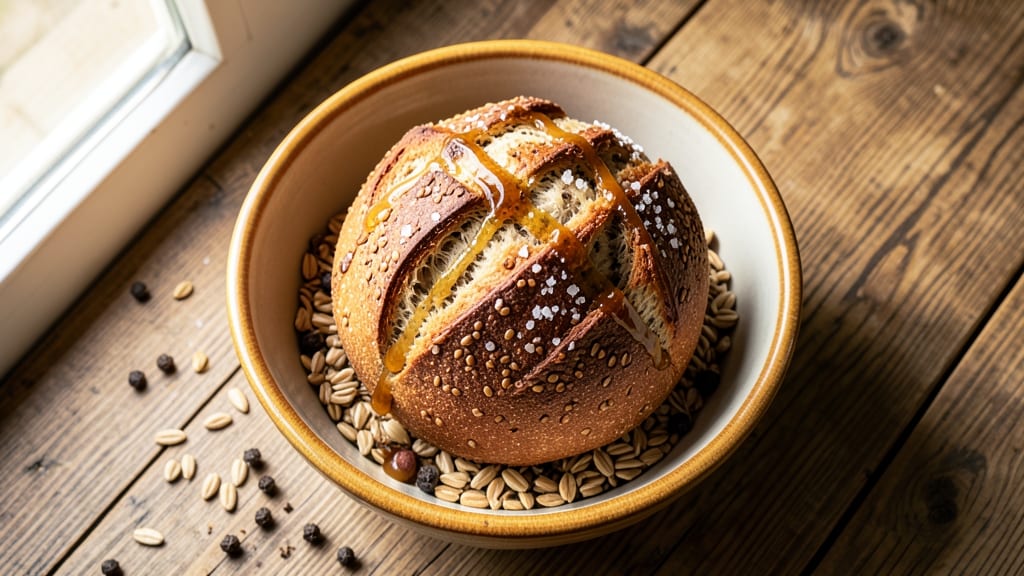
This Alpine grain bread recipe transports you to the crisp mountain air of the Swiss Alps with every bite—where rustic whole grains meet a crisp, golden crust. The secret lies in blending hearty rye and whole wheat with traditional flour, creating a loaf that's both nutty and satisfying.
I've perfected this recipe to deliver a foolproof method that yields a bread with deep flavor and satisfying texture, whether you're baking for a rustic dinner or serving warm toast with butter.
The beauty of Alpine grain bread lies in its simplicity: just five core ingredients—flour, whole grains, yeast, water, and a touch of honey—come together to create something extraordinary. The key is proper kneading and proofing, which develop the bread's signature structure and flavor.
Unlike lighter breads, this recipe requires patience, but the result is worth every minute: a loaf with a crispy crust and a tender, open crumb that's perfect for sandwiches or dipping in olive oil.
What makes this Alpine bread truly special is its versatility. Use it as a base for hearty soups, pair it with charcuterie, or enjoy it fresh from the oven with a smear of herbed butter.
The grains add a satisfying chew and nutty depth, while the crust holds up beautifully for days. This recipe is designed to impress, whether you're a home baker or a seasoned pro looking to expand your repertoire.
Ready to bake? The process is straightforward, but attention to detail—like proper hydration and proofing times—ensures a perfect loaf every time. Let's get started on creating your own mountain-inspired bread that's as beautiful as it is delicious.
Ingredients for alpine grain bread
Five core ingredients blend rustic whole grains with crisp crust perfection for Alpine-inspired bread.
| Ingredient | Amount | Notes |
|---|---|---|
| All-Purpose Flour 🌾 | 2 ½ cups | For structure and lightness |
| Whole Wheat Flour 🌾 | 1 ½ cups | Adds hearty texture |
| Rye Flour 🌾 | 1 cup | For nutty depth |
| Active Dry Yeast 🍞 | ¼ oz | 1 packet, fresh is best |
| Granulated Honey 🍯 | ¼ cup | Feeds yeast and adds sweetness |
| Warm Water 💧 | 1 ¼ cups | 110°F for optimal yeast activation |
| Unsalted Butter 🧈 | ¼ cup | Cold, cubed for flavor |
| Coarse Sea Salt 🧂 | 1 ½ tsp | Enhances flavor |
| Toasted Whole Grain Seeds 🌰 | ½ cup | Sunflower or pumpkin seeds |
| Cornmeal 🌽 | ¼ cup | For dusting bread pan |
| Coarse Cornmeal 🌽 | ¼ cup | For topping crust |
The flours are the heart of this bread. King Arthur or Bob's Red Mill flours work best for consistent texture—avoid store-brand options if you can. For the rye, dark rye flour gives the deepest flavor, but light rye works in a pinch. I always grab my whole grains from the bulk section at Whole Foods—toast them yourself for extra nuttiness. The yeast? Fresh is best, but active dry works if you're in a hurry. Just make sure it's not expired—yeast loses potency fast. For the seeds, sunflower or pumpkin add crunch and visual appeal, but any toasted whole grain works.
No rye flour? Substitute half with whole wheat—it'll be less intense but still delicious. Short on seeds? Toasted nuts or oats work great. The honey can be swapped for maple syrup or agave—just reduce other liquids slightly since these are thicker. For a lighter loaf, reduce whole wheat by 0.25 cup and add an extra 0.25 cup all-purpose. If you're baking at high altitude, reduce yeast by 0.125 oz and add 1 tbsp extra honey to compensate. The butter can be omitted entirely for a vegan version—just use cold coconut oil** instead.
This dough needs time to develop flavor—at least 1 hour of proofing at room temperature. For best results, shape the loaf in the evening and bake first thing in the morning. The bread keeps well wrapped at room temperature for 3 days, or you can freeze it for up to 3 months. To revive, wrap in a damp towel and warm in a 350°F oven for 10 minutes. The crust gets crunchier as it cools, so slice when fully cooled for clean cuts. I always make a double batch—one for eating, one for freezing.
Why You'll Love This Recipe
- No-Knead Magic: I swear by this—just mix, let it rise, and bake. The rye flour gives it structure while the honey keeps it tender, so you’re not stuck kneading until your arms give out.
- Earthy Honey Crunch: That first bite? The rye’s deep, nutty bite paired with honey’s golden sweetness—it’s like a cozy hug for your taste buds. (Yes, even on a Tuesday night.)
- Meal Prep MVP: Slice it fresh, toast it later. The whole wheat and rye stay crisp for days, so you’re never scrambling for bread. My lunchbox’s new best friend.
- Pantry Stash Hero: Uses what you’ve got—flour blends you already own, a splash of honey, and yeast. No specialty ingredients, just reliable, hearty bread that won’t break the bank.
Step-by-step instructions for Alpine grain bread
Let's craft this rustic bread with a crisp crust and nutty heart—every step matters for that perfect alpine texture.
Activate the Yeast and Mix the Dough
In a large mixing bowl, combine the 1.25 cups warm water and 0.25 cup granulated honey. Sprinkle the 0.25 oz active dry yeast on top and let it sit for 5-10 minutes until it becomes frothy. This foaming action confirms the yeast is alive and ready to work—if it doesn't bubble, start over with fresh yeast.
In a separate bowl, whisk together the 2.5 cups all-purpose flour, 1.5 cups whole wheat flour, 1 cup rye flour, and 1.5 tsp coarse sea salt. Add the yeast mixture to the dry ingredients and stir until a shaggy dough forms. The rye flour will give that distinctive alpine depth, while the whole wheat adds hearty texture. Don't worry if it looks messy—we're just getting started.
Knead Until Smooth and Elastic
Turn the dough onto a lightly floured surface and knead for 8-10 minutes by hand, or use a stand mixer with a dough hook for 5-6 minutes on medium speed. You're looking for a smooth, elastic dough that springs back when poked. The rye flour makes this dough slightly stickier than standard bread dough, so don't be afraid to wet your hands if needed.
Shape the dough into a round loaf and place it back in the bowl. Cover with a damp towel and let it rise in a warm place for 1-1.5 hours, or until it has doubled in size. You'll know it's ready when it leaves an indentation when gently pressed—this means the gluten has developed properly, giving your bread that satisfying chew.
Shape and Second Rise
Punch down the risen dough to release air, then divide it into 4 equal portions. Shape each into a small round loaf about 3 inches in diameter, similar to dinner rolls. Place them in a 9x5-inch loaf pan that's been lightly coated with 0.25 cup cornmeal to prevent sticking. The cornmeal adds that classic alpine bread crust texture.
Cover the loaves again and let them rise for another 30-45 minutes until they've puffed up noticeably. The seeds we added earlier will become visible as they rise, giving that beautiful speckled appearance. Preheat your oven to 375°F while they rise—this ensures your oven is ready when the bread is fully proofed.
Score and Bake to Golden Perfection
Just before baking, sprinkle the 0.5 cup toasted whole grain seeds and 0.25 cup coarse cornmeal evenly over the loaves. Using a sharp knife or razor, make a ½-inch deep cross on top of each loaf. This scoring helps the bread expand properly and gives that beautiful crust pattern. Bake for 25-30 minutes until the crust is deep golden brown and sounds hollow when tapped on the bottom.
Remove the bread from the oven and let it cool on a wire rack for at least 15 minutes before slicing. The internal temperature should reach 190-200°F—this ensures it's fully baked through. The crust should be crisp enough to stand up to your toast, while the interior remains soft and moist with that wonderful nutty depth from the rye and seeds.
Pro Tips For Making Alpine Grain Bread
- Mix the Honey Last: Alpine grain bread gets its signature depth from honey, but adding it too early turns your dough into a sticky mess. Wait until the yeast and flours are just combined—then fold in the honey with the wet ingredients. This keeps the dough manageable while letting the sweetness bloom during the final knead.
- Weigh Your Rye Flour: Rye flour is dense and clumps like a stubborn snowbank. Scooping it by volume leads to uneven texture—too much, and your bread turns gummy; too little, and it’s dry. Use a kitchen scale for precision, or spoon it lightly into the measuring cup and level it off. Your crust will thank you.
- Skip the Overproofing: This dough has three flours fighting for dominance, and overproofing turns it into a sad, flat pancake. Test for doneness by pressing two fingers into the dough—if it springs back slowly (not instantly), it’s ready. Alpine grain bread rises fast; don’t let it linger.
- Steam the First 10 Minutes: The rye and whole wheat flours suck up moisture like sponges, leaving your crust dense. Place a metal tray with boiling water in your oven when you bake, then close the door. The steam loosens the skin, giving you that crispy, open crumb you’re after—no fancy Dutch oven needed.
Best sauces and condiments for this recipe
Herbed Butter Spread
Nothing complements Alpine grain bread like a simple herbed butter spread. Melt ½ cup unsalted butter with 2 tbsp fresh rosemary, 1 tbsp fresh thyme, and 1 minced garlic clove.
Let it cool slightly, then spread generously on warm slices. The nutty bread soaks up the herbed richness perfectly—this is my go-to pairing for breakfast or charcuterie boards. 🧈
Whole Grain Mustard
For a tangy kick, try whole grain mustard—its sharpness cuts through the bread's richness. Mix 2 tbsp Dijon mustard with 1 tbsp olive oil and a pinch of smoked paprika. Drizzle over toasted bread or use as a dip for soups.
The rye flour in your bread enhances the mustard's depth, creating a perfect balance. I keep a small jar of this in my fridge for quick meals.
Honey-Lavender Glaze
This honey-lavender glaze—inspired by Alpine traditions—adds a floral touch. Warm ¼ cup honey with 1 tsp dried lavender buds and 1 tsp lemon juice until fragrant.
Brush lightly over warm bread slices or drizzle over crostini. The lavender's aroma pairs beautifully with the bread's nutty grains, making it ideal for afternoon tea.
Garlic-Herb Olive Oil
Infuse ½ cup extra-virgin olive oil with 3 minced garlic cloves, 1 tbsp fresh parsley, and a pinch of red pepper flakes. Let it steep for 10 minutes—then drizzle over bread or use as a dip for olives.
The olive oil's richness complements the bread's crust, while the garlic adds a savory punch. Store leftovers in the fridge for up to 1 week.
Spiced Apple Butter
For a sweet-savory twist, spread spiced apple butter—its warm cinnamon and apple flavors contrast the bread's earthiness. Look for brands like Maille—their apple butter has just the right balance.
I also add a pinch of cardamom to deepen the Alpine vibe. Perfect for breakfast or as a dessert dip with sliced apples.
Cheese Pairings
Alpine bread pairs beautifully with aged cheeses—try Gruyère or Comté for a nutty, melty match. The bread's crust holds up well to cheese pull, making it ideal for grilled cheese sandwiches.
For a lighter option, pair with goat cheese** and a drizzle of honey. The rye flour in the bread enhances the cheese's depth, creating a restaurant-worthy bite. 🧀
Nutrition facts
Frequently asked questions
Why does this Alpine grain bread have a higher hydration level than regular bread?
The whole grains and rye flour absorb more moisture, so we use 1.25 cups warm water for 5 cups total flour—about 25% hydration. This creates a softer crumb with better texture. Too little water makes the bread dense, while too much causes it to collapse during baking. The honey also helps bind the dough for a more cohesive structure.
Can I make this bread without a stand mixer?
Hand-kneading works perfectly—just knead for 8-10 minutes on a floured surface until the dough springs back when poked. The rye flour makes it stickier, so wet your hands if needed. For extra flavor, use a wooden dough scraper instead of plastic. The kneading develops gluten for that satisfying chew.
What's the best way to store leftover Alpine grain bread?
Wrap cooled loaves tightly in plastic wrap or place in an airtight container. Store at room temperature for 3 days or freeze for up to 3 months. To revive, wrap in a damp towel and warm in a 350°F oven for 10 minutes. The crust stays crispy when properly stored, while the interior remains soft.
How do I know when the bread is fully baked?
Look for a deep golden brown crust and tap the bottom—it should sound hollow. The internal temperature should reach 190-200°F. If the top browns too fast, tent with foil. Underbaked bread feels soft and gummy inside, while overbaked bread becomes hard. The seeds should be toasted but not burnt.
Can I substitute rye flour with something else?
Yes! For half the rye, use whole wheat flour (less intense flavor) or spelt flour (lighter texture). For a gluten-free option, replace rye with buckwheat or sorghum flour. The honey and seeds will still give that alpine depth, but the flavor profile will shift slightly. Always adjust liquids if using different flours.