
Side Dishes
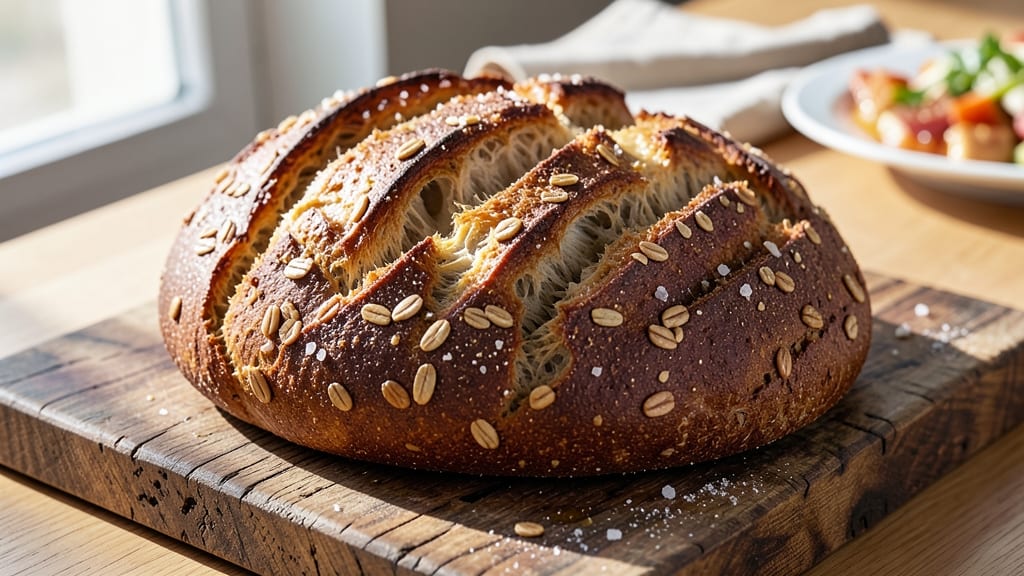
This amazing grains salty bread recipe transforms simple pantry staples into a rustic masterpiece with a crusty crunch and nutty depth—no fancy equipment needed. 🔥 The secret lies in the perfect balance of hydration and salt, which creates an irresistible texture that pairs beautifully with soups, cheeses, or even just butter.
I’ve baked this loaf countless times, and it never fails to impress, whether you’re feeding a crowd or treating yourself to a cozy meal.
The magic happens with a high-hydration dough that develops incredible flavor and texture as it bakes. We’ll incorporate grains like cornmeal or oats for that signature crunch, while a generous sprinkle of flaky sea salt on the surface elevates every bite.
The dough is forgiving enough for beginners but delivers restaurant-quality results—think golden-brown crust, airy crumb, and a salty tang that lingers. No kneading machine? No problem. This dough comes together with just your hands and a little patience.
By the time you pull this loaf from the oven, you’ll have a crusty, aromatic loaf that’s crisp on the outside and soft on the inside, with pockets of airy goodness. The grains add texture and a subtle sweetness, while the salt cuts through the richness, making each bite satisfying.
It’s the kind of bread that disappears faster than you can say "second slice." Perfect for serving alongside hearty stews, sharp cheeses, or even as a base for open-faced sandwiches.
Ready to bake? Let’s get started—this recipe is foolproof, customizable, and guaranteed to become a staple in your kitchen. Whether you’re a seasoned baker or just starting out, this bread will change the way you think about homemade loaves.
Trust me, once you try it, you’ll never go back to store-bought again.
Ingredients for amazing grains salty bread
Pantry staples meet rustic magic—just 11 ingredients for bread that tastes like a bakery secret.
| Ingredient | Amount | Notes |
|---|---|---|
| All-Purpose Flour 🌾 | 4 cups | Unbleached preferred for better texture |
| Whole Wheat Flour 🌾 | 1 cup | Adds nutty depth and texture |
| Cornmeal 🌽 | ½ cup | Fine or medium grind for crunch |
| Old-Fashioned Rolled Oats 🥣 | ½ cup | Blended into flour for texture |
| Active Dry Yeast 🍞 | 2 ¼ tsp | Ensure it's fresh (test in warm water) |
| Granulated Sugar 🍚 | 1 tbsp | Feeds yeast for rise |
| Salt 🧂 | 2 tsp | Diamond Crystal preferred |
| Flaky Sea Salt 🧂 | 1 ½ tbsp | For final crust (Maldon recommended) |
| Olive Oil 🫒 | ½ cup | Extra-virgin for richness |
| Warm Water 💧 | 2 ½ cups | 110°F for optimal yeast activation |
| Honey 🍯 | 1 tbsp | Adds subtle sweetness |
The grains are where the magic happens. Cornmeal and oats give that signature crunch, but don't skip blending them into the flour—whole pieces won't bake evenly. King Arthur or Bob's Red Mill flours work best for high-hydration doughs. For the yeast, FreshPaks are foolproof if you're nervous about activation. The honey isn't just sweet—it helps with browning and keeps the bread moist longer. Pro tip: measure your flours by weight if you have a kitchen scale—volume measurements can vary wildly by brand.
No cornmeal? Substitute extra oats or crushed graham crackers—they'll add texture too. Running low on flaky salt? Morton kosher salt at double the amount works in a pinch, but the flakes melt beautifully into the crust. The olive oil matters here—use something fruity and peppery. If you're making this in winter, warm your water to 110°F (yeast dies above 120°F). And yes, you can use whole wheat pastry flour instead of all-purpose if you prefer—just add 1 tbsp vital wheat gluten for structure.
This dough is forgiving but timing matters. Let it rest overnight in the fridge for deeper flavor—it's worth the wait. Store baked loaves wrapped in a clean towel at room temp for 3 days, or freeze slices for up to 3 months. For reheating, wrap slices in foil and warm in a 350°F oven for 5 minutes. The crust stays crisp for hours, but the interior softens fast—eat it fresh when possible. Leftovers? Toast them—it's even better the second time around.
Why You'll Love This Recipe
- No-Yeast Struggles Gone: I swear by this mix—just toss in the yeast, let it rise, and walk away. The rolled oats and cornmeal give it that rustic crunch without needing fancy techniques, and honestly? My first loaf turned out better than the store-bought kind I used to hide behind.
- Salty-Sweet Crunch Magic: That combo of whole wheat and all-purpose flour keeps it hearty, while the toasted oats and cornmeal add a nutty, buttery crunch that’s ridiculously satisfying. Between us, I’ve caught myself sneaking bites straight from the pan—no shame.
- Meal Prep MVP: This bread stays fresh for days (yes, even when I forget it’s in the fridge) and toasts up like a dream. Slap it on sandwiches, dip it in soup, or serve it with butter for breakfast—it’s my go-to for lazy mornings and last-minute guests.
- Pantry Staple Power: I’m not kidding when I say this uses ingredients you already own. No specialty flours, no weird additives—just flour, yeast, and a few pantry basics. My grocery bill dropped, and my freezer’s stocked with backup loaves for when I’m too tired to bake.
Step-by-step instructions for crusty grains and salty bread
Here's how to create that perfect balance of crispy crust and nutty, hearty interior in one beautiful loaf.
👨🍳 Step 1: Activate the Yeast and Mix the Dough
In a small bowl, combine the 2.5 cups warm water (about 110°F—too hot kills yeast), 1 tbsp granulated sugar, and 1 tbsp honey. Sprinkle the 2.25 tsp active dry yeast over the top and let sit for 5-10 minutes until foamy. This is your signal the yeast is alive and ready to work.
In a stand mixer fitted with the dough hook attachment, combine the 4 cups all-purpose flour, 1 cup whole wheat flour, 0.5 cup cornmeal, and 2 tsp salt. Mix on low speed until just combined. With the mixer running on low, gradually add the yeast mixture and 0.5 cup olive oil. Increase speed to medium and knead for 5-7 minutes until the dough is smooth and elastic. If it's too sticky, add 1 tablespoon flour at a time until it pulls away from the bowl.
🥘 Step 2: Incorporate the Oats for Texture
Transfer the dough to a lightly floured surface and gently press in the 0.5 cup old-fashioned rolled oats. This step is crucial—it gives your bread that signature crunch and nutty flavor. Fold the dough over itself a few times to distribute the oats evenly throughout. Shape the dough into a smooth ball, cover with a damp towel, and let it rise in a warm place for 1-1.5 hours or until doubled in size.
Here's the thing—don't rush this rise. The dough should feel light and airy when pressed gently. If it's not rising well, your kitchen might be too cold. Place the bowl near a warm oven with the light on (but not in direct heat) to create a cozy environment for your yeast to work its magic.
🔥 Step 3: Shape and Proof the Loaf for Maximum Crust
Punch down the risen dough to release air bubbles, then shape it into a round boule. For an extra-crispy crust, I like to dimple the surface with my fingers—this creates more surface area for browning. Place the shaped dough on a parchment-lined baking sheet, cover with the damp towel, and let it proof for another 30-45 minutes until it's puffy and jiggly when gently shaken.
Preheat your oven to 450°F with a Dutch oven inside for 30 minutes. This step ensures your oven is piping hot and ready to create that perfect crust. While the oven heats, brush the top of the dough with a little water—this helps create that beautiful, crackly crust we're after.
🔥 Step 4: Bake for Crispy Crust and Nutty Interior
Carefully transfer the dough (with parchment) into the preheated Dutch oven. Bake covered for 20 minutes, then remove the lid and bake uncovered for another 15-20 minutes until the bread is deep golden brown. You'll know it's done when it sounds hollow when tapped on the bottom and the internal temperature reaches 190-200°F.
This is where the magic happens—the covered bake steams the bread for a soft interior, while the uncovered finish creates that glorious crust. Sprinkle with 1.5 tbsp flaky sea salt immediately after removing from the oven for that perfect salty finish.
⏰ Step 5: Cool and Enjoy the Perfect Loaf
Let the bread cool on a wire rack for at least 1 hour before slicing. I know it's tempting to cut into it right away, but patience here ensures clean slices and prevents a gummy interior. The crust will be crispy and shatterable, while the inside should be soft with pockets of air from the yeast.
This bread is amazing on its own, but it's also perfect for dipping in olive oil or pairing with soups and stews. The combination of whole wheat flour and oats gives it a satisfying chew, while the cornmeal adds just the right amount of crunch. Every bite delivers that perfect balance of textures and flavors we set out to achieve!
Pro Tips For Making Amazing Grains Salty Bread
- Toast Your Oats First: Skip the raw oats—they’ll turn your dough gummy. Pulse them in a food processor or spread on a baking sheet at 350°F for 8–10 minutes until golden and fragrant. I learned this the hard way when my first batch turned into a chewy brick instead of a crispy, nutty loaf.
- Mix Cornmeal Last: Sprinkle the cornmeal after shaping the dough, right before baking. Press it lightly into the pan—this creates that signature crunchy bottom without drying out the rest. (Yes, even if you’re impatient like me, resist the urge to fold it in earlier.)
- Let the Dough Rise Twice: The first rise warms the yeast, but the second—after shaping—builds structure. Cover the shaped loaf and let it rise another 30–45 minutes until it’s puffed but not doubled. This guarantees a light, airy crumb, not a dense brick.
- Use Warm Water for Yeast: Dissolve the yeast in warm (not hot) water—about 110°F—with a pinch of sugar. If it fizzes within 5 minutes, your dough’s ready; if not, your yeast is dead. I’ve wasted enough dough waiting for sluggish yeast to wake up.
Perfect pairings for this recipe
Soup Pairings
This bread is a match made in heaven with roasted tomato soup—the salty crust cuts through the acidity beautifully. I like to serve it with a simple garlic-herb soup too, where the bread soaks up every last drop.
For something heartier, try pairing with lentil or minestrone soup—the grains in the bread complement the earthy flavors perfectly. 🥘
Cheese Boards
Create a showstopping cheese board by pairing this bread with aged cheddar, brie, and blue cheese—the salty crust balances the richness of creamy and sharp cheeses. I always include fig jam or honey to add a touch of sweetness that makes the flavors sing.
For a vegetarian twist, add marinated olives and cured meats like prosciutto. 🧀
Spreads and Dips
Transform your bread into a gourmet snack by pairing it with whipped feta, hummus, or olive tapenade. I love spreading herb butter on warm slices—just mix softened butter with fresh parsley, chives, and a pinch of lemon zest.
For something extra indulgent, try bacon jam or spicy harissa for a kick. 🧈
Breakfast Pairings
This bread is perfect for breakfast too! Serve it with scrambled eggs and avocado toast, or use it as a base for French toast—the grains add texture that soaks up the custard beautifully. Top with crispy bacon or sautéed mushrooms for a hearty morning meal. ☕
Wine and Beer Pairings
For a sophisticated touch, pair this bread with a crisp white wine like Sauvignon Blanc or Pinot Grigio—the acidity cleanses your palate between bites. If you prefer beer, a wheat beer or pilsner complements the nutty flavors without overpowering them.
For something stronger, try a light red wine like Pinot Noir with roasted meats. 🍷
Sweet Pairings
Don’t forget about dessert! This bread pairs surprisingly well with dark chocolate or fruit compotes—the saltiness enhances the sweetness. I love serving it with whipped cream and raspberry jam for a simple yet elegant treat.
For a savory-sweet combo, try peanut butter or almond butter with a drizzle of honey. 🍫
Nutrition facts
Frequently asked questions
Can I make this bread without a Dutch oven?
If you don't have a Dutch oven, use a heavy baking sheet or cast-iron skillet. For extra crustiness, bake the bread on a preheated stone or steel in the oven. Just be prepared for a slightly less dramatic crust—sprinkle more water before baking to help with browning. A baking steel works best if you have one!
Why did my bread turn out dense instead of crusty?
Dense bread usually means one of two things: either the yeast didn't activate properly (test it in warm water first next time) or the dough didn't rise enough. Make sure your kitchen is warm enough (75°F+), and give the dough plenty of time to proof—it should double in size. Also, avoid over-kneading, which can develop too much gluten and make the texture tough.
How do I store leftover bread to keep it fresh?
Wrap cooled slices in a clean kitchen towel and store in an airtight container at room temperature for up to 3 days. For longer storage, freeze slices individually in a bag for up to 3 months. To revive, warm in a 350°F oven for 5 minutes—the crust will crisp up beautifully. Never refrigerate bread unless you're making sandwiches!
What other grains can I add for extra texture?
You can experiment with crushed graham crackers (for sweetness), puffed quinoa (for extra crunch), or even toasted sesame seeds. Just reduce the cornmeal by the same amount you add. For a savory twist, try crushed pretzels—they add a salty crunch that pairs perfectly with the flaky sea salt topping!
Can I make this bread without whole wheat flour?
Yes! Replace the whole wheat flour with extra all-purpose flour for a lighter texture. If you want to keep some nutty flavor without the density, try white whole wheat flour or add 1 tbsp vital wheat gluten to maintain structure. The bread will still be delicious—just slightly less hearty in texture.