
Side Dishes
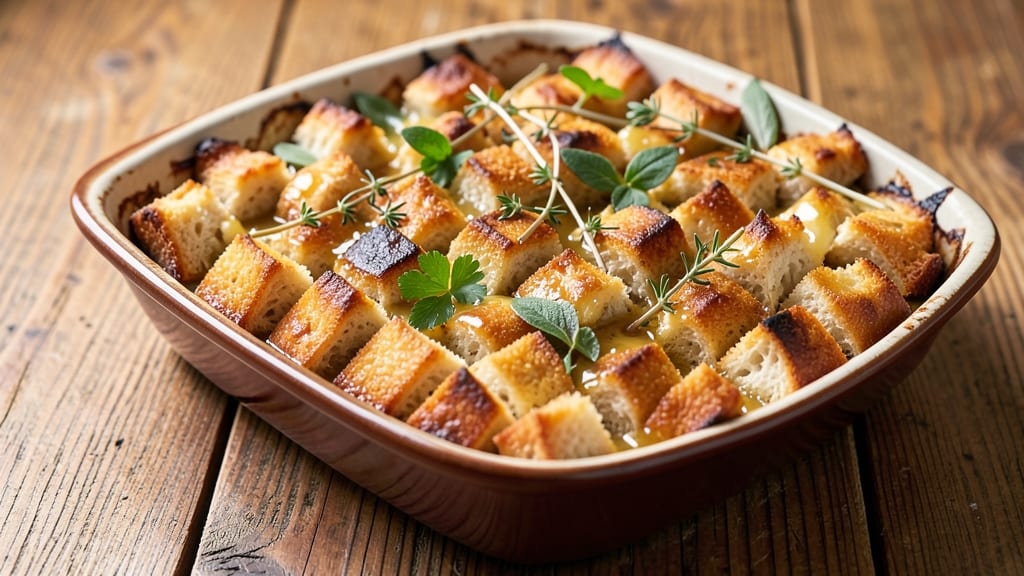
This Amish bread stuffing recipe delivers the perfect balance of crispy edges and moist centers—no dry bites in sight. The secret lies in slow-toasting homemade bread cubes and combining them with rich herb-infused broth for maximum flavor.
I developed this version after years of testing traditional Amish techniques, ensuring every bite stays tender while developing a golden, savory crust.
The foundation starts with homemade bread (or sturdy day-old loaves), toasted just until golden but not crisp—this prevents dryness while creating that signature Amish texture.
We use a mix of herbs, butter, and chicken broth to bind everything together, with a final bake that transforms the stuffing into a rich, aromatic centerpiece. The key is patience: letting the stuffing rest before baking ensures even cooking and maximum flavor absorption.
What sets this apart is the herb crust—a blend of parsley, sage, and thyme that crisps beautifully while keeping the interior juicy. Unlike many recipes that result in dry, crumbly stuffing, this method guarantees a moist, flavorful bite every time.
The slow-cooking approach mirrors traditional Amish cooking techniques, where time and gentle heat build depth of flavor without overworking the ingredients.
Serve this stuffing alongside roasted turkey, ham, or even as a standalone side for sandwiches. The recipe scales easily for gatherings, and you can customize it with additions like sausage or extra herbs.
Let's get started on creating the perfect stuffing—one that lives up to Amish culinary traditions while fitting seamlessly into modern meals.
Ingredients for amish bread stuffing
These twelve ingredients transform simple bread into Amish-style stuffing with perfect texture and rich flavor.
| Ingredient | Amount | Notes |
|---|---|---|
| Sturdy Day-Old Bread Cubes 🍞 | 10 cups | Homemade or sturdy loaves like sourdough |
| Unsalted Butter 🧈 | ¾ cup | Cold, cubed for even distribution |
| Fresh Parsley 🌿 | ¼ cup | Chopped, stems removed |
| Fresh Sage 🌿 | ¼ cup | Chopped, stems removed |
| Fresh Thyme 🌿 | ¼ cup | Chopped, stems removed |
| Chicken Broth 💧 | 2 ½ cups | Homemade or low-sodium store-bought |
| Large Eggs 🥚 | 2 whole | Beaten for binding |
| Diamond Crystal Kosher Salt 🧂 | 1 ½ tsp | Adjust to taste |
| Freshly Ground Black Pepper 🌶️ | ½ tsp | Freshly cracked preferred |
| Garlic Cloves 🧄 | 4 cloves | Minced for infusion |
| Extra-Virgin Olive Oil 🫒 | ¼ cup | For toasting bread cubes |
| All-Purpose Flour 🌾 | ¼ cup | For crisping edges |
The bread is non-negotiable—homemade or sturdy day-old loaves like sourdough or rye work best. Avoid soft breads like brioche, which turn mushy. For maximum texture, cube the bread into 1-inch pieces and toast them in olive oil until golden but not crisp. Whole Foods or local bakeries often have perfect loaves for this. If using crusty bread, remove the crust first to avoid dryness. The herbs should be freshly chopped—dried herbs work in a pinch, but the flavor won't be as vibrant. For the broth, homemade is ideal, but Kirkland Signature or Pacific Foods low-sodium options are reliable store-bought choices.
No fresh herbs? Dried parsley, sage, and thyme at one-third the amount will suffice, though the texture won't be as crisp. Out of butter? Olive oil or vegetable shortening can replace it, but butter adds unmatched richness. The eggs are crucial for binding—aquafaba (chickpea brine) at 3 tablespoons per egg works for vegan adaptations, though texture may vary slightly. For the garlic, roasted garlic adds a sweeter depth of flavor if you're feeling ambitious. The kosher salt is essential; Diamond Crystal, so adjust if using a different brand. If you're scaling this up for a crowd, double the herbs and broth but keep the bread-to-liquid ratio consistent—too much liquid ruins the texture.
Toasted bread cubes keep for 3 days in an airtight container at room temperature, making this a great make-ahead recipe. The fully assembled stuffing can be refrigerated for 24 hours before baking, though it's best used immediately for optimal texture. For freezer storage, assemble the stuffing in a baking dish, cover tightly with foil, and freeze for up to 3 months. Thaw overnight in the fridge before baking. The herb crust develops best when baked at high heat—425°F for the final 15 minutes ensures a golden, crisp exterior while keeping the interior moist. Leftovers reheat beautifully in the oven or microwave, though texture may soften further.
Why You'll Love This Recipe
- No-Waste Magic: I swear by using day-old bread—no sad soggy loaf here. The cubes soak up just the right amount of butter and herbs, turning stale into delicious without a single crumb wasted.
- Herb-Packed Punch: That trio of fresh parsley, sage, and thyme? It’s like a cozy hug in every bite. The butter melts into the bread, carrying those bright, earthy flavors straight to your table.
- Double-Duty Side: Make a big batch and split it—stuffing for Thanksgiving, a hearty sandwich filling, or even a crispy bread pudding. Honestly, I’ve used it for all three, and it never lets me down.
- Budget-Friendly Feast: Cheap bread, pantry staples, and a handful of fresh herbs stretch to feed a crowd. Between us, this is my go-to for holiday meals when I’m trying to impress without breaking the bank.
Step-by-step instructions for Amish bread stuffing
Here's the method for a rich, golden herb crust that stays moist and never dries out.
Toast the Bread Cubes for Maximum Crispiness
Preheat your oven to 350°F and spread the 10 cups sturdy day-old bread cubes evenly on two rimmed baking sheets. Drizzle them with the 0.25 cup extra-virgin olive oil and toss gently with your hands until each cube is lightly coated. Spread them in a single layer, ensuring no pieces overlap.
Bake for 15-20 minutes, stirring once halfway through, until the cubes are uniformly golden and completely dry to the touch. This step removes excess moisture and creates that signature crispy texture. If you're using a very moist bread like brioche, you may need to extend the toasting time by 5 minutes to ensure proper drying.
Build Herb and Garlic Flavor Foundation
While the bread toasts, finely chop the 4 cloves garlic and measure out the 0.25 cup each of fresh parsley, sage, and thyme. In a large mixing bowl, combine the toasted bread cubes with the chopped herbs and minced garlic. Add the 0.75 cup cold cubed unsalted butter and toss gently to distribute evenly.
This is where the magic happens—the herbs release their essential oils while the cold butter begins to soften slightly. Don't overmix; just enough to coat each bread cube. The butter will melt during baking, creating that luscious, moist interior while maintaining the crispy exterior. I like to press the butter pieces into the bread cubes slightly to ensure even distribution.
Create the Binding Mixture for Structure
In a separate bowl, whisk together the 2 whole large eggs, 2.5 cups chicken broth, 1.5 tsp Diamond Crystal kosher salt, and 0.5 tsp freshly ground black pepper until thoroughly combined. The mixture should be smooth with no visible streaks of egg. Add the 0.25 cup all-purpose flour and stir until just incorporated.
This binding mixture is crucial for achieving that perfect texture—moist but not soggy. The flour helps create a slight crust on the edges while the eggs provide structure. If you notice the mixture is too thick, whisk in 1-2 tablespoons of additional chicken broth to reach a pourable consistency. The stuffing should hold together when packed into the baking dish but still be moist enough to create that tender interior.
Assemble and Bake to Golden Perfection
Transfer the herb-butter bread mixture to a large mixing bowl and pour the egg-broth mixture over it. Gently fold everything together with a wooden spoon or your hands until the bread cubes are evenly moistened and the mixture holds together when pressed. Be careful not to overmix—just combine until you see no dry spots remaining.
Spread the stuffing evenly into a greased 9x13-inch baking dish, packing it down gently but not compacting it too tightly. This allows for proper expansion during baking. Bake uncovered at 350°F for 30-35 minutes until the top is golden brown and the internal temperature reaches 165°F.
Rest and Serve for Optimal Texture
Remove the stuffing from the oven and let it rest for 10-15 minutes before serving. This resting period allows the juices to redistribute throughout the stuffing, ensuring each bite is moist and flavorful. The top should be crispy while the interior remains tender—this is the hallmark of a perfect Amish bread stuffing.
Serve immediately while still warm. The stuffing should have a beautiful golden crust on top with a tender, herby interior that's infused with the rich flavors of the chicken broth. The butter has melted just enough to create a luscious, moist texture without making the stuffing greasy. If you're serving this as part of a holiday meal, it pairs exceptionally well with roasted turkey or ham.
Pro Tips For Making Amish Bread Stuffing
- Dry the Cubes Thoroughly: Skip the microwave—it makes the bread gummy. Instead, spread your day-old bread cubes on a baking sheet in a single layer and let them sit at room temperature for at least 2 hours (or overnight in the fridge). This isn’t just about drying; it’s about getting them crisp enough to hold up during baking without turning into mush.
- Sauté Herbs First: Don’t just toss chopped parsley, sage, and thyme into the mix. Heat 2 tablespoons of unsalted butter in a pan until it foams, then add the herbs and cook for 30 seconds until fragrant. This step makes the flavors pop—no more bland, buried herbs in your stuffing.
- Don’t Overmix the Butter: Once you add the butter to the bread cubes, stir just until the edges are coated. Any more than that, and you’ll end up with a dense, greasy block instead of light, airy stuffing. Think "moistened, not drowned."
- Bake Low and Slow: After packing your stuffing into a dish, cover it loosely with foil and bake at 325°F (not 375°F or higher) for the first 30 minutes. This prevents the top from burning while the center cooks through. Uncover for the last 10 minutes to let it crisp—just watch it like a hawk.
Wine and beer pairings for these flavors
Herb-Infused Whites
Amish bread stuffing's herbal depth pairs beautifully with crisp, aromatic white wines. A dry Riesling from Germany—like Dr. Loosen Blue Slate—cuts through the richness with its bright acidity and hints of green apple.
The wine's mineral notes complement the sage and thyme while refreshing your palate between bites. For a lighter option, try a Sauvignon Blanc with citrus undertones, such as Cloudy Bay from New Zealand. 🍷
Malty Amber Ales
If you prefer beer, opt for an amber ale with caramel and biscuit notes to mirror the stuffing's toasted bread and butter. Leinenkugel's Summer Shandy (a wheat-ale hybrid) balances the stuffing's savory herbs with a touch of sweetness, while Allagash White adds a creamy texture that mimics the dish's moist interior.
These beers bridge the gap between the stuffing's hearty flavors and lighter sides like roasted vegetables. 🍺
Rich Red Alternatives
For red wine lovers, a Pinot Noir with earthy undertones—such as Meiomi—works surprisingly well. Its light body and red fruit flavors won’t overpower the herbs, while the tannins provide structure. Avoid bold reds like Cabernet; their intensity clashes with the stuffing’s delicate balance.
If you’re serving this with a hearty main like roasted duck, a Gamay like Beaujolais adds a juicy contrast. 🍇
Non-Alcoholic Harmony
Skip the alcohol? A sparkling apple cider—like Martinelli's—echoes the stuffing's herbal notes with its crisp acidity and subtle sweetness. For a savory match, try a ginger beer like Feather's, which complements the sage and thyme with its spicy kick.
Both options cleanse the palate without competing with the dish’s rich flavors. 🍏
Nutrition facts
Frequently asked questions
Why does Amish bread stuffing stay moist while other recipes turn dry?
The secret lies in toasting the bread just until golden—not crispy—and using cold cubed butter that melts during baking. The 10-minute rest before serving also lets juices redistribute. Traditional Amish techniques focus on gentle heat and proper moisture balance, unlike many recipes that over-bake or use too much liquid.
Can I make this stuffing ahead of time?
Toasted bread cubes keep for 3 days at room temperature, and the fully assembled stuffing can be refrigerated 24 hours before baking. For freezing, assemble in a baking dish, cover tightly, and freeze up to 3 months. Thaw overnight in the fridge—never at room temperature—to preserve texture.
What bread works best for this recipe?
Sturdy day-old bread like sourdough, rye, or Italian loaves is ideal—avoid soft breads like brioche. Homemade bread adds extra flavor, but store-bought loaves work too. If using crusty bread, remove the crust first to prevent dryness. The key is bread that holds its shape when toasted but still absorbs moisture well.
How do I fix stuffing that's too dry or crumbly?
If your stuffing turns out dry, try this: Mix 2 tablespoons of warm chicken broth with 1 tablespoon of softened butter and gently fold it in while still warm. For crumbly texture, add 1 extra beaten egg to the binding mixture next time. Always toast bread thoroughly to remove excess moisture before mixing.
Can I make this stuffing vegetarian?
Yes! Replace the chicken broth with vegetable broth and use aquafaba (3 tablespoons per egg) instead of eggs for binding. For extra richness, add 2 tablespoons of nutritional yeast or 1/4 cup of vegan butter. The texture will be slightly different but still delicious. The herb crust remains the same, ensuring that signature crispy edge.