
Side Dishes
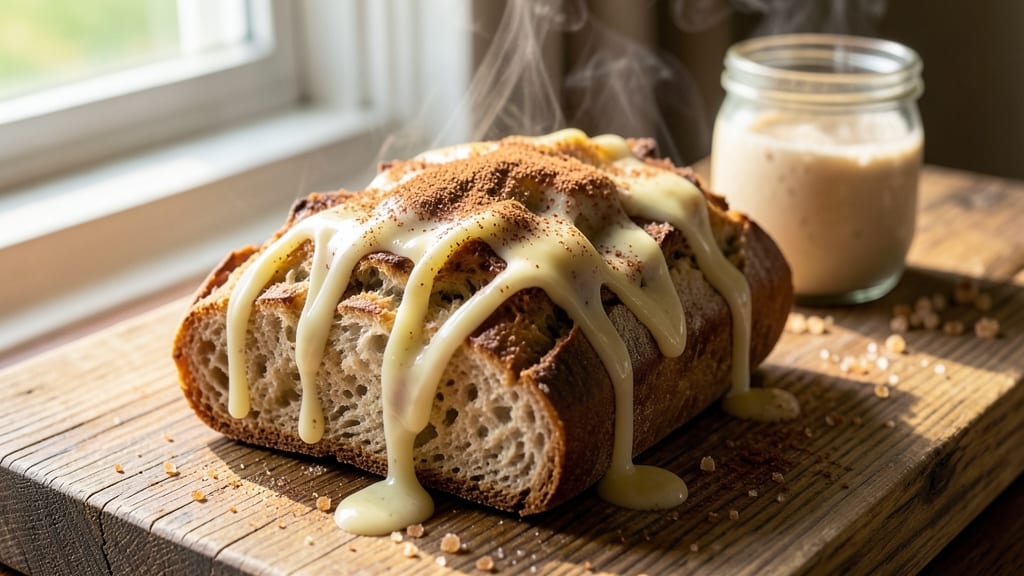
This Amish friendship sourdough bread recipe brings the warmth of tradition to your kitchen with its signature spice streusel swirls baked into every loaf. 🔥 The Amish have long shared this bread as a symbol of friendship and hospitality, and now you can recreate its rustic charm at home with a few simple techniques.
The key lies in the sourdough starter—its tangy flavor and airy texture form the heart of this beloved bread.
What sets this recipe apart is the combination of traditional Amish methods with modern adaptations. You'll use a Dutch oven for that signature crusty exterior, mimicking the wood-fired ovens of old, while the spiced streusel swirls add a comforting sweetness that balances the bread's natural tang.
The dough requires patience—kneading by hand and allowing it to proof slowly—but the result is worth every moment.
By the time your loaf emerges from the oven, you'll have a golden-brown crust with those beautiful streusel swirls peeking through, promising a tender crumb inside.
This bread isn't just a dish; it's a tradition you can share with friends and family, whether as a gift or a centerpiece for your table. The aroma alone will transport you to a cozy Amish kitchen.
The beauty of this recipe is its versatility—enjoy it fresh from the oven, toasted with butter, or served alongside soups and stews.
With a few simple steps and a little time, you'll achieve a loaf that's both authentic and foolproof, perfect for those who appreciate the art of baking with heart. Let's get started on creating this timeless treat.
Ingredients for amish friendship sourdough bread
The heart of this Amish tradition starts with a simple starter and a few pantry staples.
| Ingredient | Amount | Notes |
|---|---|---|
| Active Sourdough Starter 🍞 | 1 cup | Unfed, bubbly starter (100% hydration) |
| All-Purpose Flour 🌾 | 5 cups | Unbleached, high-protein preferred |
| Granulated Sugar 🍚 | ¼ cup | For streusel sweetness |
| Light Brown Sugar 🍚 | ¼ cup | Packed, for streusel depth |
| Unsalted Butter 🧈 | ½ cup | Cold, cubed for streusel |
| Ground Cinnamon 🌿 | 1 tbsp | Freshly ground preferred |
| Ground Nutmeg 🌿 | ½ tsp | Freshly grated nutmeg |
| Diamond Crystal Kosher Salt 🧂 | 1 ½ tsp | Fine grain preferred |
| Whole Milk 🥛 | ½ cup | Room temperature |
| Large Eggs 🥚 | 1 whole | Room temperature |
| Honey 🍯 | 1 tbsp | For dough tenderness |
| Old-Fashioned Rolled Oats 🥣 | ½ cup | For streusel texture |
| Vanilla Extract 🍯 | 1 tsp | Pure vanilla preferred |
Your sourdough starter is the soul of this bread—it should be unfed for 12 hours before using, with visible bubbles and a slightly tangy aroma. King Arthur or Bob's Red Mill flours work best for the dough, but any high-protein flour will do. For the streusel, cold butter is key—don't let it soften, or your swirls will spread too much. If you're new to sourdough, King Arthur's sourdough starter guide is a game-changer. The oats add that perfect crunch, so don't skip them—Trader Joe's has a great bulk bin option if you're not into measuring cups.
No vanilla extract? Vanilla bean paste works beautifully, or even a pinch of vanilla sugar. Running short on butter? Coconut oil in equal parts keeps the streusel together, though it'll be slightly softer. The honey can be swapped for maple syrup, but honey's floral notes complement the sourdough tang perfectly. For the cinnamon, Penzeys or McCormick ground spices are my go-tos—they stay fresh longer. If you're making this ahead, prep the streusel mixture first and store it in the fridge for up to 3 days—it keeps beautifully.
This dough needs time—at least 8 hours for the first rise, then another 2 hours after shaping. The streusel keeps well in the fridge for 5 days if wrapped tightly, but honestly, it disappears faster than that. For the Dutch oven, I use Le Creuset—it's worth the investment if you bake bread often. If you don't have one, a heavy oven-safe pot with a lid works too. The bread freezes beautifully for up to 3 months—slice it before freezing for perfect portions.
Why You'll Love This Recipe
- No-Fuss Dough: I swear, the only tools you need are a bowl and your hands—no mixer, no stress. The sourdough starter does the heavy lifting while you mix in that buttery brown sugar combo, and boom, you’re done. Honestly, even my lazy Sundays feel productive after this.
- Sweet Butter Magic: That brown sugar and butter pairing? It’s what turns this from bread to something special. The crust gets just crisp enough to hold up to jam or butter, while the inside stays soft—like a hug in every bite. (Yes, even on a Tuesday night.)
- Leftovers That Last: This bread keeps beautifully for days, so you’re never scrambling for toast or sandwiches. Freeze slices for quick breakfasts, or pack it for lunch—it’s my go-to for meal prep without the fuss. Between us, I’ve fed a crowd with half a loaf.
- Budget-Friendly Staple: All-purpose flour and a little sugar? This recipe costs pennies but tastes like you spent hours baking. The sourdough starter is the only "fancy" part, and once you’ve got it, you’re golden. My wallet and my taste buds thank me weekly.
Step-by-step instructions for Amish friendship sourdough bread
Here's how to create that signature spiced streusel swirl—no fancy techniques, just patience and love.
👨🍳 Step 1: Mix the Streusel and Prepare the Dough
First, make the streusel by combining the 0.5 cup cold unsalted butter, 0.25 cup granulated sugar, 0.25 cup packed light brown sugar, 1 tbsp ground cinnamon, 0.5 tsp ground nutmeg, and 0.5 cup old-fashioned rolled oats in a bowl. Use a pastry cutter or your fingers to work it until it resembles coarse crumbs with pea-sized butter pieces—this texture gives those beautiful streusel pockets. Set aside.
In a separate large bowl, whisk together the 1 cup active sourdough starter, 0.5 cup room-temperature whole milk, 1 whole large egg, 1 tbsp honey, and 1 tsp vanilla extract until smooth. This wet mixture is the foundation of your tender dough. In a separate bowl, sift together the 5 cups all-purpose flour and 1.5 tsp diamond crystal kosher salt—this ensures even distribution and prevents clumping.
🥘 Step 2: Combine and Knead the Dough
Make a well in the center of your dry ingredients and pour in the wet mixture. Using a wooden spoon or dough whisk, gently fold everything together until a shaggy dough forms. Then turn it out onto a lightly floured surface and knead for 8-10 minutes until smooth and elastic. The dough should be slightly tacky but not sticky—if it's too dry, add 1 tsp milk at a time; if too sticky, add 1 tbsp flour.
Here's the thing—Amish friendship bread has a unique texture. You want it soft but not gummy, with just enough structure to hold those streusel swirls. Once kneaded, shape the dough into a rough rectangle about 12x8 inches. This will be your canvas for the streusel pattern.
🍳 Step 3: Layer Streusel and Shape the Loaf
Roll out the dough on a lightly floured surface to about ¼-inch thickness. Sprinkle half of the streusel mixture evenly over the dough, leaving a ½-inch border around the edges. Fold the dough over the streusel like a letter, then roll it out again to ¼-inch thickness. Sprinkle the remaining streusel over this new surface, then fold the dough over one more time to create three distinct streusel layers.
Now for the shaping: Roll the dough into a log shape, about 9 inches long. Tuck the ends under to seal, then place it seam-side down in a 9x5-inch loaf pan that's been lightly greased with butter. The dough will rise significantly, so don't overfill the pan. Cover loosely with a clean kitchen towel and let it rise at room temperature for 1-1.5 hours, until it's puffed about 1 inch above the pan.
🔥 Step 4: Bake to Golden Perfection
Preheat your oven to 350°F while the dough rises. When ready, bake the loaf for 45-50 minutes, until the top is deep golden brown and a toothpick inserted in the center comes out clean. Here's my pro tip: For that classic Amish look, brush the top with 1 tbsp melted butter after 30 minutes in the oven—this creates a beautiful sheen and enhances the caramelization.
Let the bread cool in the pan for 10 minutes before transferring to a wire rack. The streusel will be soft and gooey when hot, but it sets beautifully as it cools. Slice while still warm for those perfect streusel pockets in every bite. This bread tastes best the day it's made, but it keeps well wrapped at room temperature for 2 days or frozen for up to 3 months.
Pro Tips For Making Amish Friendship Sourdough Bread
- STRETCH AND FOLD: This isn’t just a knead—it’s a workout for the dough. After mixing, fold the dough over itself 4-5 times at 30-minute intervals (yes, set a timer). I used to skip this, and my loaves turned out dense and sad. The folding builds gluten and distributes that butter evenly, so every bite gets that melt-in-your-mouth texture.
- CHILL THE DOUGH: Don’t rush the 12-hour cold proof. I learned this the hard way—my first batch came out gummy because I proofed it overnight in a warm kitchen. Pop the dough in the fridge right after shaping, even if you’re not baking it right away. The cold slows fermentation, deepens the flavor, and makes slicing cleaner. (Pro tip: Cover it loosely with plastic wrap so it doesn’t dry out.)
- BROWN THE SUGAR FIRST: Toast that light brown sugar in a dry skillet over medium heat for 2-3 minutes until it’s fragrant and just starting to darken. The caramelized notes cut through the sourdough’s tang and make the bread taste way more complex. Skip this, and you’re missing out on the rich, buttery depth that makes this bread special. (Yes, even if you’re impatient like me.)
- STEAM THE OVEN: Place a metal tray on the bottom rack and fill it with boiling water before you bake. The steam helps the crust rise dramatically at first, then crisp up beautifully. I used to forget this, and my loaves would bake flat and dense. The steam also keeps the interior moist—critical for that soft, pillowy crumb. (No steam? A spray bottle works in a pinch, but it’s not as dramatic.)
Troubleshooting this recipe
Dense Dough Issues
If your dough feels too dense or tough after kneading, you’ve likely overworked it or used too much flour. The Amish friendship bread should be soft yet elastic—think "slightly tacky but not sticky." To fix it, add 1 teaspoon of milk at a time while kneading to restore moisture.
If the dough resists shaping, let it rest for 15-20 minutes under a damp towel before rolling. Over-kneading breaks down gluten too much, so stop when the dough springs back slowly when poked. 💫
Streusel Not Holding
The streusel should stay in distinct pockets, not spread into a gooey mess. Cold butter is key—if yours melts too quickly, chill the streusel mixture for 20 minutes before using. For extra structure, fold in 1 tablespoon of flour to the streusel.
When rolling out the dough, keep it ¼-inch thick (no thinner) to prevent the streusel from sinking too deeply. If it still spreads, reduce the butter by 1 tablespoon next time. 🌟
Underproofed Dough
An underproofed loaf will be dense and heavy, lacking that signature light, airy crumb. Look for these signs: the dough hasn’t doubled in size after 1-1.5 hours, or it springs back too quickly when poked.
To fix it, extend the proofing time by 30 minutes in a warm spot (like a turned-off oven with the light on). If your kitchen is cold, place the dough on a tray over a bowl of hot water to create a mini proofing chamber. 🔥
Pale or Soft Crust
A pale crust means your bread lacks the caramelized depth Amish friendship bread is known for. Preheat your oven for at least 30 minutes to ensure it’s hot enough.
For extra crispness, place a tray of boiling water in the oven’s lower rack for the first 10 minutes of baking to create steam. Brush the top with 1 tablespoon of melted butter after 30 minutes to encourage browning.
If using a Dutch oven, ensure it’s preheated alongside the bread. 💛
Starter Too Weak
A weak or underactive starter will yield a flat, bland loaf. Your starter should be bubbly, slightly domed, and smell tangy but not harsh. If it’s sluggish, feed it 1:1:1 (starter:flour:water) 12 hours before using and let it sit at room temperature.
For a quick fix, add ½ teaspoon of instant yeast to the dough to boost rise—just don’t overdo it, or the sourdough flavor will suffer. 💡
Loaf Collapses After Baking
Collapsing often happens when the dough overproofs or the oven isn’t hot enough. To prevent this, check for doneness with a toothpick at 45 minutes—if it’s not set, bake 5-10 minutes longer.
For a sturdier structure, chill the shaped loaf in the fridge for 30 minutes before baking to slow fermentation. If it still collapses, your oven may not be hot enough—use an oven thermometer to confirm it’s hitting 350°F. 💪
Nutrition facts
Frequently asked questions
Why is this called "friendship bread"?
This bread carries deep Amish tradition—it's called friendship bread because it was historically shared among neighbors as a gesture of goodwill. The Amish community values hospitality, and this sweet, spiced loaf became a symbol of connection. Many families still bake it to share with friends, often with handwritten notes tucked inside the loaf.
Can I make this without a Dutch oven?
While a Dutch oven creates that perfect crust, you can use a heavy oven-safe pot with a lid or even a loaf pan. For best results, place a tray of boiling water in the oven's lower rack during the first 10 minutes of baking to create steam. The bread will still be delicious, just with a slightly different texture.
How do I know when my sourdough starter is ready?
Your starter should be bubbly, slightly domed, and have a tangy aroma—almost like yogurt. It should also double in size within 4-6 hours after feeding. For this recipe, use it when it's at its peak (right before it starts collapsing). If unsure, test it by dropping a spoonful in water—if it floats, it's ready!
What's the best way to store leftover bread?
Wrap the bread tightly in plastic wrap or place it in an airtight container to keep it fresh for 2-3 days at room temperature. For longer storage, freeze slices individually—they'll stay fresh for up to 3 months. To reheat, wrap frozen slices in a damp paper towel and warm in a 350°F oven for 5-10 minutes.
Can I make this gluten-free?
While traditional Amish friendship bread uses wheat flour, you can adapt the recipe with a 1:1 gluten-free flour blend like Bob's Red Mill or King Arthur. Replace the all-purpose flour with the blend and add ½ teaspoon of xanthan gum to improve texture. Note that the crumb will be slightly denser, but the flavor will still be wonderful!