
Side Dishes
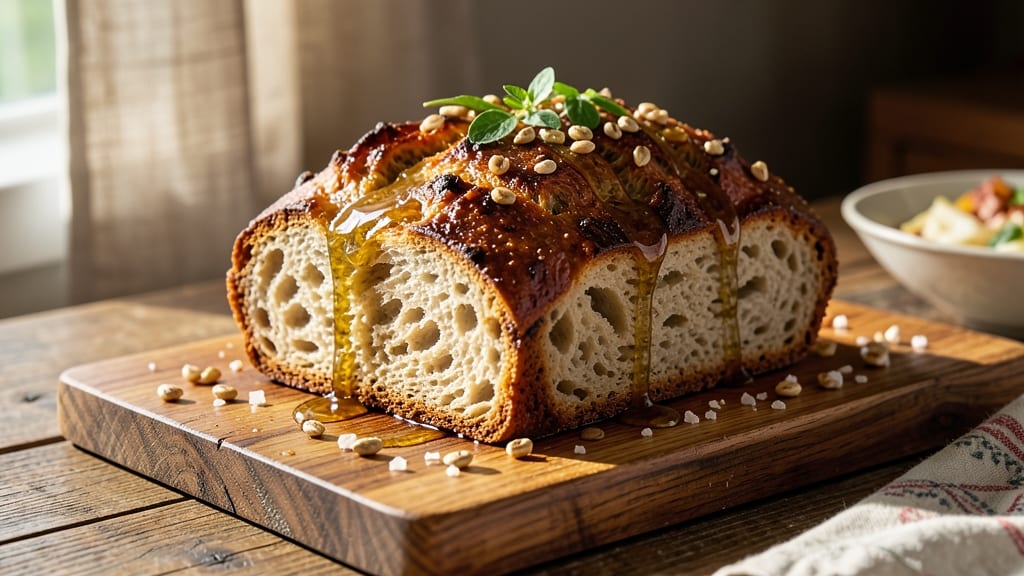
This ancient grains einkorn bread recipe brings history to your kitchen table with every bite—nutty, rustic, and packed with flavor from grains cultivated over 10,000 years ago. 🌾 Unlike modern wheat, einkorn’s delicate crumb and crisp crust deliver a texture that’s both satisfying and nostalgic, perfect for sandwiches or toasted with butter.
The secret lies in its low-gluten nature, which requires patience during mixing and proofing to achieve that signature open crumb without compromising structure.
What sets einkorn apart is its nutty, slightly sweet flavor that develops as the dough ferments, creating a depth you won’t find in standard breads.
This recipe simplifies the process with a straightforward dough formula—just flour, water, yeast, and a touch of honey—but the magic happens in the slow fermentation, which enhances both flavor and digestibility. Even beginners can master it with the right timing and gentle handling.
The result is a loaf with a golden, crackly crust and an airy, open crumb that’s tender yet sturdy enough to hold thick slices of jam or cheese. The aroma alone—warm, grainy, and slightly caramelized—transforms a simple side into a centerpiece.
Whether you’re baking for tradition or texture, this bread proves ancient grains still have modern appeal.
Pair it with soups, charcuterie boards, or simply enjoy it fresh from the oven. The recipe includes troubleshooting tips to ensure success, so you’ll end up with a loaf that tastes like it belongs in a heritage bakery. Let’s get started—your kitchen’s about to smell like history.
Ingredients for ancient grains einkorn bread
Four cups of einkorn flour kick off this ancient grain bread with nutty, rustic flavor—just flour, water, and patience needed.
| Ingredient | Amount | Notes |
|---|---|---|
| Einkorn Flour 🌾 | 4 cups | Organic preferred, finely milled |
| Water 💧 | 1 ½ cups | Lukewarm, filtered preferred |
| Active Dry Yeast 🍞 | ¼ tsp | Fresh yeast if available |
| Honey 🍯 | 1 tbsp | Raw or wildflower preferred |
| Salt 🧂 | 1 ½ tsp | Fine sea salt preferred |
| Olive Oil 🫒 | 1 tbsp | Extra-virgin for richness |
| Whole Wheat Flour 🌾 | ½ cup | For structure and nutrition |
| Cornmeal 🌽 | 2 tbsp | For dusting and crust |
| Sesame Seeds 🌻 | 1 tbsp | Optional for topping |
Einkorn flour is the star here—King Arthur or Bob’s Red Mill are my go-tos, but any organic brand works. The nutty, slightly sweet flavor develops during fermentation, so don’t rush it. If you can’t find einkorn, a 50/50 mix of whole wheat and white flour mimics the texture (though flavor will be milder). The yeast? Fresh is ideal, but active dry works too—just proof it in warm water with a pinch of honey first. Water temperature matters: too hot kills yeast, too cold slows fermentation. Aim for lukewarm (like bathwater).
No honey? Maple syrup or agave works in a pinch, though honey’s floral notes complement einkorn’s earthiness. The olive oil adds richness—skip it if you’re watching calories, but the bread will be denser. Whole wheat flour boosts nutrition and structure, but if you’re avoiding gluten, einkorn alone works (just expect a longer rise). For the crust, cornmeal gives that classic rustic look, but semolina or rice flour works too. Sesame seeds? Totally optional, but they add crunch and a pretty finish. If you’re baking for a crowd, double the recipe—this bread freezes beautifully.
Mix the dough the night before and let it ferment in the fridge for 8-12 hours—this slow rise is key for flavor. Shape the loaf gently; einkorn’s low gluten means it’s delicate. Bake at 375°F for 40-45 minutes until the crust is golden and hollow-sounding when tapped. Cool on a wire rack—cutting too soon makes it gummy. Store wrapped at room temp for 3 days or freeze for 3 months. Toasted, it’s even better—butter and jam are classic, but try it with olive oil and sea salt for a Mediterranean twist.
Why You'll Love This Recipe
- Five-Ingredient Magic: I swear by this—just flour, water, yeast, honey, and salt. No fancy mixers or complicated steps. The dough comes together in minutes, and honestly? That’s half the battle won.
- Nutty, Sweet Crust: The einkorn flour gives it this warm, slightly sweet nuttiness that’s ridiculously satisfying. The honey caramelizes just right, so every bite has that crispy, golden edge with a soft center—like a hug in bread form.
- Weeknight & Weekend: Toss a loaf in the oven while you prep dinner, and it’s ready by the time you’re done. Too fancy for a sandwich? No problem—it’s just as happy toasted with butter or slathered in jam for breakfast. (Yes, even on a Tuesday night.)
- Budget Bread That Lasts: Einkorn flour might sound fancy, but it’s cheaper than you’d think, and this recipe stretches it far. A single loaf keeps well for days—perfect for toast, charcuterie, or when you’re too tired to bake. (Between us, I’ve had it last a full week.)
Step-by-step instructions for ancient grains einkorn bread
Here's how to transform simple ingredients into a rustic loaf with a nutty crust and airy interior.
👨🍳 Step 1: Activate the Yeast with Honey and Water
In a small bowl, combine the 1.5 cups lukewarm water, 1 tbsp honey, and 0.25 tsp active dry yeast. Stir gently and let sit for 5-10 minutes until frothy. You'll see tiny bubbles forming on the surface—this confirms your yeast is alive and ready to work.
I always use lukewarm water around 105-110°F (just warm to the touch). If it's too hot, you'll kill the yeast; if too cold, it won't activate properly. The honey not only feeds the yeast but also adds subtle sweetness that balances the nutty einkorn flavor. If no bubbles form after 10 minutes, your yeast might be dead—start over with fresh yeast.
👨🍳 Step 2: Mix the Dough with Einkorn and Whole Wheat Flours
In a large mixing bowl, whisk together the 4 cups einkorn flour, 0.5 cup whole wheat flour, and 1.5 tsp salt. Create a well in the center and pour in the yeast mixture along with the 1 tbsp olive oil. Using a wooden spoon, gradually incorporate the dry ingredients into the wet, mixing until a shaggy dough forms.
Once combined, turn the dough onto a lightly floured surface and knead for 8-10 minutes until smooth and elastic. Einkorn dough is stickier than wheat dough, so don't be alarmed if it feels tacky. You'll know it's ready when it springs back slowly when poked. If it's too sticky to handle, wet your hands slightly to prevent tearing the gluten structure.
🥘 Step 3: Let the Dough Rise Until Doubled
Lightly oil a large bowl, place the dough inside, and cover with a damp towel. Let it rise in a warm spot for 1.5-2 hours until it has nearly doubled in size. The dough should feel puffy and jiggly when gently pressed—this indicates proper fermentation.
I like to place my dough bowl on top of my turned-off oven with the light on (creates a warm, humid environment) for even rising. Don't rush this step—proper fermentation develops the bread's flavor and texture. If your kitchen is cold, extend the rising time to 2.5 hours. The dough should reach about 60-65% larger than its original size when ready.
🔥 Step 4: Shape and Score the Loaf
Punch down the risen dough to release air, then shape it into a round boule. For best results, I use the "stretch and fold" method: divide the dough into quarters, stretch each piece toward the center, then fold over. Repeat this process 2-3 times to tighten the gluten structure.
Place the shaped dough on a parchment-lined baking sheet dusted with 2 tbsp cornmeal. Cover loosely and let it rest for 20-30 minutes while you preheat your oven to 425°F. After resting, use a sharp razor or knife to score the top in a decorative pattern—this prevents the bread from bursting open unevenly during baking and gives it that beautiful artisan look.
🔥 Step 5: Bake Until Golden and Hollow-Sounding
Bake the bread for 35-40 minutes until the crust is deep golden brown and sounds hollow when tapped on the bottom. For extra crispiness, I like to spray the oven walls with water during the first 10 minutes of baking—this creates steam that helps develop that open crumb structure we're after.
When the bread is done, transfer it to a wire rack and let it cool completely before slicing. The interior should be light and airy with a subtle nutty flavor from the einkorn. For that extra touch, sprinkle the 1 tbsp sesame seeds on top right after baking while the crust is still warm. The contrast of the nutty seeds against the golden crust makes this bread truly special.
Pro Tips For Making Ancient Grains Einkorn Bread
- STIR THE DOUGH LONG: Einkorn’s dense proteins need a good workout—knock it around for at least 10 minutes by hand (or 5 on speed 2 in a stand mixer) until it’s smooth and elastic. I used to rush this, and the bread turned out gummy. Trust the process; your dough will thank you with a better crumb.
- HYDRATE THE FLOUR FIRST: Sprinkle your einkorn flour over warm water (not cold) and let it sit for 20 minutes before adding yeast. This pre-hydration mimics the soaking ancient grains would’ve gotten, making the dough easier to handle and the final bread lighter. (Yes, it looks like glue at first—that’s normal.)
- SKIP THE OVERPROOFING: Einkorn dough rises slower than modern wheat, so watch it closely. Once it’s doubled, bake it—don’t let it sag or you’ll end up with a dense loaf. I learned this after one disastrous batch where I walked away for “just 10 more minutes.” Set a timer.
- USE HONEY LAST: Fold the honey into the dough after the yeast has activated, not before. Adding it early can slow fermentation, and you want that yeast partying hard. A splash of warm water mixed with the honey before folding keeps it from sticking to your fingers—cleaner hands, better results.
Make-ahead tips for leftovers
Night-Before Prep
Mix your dough the evening before and refrigerate it overnight for a slow, flavor-rich fermentation. This cold rise (called a retardation) enhances the nutty einkorn flavor and makes the bread easier to handle.
Simply shape the dough in the morning and bake as directed. I find this method reduces my morning stress while improving texture. 🌾
Freezing for Later
Einkorn bread freezes beautifully for up to 3 months without losing its rustic charm. After baking, let it cool completely, then wrap tightly in plastic wrap followed by a foil layer to prevent freezer burn.
Thaw at room temperature for 1-2 hours before toasting—no microwave needed! The crust stays crisp, and the crumb remains tender when reheated.
Batch Baking Tips
Double the recipe for crowd-pleasing results, but use two 9x5-inch loaf pans instead of one large pan. Divide the dough evenly between pans, then bake at 375°F for 35-40 minutes.
For even browning, rotate pans halfway through. I always bake two loaves at once—they’re perfect for gifting or meal prep. Store wrapped at room temp for 5 days or freeze extras.
Reviving Stale Bread
Einkorn bread stales faster than wheat bread due to its lower gluten content, but it revives beautifully. Wrap slices in a damp paper towel and microwave for 10-15 seconds to restore freshness.
For a crispy crust, toast in a 375°F oven for 5 minutes with a sprinkle of water—this mimics fresh-baked texture. I swear by this trick when making sandwiches the next day! 🔥
Make-Ahead Jam Topping
Prep a quick jam topping the night before to save time in the morning. Simmer 1 cup berries (strawberries or raspberries work best) with 2 tbsp honey and 1 tsp lemon juice for 10 minutes until thickened.
Spread on fresh slices of einkorn toast for a no-fuss breakfast. The jam’s acidity cuts through the bread’s nutty richness perfectly.
Gift-Worthy Packaging
For a thoughtful gift, wrap cooled loaves in brown kraft paper tied with twine and a sprig of fresh rosemary. Add a handwritten note about the bread’s ancient origins—recipients will love the story behind their gift.
I’ve sent these to friends during holidays, and they always rave about the texture. Store in a paper bag to keep the crust crisp for up to 3 days.
Nutrition facts
Frequently asked questions
Why does einkorn bread have a nutty flavor?
Einkorn wheat contains higher levels of protein and natural oils than modern wheat, which develop rich, nutty flavors during fermentation. The slow rise in this recipe enhances these flavors, creating that distinctive taste you won't find in standard breads. Think of it as nature's way of adding depth to every bite!
Can I make this bread without a stand mixer?
Einkorn dough is sticky but manageable by hand. Knead for 8-10 minutes on a lightly floured surface, wetting your hands occasionally to prevent sticking. The dough should feel smooth and slightly springy when ready. A wooden spoon works well for initial mixing too.
What if my dough doesn't rise properly?
Cold kitchen? Try placing your dough bowl on a turned-off oven with the light on (creates warmth). Or extend rising time to 2.5 hours. Check your yeast first—if it didn't bubble in the honey water, replace it. Remember, einkorn's low gluten means gentle handling is key throughout the process.
How do I store einkorn bread to keep it fresh?
Wrap cooled loaves in a paper bag (not plastic) to maintain crispness for 3 days at room temperature. For longer storage, freeze slices wrapped in foil—they toast perfectly! The crust stays crispy while the crumb remains tender when reheated.
Can I substitute einkorn flour with regular flour?
While possible, you'll lose the signature nutty flavor and texture. For a similar result, use a 50/50 mix of whole wheat and white flour. However, einkorn's unique properties (like its open crumb) come from its ancient genetics—worth tracking down for the authentic experience!