
Side Dishes
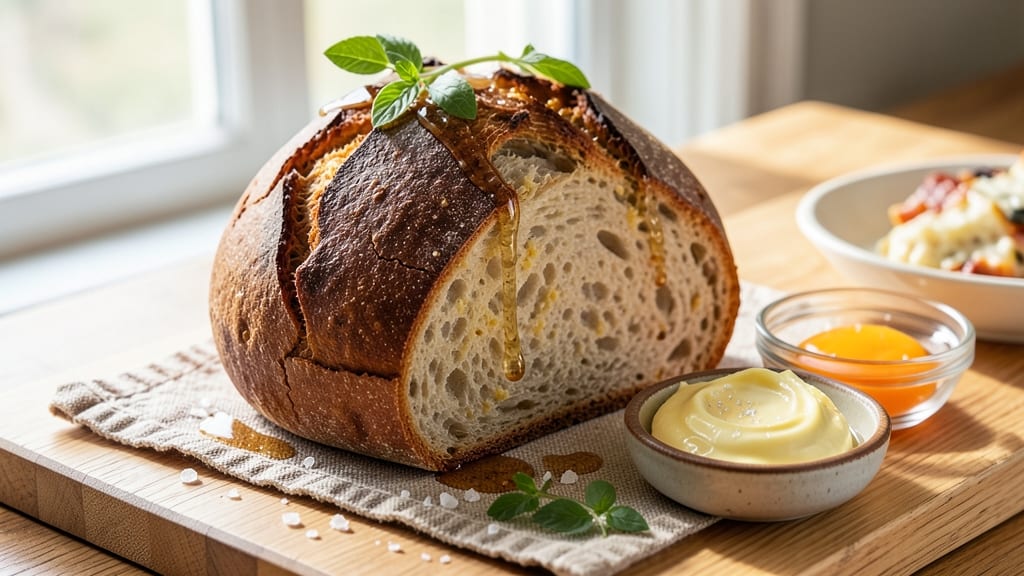
Angelo’s bread recipe brings the soul of Italian bakeries into your kitchen with its signature cinnamon-vanilla swirls baked into golden, crisp-edged perfection. 🌟 This traditional Italian loaf—known for its tender crumb and aromatic sweetness—requires patience but delivers a result that’s worth every moment of waiting.
The secret lies in the dough’s slow fermentation, which develops deep flavor and creates that signature airy texture.
What sets Angelo’s bread apart is its effortless balance of sweet and savory, achieved through a simple cinnamon-sugar swirl that infuses the dough without overpowering its rustic charm. Unlike store-bought versions, this recipe uses high-quality flour and a touch of vanilla extract to elevate the flavor profile.
The dough is shaped into a classic round loaf, then baked until the crust achieves that coveted golden-brown crispness.
Once out of the oven, Angelo’s bread is best enjoyed warm, slathered with olive oil or paired with aged cheeses for a taste of Italy. Its versatility makes it perfect for breakfast, antipasto platters, or even as a sweet treat when sliced and toasted.
The recipe’s foolproof method ensures a consistent result every time, making it ideal for both beginners and seasoned bakers.
For those seeking regional variations, some Italian families add a hint of orange zest to the dough or incorporate nuts into the swirl for added texture. The key to success lies in proper proofing and baking—patience here transforms simple ingredients into a loaf that tastes like home.
Let’s get started on creating your own masterpiece.
Ingredients for angelo's bread
High-quality flour, yeast, and butter create Angelo’s bread’s signature tender crumb and golden crust.
| Ingredient | Amount | Notes |
|---|---|---|
| All-Purpose Flour 🌾 | 5 cups | High-quality, bread flour preferred |
| Active Dry Yeast 🍞 | 2 ¼ tsp | Ensure freshness with expiration date check |
| Granulated Sugar 🍚 | ¼ cup | White sugar for balanced sweetness |
| Salt 🧂 | 1 tsp | Fine sea salt for even distribution |
| Unsalted Butter 🧈 | ½ cup | Cold, cubed for easier mixing |
| Whole Milk 🥛 | ¾ cup | Room temperature for best activation |
| Large Eggs 🥚 | 1 whole | Room temperature for even baking |
| Pure Vanilla Extract 🌸 | 1 tsp | High-quality for authentic flavor |
| Ground Cinnamon 🌶️ | 2 tbsp | Freshly ground for maximum aroma |
| Granulated Sugar 🍚 | ½ cup | For cinnamon-sugar swirl mixture |
| Olive Oil 🫒 | 2 tbsp | For greasing the bowl and loaf pan |
| Coarse Sugar 🍬 | 1 tbsp | For sprinkling on top before baking |
The flour is the foundation—King Arthur or Caputo bread flour gives that signature Italian texture, but all-purpose works in a pinch. Active dry yeast should be fresh (test by dropping in warm water—it should foam within 5 minutes). For the butter, Plugrá or Land O’Lakes work well, but any unsalted butter at room temperature is fine. The vanilla extract matters here—Nielsen-Massey or McCormick are reliable choices. If you’re feeling fancy, add a pinch of orange zest to the dough for that regional touch mentioned in the intro.
No bread flour? Add 1 tbsp vital wheat gluten per 5 cups flour for better rise. Running short on butter? Substitute with olive oil (reduce other liquids by 2 tbsp). The cinnamon-sugar swirl can be adjusted—add cardamom or nutmeg for a spiced variation. For the coarse sugar topping, turbinado sugar gives a nicer crunch than regular granulated. If you’re baking at high altitude, reduce yeast by 10% and add 1 tbsp extra flour to the dough. The milk can be swapped for oat milk if needed, but whole milk gives the best texture.
Store the dough in the fridge for up to 24 hours before baking—this enhances flavor. Once baked, Angelo’s bread keeps well at room temperature for 3 days in a bread bag, or 1 week if wrapped tightly in foil. For longer storage, freeze slices for up to 3 months. Reheat slices in a 350°F oven for 5-7 minutes to restore freshness. The cinnamon swirl stays fragrant for days, so slice just before serving for the best experience.
Why You'll Love This Recipe
- No-Knead Magic: This dough comes together in five minutes—just mix, let it rise, and bake. I swear, my lazy Sunday mornings have never been this productive.
- Buttery Crust, Soft Heart: That rich butter and sugar combo? It gives you a golden crust with a pillowy interior that melts in your mouth. Honestly, I’ve made bread for years, but this one’s my new standard.
- Weeknight Wonder: Pull it from the oven, slice it warm, and suddenly you’ve got dinner. Toast it for breakfast, use it for sandwiches, or just eat it straight—it’s that versatile.
- Budget-Friendly Staple: A single batch feeds my family for days, and the ingredients cost pennies. Between us, I’ve never thrown out stale bread again—this loaf lasts.
Step-by-step instructions for swirled cinnamon vanilla bread
Here's how to create Angelo's signature bread with perfect swirls and tender crumb.
👨🍳 Step 1: Activate the Yeast and Mix the Dough
In a small bowl, combine the 75 cup whole milk, 25 cup granulated sugar, and 2.25 tsp active dry yeast. Let it sit for 5-10 minutes until frothy—this confirms your yeast is active. If it doesn't bubble, start over with fresh yeast.
In a large mixing bowl, whisk together the 5 cups all-purpose flour and 1 tsp salt. Add the yeast mixture, 1 whole large egg, 1 tsp pure vanilla extract, and 5 cup unsalted butter (cold, cubed). Mix with a wooden spoon until combined, then turn onto a lightly floured surface and knead for 8-10 minutes until smooth and elastic. The dough should spring back when poked.
🥘 Step 2: Prepare the Cinnamon Swirl Filling
While the dough rests, combine 2 tbsp ground cinnamon and 5 cup granulated sugar in a small bowl. This is your signature swirl filling—freshly ground cinnamon makes all the difference. Keep this mixture ready for the next step.
Roll the kneaded dough into a 12x8-inch rectangle on a floured surface, about ¼-inch thick. Sprinkle the cinnamon-sugar mixture evenly over the dough, leaving a ½-inch border around the edges. This prevents the filling from leaking out during baking.
🍳 Step 3: Shape and Let the Dough Rise
Starting from the long side, tightly roll the dough into a log, pinching the seam to seal. Place it seam-side down in a greased 9x5-inch loaf pan (use the 2 tbsp olive oil to grease). Cover the pan with a clean kitchen towel and let rise in a warm place for 1-1.5 hours until doubled in size. The dough should feel light and springy when pressed gently.
Here's the thing—don't overproof. The dough should rise just until it reaches the top of the pan. Overproofing leads to dense bread. If your kitchen isn't warm enough, place the pan near a turned-off oven with the light on for gentle warmth.
🔥 Step 4: Bake to Golden Perfection
Preheat your oven to 350°F. Brush the risen dough with any remaining egg wash (if you have leftover egg yolk) or water, then sprinkle generously with 1 tbsp coarse sugar on top. This creates that beautiful caramelized crust we all love.
Bake for 50-55 minutes until the top is deep golden brown and the internal temperature reaches 190°F. Tap the loaf gently—the sound should be hollow, not dull. If the top browns too quickly, tent with foil to prevent over-browning while the center finishes baking.
⏰ Step 5: Cool and Slice for Maximum Enjoyment
Remove the bread from the oven and let it cool in the pan for 10 minutes, then transfer to a wire rack to cool completely. This resting period is crucial—it allows the crumb to set properly and prevents the loaf from falling apart when sliced.
Slice while still warm for the best texture—each bite should reveal those beautiful cinnamon swirls throughout. The bread will keep well at room temperature for 2 days or wrapped tightly in the freezer for up to 3 months. For extra flavor, brush warm slices with melted butter before serving.
Pro Tips For Making Angelo'S Bread
- MEASURE BUTTER COLD: Take the unsalted butter straight from the fridge—no softening needed. Cut it into small cubes and toss them into the warm flour mixture; they’ll melt into the dough without stealing heat from the yeast. I learned this the hard way after a batch of dough took forever to rise because I used room-temperature butter.
- WEIGH YOUR FLOUR: Scooping flour from the bag packs too much air and changes the texture. Use a kitchen scale for the all-purpose flour—Angelo’s bread relies on consistent hydration. If you’re measuring by cup, spoon it in gently and level it off; packing it down makes the dough dense and chewy.
- LET THE DOUGH RISE TWICE: Skip the second rise at your own risk—this is where the flavor develops. After shaping, let it proof in a warm spot until it’s doubled in size, then refrigerate it overnight. That cold rest tightens the gluten and makes the final bake crisp and golden. (Yes, even if you’re impatient like me.)
- STEAM THE FIRST 10 MINUTES: Place a metal tray on the oven rack and pour boiling water into it before baking. The steam helps the bread rise dramatically in the first 10 minutes, giving you that signature dome shape. No tray? A bowl of boiling water on the lower rack works—just don’t forget to remove it.
Pro cooking tips for great angelo's bread
Perfect Dough Temperature
Your dough’s success starts with temperature control. The milk and butter should be at room temperature (70-75°F)—cold butter creates dense bread, while warm milk activates yeast properly. I test by touching the butter: it should feel slightly soft but not melted.
If your kitchen is chilly, place the bowl in warm water for 5 minutes to speed up the process. 🌡️
Kneading Like a Pro
Knead the dough for exactly 8-10 minutes by hand or 5-6 minutes with a stand mixer (using the dough hook). The goal is to develop gluten—when you poke the dough, it should spring back slowly.
Over-kneading makes bread tough, so stop when it’s smooth and elastic. I like to use a digital kitchen scale to track weight: aim for 1.5 lbs of dough after kneading.
Swirl Placement Trick
For even cinnamon distribution, roll the dough to ¼-inch thickness and sprinkle the filling in a zigzag pattern. Press lightly with your fingers to help it stick. When rolling, keep the seam side down in the pan—this prevents the filling from oozing out during baking.
I’ve found that using a pastry brush to lightly dampen the dough before adding filling helps it adhere better.
Proofing Perfection
Proof your dough in a warm spot (80°F) where it can rise freely. If your kitchen is cool, turn on the oven light or use a proofing box (a container with warm water).
The dough should double in size—if it doesn’t rise evenly, gently stretch the sides to redistribute air. Overproofing is the #1 mistake; tap the dough: if it springs back quickly, it’s ready. 💡
Steam for Crispy Crust
For that bakery-style crust, add steam to the oven. Place a baking sheet on the lower rack and pour ½ cup hot water into it before baking. This creates steam for the first 10 minutes, giving you a crispy exterior.
I also like to spray the oven walls with water right before baking for extra moisture. Remove the baking sheet after 10 minutes to finish browning.
Internal Temp Check
Use an instant-read thermometer to check doneness—190°F at the center means perfect bread. If you don’t have one, tap the loaf: it should sound hollow. Underbaked bread is gummy, while overbaked bread dries out.
For extra insurance, bake for 5 minutes longer if the center feels slightly soft. Let it cool completely before slicing to avoid a gummy texture. ✨
Nutrition facts
Frequently asked questions
Can I make Angelo's bread without a loaf pan?
Shape the dough into a free-form round loaf or braid on a parchment-lined baking sheet. Brush with egg wash and sprinkle with coarse sugar before baking at 350°F for 30-35 minutes. For extra crustiness, bake on a preheated pizza stone or steel. The swirls will still shine through when sliced!
Why did my dough collapse during baking?
This usually happens from overproofing or opening the oven too early. The dough should rise just until it reaches the top of the pan (or doubles in size for free-form). If your kitchen is cold, use a warm spot like a turned-off oven with the light on. For free-form shapes, proof on parchment for easier handling.
What's the best way to store leftover Angelo's bread?
Wrap cooled slices tightly in plastic wrap or aluminum foil to maintain freshness. Store at room temperature for 2-3 days or freeze for up to 3 months. For reheating, warm slices in a 350°F oven for 5-7 minutes or toast in a dry skillet over medium heat. The cinnamon swirl stays fragrant when properly stored!
Can I add nuts or chocolate chips to the cinnamon swirl?
Yes! For texture, fold in ½ cup chopped walnuts or pecans with the cinnamon-sugar mixture. For sweetness, use ½ cup mini chocolate chips instead of sugar. Just be mindful of portion sizes—too many mix-ins can make the bread dense. Distribute evenly for consistent flavor in every slice.
How do I know when the yeast is active?
Test your yeast by combining ¼ cup warm milk (110°F), 1 tsp sugar, and 2.25 tsp yeast in a small bowl. Let sit for 5-10 minutes—it's active if it becomes foamy and bubbly. If nothing happens, your yeast may be old. Replace it with fresh yeast and try again.