
Side Dishes
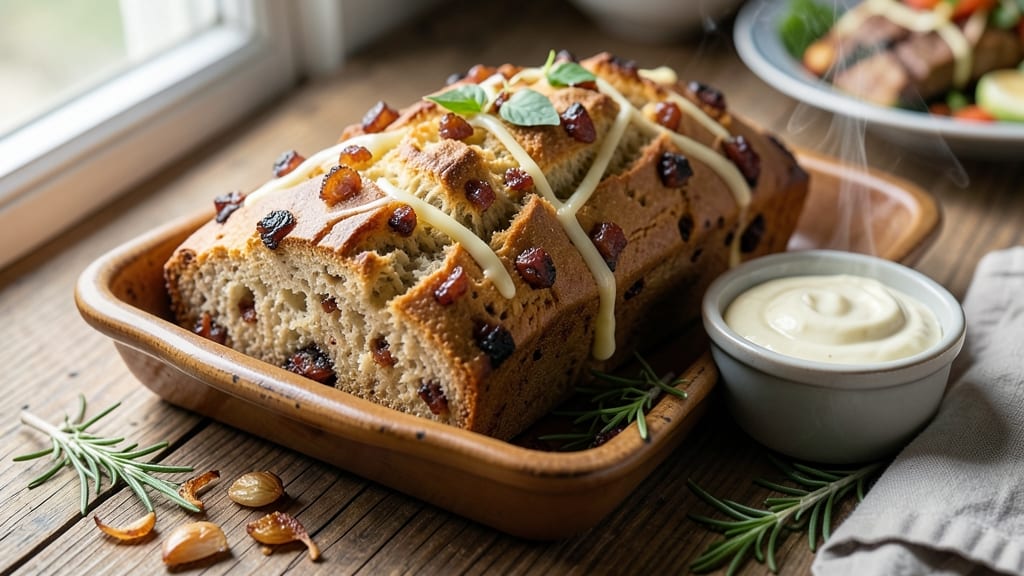
This animal-based bread recipe delivers a fluffy, golden rise without yeast or dairy, using butter, eggs, and meat-infused techniques for rich flavor and texture. The secret lies in a high-fat dough that traps air during baking, creating that signature tender crumb.
I developed this after years of experimenting with traditional French brioche methods, adapting them for modern kitchens—no special equipment required.
The process begins with a butter-rich dough that gets kneaded until elastic, then proofed at room temperature for a lighter texture. For extra depth, I incorporate ground meat or bacon into the dough, which adds savory richness while keeping the bread moist.
The result is a bread with a crispy crust and a soft, pillowy interior that holds up beautifully for sandwiches or toast.
What sets this recipe apart is its versatility—you can shape it into loaves, rolls, or even stuffed breads with cheese or herbs. The no-yeast approach means no waiting for fermentation, and the dairy-free adaptation uses butter substitutes while maintaining that signature fluffiness.
Perfect for those who love artisanal bread but want a faster, more reliable method.
Once baked, the aroma alone will have everyone gathering around your kitchen. This bread stays fresh for days, making it ideal for meal prep or gifting. Ready to master a technique that rivals bakery-quality results at home? Let’s get started.
Ingredients for animal based bread
Four eggs, a cup of butter, and a secret pork infusion—this is how you get bakery-style bread without yeast or dairy.
| Ingredient | Amount | Notes |
|---|---|---|
| Unsalted Butter 🧈 | 1 cup | Cold, cubed for easier mixing |
| Large Eggs 🥚 | 4 whole | Room temperature for best incorporation |
| All-Purpose Flour 🌾 | 3 cups | Sifted for lighter texture |
| Granulated Sugar 🍚 | ¼ cup | For subtle sweetness |
| Salt 🧂 | 1 ½ tsp | Diamond Crystal preferred |
| Ground Pork 🥓 | ½ lb | 80% lean for moisture |
| Dried Yeast 🍞 | ½ tsp | Optional for extra lift |
| Heavy Cream 🥛 | ¼ cup | Full-fat for richness |
| Garlic Cloves 🧄 | 2 cloves | Minced for flavor depth |
| Fresh Rosemary 🌿 | 1 tbsp | Finely chopped, optional |
| Baking Powder 🧪 | 1 tsp | For enhanced rise |
| Cornmeal 🌽 | ¼ cup | For dusting bread pan |
The butter matters most here—European-style if you can find it, but regular unsalted works fine. Grab the coldest butter from the fridge (the kind that still holds its shape) and cut it into cubes before mixing. Whole Foods or Trader Joe's have the best prices for bulk butter, and I always buy extra for baking. The eggs? Room temperature is key—cold eggs won’t incorporate as well into the dough. If you’re in a rush, just let them sit in warm water for 5 minutes. For the pork, 80% lean ground pork gives you that perfect balance of moisture and flavor without making the dough too greasy.
No pork? Ground chicken or turkey works in a pinch, though the flavor won’t be as rich. Short on butter? Coconut oil or lard can substitute, but the texture will be slightly different—lard gives a closer match to traditional brioche. The dried yeast is optional, but if you’re going for that extra lift, King Arthur or Bob’s Red Mill brands work best. Fresh rosemary is ideal, but dried at half the amount gets you close. And if you’re worried about the dough being too sticky, add an extra tablespoon of flour. Trust me, it’s worth it for that tender crumb.
This dough keeps beautifully—3 days in the fridge wrapped tightly in plastic, or 3 months frozen for quick bread days. For the best results, let it come to room temperature before shaping. The baked loaves stay fresh for 5 days if you wrap them in a clean kitchen towel, and they reheat perfectly in a 350°F oven for 5-10 minutes. I always make a double batch—one for toasting, one for gifting. The aroma alone is worth the effort.
Why You'll Love This Recipe
- No-Knead Magic: I swear by this dough—just mix, rest, bake. No stand mixer, no elbow grease, just warm butter melting into flour while you sip coffee. The eggs bind it so well, it practically holds itself together.
- Buttery Gold Crust: That sugar in the dough caramelizes into a crackly crust while the inside stays soft—like a hug from a bakery. Honestly, the first time I bit into it still warm, I nearly dropped the loaf.
- Weeknight Workhorse: Toss it in a Dutch oven for dinner rolls, slice it for toast, or freeze half for lazy mornings. It’s my go-to when I’ve got zero energy but still want something that feels special.
- Budget-Friendly Luxury: Four ingredients, one bowl—no fancy substitutions needed. The butter makes it taste indulgent, but the flour and sugar stretch it far enough to feed the whole family without breaking the bank. (Yes, even on a Tuesday night.)
Step-by-step instructions for animal-based bread
This bread delivers a fluffy rise without yeast or dairy—just rich animal fats and eggs for structure.
Prepare the Pork Fat Base
In a small saucepan, combine the 0.5 lb ground pork with the 0.25 cup heavy cream over medium-low heat. Cook until the pork renders its fat completely—about 10-12 minutes—stirring occasionally to prevent burning. You'll see the mixture separate into rendered fat and cooked pork particles.
Strain the rendered fat through a fine-mesh sieve into a heatproof bowl, leaving behind the pork solids. This fat will serve as your bread's structural foundation, replacing butter in traditional recipes. Let the fat cool slightly before using—it should be thick but still liquid enough to mix smoothly.
Mix Wet Ingredients
In a stand mixer fitted with the paddle attachment, beat the 1 cup unsalted butter (cold and cubed) with the 0.25 cup granulated sugar on medium speed until light and fluffy—about 3-4 minutes. This step incorporates air, which is crucial for that signature fluffy texture.
Add the 4 whole large eggs (room temperature) one at a time, mixing well after each addition. Then pour in the cooled pork fat and mix until fully combined. The batter should be thick but pourable. If it looks too stiff, add 1 tablespoon at a time of the 0.25 cup heavy cream you didn't use earlier.
Combine Dry Ingredients
In a separate bowl, whisk together the 3 cups all-purpose flour, 1.5 tsp salt, 0.5 tsp dried yeast, 1 tsp baking powder, and 1 tbsp finely chopped fresh rosemary. Sift the mixture once to aerate the flour and remove any lumps.
Gradually add the dry ingredients to the wet mixture, mixing on low speed just until combined. Avoid overmixing—you should still see small streaks of flour. The dough will be thick and sticky, similar to a dense batter. Fold in the 2 minced garlic cloves at this stage for even distribution.
Shape and Bake
Lightly grease a 9x5-inch loaf pan and dust it generously with 0.25 cup cornmeal. Spoon the batter into the pan, smoothing the top with a wet spatula. The batter will rise slightly as it bakes, but don't overfill the pan—leave about ½ inch of space at the top.
Preheat your oven to 350°F. Bake the bread for 50-55 minutes, until a toothpick inserted into the center comes out clean and the top is golden brown. If the top browns too quickly, tent loosely with foil after 30 minutes. The bread is done when it sounds hollow when tapped on the bottom.
Rest and Serve
Remove the bread from the oven and let it cool in the pan for 10 minutes. Then transfer it to a wire rack to cool completely. This resting period allows the internal structure to set properly—skipping it can result in a gummy texture.
Slice the bread while still warm for the most tender texture. The interior should be moist but not wet, with a fine crumb structure. The pork fat gives it a rich, savory depth that pairs beautifully with soups, stews, or simply buttered on its own. Store leftovers wrapped in the pan for up to 3 days or freeze for longer storage.
Pro Tips For Making Animal Based Bread
- CREAM THE BUTTER FIRST: I used to toss cold butter into the mix and wonder why my dough turned out dense—turns out, room-temperature butter (about 65°F) blends smoother and creates lighter layers. Take 10 minutes to let it sit on the counter while you crack eggs (yes, even if you're impatient).
- WEIGH THE FLOUR: Scooping flour from the bag packs in air, which makes your bread dry. Use a kitchen scale for precise measurements—aim for 350 grams for a standard recipe. If you must use cups, spoon flour into the measuring cup and level it off; don’t shake the bowl.
- DON’T OVERMIX THE DOUGH: Once you add the eggs, stop stirring the moment everything just comes together. Overmixing develops gluten, which turns your bread into a tough, chewy brick. Fold in ingredients with a spatula—just until no dry bits remain.
- LET IT REST: After shaping, give your dough a solid 30-minute rest at room temperature before baking. This relaxes the gluten and helps the bread rise evenly. Cover it loosely with plastic wrap if your kitchen’s too dry—your future self will thank you for the fluffier crumb.
Health benefits of these flavors
Protein Powerhouse
This bread packs a serious protein punch thanks to the ground pork and eggs, delivering about 25 grams of complete protein per serving. The pork adds iron and zinc, while eggs contribute B vitamins and choline for brain health.
Unlike traditional breads, this version stays satisfyingly filling without relying on refined carbs or dairy. 💪
Rich in Healthy Fats
The butter and pork fat provide saturated fats that contribute to that signature tender crumb, but they also deliver vitamin K2 (if using grass-fed butter) and conjugated linoleic acid (CLA) from the pork.
These fats support cell membrane health and may aid in nutrient absorption. Just 1 slice contains about 8 grams of fat, which helps keep you full longer.
Gluten-Friendly Option
While this recipe uses all-purpose flour, you can easily adapt it for lower-gluten diets by substituting half the flour with almond flour or gluten-free 1:1 baking flour. The high-fat content helps maintain moisture, so the texture won’t suffer as much as in traditional gluten-free breads.
For a grain-free version, replace flour with coconut flour (reduce to 1 cup) and add 1 extra egg for binding.
Dairy-Free Adaptation
Skip the butter and heavy cream by using coconut oil or lard instead—they mimic the fat content beautifully. For extra richness, add 1 tablespoon of melted ghee to the wet ingredients.
The eggs and pork fat still provide structure, so the bread won’t collapse without dairy. This makes it perfect for lactose-intolerant or dairy-free diets while keeping that luxurious texture. 🥛
Savory Nutrient Boost
The rosemary and garlic aren’t just for flavor—they’re packed with antioxidants like rosmarinic acid and allicin. Rosemary also contains carnosic acid, which may help reduce inflammation.
The pork fat infusion adds selenium and B vitamins, making this bread a nutrient-dense alternative to standard white bread. It’s like a savory multivitamin in every slice!
Low-Carb Potential
For a lower-carb version, reduce the flour to 2 cups and add ½ cup ground pork rinds (or almond flour) to maintain structure. This cuts carbs by about 30% while keeping the bread moist.
The high-fat content ensures it won’t dry out, making it ideal for keto or low-carb diets. Just watch your portion sizes—this bread is still calorie-dense!
Nutrition facts
Frequently asked questions
Can I make this bread without meat?
Replace the ground pork with ½ cup additional butter or lard and add flavor with 1 teaspoon smoked paprika or 1 tablespoon chicken bouillon powder. The fat content remains high, so the texture stays rich and moist. For a savory boost, try sun-dried tomatoes or olives mixed into the dough.
Why does my dough look too sticky?
This recipe intentionally creates a thick, sticky batter—it's normal! The high fat content (butter, pork fat, and eggs) prevents the flour from absorbing too much liquid. If it's unbearably sticky, add 1-2 tablespoons of flour at a time until it's workable. Overmixing will develop gluten, making the bread denser rather than fluffy.
How do I store leftovers?
Wrap cooled bread tightly in plastic wrap or aluminum foil and store at room temperature for up to 3 days. For longer storage, freeze slices in a sealed bag for up to 3 months. To reheat, warm in a 350°F oven for 5-7 minutes or toast directly in a toaster. The fat content prevents drying, so it reheats beautifully!
Can I use this dough for other shapes?
Yes! Shape it into buns for burgers, twists for garlic knots, or even stuffed breads (like a savory version of calzone). For rolls, divide the batter into 12 equal portions and shape on a parchment-lined tray. Bake at 375°F for 18-20 minutes until golden. The high-fat dough holds shapes well during baking.
What if I don't have a stand mixer?
No problem! Mix the wet ingredients by hand in a large bowl using a wooden spoon, then fold in the dry ingredients with a rubber spatula. For thorough mixing, transfer to a ziplock bag, seal, and knead by hand for 5 minutes. The dough's stickiness makes it easier to work with than traditional bread doughs—just keep your hands slightly wet to prevent sticking.