
Desserts
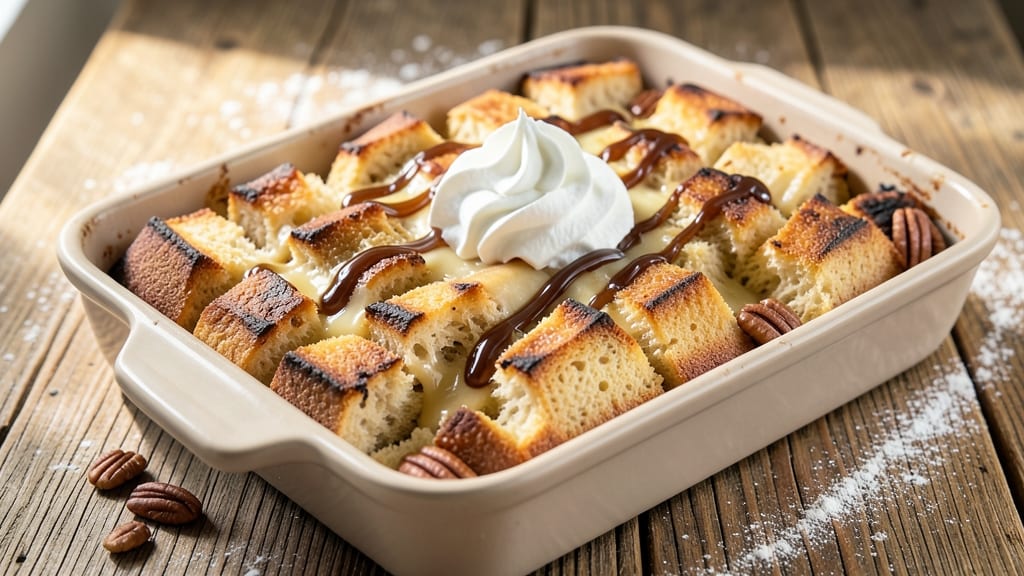
This Anna Olson bread pudding recipe delivers the coziest, most indulgent dessert you’ll crave all year—vanilla-infused custard wrapped around tender bread cubes, crowned with a golden, caramelized top.
The secret lies in balancing rich custard with just the right amount of sweetness, creating a texture that’s creamy yet sturdy enough to hold its shape.
I’ve perfected this version after years of testing, and it’s become my go-to for holiday gatherings or quiet weeknight treats when I need something comforting.
The magic happens in the custard: a blend of warm vanilla, cinnamon, and nutmeg that infuses every bite with homestyle warmth. Unlike many recipes that rely on heavy cream, this version uses a lighter approach with eggs and milk for a custard that’s rich but not overly dense.
The bread? Stale or lightly toasted works best—it absorbs the custard beautifully, transforming into tender, custard-drenched layers. And that caramelized top? Achieved through a simple broiling technique at the end, giving it that restaurant-worthy crunch.
What you’ll end up with is a bread pudding that’s foolproof yet feels special—golden brown on top, creamy in the center, with just the right balance of sweetness and spice. It’s the kind of dessert that disappears quickly, leaving only crumbs and happy faces behind.
The best part? It’s easy enough to make ahead, so you can focus on enjoying the company while it bakes. Ready to try it? Here’s everything you need to create this crowd-pleaser.
Pair it with a scoop of vanilla ice cream or a drizzle of caramel sauce for the ultimate indulgence. The recipe scales perfectly for gatherings, and leftovers reheat beautifully—though I can’t promise they’ll last that long. Let’s get baking!
Ingredients for anna olson bread pudding
Six ingredients for the custard, five for the magic caramelized top—simple but spectacular.
| Ingredient | Amount | Notes |
|---|---|---|
| Stale French Bread Loaf 🍞 | 1 ½ lb | Day-old or lightly toasted cubes |
| Large Eggs 🥚 | 6 whole | Room temperature preferred |
| Granulated Sugar 🍚 | 1 ½ cups | Light brown sugar works too |
| Whole Milk 🥛 | 3 cups | 2% or whole for creaminess |
| Pure Vanilla Extract 🌿 | 2 tbsp | Imitation won't cut it |
| Unsalted Butter 🧈 | ½ cup | Cold, cubed for custard |
| Ground Cinnamon 🌶️ | 1 ½ tsp | Freshly ground preferred |
| Ground Nutmeg 🌿 | ½ tsp | Freshly grated nutmeg |
| Salt 🧂 | ½ tsp | Kosher or sea salt |
| Heavy Whipping Cream 🥛 | ½ cup | For caramelized topping |
| Chopped Walnuts 🥜 | ¼ cup | Optional crunchy topping |
| Powdered Sugar 🍚 | 2 tbsp | For dusting final topping |
The bread is non-negotiable here. Day-old French bread from Breads Bakery or your local bakery gives the best texture—crusty enough to hold up but soft enough to soak up custard. If you're using fresh bread, toast it lightly to mimic that perfect staleness. The eggs should be large, fresh eggs—room temperature makes all the difference when mixing the custard. I always buy mine from Trader Joe's because they're consistently good quality. For the spices, Penzeys or bulk bins at Whole Foods have the best ground cinnamon and nutmeg—freshly ground means better flavor. Don't skimp on the vanilla either; McCormick Pure Vanilla is my go-to for that authentic vanilla taste.
No French bread? Challah or brioche cubes work beautifully—they're just as buttery. Running out of milk? Evaporated milk or coconut milk gives a similar richness, though the texture will be slightly different. The sugar can be swapped for maple syrup or honey, but reduce by 2 tbsp since they're sweeter. For the caramelized top, if you don't have heavy cream, half-and-half or even coconut cream will work, though it won't be quite as luscious. The walnuts are optional, but if you skip them, add another 1 tbsp of powdered sugar to the topping for extra sweetness. And if you're feeling fancy, a sprinkle of flaky sea salt on top after baking takes it to another level.
This custard mixture keeps for 1 day in the fridge if you need to prep ahead, but the bread should be added right before baking. The walnuts and powdered sugar topping can be mixed up to 2 days in advance and stored in an airtight container. Leftovers reheat beautifully—just pop them in the oven at 350°F for 10-15 minutes until warmed through. I always make a double batch because it disappears faster than you can say 'caramelized top.' Store leftovers in the fridge for up to 4 days or freeze for 2 months—though honestly, it's hard to resist eating it all at once.
Why You'll Love This Recipe
- No-Stale-Bread Waste: I keep a loaf of French bread on hand just for this—no sad, dried-out scraps left in the back of the pantry. Toss in chunks, pour the custard (eggs, milk, sugar, vanilla), and watch it transform into something golden and tender.
- Vanilla-Sugar Magic: That simple vanilla extract and sugar combo? It’s the secret weapon here. The bread soaks up the sweet custard until every bite is warm, custardy perfection—like dessert, but breakfast-worthy.
- Weeknight Hero: Between us, this is my go-to when I need something hearty but hands-off. Bake it while you fold laundry or watch a movie—just 45 minutes later, you’ve got a crowd-pleaser with almost no effort.
- Budget Breakfast Win: Eggs, milk, and a loaf of bread? Check. No fancy ingredients, no markup. Plus, leftovers reheat beautifully—drizzle with caramel sauce or eat plain, but either way, it’s a steal.
Step-by-step instructions for Anna Olson's bread pudding recipe
This custardy, vanilla-infused bread pudding delivers a caramelized top and creamy texture every time.
Prepare the Bread and Custard Base
Cut the 1.5 lb stale French bread loaf into 1-inch cubes—no need to be precise, just keep them roughly even. If your bread is fresh, toast it lightly first to mimic the texture of day-old bread. Transfer the cubes to a 9x13-inch baking dish and arrange them in an even layer, leaving about ½-inch between each cube for the custard to soak through.
In a large bowl, whisk together the 6 whole large eggs, 1.5 cups granulated sugar, 3 cups whole milk, 2 tbsp pure vanilla extract, 1.5 tsp ground cinnamon, 0.5 tsp ground nutmeg, and 0.5 tsp salt until completely smooth. The mixture should be pale yellow and fully combined—no streaks of egg or sugar should remain. This ensures a silky custard rather than a lumpy one. Pour the custard evenly over the bread cubes, pressing down gently to help it seep into every nook and cranny.
Dot the top with 0.5 cup cold unsalted butter, cut into small cubes. The butter will melt into the custard as it bakes, adding richness and helping create that coveted caramelized crust. Let the baking dish sit at room temperature for 15-20 minutes while you preheat the oven to 350°F. This resting time allows the bread to absorb as much custard as possible before baking.
Bake Until Golden and Set
Place the baking dish in the preheated oven and bake for 45-50 minutes. You'll know it's ready when the top is deep golden brown and the edges pull away slightly from the dish. If the top browns too quickly, tent it loosely with aluminum foil during the last 10-15 minutes of baking to prevent over-browning while the center finishes cooking.
To check doneness, insert a knife or skewer into the center—it should come out clean with just a few moist crumbs clinging to it. If it's still slightly underdone, return it to the oven for another 5 minutes. Overbaking will make the pudding dry, so resist the urge to let it cook longer than necessary. Once done, remove from the oven and let it rest for 10 minutes before serving. This resting time allows the custard to set slightly, making it easier to slice.
Create the Caramelized Topping
While the bread pudding rests, prepare the caramelized topping in a small saucepan. Combine the 0.5 cup heavy whipping cream and 2 tbsp powdered sugar over medium heat. Stir constantly with a wooden spoon until the mixture thickens slightly and begins to bubble—about 3-4 minutes. The topping should coat the back of the spoon and have a glossy, caramel-like consistency. Remove from heat immediately to prevent scorching.
Pour the warm cream mixture evenly over the baked bread pudding, spreading it gently with a spatula to cover the entire surface. Sprinkle the 0.25 cup chopped walnuts over the top for a delightful crunch. The contrast of the creamy, caramelized topping with the crunchy walnuts is what makes this bread pudding truly special. Let it sit for another 5 minutes to allow the topping to set slightly before serving.
Serve Warm with Vanilla Ice Cream
Slice the bread pudding into 6 generous portions and serve immediately while warm. The custard should be creamy and set but still slightly jiggly in the center, with a crisp, caramelized top that crackles with every bite. Pair it with a scoop of vanilla ice cream to enhance the vanilla flavor and add a cool contrast to the warm pudding.
For an extra touch, dust the top with a pinch of ground cinnamon or a sprinkle of powdered sugar just before serving. The aroma of freshly baked bread pudding with its warm, spiced notes will fill your kitchen, making it impossible to resist. This recipe is perfect for brunch, dessert, or even a cozy weekend treat—every bite is pure comfort in custard form.
Pro Tips For Making Anna Olson Bread Pudding
- Soak the Bread Properly: Drown those bread cubes in the egg-milk mix for at least 15 minutes—no rushing. I learned this the hard way when my first batch came out dense and dry because I only let it sit for 5. The bread needs time to absorb the liquid so it doesn’t turn into a brick when baking.
- Whisk Eggs Like a Pro: Beat the eggs and sugar together until the mixture is pale yellow and slightly thickened—about 2 minutes with a whisk. This isn’t just for fluff; it ensures your pudding has that signature Anna Olson custardy texture instead of a watery, undercooked mess.
- Skip the Overmixing: Once you fold in the soaked bread, stop stirring the second everything comes together. Overmixing deflates the bread and makes the pudding gummy. Just give it a couple of gentle turns—your future self will thank you when it’s golden and set, not gluey.
- Bake at 350°F, Not Higher: Anna Olson’s recipe is designed for a steady 350°F oven—don’t crank it up to 375°F thinking it’ll speed things along. The heat needs to work slowly to let the custard set properly. If the top browns too fast, tent it with foil and let it finish at its own pace.
Creative variations of this recipe
Boozy Twist
Add 2 tbsp bourbon or rum to the custard mixture for a grown-up version—it infuses beautifully with the vanilla and cinnamon. I like Maker's Mark bourbon for its caramel notes that complement the bread pudding’s sweetness. For a lighter touch, use ½ cup vanilla-infused vodka instead of milk. 🥃
Chocolate-Dipped
Drizzle the baked bread pudding with warm melted chocolate (I use Ghirardelli 60% dark chocolate) before adding the caramelized topping. The chocolate pools in the crevices, creating pockets of rich, bittersweet contrast. For extra decadence, sprinkle with flaky sea salt to balance the sweetness.
Pumpkin Spice
Swap the vanilla extract for 2 tbsp pumpkin pie spice and add 1 cup pumpkin puree to the custard. The spices—cinnamon, nutmeg, ginger, and cloves—transform this into a cozy fall dessert. Top with toasted pecans instead of walnuts for a Southern-inspired twist.
Coconut Cream
Replace the milk and heavy cream with 3 cups full-fat coconut milk for a tropical version. The custard takes on a subtle coconut flavor that pairs perfectly with the caramelized topping. Garnish with toasted coconut flakes and a sprinkle of turbinado sugar for a beachy dessert vibe.
Apple Cider Glaze
Simmer ½ cup apple cider with 2 tbsp brown sugar and 1 tsp cinnamon until reduced by half. Drizzle this warm glaze over the baked bread pudding before adding the caramelized topping. The tartness cuts through the richness, and the aroma is pure autumn coziness. 🍎
Make-Ahead Freezer Hack
Assemble the bread pudding in the baking dish, but bake it for 30 minutes at 350°F before freezing. Cool completely, wrap tightly in plastic wrap and foil, and freeze for up to 3 months.
To serve, thaw overnight in the fridge, then bake at 350°F for 20-25 minutes until heated through. This is a lifesaver for holiday prep!
Nutrition facts
Frequently asked questions
Why does the bread need to be stale for this recipe?
Stale bread absorbs custard perfectly without turning mushy. Fresh bread soaks up too much liquid, making the pudding dense and watery. If you only have fresh bread, toast it lightly first to mimic staleness. The texture should be slightly dry but not crumbly—this ensures every bite has that ideal custard-to-bread ratio.
Can I make this bread pudding without eggs?
Yes, but the texture will change significantly. Replace the eggs with a flax egg mixture (1 tbsp ground flaxseed + 3 tbsp water per egg) or silken tofu (½ cup blended per 2 eggs). The custard will be lighter but less rich. For best results, reduce the milk by ¼ cup to maintain balance. The caramelized top may also be slightly less crisp.
How do I prevent the bread pudding from getting gummy?
Gummy texture usually means overbaking or too much liquid. First, ensure your bread cubes are evenly spaced with ½-inch gaps between them. Second, bake until the edges pull away from the dish (45-50 minutes at 350°F) but not until the top is hard. Finally, let it rest for 10 minutes before slicing—this helps the custard set properly. If it's still gummy, reheat briefly at 325°F for 5-10 minutes.
What’s the best way to reheat leftovers?
For best results, cover the bread pudding with foil and reheat at 325°F for 15-20 minutes until warmed through. If using the microwave, cover with a damp paper towel and heat in 20-second bursts at 50% power. Avoid high heat—it can make the custard rubbery. For extra decadence, add a splash of milk or cream before reheating to restore moisture. Leftovers keep well for 4 days in the fridge.
Can I use a different type of bread?
While French bread is traditional, challah, brioche, or even sourdough work beautifully. Avoid soft breads like white sandwich bread—they’ll turn soggy. For extra flavor, try cinnamon swirl bread or raisin bread. Just adjust the baking time by 5-10 minutes depending on the bread’s density. The key is using bread that’s at least 1 day old or lightly toasted.