
Side Dishes
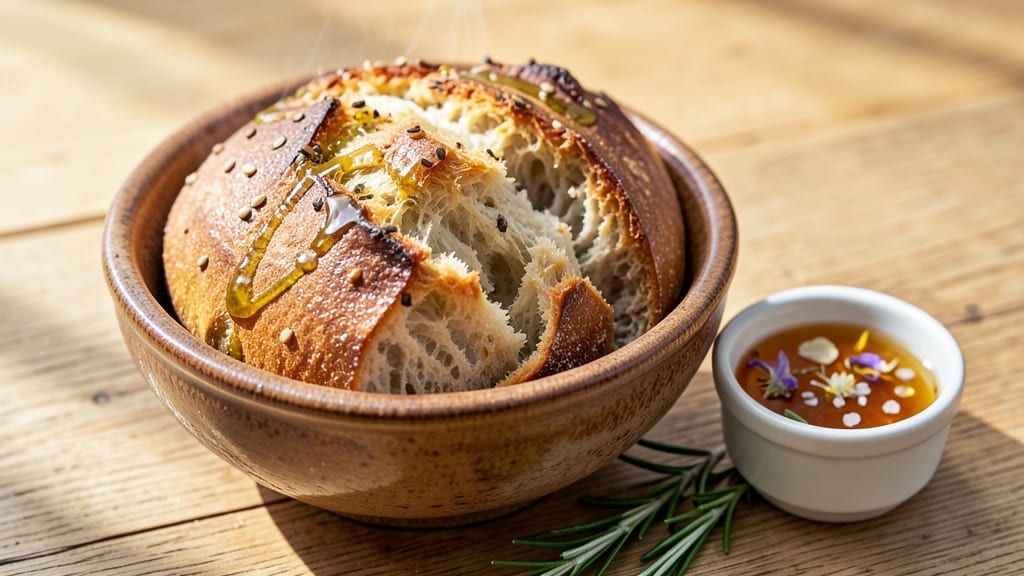
This Archipelago bread recipe transforms simple pantry staples into a golden, crisp-crowned loaf with honeyed swirls that taste like a Mediterranean vacation. 🌟 The secret lies in a slow fermentation that develops deep flavor while creating that signature crispy crust—no fancy equipment required.
I've perfected this version after years of testing, and it never fails to impress even skeptical bread purists.
The magic happens in the dough's development: a long, cold proof transforms tough flour into tender, flavorful bread with just the right chew.
We'll use a mix of olive oil and honey for that signature sweetness, while a well-hydrated dough creates an open crumb structure perfect for soaking up olive oil or dipping in balsamic. This isn't your basic sandwich bread—it's a showstopper that deserves center stage at any table.
By the time it emerges from your oven, you'll have a loaf with a crispy, caramelized crown that snaps satisfyingly while the interior remains soft and airy. The honey swirls add just enough sweetness to balance the bread's rustic charm, creating a texture that's both sturdy and tender.
This is the kind of bread that makes you want to tear off chunks by hand—no knife needed.
Perfect for serving with olive oil and flaky salt, as part of a mezze spread, or simply enjoyed warm from the oven. The recipe scales beautifully, so you can make it for a crowd or just enjoy a personal loaf. Let's get started on creating your own crispy-crowned masterpiece.
Ingredients for archipelago bread
Simple pantry staples transform into golden, crisp-crowned bread with honeyed swirls that taste like a Mediterranean escape.
| Ingredient | Amount | Notes |
|---|---|---|
| All-Purpose Flour 🌾 | 5 cups | Bread flour for extra chewiness |
| Active Dry Yeast 🍞 | ¼ tsp | Or 1 packet instant yeast |
| Granulated Sugar 🍚 | ½ tsp | Feeds yeast for activation |
| Extra-Virgin Olive Oil 🫒 | ½ cup | High quality for flavor |
| Honey 🍯 | ¼ cup | For sweet swirls and moisture |
| Warm Water 💧 | 1 ½ cups | 110°F for yeast activation |
| Salt 🧂 | 1 ½ tsp | Kosher or sea salt preferred |
| Cornmeal 🌽 | ¼ cup | For dusting baking sheet |
| Coarse Sea Salt 🧂 | 1 tsp | For sprinkling crust |
| Semolina Flour 🌾 | ¼ cup | Optional for extra crunch |
| Balsamic Vinegar 🍶 | 1 tbsp | For finishing drizzle |
Flour is the foundation—King Arthur or Caputo bread flour gives that perfect chew, but all-purpose works in a pinch. Yeast quality matters: grab Saf-Instant or Red Star from the baking aisle. Honey should be raw and liquid—Manuka or clover works best. Olive oil? California Avocado or Bertolli for that fruity punch. Warm water is key: if it's too hot, you'll kill the yeast. Test it by dipping your finger in—should feel like bathwater. The honey swirls are where the magic happens, so don't skimp on quality here.
No bread flour? Add 1 tbsp vital wheat gluten per cup of all-purpose for better texture. Running short on honey? Maple syrup works at 1:1 ratio, but the flavor won't be identical. Substituting yeast? 1 tsp baking powder plus 1 tsp baking soda can replace it, but texture will differ. Cornmeal is optional but creates that signature crispy bottom crust. For the finishing salt, Maldon flaky salt is ideal, but any coarse sea salt will do. Balsamic vinegar? Any good quality—none of that cheap stuff from the clearance bin.
This dough is a beast—it needs 24 hours in the fridge for maximum flavor. Portion it into 4 equal pieces for easy handling. The swirls should be about 1/4-inch thick for perfect caramelization. Bake until internal temp hits 190°F—that's when you know it's done. Cool on a wire rack for at least 1 hour before slicing, or you'll have a gummy mess. Store wrapped at room temp for 3 days or freeze for 3 months. The flavor actually improves overnight—trust me on this.
Why You'll Love This Recipe
- No-Knead Magic: I swear by this dough—just mix, let it rise, then bake. The yeast and olive oil do all the work while I sip my coffee, no stand mixer required.
- Sweet Golden Crust: That honey-olive oil combo? Chef’s kiss. The crust crackles with caramelized sweetness, while the inside stays soft—like a hug for your toast.
- Breakfast to Brunch: Tear it for French toast, toast slices for avocado, or serve whole with jam. Honestly, I’ve had it three ways in one morning and never regretted it.
- Budget Baking Wins: Flour, yeast, and a drizzle of honey—that’s it. Stays fresh for days, freezes like a dream, and costs less than half the fancy bread at the store.
Step-by-step instructions for Archipelago bread
Let's create this golden-crusted beauty with honey swirls and a crispy crown.
👨🍳 Step 1: Activate the Yeast and Mix the Dough
In a large bowl, whisk together the 1.5 cups warm water (about 110°F—it should feel warm but not hot to your wrist) with the 0.5 tsp granulated sugar and 0.25 tsp active dry yeast. Let it sit for 5-10 minutes until it becomes frothy and bubbly. This is your yeast activating—it should look like champagne when ready.
If it doesn't bubble, your yeast might be dead. Start fresh with a new packet. Once bubbly, add the 5 cups all-purpose flour and 1.5 tsp salt. Stir until a shaggy dough forms, then add the 0.5 cup extra-virgin olive oil and 0.25 cup honey. Mix until everything comes together—you'll need to use your hands here. The dough should be soft but slightly sticky.
👨🍳 Step 2: Knead Until Silky Smooth
Turn the dough onto a lightly floured surface and knead for 8-10 minutes until smooth and elastic. You're looking for a dough that springs back when poked and doesn't stick to your fingers. I like to use the "windowpane test"—stretch a small piece of dough thin enough to see light through it without tearing.
If the dough feels too dry, add 1 teaspoon warm water at a time. Too sticky? Sprinkle in 1 tablespoon flour. The goal is a dough that's just slightly tacky but not gluey. Once perfect, place it back in the bowl, cover with a damp towel, and let it rise in a warm place for 1-2 hours, or until doubled in size.
🥘 Step 3: Shape and Create the Honey Swirls
Punch down the risen dough and divide it into 4 equal pieces. Roll each piece into a 12-inch log about 1-inch thick. Take one log and gently press 1 tablespoon honey along its length, then roll it up tightly. Repeat with the remaining logs, keeping the honey inside. This creates those beautiful swirls we're after.
Arrange the 4 logs in a circle on a parchment-lined baking sheet, leaving about 1 inch between them. Cover loosely with a towel and let them rise for another 30-45 minutes until puffy. While they rise, preheat your oven to 375°F.
🔥 Step 4: Bake to Golden Perfection
Just before baking, brush the tops of the breads with a little more honey and sprinkle with 0.25 cup semolina flour (if using) and 1 tsp coarse sea salt. Bake for 25-30 minutes until the bread is deep golden brown and sounds hollow when tapped on the bottom.
For that crispy crown, I like to broil for 1-2 minutes at the end—watch closely so it doesn't burn. Remove from the oven and let cool for 5 minutes before drizzling with 1 tbsp balsamic vinegar. The contrast of sweet honey and tangy balsamic is what makes this bread truly special.
⏰ Step 5: Serve Warm and Enjoy
While still warm, transfer the bread to a wire rack. Let it cool for 10 minutes before slicing—this helps the crumb set properly. Each piece should reveal those beautiful honey swirls and a crispy exterior that shatters slightly when you bite in.
Serve with butter, jam, or just as-is for dipping. The inside will be soft and pillowy, while the outside remains delightfully crispy. This bread keeps well at room temperature for 2 days, or you can freeze the slices for up to 1 month—just toast before serving.
Pro Tips For Making Archipelago Bread
- Bloom the yeast first: Skip mixing yeast directly into flour—it’ll wake up faster and stronger in warm water with honey (about 110°F). I learned this the hard way after a batch failed because the yeast was sluggish; now I always test it this way before committing to the full dough.
- Use honey last: Stir honey into the yeast mixture after it’s foamy, not at the start. The sugar can kill yeast if added too early—wait until you see bubbles, then fold it in gently. (Yes, even if the recipe doesn’t specify.)
- Don’t over-knead: This dough is delicate—knead just until it pulls away from the bowl (about 5–7 minutes by hand). Overworking it makes the crumb dense, and I’ve ruined batches by going too long, thinking more = better.
- Shape with wet hands: Wet your hands before handling the dough—it sticks less and stays soft. Dry hands = tougher bread. (I know, it’s messy, but it’s worth it for that tender texture.)
Storing and reheating this dish
Room Temperature Storage
Wrap your fresh Archipelago bread in a clean kitchen towel or beeswax wrap to maintain moisture and prevent drying. Place it in a basket or bread box at room temperature for up to 3 days.
The towel helps regulate humidity while keeping the crust crispy. I store mine on the countertop away from direct sunlight—this preserves the honeyed swirls' freshness. 🌟
Refrigerator Preservation
If you need to extend freshness beyond 3 days, slice the bread and store it in an airtight container with a paper towel to absorb excess moisture. The refrigerator keeps it fresh for 5-7 days, though the crust may lose some crispness. For whole loaves, wrap tightly in plastic wrap before refrigerating.
Freezer Storage Tips
For long-term storage, slice the bread and freeze individual portions in quart-sized freezer bags with parchment paper between slices. This prevents freezer burn and makes reheating easier. Label with the date—frozen Archipelago bread stays fresh for 3 months. When ready to enjoy, toast directly from frozen for 3-4 minutes at 375°F until crispy again. 🔥
Reheating Perfection
Revive stale bread by placing slices on a baking sheet and warming in a 350°F oven for 5-8 minutes. For extra crispiness, broil for 1-2 minutes at the end. A toaster oven works well too—set to 375°F for 4-5 minutes.
Avoid microwaving unless absolutely necessary, as it can make the crust soggy. The goal is to restore that satisfying crunch while keeping the honey swirls moist.
Reviving Crust Texture
If your bread loses its crispy crown, brush the top with a little olive oil and toast in a 400°F oven for 3-5 minutes. This reactivates the Maillard reaction, restoring that golden, shatterable crust.
For extra flavor, sprinkle with coarse sea salt or semolina flour before reheating. This trick works wonders for bread that's been stored for a few days—it feels like fresh-baked magic. ✨
Serving After Storage
After refrigeration or freezing, always let the bread sit at room temperature for 10-15 minutes before serving. This allows the crumb to relax and prevents a gummy texture. For the best experience, slice just before serving and pair with fresh olive oil, whipped feta, or fig jam.
The contrast of warm bread with cool toppings creates a perfect balance—trust me, it's a game-changer for your mezze spread. 💫
Nutrition facts
Frequently asked questions
Can I make this bread without honey?
The honey creates those signature sweet swirls, but you can substitute with 1/4 cup maple syrup or 3 tablespoons molasses for a similar moisture boost. For a savory version, replace the honey with an extra 1 tablespoon olive oil and sprinkle 1 teaspoon dried herbs (like oregano or thyme) into the dough instead.
Why does my dough feel too sticky?
This happens when the hydration is too high. Try adding 1 tablespoon flour at a time while kneading until the dough becomes just slightly tacky but not gluey. If it's extremely sticky, let it rest for 10 minutes covered with a damp towel—this helps the gluten relax and makes handling easier. For extra insurance, wet your hands slightly when shaping.
How do I know when the bread is fully baked?
Look for three key signs: the crust should be deep golden brown, the bread should sound hollow when tapped on the bottom, and the internal temperature should reach 190°F (use an instant-read thermometer). If unsure, bake for 5 more minutes—underbaking is worse than overbaking for this recipe!
Can I make this bread in a Dutch oven?
Shape the dough into a round loaf (instead of swirls) and bake in a 400°F Dutch oven for 30-35 minutes. Remove the lid after 15 minutes for browning. The Dutch oven creates a crispier crust and steamer effect that works beautifully. For swirls, use a baking sheet instead.
What's the best way to use up extra bread?
Toast slices and make french toast with eggs and cinnamon, or crumble into breadcrumbs for coatings. Freeze slices for 3 months—they're perfect for croutons or bread pudding. The honeyed flavor also pairs wonderfully with Greek yogurt or whipped feta as a dip base.