
Desserts
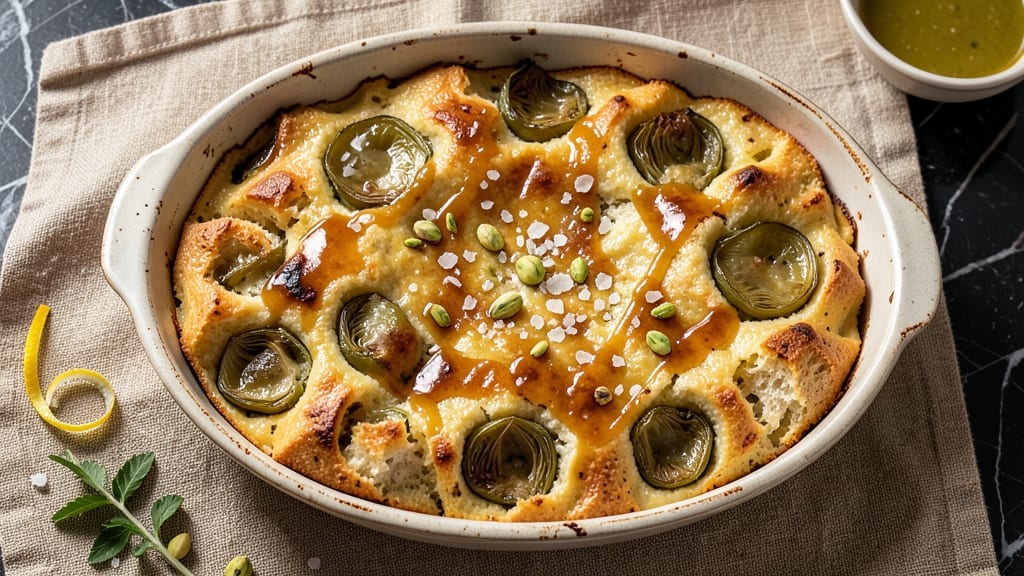
This artichoke bread pudding recipe transforms a simple dessert into a savory-sweet masterpiece that balances herby artichoke crunch with caramelized custard layers.
The secret lies in soaking sturdy bread cubes in an egg-milk mixture infused with marinated artichokes, then baking until golden and tender—creating a texture that’s both crisp at the edges and velvety inside.
I developed this recipe after craving something unexpected for dessert that still felt hearty enough to satisfy a crowd.
The magic happens in the layers: crispy bread cubes absorb a rich custard base while artichokes add a briny, herby depth that cuts through the sweetness. A sprinkle of parmesan cheese and fresh herbs on top elevates it from ordinary to extraordinary, making every bite feel like a restaurant-worthy indulgence.
What makes this recipe stand out is its versatility—it works as a make-ahead dessert for gatherings or a comforting weeknight treat when you’re craving something different.
By the time it emerges from the oven, you’ll have a golden, bubbling pudding with artichoke bits peeking through the custard, offering a delightful contrast of textures and flavors.
The crust is crisp enough to hold a spoonful of custard, while the center remains soft and rich, almost like a cross between bread pudding and a savory casserole. This dish proves that dessert doesn’t have to be one-dimensional—it can be bold, unexpected, and utterly satisfying.
Perfect for brunch, holiday meals, or even a special dinner, this artichoke bread pudding is the kind of recipe that turns a simple ingredient—day-old bread—into something extraordinary. Let’s get started on creating your next crowd-pleaser.
Ingredients for artichoke bread pudding
Sixteen ingredients transform simple bread and artichokes into a restaurant-worthy dessert masterpiece.
| Ingredient | Amount | Notes |
|---|---|---|
| Day-Old French Bread Loaf 🍞 | 1 ½ lb | Crust removed, cut into 1-inch cubes |
| Large Eggs 🥚 | 6 whole | Room temperature for even baking |
| Whole Milk 🥛 | 2 ½ cups | Warm slightly for better custard |
| Marinated Artichoke Hearts 🍃 | 14 oz | Drained, quartered, brine reserved |
| Granulated Sugar 🍯 | ¾ cup | Light brown sugar for caramel notes |
| Unsalted Butter 🧈 | ½ cup | Cold, cubed for even distribution |
| Fresh Thyme Leaves 🌿 | ¼ cup | Finely chopped, stems removed |
| Fresh Rosemary 🌿 | 2 tbsp | Finely chopped, woody stems discarded |
| Parmesan Cheese 🧀 | ½ cup | Freshly grated, nutmeg added |
| Vanilla Extract 🌿 | 1 tsp | Pure, high-quality extract |
| Salt 🧂 | 1 ½ tsp | Diamond Crystal kosher salt |
| Ground Black Pepper 🌶️ | ½ tsp | Freshly cracked black pepper |
| All-Purpose Flour 🌾 | 2 tbsp | For breading crispy top layer |
The bread is your canvas—French bread holds up best to soaking, but sourdough or Italian loaves work too. Look for day-old bread at bakeries (they often give it away for free) or use what you have. The artichokes? Marinated hearts from Trader Joe's or Whole Foods are my go-to—they're pre-cooked and packed with flavor. Fresh artichokes would need hours of boiling, so jarred is the practical choice here. For the herbs, fresh thyme and rosemary make all the difference; dried works in a pinch but lacks that bright, aromatic punch. If you're using dried, double the amount and toast the rosemary sprigs in a dry pan for 30 seconds to deepen their flavor.
No marinated artichokes? Sun-dried tomatoes or roasted red peppers add similar briny depth—just chop them finely. Substituting milk? Oat milk or almond milk works, but the custard won't be as rich. For a dairy-free version, use unsweetened coconut milk and add an extra tablespoon of cornstarch to thicken. The Parmesan is non-negotiable here—it's what gives that savory crunch. Pre-grated cheese gets clumpy, so invest in a good block and grate it yourself. Short on time? Nutritional yeast adds a cheesy flavor without the texture. The butter should be cold when you add it to the bread cubes—this creates pockets of richness that melt during baking, creating that perfect custard texture.
This pudding is a make-ahead dream—prepare everything up to baking the day before. Store the assembled pudding in the fridge for up to 24 hours before baking. Once baked, it keeps for 4 days in the fridge or 3 months in the freezer. For serving, a sprinkle of extra Parmesan and fresh herbs makes it look restaurant-worthy. The crust gets crispier as it cools, so let it sit for 10 minutes before slicing. Portion into individual ramekins for elegant single servings or bake in a large dish for feeding a crowd. Leftovers reheat beautifully—just cover with foil and warm at 350°F for 15 minutes.
Why You'll Love This Recipe
- Here’s what sold me: the artichokes bring this dish a briny, buttery depth that’s not sweet or heavy. The sugar caramelizes just enough to balance the saltiness, while the eggs add that custardy richness. It’s like a hug in dessert form—savory, creamy, and just a little bit sophisticated.
- One-Pan Magic: I swear by this recipe—just toss cubed day-old French bread, those tangy marinated artichoke hearts, and a few eggs into a baking dish. No fancy layers, no fussing with ramekins. The artichokes soften into the custard while the bread soaks up the creamy milk-egg mix, giving you that golden crust without the extra work.
- Unexpected Richness: Here’s what sold me: the artichokes bring this dish a briny, buttery depth that’s not sweet or heavy. The sugar caramelizes just enough to balance the saltiness, while the eggs add that custardy richness. It’s like a hug in dessert form—savory, creamy, and just a little bit sophisticated.
- Leftovers? Better.: Between us, this pudding tastes better the next day. The flavors meld overnight, and the texture gets even more velvety. I make a big batch on Sundays and portion it out for breakfast or a quick snack—no reheating required, just microwave and enjoy. (Yes, even on a Tuesday night.)
Step-by-step instructions for artichoke bread pudding
Here's how to transform simple ingredients into a rich, herby bread pudding with caramelized artichoke bites.
Prepare the Bread and Artichoke Mixture
Preheat your oven to 350°F and grease a 9x13-inch baking dish with unsalted butter. Cut the 1.5 lb day-old French bread loaf into 1-inch cubes, removing any crust. Arrange half the bread cubes in the prepared dish, slightly overlapping but not packed too tightly.
In a large bowl, combine the 14 oz drained, quartered marinated artichoke hearts, 0.25 cup finely chopped fresh thyme leaves, 2 tbsp finely chopped fresh rosemary, and 0.5 cup freshly grated Parmesan cheese. Toss gently to distribute the herbs and cheese evenly. Sprinkle this mixture evenly over the bread cubes in the baking dish.
Create the Custard Base
In a separate large bowl, whisk together the 6 whole room-temperature eggs, 2.5 cups warm whole milk, 0.75 cup granulated sugar, 1 tsp vanilla extract, 1.5 tsp salt, and 0.5 tsp ground black pepper until completely smooth and well combined. This mixture should be pale and slightly thickened from the warm milk.
Gently pour the egg mixture over the bread and artichoke mixture in the baking dish, allowing it to seep between the bread cubes. Let it sit for 10 minutes at room temperature while you prepare the topping. This resting time helps the bread absorb the custard evenly.
Add the Topping for Crispy Texture
In a small bowl, combine the 2 tbsp all-purpose flour and 0.5 cup cold cubed unsalted butter. Using your fingers, work the butter into the flour until you have a coarse, crumbly texture with pea-sized butter pieces throughout. This creates the signature crispy topping.
Sprinkle the flour-butter mixture evenly over the custard mixture in the baking dish. Press down very lightly with your fingers to help it adhere to the bread cubes. The topping should look like a snowy blanket covering the entire surface.
Bake Until Golden and Set
Place the baking dish on the middle rack of your preheated oven and bake for 45-50 minutes, until the edges are deep golden brown and the center is just set. The pudding is done when it springs back slowly when gently pressed with a finger and the top is crispy to the touch.
If the top browns too quickly before the center is set, loosely cover the dish with aluminum foil for the last 10-15 minutes of baking. The internal temperature should reach 165°F when measured at the center. Let the pudding rest for 15 minutes before serving—this allows it to set properly and makes slicing easier.
Serve Warm with Optional Garnishes
Use a sharp knife to cut the bread pudding into 6 equal squares, gently lifting the knife to avoid tearing the crispy topping. Serve warm, straight from the baking dish, with a sprinkle of freshly cracked black pepper and an additional dusting of Parmesan cheese if desired.
Each bite should deliver a perfect balance of creamy custard, herby artichokes, and crispy bread crust. The caramelized sugar in the custard pairs beautifully with the briny artichokes, while the thyme and rosemary add an aromatic depth that elevates this savory dessert to restaurant-quality.
Pro Tips For Making Artichoke Bread Pudding
- Bake at 350°F: DESCRIPTION: That’s the magic number for this pudding—hot enough to set the custard without burning the bread crust. I used to crank it to 375°F and ended up with a dry top and a gooey center. Trust me, 350°F is where it all comes together evenly.
- Drain Artichokes Well: DESCRIPTION: Marinated artichokes hold onto extra liquid, which turns your pudding into soup. Pat them dry with a paper towel before chopping—this keeps the texture light and prevents a watery mess. (Yes, even if the jar says "drained." I learned this after a soggy disaster.)
- Soak Bread in Milk: DESCRIPTION: Don’t just toss cubes into cold milk—let them sit for 10 minutes first. This ensures the bread absorbs the liquid evenly, so every bite is tender, not gummy. I skip this step sometimes, and the center stays undercooked. (Your future self will notice.)
- Whisk Eggs Like Mad: DESCRIPTION: Beat those eggs until they’re pale and ribbony—no streaks, no lumps. I used to give them a half-hearted stir, and the pudding ended up grainy. A full 2 minutes with a whisk makes all the difference in a silky texture. (And yes, you can use a fork, but I’ve tried it both ways.)
Regional styles of this recipe
Italian Rustic Twist
In Italy, bread puddings often incorporate local flavors like ricotta cheese and saffron for a lighter texture. Swap the Parmesan for Pecorino Romano and fold in ½ cup ricotta with the eggs.
Add a pinch of saffron threads steeped in 2 tbsp warm milk for a golden hue and floral aroma. Serve with a drizzle of honey instead of sugar on top for a touch of sweetness. 🌿
French Artichoke Focus
French bakeries often use baguette slices instead of cubes for a more elegant presentation. Layer ½-inch thick baguette slices in a 9x13-inch dish, brushing each layer with melted butter and sprinkling with flaky sea salt.
Add a layer of ¼ cup chopped shallots with the artichokes for extra depth. Top with a crème fraîche mixture (whisk ½ cup crème fraîche with 1 egg yolk and 1 tbsp Dijon mustard) before baking. This version keeps the bread tender while adding a tangy contrast.
Southern U.S. Cheesy Crunch
In the American South, this pudding often includes sharp cheddar and bacon crumbles for a smoky, cheesy twist. Replace half the Parmesan with ½ cup sharp cheddar and fold in ½ cup cooked bacon crumbles with the artichokes.
Add ½ tsp smoked paprika to the custard for warmth. Top with a mix of crushed Ritz crackers and butter for an extra-crispy crust. Serve with a side of spicy apple butter for dipping. 🔥
Mediterranean Herb Blend
For a brighter Mediterranean flavor, boost the herbs with fresh oregano and lemon zest. Add 1 tbsp chopped oregano and 1 tsp lemon zest to the artichoke mixture. Replace the vanilla with 1 tsp lemon extract for a citrusy kick.
Finish with a sprinkle of toasted pine nuts and crumbled feta before baking. This version shines when served with a Greek salad on the side for a complete meal. 🌞
Gluten-Free Adaptation
Use a gluten-free baguette or cornbread instead of French bread. Mix 2 tbsp gluten-free flour with the 2 tbsp all-purpose flour for the topping. Ensure your marinated artichokes are certified gluten-free (some brands use soy sauce in the marinade).
For extra binding, whisk 1 tbsp cornstarch into the custard mixture. This version maintains the same rich texture while being safe for gluten-sensitive guests. ✨
Nutrition facts
Frequently asked questions
Can I use fresh artichokes instead of marinated hearts?
Fresh artichokes require extensive prep—peeling, trimming, and boiling for 30-45 minutes until tender. For this recipe, marinated hearts save time while delivering concentrated flavor. If using fresh, chop them finely and sauté with olive oil, garlic, and herbs before adding to the bread mixture.
Why does my bread pudding turn out too soggy?
Soggy pudding usually means the bread absorbed too much custard before baking. Let the soaked bread rest for 10 minutes before adding the topping, and ensure your baking dish is properly greased. For extra crispiness, bake at 375°F instead of 350°F for the last 10 minutes of cooking.
Can I make this ahead of time?
Assemble the pudding (up to the topping) and refrigerate for up to 24 hours. Bake straight from the fridge, adding 10-15 minutes to the cooking time. For best texture, let it rest 15 minutes after baking before slicing. This makes it perfect for holiday meals or make-ahead desserts.
What's the best bread for this recipe?
French bread or baguette work best—their sturdy texture holds up to soaking without turning mushy. Avoid soft breads like brioche or challah, which absorb too much liquid. Day-old bread is ideal, but fresh bread works if you soak it for 5 minutes in milk first to prevent sogginess.
How do I reheat leftovers?
Cover with foil and warm at 350°F for 15 minutes to restore crispiness. For individual portions, microwave for 30 seconds (covered) but expect the crust to soften slightly. The pudding reheats best when served warm, so plan to bake extra if you know you'll have leftovers.