
Side Dishes
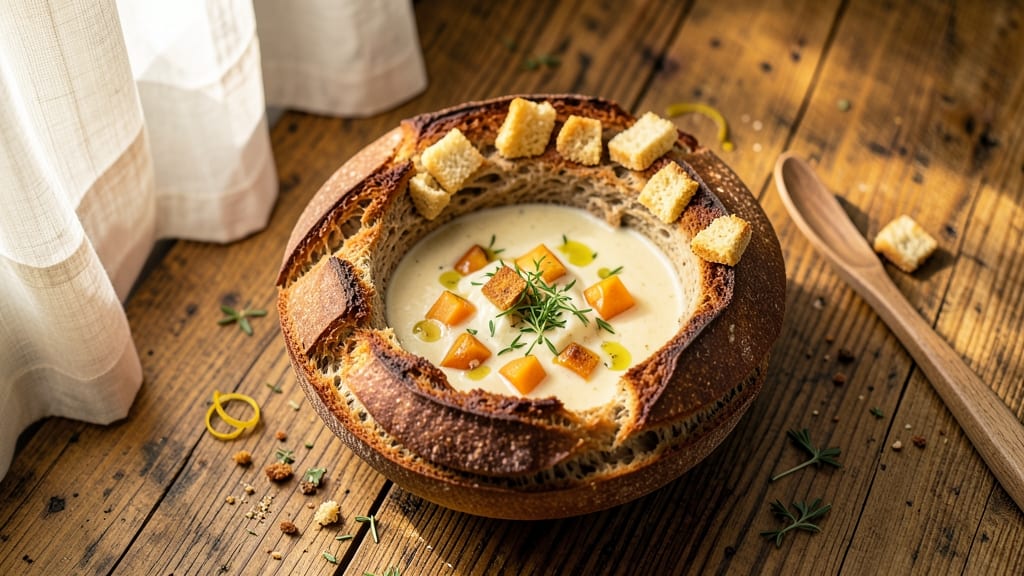
This artisan sourdough bread bowl recipe transforms humble loaves into edible soup bowls with crispy, hollowed crusts that hold hearty fillings perfectly. The key lies in mastering a long fermentation—at least 12 hours—for that signature tangy depth, followed by a precise hollowing technique that creates sturdy yet delicate walls.
I’ve baked dozens of variations, and this method ensures the bread stays structurally sound even when filled with steaming soups or rich dips.
The process begins with a simple sourdough starter, but the real magic happens during shaping and baking. You’ll shape the dough into a thick round, let it proof until nearly doubled, then bake it until golden and firm.
Once cooled, carefully hollow the center using a serrated knife—this is where precision meets patience. The result? A bread bowl with thick enough walls to hold hot liquids without collapsing, yet tender enough to soak up every last drop of flavor.
What makes this recipe stand out is its versatility. Serve it filled with your favorite soup—think creamy tomato basil or hearty minestrone—or use it as a vessel for dips like spinach-artichoke or buffalo chicken.
The bread’s natural crust adds a satisfying crunch to each bite, while the hollowed center keeps fillings warm and contained. Perfect for meal prep or impressing guests, this bread bowl turns an ordinary dinner into an interactive, rustic centerpiece.
For best results, bake the bread bowl a day ahead—it develops even more flavor as it sits. Store it wrapped at room temperature until ready to use, then simply hollow and fill. The longer you let the dough ferment, the more complex the flavor becomes, so don’t rush this step.
Whether you’re a seasoned baker or trying sourdough for the first time, this recipe delivers professional-quality results with just a few key techniques.
Ingredients for artisan sourdough bread bowl
These 10 simple ingredients create the perfect vessel for soups and dips.
| Ingredient | Amount | Notes |
|---|---|---|
| Active Sourdough Starter 🍞 | 1 cup | Unfed, 100% hydration |
| All-Purpose Flour 🌾 | 4 cups | Unbleached, high protein |
| Whole Wheat Flour 🌾 | 1 cup | For structure and flavor |
| Granulated Sugar 🍚 | ½ cup | Feeds starter and caramelizes crust |
| Salt 🧂 | 1 ½ tsp | Diamond Crystal preferred |
| Water 💧 | 1 ½ cups | Room temperature, 70°F |
| Olive Oil 🫒 | 2 tbsp | Extra-virgin for richness |
| Cornmeal 🌽 | ¼ cup | For dusting work surface |
| Egg Wash 🥚 | 1 whole | Beaten with 1 tbsp water |
| Sesame Seeds 🌰 | 1 tbsp | Optional for topping |
The sourdough starter is where all the magic begins. Grab a well-maintained starter from your fridge—it should be lively and bubbly. If you're new to sourdough, King Arthur or Bob's Red Mill flours work best for this recipe. The whole wheat flour adds structure and a subtle nuttiness, so don't skip it. For the sugar, I always use organic cane sugar—it caramelizes beautifully and adds a touch of depth. The olive oil is non-negotiable for that rich flavor, but any good quality extra-virgin will do. Pro tip: measure your water carefully—room temperature is key for proper hydration.
No sourdough starter? Store-bought pizza dough works in a pinch, but it won't have that signature tang. Running low on whole wheat flour? Substitute rye flour at the same amount—it adds a nice earthy note. Diamond Crystal salt is my go-to, but Morton kosher salt at 1/2 teaspoon works too. For the egg wash, use pasteurized eggs if you're concerned about raw egg safety. The sesame seeds are totally optional, but they add a nice crunchy texture that pairs perfectly with soups. If you're feeling adventurous, try toasting them in a dry pan for 2-3 minutes before sprinkling.
This dough needs time to develop flavor, so plan ahead. Store your shaped bread bowl in an airtight container at room temperature for up to 2 days before baking. Once baked, keep it wrapped in a clean kitchen towel to maintain moisture. The bread bowl reheats beautifully—just pop it in a 350°F oven for 5-10 minutes to refresh the crust. For meal prep, bake a double batch and freeze one—it keeps for 3 months in the freezer. Just thaw overnight in the fridge before hollowing and filling.
Why You'll Love This Recipe
- No-Knead Magic: I swear by this dough—just mix, shape, and let it rise while I handle dinner. The whole wheat gives it a subtle nuttiness that pairs perfectly with the tangy starter, and honestly? It’s the closest I get to a bakery loaf without the fuss.
- Tangy Crust, Soft Core: That crispy, caramelized crust when baked? Chef’s kiss. But here’s the secret: the whole wheat keeps the inside tender enough to hold soups or chili without falling apart. I’ll take that over dry bread any day.
- Soup’s Best Friend: Between us, this bread bowl is my lazy Sunday go-to. Toss in chili, mac and cheese, or even a creamy tomato bisque—it soaks up flavors like a dream. My roommates still ask how I make it after the third time they’ve seen me pull it out.
- Starter Savings: I’ve got a jar of sourdough starter sitting on my counter, and this recipe uses it up without wasting it. A little sugar feeds the starter, a little flour stretches it, and suddenly I’ve got a free, homemade vessel for my next meal. Budget win.
Step-by-step instructions for artisan sourdough bread bowl recipe
Here's how to craft a sturdy, hollowed sourdough bread bowl perfect for soups.
Mix the Dough with Precision
In a large mixing bowl, combine the 1 cup active sourdough starter, 4 cups all-purpose flour, 1 cup whole wheat flour, 0.5 cup granulated sugar, and 1.5 tsp salt. I like to use a wooden spoon first to break up any flour clumps before adding the 1.5 cups water and 2 tbsp olive oil. The dough should come together into a shaggy mass—don't be tempted to add extra flour yet.
Once the dough forms a rough ball, turn it out onto a lightly cornmeal-dusted surface and knead for 8-10 minutes until smooth and elastic. You'll know it's ready when it springs back slowly when poked. The whole wheat flour adds structure, so don't skip it—it helps the bowl hold its shape during baking.
Shape and Hollow the Dough
Divide the dough into 4 equal portions (about 1 pound each). Roll each portion into a 12-inch circle, about ½-inch thick. Here's the key part: use a 4-inch round cutter to hollow out the center, creating a 1-inch thick ring. Press the removed dough onto the sides to build up the walls—this ensures a sturdy bowl that won't collapse.
Place each shaped dough ring on a parchment-lined baking sheet, seam-side down. Cover with a damp towel and let rise at room temperature for 1.5-2 hours, or until nearly doubled in size. The dough should feel light and springy when pressed gently. If it rises too quickly, it might collapse during baking—patience here pays off.
Proof and Prepare for Baking
Preheat your oven to 375°F with a baking stone or inverted baking sheet inside—this creates steam for a crispy crust. Once the dough has risen, brush the tops with the egg wash (beaten egg + 1 tbsp water). Sprinkle with 1 tbsp sesame seeds for extra flavor and texture. I like to do this right before baking so the seeds stay crisp.
Bake for 25-30 minutes until the bread bowls are deep golden brown and sound hollow when tapped on the bottom. The edges should pull away from the parchment slightly, and the interior should be fully set. If the tops brown too quickly, tent with foil to prevent burning while the centers finish baking.
Cool and Hollow Completely
Let the bread bowls cool on a wire rack for 15 minutes—this prevents them from cracking when you remove the center. Using a serrated knife, carefully cut along the inner edge and remove the remaining dough center. Press the removed dough into the sides to reinforce the bowl structure if needed. The walls should be about ½-inch thick for maximum strength.
For best results, store the hollowed bowls in an airtight container at room temperature for up to 3 days or freeze for 1 month. When ready to use, simply reheat in a 350°F oven for 5-7 minutes to crisp up the crust before filling with your favorite soup. The contrast of warm soup and crispy bread is pure comfort food magic.
Pro Tips For Making Artisan Sourdough Bread Bowl
- STRETCH THE DOUGH LONG: The whole wheat flour makes this dough stiff—don’t fight it. After mixing, let it rest for at least 30 minutes before shaping, or the gluten won’t relax enough to hold the bowl’s shape. I used to skip this, and my bowls would collapse like a sad soufflé.
- WEIGH YOUR FLOUR: All-purpose and whole wheat flour pack differently. Use a kitchen scale for accuracy—eyeballing leads to dense, uneven bowls. I learned this after my first batch turned out like a brick. (Yes, even if you’re impatient like me.)
- SKIP THE OVERPROOFING: Whole wheat darkens faster than all-purpose flour. Watch for the dough to rise just until it’s almost doubled—overproofing turns your bread bowl into a sad, flat ring. If unsure, poke it: if it springs back slowly, it’s ready.
- HOLLOW IT FAST: Use a sharp knife or skewer to carve out the center before baking—don’t wait for it to cool. A warm, pliable dough holds its shape better, and you’ll avoid the frustration of a bowl that cracks apart when you try to scoop it out. (I’ve done this the hard way.)
Wine and beer pairings for this recipe
Crisp White Wine
For a classic pairing, reach for a dry Riesling or Sauvignon Blanc—both wines cut through the rich, tangy flavors of sourdough while complementing the earthy notes of whole wheat flour.
I love a chilled German Riesling (like Dr. Loosen Blue Slate) for its bright acidity and subtle mineral finish. The crispness of these wines mirrors the bread bowl's crispy crust, creating a harmonious balance. 🍷
Red Wine Options
If you prefer red, a light-bodied Pinot Noir or Gamay works beautifully. The Pinot Noir from Oregon (try Domaine Serene) enhances the bread's nutty undertones without overpowering the soup inside.
For something fruitier, a Beaujolais (like Château de Pizay) adds a juicy contrast that pairs wonderfully with hearty fillings like minestrone or butternut squash soup.
Malty Belgian Ale
For beer lovers, a Belgian Dubbel or Tripel brings out the bread bowl's caramelized crust and fermented depth. I recommend Westmalle Dubbel or Chimay Blue—their malty sweetness and spicy yeast notes create a delicious contrast with the tangy sourdough.
The effervescence also cleanses your palate between bites, making it a perfect match for rich fillings like spinach-artichoke dip or French onion soup. 🍺
Seasonal Pairings
In summer, opt for a rosé (like Whispering Angel) with its refreshing acidity, while winter calls for a bold red blend (such as Côtes du Rhône) to stand up to heartier fillings.
Pro tip: Chill your red wine slightly (about 10 minutes in the fridge) to enhance its fruitiness and soften tannins, making it more versatile with the bread bowl's flavors.
Non-Alcoholic Choices
Don’t drink alcohol? A sparkling apple cider (like Martinelli’s) or ginger beer (such as Brew Dr. Brown’s) adds effervescence and complements the bread’s crust beautifully.
For a more savory option, try a cucumber-mint infused water—the cool, herbal notes refresh your palate between bites of warm soup and crispy bread.
Nutrition facts
Frequently asked questions
Can I make this sourdough bread bowl without a sourdough starter?
Yes, but the flavor won't be authentic. For a quick substitute, use 1 cup plain yogurt or buttermilk to replace the starter—it adds acidity and helps with fermentation. The texture will be slightly different, but it'll still hold soups well. For best results, maintain your starter for future batches.
How do I prevent my bread bowl from collapsing when filled with hot soup?
Build sturdy walls by pressing removed dough into the sides during shaping, and ensure the walls are at least ½-inch thick. Bake until fully set (25-30 minutes at 375°F) and let cool completely before hollowing. Reheat empty bowls at 350°F for 5-7 minutes to crisp the crust before filling.
What's the best way to store leftover bread bowls?
Keep hollowed bowls in an airtight container at room temperature for up to 3 days or freeze for 1 month. Reheat at 350°F for 5-7 minutes before filling. For extra crispiness, brush with melted butter after reheating. The crust stays fresh longer if stored with a slice of bread inside.
Can I make these bread bowls gluten-free?
Not easily with this recipe—the whole wheat flour and sourdough starter rely on gluten for structure. For a GF version, try a dedicated GF sourdough starter and a gluten-free flour blend (like rice flour + xanthan gum), but expect less sturdy walls. The hollowing technique may need adjustment to prevent collapsing.
What are the best fillings for these bread bowls?
Hearty soups work best—try creamy tomato basil, minestrone, or butternut squash. For dips, spinach-artichoke or buffalo chicken pair perfectly. The bread's crust soaks up flavors beautifully, so avoid watery fillings. Pro tip: Add a sprinkle of Parmesan cheese to the soup before serving for extra richness.