
Side Dishes
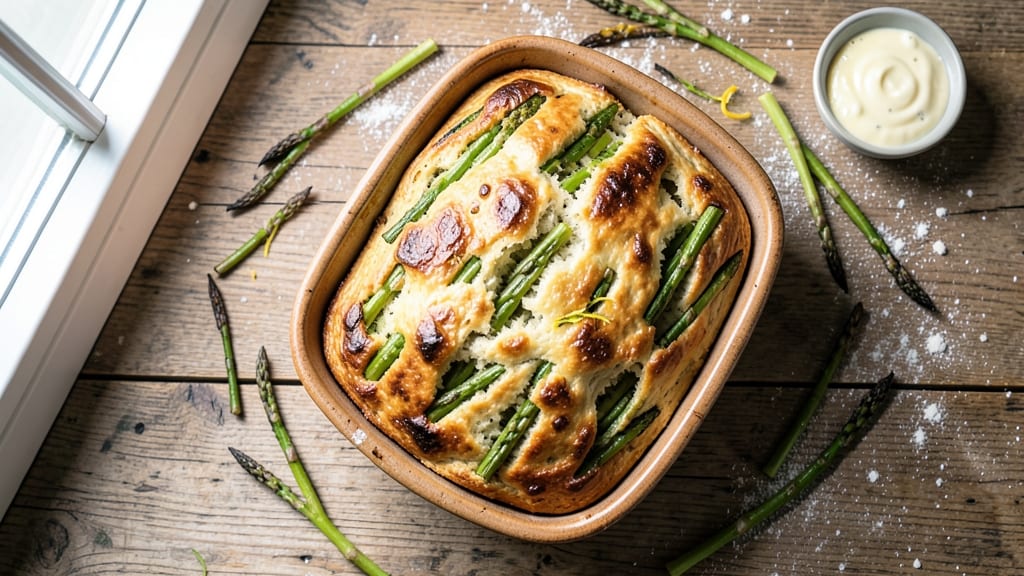
This asparagus bread recipe transforms humble ingredients into a fragrant, herb-infused loaf where tender asparagus spears become part of the texture. The secret lies in baking fresh asparagus directly into the dough, creating pockets of vibrant green and delicate crunch with every bite.
After years of perfecting this technique, I've developed a method that ensures the bread stays moist while preserving the asparagus's natural sweetness.
The dough combines simple pantry staples with fresh herbs and asparagus, creating a savory loaf that's perfect for sandwiches or served alongside soups. What makes this recipe special is how the asparagus infuses flavor throughout the bread rather than remaining as a separate ingredient.
The result is a loaf with subtle asparagus notes, tender herb accents, and a satisfyingly dense yet airy crumb.
By the time it emerges from the oven, you'll have a golden-brown loaf with asparagus spears peeking through the crust, adding visual appeal and unexpected texture. The crust develops a satisfying crispness while the interior remains soft and flavorful.
This bread is versatile enough for everyday meals but impressive enough for dinner guests.
For added richness, consider brushing the top with olive oil before baking or sprinkling with seeds for extra crunch. The recipe also works beautifully as a vegan option by substituting flax eggs and plant-based cheese. Let's get started on this herb-infused asparagus loaf that will elevate any meal.
Ingredients for asparagus bread
These fourteen ingredients blend fresh asparagus and herbs into a savory loaf with vibrant green pockets.
| Ingredient | Amount | Notes |
|---|---|---|
| All-Purpose Flour 🌾 | 3 ½ cups | Spooned and leveled for accuracy |
| Fresh Asparagus Spears 🌱 | 1 lb | Trimmed and cut into 1-inch pieces |
| Active Dry Yeast 🍞 | ¼ oz | Or 2 1/4 tsp (1 packet) |
| Granulated Sugar 🍚 | 1 tbsp | For yeast activation |
| Warm Water 💧 | 1 cup | 110°F for optimal yeast activation |
| Unsalted Butter 🧈 | ½ cup | Cold, cubed for dough texture |
| Large Eggs 🥚 | 1 whole | Room temperature for even mixing |
| Fresh Dill 🌿 | ¼ cup | Chopped, stems removed |
| Fresh Chives 🌱 | ¼ cup | Chopped, for bright flavor |
| Fresh Parsley 🌿 | ¼ cup | Chopped, for freshness |
| Garlic Cloves 🧄 | 4 cloves | Minced for aromatic depth |
| Diamond Crystal Kosher Salt 🧂 | 1 ½ tsp | Adjust to taste |
| Black Pepper 🌶️ | ½ tsp | Freshly cracked for warmth |
| Extra-Virgin Olive Oil 🫒 | ¼ cup | For dough enrichment |
The asparagus selection is critical—look for bright green spears with tightly closed tips at your local market or farmers' stand. Whole Foods and Trader Joe's carry premium varieties, but any fresh asparagus will work. Trim the woody ends carefully with a knife, leaving the tender tips intact. For the herbs, a mix of fresh dill, chives, and parsley creates the signature flavor profile. Penzeys Spices sells pre-chopped herb blends if you're short on time, but fresh always delivers superior aroma. The yeast should be freshly opened—test its potency by dissolving a pinch in warm water with sugar; if it foams within 5 minutes, it's active.
No fresh asparagus? Blanched frozen asparagus works in a pinch, but texture will differ slightly. Substitute dried herbs at one-third the amount—though fresh is ideal. For a vegan adaptation, replace the egg with 1 flax egg (1 tbsp ground flaxseed + 3 tbsp water) and use vegan butter. The olive oil can be swapped for avocado oil if preferred, though it alters flavor subtly. If your yeast isn't active, instant yeast can be used directly in the dry ingredients without activation. For extra richness, consider adding 1 tbsp nutritional yeast to the dough.
Store the dough in an airtight container at room temperature for up to 24 hours before baking, or refrigerate for 48 hours for deeper flavor development. The baked loaf keeps well at room temperature for 3 days, wrapped in a clean kitchen towel. For longer storage, slice and freeze portions for up to 3 months. To reheat, wrap slices in foil and warm in a 350°F oven for 5-7 minutes. The crust benefits from brushing with extra olive oil immediately after baking for added crispness.
Why You'll Love This Recipe
- No Chopping Chaos: I just pulse the asparagus in a food processor—no knife skills required. The spears blend right into the dough, so you get that fresh spring flavor without the mess.
- Earthy Crust Magic: That crispy, golden crust? It’s all thanks to the asparagus’s natural sugars caramelizing while the yeast does its thing. Honestly, it tastes like you spent hours baking when it’s really just 30 minutes.
- Weeknight Superhero: Slice it for toast, tear it for sandwiches, or serve it warm with butter. Between us, this bread is my go-to when I’m too tired to plan dinner—it’s that reliable.
- Budget-Friendly Stretch: A single batch feeds my family for days. Freeze half the loaf, and you’ve got a pantry staple that costs less than store-bought. Plus, asparagus is cheaper in season—win, win.
Step-by-step instructions for herb-infused asparagus bread
Transform fresh asparagus and aromatic herbs into a golden, flavorful loaf with this precise method.
Prepare the Asparagus and Yeast Mixture
Trim the ends from the 1 lb fresh asparagus spears and cut them into 1-inch pieces. Blanch them in boiling water for 30 seconds, then immediately plunge into ice water to stop cooking. Drain well and pat dry completely—this prevents a soggy dough. In a separate bowl, dissolve the 0.25 oz active dry yeast and 1 tbsp granulated sugar in the 1 cup warm water (about 110°F). Let it sit for 5-10 minutes until frothy, which confirms the yeast is active.
If the yeast doesn't foam, it's dead—start over with fresh yeast. The warm water activates the yeast, while the sugar provides food for fermentation. This step forms the foundation for a light, airy loaf.
Mix the Dough with Butter and Herbs
In a large bowl, combine the 3.5 cups all-purpose flour and 1.5 tsp diamond crystal kosher salt. Cut in the 0.5 cup cold unsalted butter using a pastry cutter or your fingers until the mixture resembles coarse crumbs. Add the 1 whole large egg, 0.25 cup extra-virgin olive oil, and the yeast mixture. Mix until a shaggy dough forms.
Fold in the 0.25 cup chopped fresh dill, 0.25 cup chopped fresh chives, 0.25 cup chopped fresh parsley, and 4 minced garlic cloves. The herbs should be evenly distributed—this ensures each bite carries their bright, fresh flavor. The dough will be sticky, but don't add extra flour yet; it needs moisture for proper fermentation.
Incorporate the Asparagus and Knead
Gently fold in the drained asparagus pieces, being careful not to overwork the dough. Turn the dough onto a lightly floured surface and knead for 5-7 minutes until smooth and elastic. The dough should spring back when poked—this indicates proper gluten development. If it's too sticky, wet your hands slightly to prevent tearing.
Real talk: Over-kneading develops tough gluten, so stop as soon as the dough holds together. The asparagus pieces should be evenly dispersed, promising bursts of freshness in every slice.
First Rise and Shaping
Place the dough in a lightly greased bowl, cover with a damp towel, and let it rise in a warm place for 1-1.5 hours, or until doubled in size. The dough should puff noticeably and feel light when pressed gently. Punch it down to release air, then shape it into a loaf by rolling it tightly from the center outward.
Transfer the shaped loaf to a greased 9x5-inch loaf pan. The dough should fill the pan about 2/3 full, allowing room for expansion. Cover again and let it rise for another 30-45 minutes until it reaches the top of the pan.
Bake to Golden Perfection
Preheat your oven to 375°F. Brush the top of the loaf with a beaten egg for a golden crust, then sprinkle with 0.5 tsp black pepper. Bake for 30-35 minutes until the top is deeply golden brown and the internal temperature reaches 190°F. Tap the bottom of the loaf—it should sound hollow.
Remove from the oven and let it cool in the pan for 10 minutes, then transfer to a wire rack. The loaf should be firm to the touch and have a crisp crust. Slice when completely cooled to prevent crumbling—each slice will reveal tender crumb and pockets of asparagus and herbs.
Pro Tips For Making Asparagus Bread
- BLEND ASPARAGUS FINE: Fresh asparagus adds texture, but if you want a smooth, evenly distributed flavor in the dough, pulse it in a food processor until it’s almost paste-like—think fine shreds, not chunky bits. I learned this the hard way when my first batch had chewy asparagus pockets that didn’t soften during baking. (Yes, even if you’re impatient like me, resist the urge to skip this step.)
- PROOF YEAST AT ROOM TEMP: Skip the warm-water guesswork: mix the yeast with a tiny bit of sugar and room-temperature water (about 75°F/24°C) to activate it. Cold water kills it, and hot water cooks it—both leave you with flat, sad bread. My grandmother swore by this, and she was right: the dough rises faster and more reliably when the yeast is happy from the start.
- STEAM THE LOAF: Place a shallow tray of boiling water in the oven before baking, then cover the bread loosely with foil for the first 10 minutes. This traps moisture and prevents the crust from drying out too quickly, especially since asparagus can make dough a little drier. I was skeptical until I tried it—now my asparagus bread stays tender longer.
- USE A LIGHT HAND WITH FLOUR: This dough sticks like glue, but over-flouring it makes the bread dense. Wet your fingers slightly and dust the bowl just enough to keep it from sticking—about a tablespoon at most. I skip this when I’m lazy, but the difference in texture is noticeable: less flour means a lighter, airier crumb. (Your future self will thank you.)
Pro cooking tips for this dish
Asparagus Prep Secrets
Blanching the asparagus for just 30 seconds before adding it to the dough is non-negotiable—this preserves its vibrant green color and tender texture. I use a fine-mesh strainer to drain it thoroughly, then pat it dry with paper towels to remove all moisture.
Any lingering water will make your dough gummy, and trust me, you don't want that. For extra flavor, I like to add a pinch of salt to the blanching water before draining. 🌱
Yeast Activation Test
Before mixing your dough, always test your yeast by dissolving it in 110°F warm water with 1 tsp sugar. If it doesn't foam within 5-10 minutes, your yeast is dead—no amount of waiting will revive it.
I keep a small jar of yeast in my fridge and replace it every 3 months to ensure potency. For faster results, use instant yeast, which you can add directly to the dry ingredients without activation. 💡
Dough Handling Tips
The dough will be sticky, but resist the urge to add extra flour—this disrupts gluten development. Instead, wet your hands slightly before handling to prevent sticking. I use a stand mixer with a dough hook for the initial mixing, then switch to hand-kneading to incorporate the asparagus gently.
Over-kneading develops tough gluten, so stop as soon as the dough springs back when poked. For a vegan version, replace the egg with 1 flax egg (1 tbsp ground flaxseed + 3 tbsp water) and let it sit for 5 minutes to thicken. 🌾
Rise Time Mastery
Find a warm spot for rising—your oven with the light on works perfectly. The dough should double in size within 1-1.5 hours. If your kitchen is cold, place the bowl near a heat source like a light bulb or space heater.
For a deeper flavor, let the dough rise overnight in the fridge—this slow fermentation develops complex notes. Just be sure to shape it and let it rise at room temperature for 30-45 minutes before baking. 🌡️
Baking Like a Pro
Preheat your oven to 375°F with a baking sheet on the lower rack—this creates steam for a crispier crust. Brush the loaf with beaten egg and sprinkle with black pepper just before baking. For an extra-shiny crust, mix 1 tbsp olive oil with the egg wash.
Bake until the internal temperature hits 190°F—a meat thermometer is your best friend here. If the top browns too quickly, tent the loaf with foil. 🔥
Cooling and Storing
Let the loaf cool in the pan for 10 minutes before transferring to a wire rack—this prevents it from falling apart. For storage, wrap it in a clean kitchen towel to maintain moisture.
The bread keeps well at room temperature for 3 days or in the freezer for 3 months. To reheat, wrap slices in foil and warm in a 350°F oven for 5-7 minutes. The crust will crisp up beautifully, and the asparagus will stay tender. 💫
Nutrition facts
Frequently asked questions
Can I use frozen asparagus in this recipe?
You can substitute frozen asparagus, but the texture will differ slightly. Thaw and drain it completely, then pat dry thoroughly to prevent a soggy dough. For best results, use frozen asparagus that's been blanched and packaged in water, not steamed. The flavor won't be as vibrant as fresh, but it still works in a pinch!
How do I know when the dough has risen enough?
The dough should visibly double in size and feel light when pressed gently with a finger. If it springs back slowly, it's ready! For the final rise in the loaf pan, it should reach the top edge. Cold kitchens slow fermentation—place the bowl near a warm light bulb or use your oven's light to speed things up.
Can I make this bread without a loaf pan?
Shape the dough into a round boule or oval batard for a free-form loaf. Place it on a parchment-lined baking sheet and let it rise until puffy. Score the top with a sharp knife before baking. The crust will be thicker, but the interior stays tender. For extra crispiness, bake on a preheated stone or steel.
Why did my bread turn out dense instead of light?
Dense bread usually means the yeast wasn't active, the dough wasn't kneaded enough, or it didn't rise long enough. Always test your yeast first, and ensure your kitchen is warm enough for proper fermentation. Over-kneading can also make bread tough—stop when the dough springs back when poked. For extra lightness, let the dough rise overnight in the fridge.
What are the best toppings for this asparagus bread?
Try a spread of herbed goat cheese, whipped garlic butter, or a smear of hummus for dipping. For extra crunch, sprinkle sesame seeds or poppy seeds on top before baking. The bread also pairs beautifully with smoked salmon, avocado slices, or a simple tomato-basil salad. The asparagus flavor shines in sandwiches too!