
Side Dishes
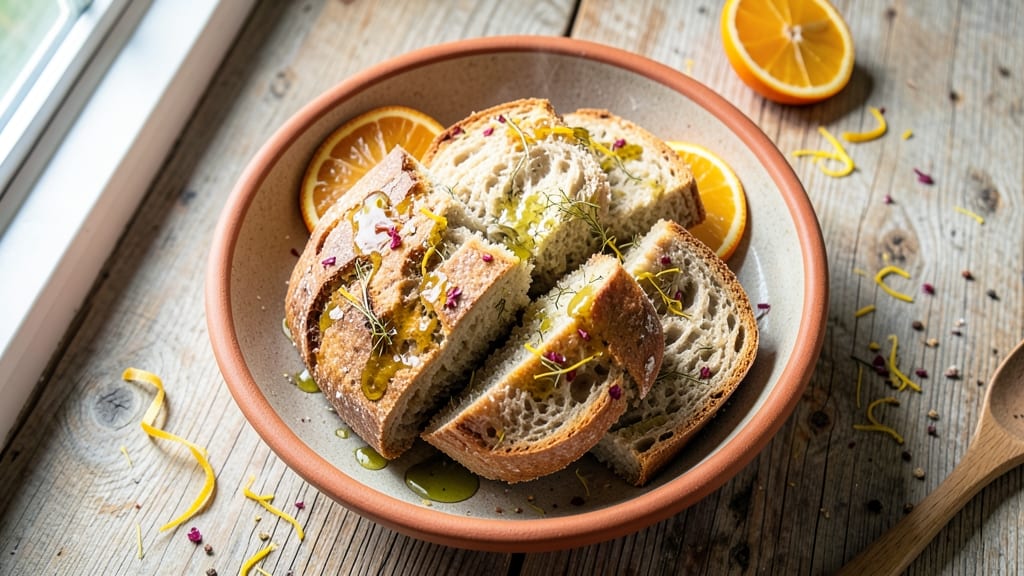
This Asphodel Bread recipe brings ancient Greek tradition to your kitchen with its golden crust and tender crumb. 🌟 Born from the island of Chios, this olive oil loaf was traditionally made with just flour, water, and oil—a testament to simplicity and flavor.
The secret lies in its crusty crown, achieved through a precise baking technique that transforms humble ingredients into something extraordinary.
What makes this recipe special is its cultural heritage and foolproof method. Unlike modern breads, Asphodel relies on just three core ingredients—flour, olive oil, and water—with optional variations like orange zest or anise for added depth.
The dough requires minimal handling, making it perfect for both beginners and experienced bakers. Baking at high heat creates that signature crispy crown while keeping the interior soft and moist.
By the time it emerges from the oven, you'll have a loaf with a fragrant aroma and a texture that balances crispness and tenderness. The golden crust gives way to a slightly dense, moist interior—ideal for serving with meals or dipping in olive oil.
This bread isn't just a dish; it's a piece of history, a taste of Greece's culinary roots.
For those who love experimenting, try adding a touch of orange zest or anise to the dough for a fragrant twist. The possibilities are endless, yet the core recipe remains true to its ancient origins. Let's bring this timeless loaf to life in your kitchen.
Ingredients for asphodel bread
Ancient simplicity meets modern baking with just nine ingredients for this iconic Greek loaf.
| Ingredient | Amount | Notes |
|---|---|---|
| All-Purpose Flour 🌾 | 3 ½ cups | Unbleached preferred for texture |
| Extra-Virgin Olive Oil 🫒 | 1 cup | High quality, fruity variety |
| Warm Water 💧 | 1 ½ cups | 100°F for ideal dough |
| Instant Yeast 🍞 | ½ tsp | Active dry works too |
| Salt 🧂 | 1 ½ tsp | Fine sea salt preferred |
| Orange Zest 🍊 | 1 tbsp | Optional for citrus note |
| Ground Anise Seed 🌿 | ½ tsp | Optional aromatic touch |
| Coarse Sea Salt 🧂 | 1 tsp | For crust sprinkling |
| Cornmeal 🌽 | ¼ cup | For dusting parchment |
The olive oil is non-negotiable here—look for extra-virgin with fruity notes at specialty markets or Trader Joe's for reliable quality. Kalamata olives brands often have great olive oil too. Flour matters less but unbleached all-purpose gives the best texture. The yeast should be fresh—if it smells old or has lost its potency, toss it. For the water, warm (100°F) is crucial—too hot kills the yeast, too cold slows activation. If you're adding orange zest, use a microplane for maximum flavor without the bitter pith.
No instant yeast? Active dry works at half the amount but needs 5 minutes to dissolve first. Skip the anise? Cardamom at one-third the amount gives a similar aromatic warmth. For the orange zest, lemon zest works too if you're out. The coarse sea salt for the crust can be any flaky salt—Maldon or Jacobsen are great, but regular coarse kosher works fine. If you're making this ahead, pre-portion the dough and freeze it—thaw overnight in the fridge before baking.
This dough keeps 3 days in the fridge wrapped tightly. For longer storage, freeze shaped loaves for up to 3 months—thaw at room temp before baking. The baked loaf stays fresh 5 days wrapped in a cotton towel. For serving, warm slices in a 300°F oven for 5 minutes to restore that bakery-fresh crunch. The crusty crown is best enjoyed the day it's baked, but the interior stays tender for days.
Why You'll Love This Recipe
- No-Fuss Dough: I swear by this recipe because it’s actually no-knead—just mix the flour, olive oil, warm water, and yeast, let it sit, and shape it. No stand mixer, no overworking, just a simple stretch and fold that even my sleep-deprived self can handle.
- Olive Oil Magic: That rich extra-virgin olive oil? It’s the secret weapon. The bread develops this unexpected depth—slightly nutty, with a tender crumb that’s better than anything from a bakery. (Yes, even on a Tuesday night.)
- Weeknight Hero: This bread is my go-to for sandwiches, toast, or even a quick snack. It keeps well for days, so I can bake once and have it ready for breakfast, lunch, or a midnight craving—no wasted effort.
- Budget-Friendly Staple: Five ingredients, zero frills, and it costs pennies to make. Honestly, the yeast and olive oil stretch further than you’d think, and the flour? You likely already have it. Practical, reliable, and always delivers.
Step-by-step instructions for Asphodel bread
This ancient Greek loaf transforms simple ingredients into rustic beauty with a crispy crown and tender crumb.
👨🍳 Step 1: Mix the Dough with Olive Oil and Yeast
In a large bowl, combine the 3.5 cups all-purpose flour and 1.5 tsp salt. Make a well in the center and add the 1 cup extra-virgin olive oil, 1.5 cups warm water (100°F), 0.5 tsp instant yeast, 1 tbsp orange zest, and 0.5 tsp ground anise seed. The dough will be sticky but manageable—don't add extra flour yet.
Using a wooden spoon or your hands, mix vigorously for 3-4 minutes until the dough comes together and pulls away from the sides of the bowl. The olive oil creates a rich, tender crumb, so resist the urge to overwork it. You're aiming for a soft, slightly tacky dough that holds its shape when pressed.
🥘 Step 2: Knead and Rest for Optimal Texture
Turn the dough onto a lightly floured surface and knead for 5-7 minutes until smooth and elastic. The dough should feel soft but not sticky—add just enough flour to prevent sticking. Shape into a round loaf and place it back in the bowl.
Cover the bowl with a damp towel and let the dough rest at room temperature for 1 hour. This resting period allows the gluten to relax and the flavors to meld. The dough should nearly double in size, becoming puffy and airy. If it doesn't rise much, your yeast may need warming or your kitchen may be cool—this is normal for olive oil doughs.
🔥 Step 3: Shape and Score for the Crusty Crown
Preheat your oven to 375°F. Lightly dust a baking sheet with 0.25 cup cornmeal and transfer the rested dough onto it. Shape the dough into a round loaf about 8 inches in diameter, using your hands to create a smooth, even surface. The edges should be slightly thicker than the center to form that classic Greek crown.
Using a sharp knife or razor blade, score the top of the loaf in a crosshatch pattern, cutting about ¼ inch deep. This creates steam vents and prevents the loaf from cracking unpredictably. Sprinkle generously with 1 tsp coarse sea salt over the scored surface—this enhances flavor and creates a beautiful crust.
🔥 Step 4: Bake to Golden Perfection
Bake the loaf for 35-40 minutes until the crust is deep golden brown and sounds hollow when tapped on the bottom. The interior temperature should reach 190-200°F when measured with an instant-read thermometer. The aroma should be rich with olive oil and slightly nutty from the anise.
For the final 5 minutes, increase the oven temperature to 400°F to intensify the crust color. If the loaf browns too quickly, tent it loosely with foil. Remove from the oven and let cool on a wire rack for at least 30 minutes before slicing—this prevents a gummy crumb.
Pro Tips For Making Asphodel Bread
- Dissolve the Yeast First: I learned this the hard way—mixing instant yeast directly into the flour means it’ll wake up unevenly, leaving pockets of dough that refuse to rise. Instead, whisk the yeast into the warm water with a pinch of sugar (if you have it) and let it froth for 5 minutes before adding anything else. That way, you’re starting with a lively, uniform starter, not a lazy one.
- Use Lukewarm Water: Cold water kills the yeast before it gets a chance to work, and boiling water? You’ll scramble the poor thing. Aim for water that’s warm enough to make a puddle on your wrist but not so hot it burns—think bathwater temperature. If you’re unsure, test it with your pinky: if it feels warm but not hot, you’re good.
- Knead Just Enough: This isn’t brioche—overworking the dough will make it tough and dense. After mixing the flour, olive oil, yeast mixture, and salt, turn it out onto a floured surface and knead for about 5 minutes, or until it’s smooth and slightly tacky but not sticky. If it’s sticking like glue, you’ve gone too far.
- Let It Rise Twice: Skipping the second rise is where people mess up. After the first rise (when the dough doubles), punch it down and let it rise again—this time for about 30 minutes. It’s non-negotiable for that light, airy texture. Trust me, your bread will taste flat and heavy if you skip this step.
Regional styles of this dish
Island of Chios Tradition
The original Asphodel bread hails from the Greek island of Chios, where it was traditionally baked in wood-fired ovens using just flour, olive oil, and water. The island's high-quality olive oil—often from Kalamata olives—gives the bread its signature rich flavor.
Locals would bake it daily, serving it warm with meals or dipping in olive oil. The crusty crown was achieved by baking over hot coals, creating that perfect contrast of crispy exterior and soft interior. 🌟
Peloponnese Olive Oil Variations
In mainland Greece, particularly the Peloponnese region, bakers often enhance the dough with orange zest or anise seeds to complement the olive oil. The Mantineia area is famous for its anise-infused breads, where ½ tsp ground anise seed per loaf becomes a staple.
Some versions use rosemary instead of anise, adding an earthy aroma that pairs beautifully with the olive oil's fruitiness. The dough is sometimes enriched with a touch of honey for extra sweetness.
Cretan Rustic Style
On the island of Crete, Asphodel bread takes on a more rustic form, often baked in clay pots buried in hot coals. The Cretans use whole wheat flour> (about 1 cup mixed with 2.5 cups all-purpose) for a nuttier flavor.
The bread is typically larger—about 10 inches in diameter>—and baked longer at 350°F> for 45-50 minutes>. The result is a denser, heartier loaf perfect for accompanying hearty Cretan dishes like dakos or stifado.
Modern Greek Adaptations
Today's Greek bakers often experiment with whole grain flours> (like spelt or einkorn>) for added texture and nutrition. Some versions incorporate walnuts or pistachios> into the dough for crunch and Mediterranean flair.
In Athens, you'll find sesame seed-topped> Asphodel bread, where 2 tbsp sesame seeds> are sprinkled before baking. The dough is sometimes brushed with garlic-infused olive oil> after baking for an extra layer of flavor.
Cyprus Citrus Twist
In Cyprus, Asphodel bread often includes lemon zest> instead of orange, giving it a brighter, more tangy profile. Cypriot bakers also use mahlep (cherry pit powder>) for a unique floral note that pairs wonderfully with the olive oil.
The bread is typically baked in a round tin> rather than free-form, creating a more uniform shape. This version is especially popular during Easter celebrations,> where it accompanies lamb dishes.
Italian Olive Oil Influence
In southern Italy, particularly Calabria, Asphodel bread has inspired similar loaves made with Calabrian olive oil> and chili flakes>. The dough is often enriched with ricotta cheese> (about ½ cup>) for extra moisture. Italian versions sometimes include fennel seeds> for an anise-like aroma.
The bread is baked in a cast iron skillet>, creating a crispier crust than traditional Greek methods. This fusion style is gaining popularity in modern Greek-Italian kitchens.
Nutrition facts
Frequently asked questions
Why does Asphodel bread have such a crispy crust?
The signature crust comes from a combination of techniques: baking at 375°F with a final 5-minute blast at 400°F creates the perfect caramelization. The cornmeal dusting and coarse sea salt sprinkle also contribute to that satisfying crunch. Traditional wood-fired ovens achieved this with intense, uneven heat—your home oven can mimic it with proper timing!
Can I make this bread without yeast?
Yes! For a quick version, replace the yeast with 1 tsp baking powder and 1 tsp baking soda. The dough will be denser but still delicious. For best results, bake immediately after mixing—no resting time needed. This works well for emergency situations or when you've forgotten yeast. The texture will be more cake-like than the traditional version.
How long can I store the dough before baking?
Unbaked dough keeps well in the fridge for 3 days wrapped tightly in plastic. For longer storage, shape the loaf and freeze it for up to 3 months. Thaw overnight in the fridge before baking. The dough may rise slightly after thawing, which is normal. For best flavor, bake within 24 hours of shaping.
What's the best way to reheat sliced Asphodel bread?
For that bakery-fresh crunch, warm slices in a 300°F oven for 5 minutes on a wire rack. For quick reheating, wrap slices in a damp paper towel and microwave for 10-15 seconds. Avoid toaster ovens—they can dry out the bread. The crust will soften slightly but the interior stays tender.
Can I substitute olive oil with another fat?
While traditional, you can use melted butter (same amount) for a richer flavor, though it won't be authentic. For a lighter option, try avocado oil—it has a neutral taste that works well. Avoid vegetable oils with strong flavors. The bread will still be delicious, but the texture may be slightly less tender. The olive oil's quality is key to the authentic taste!