
Side Dishes
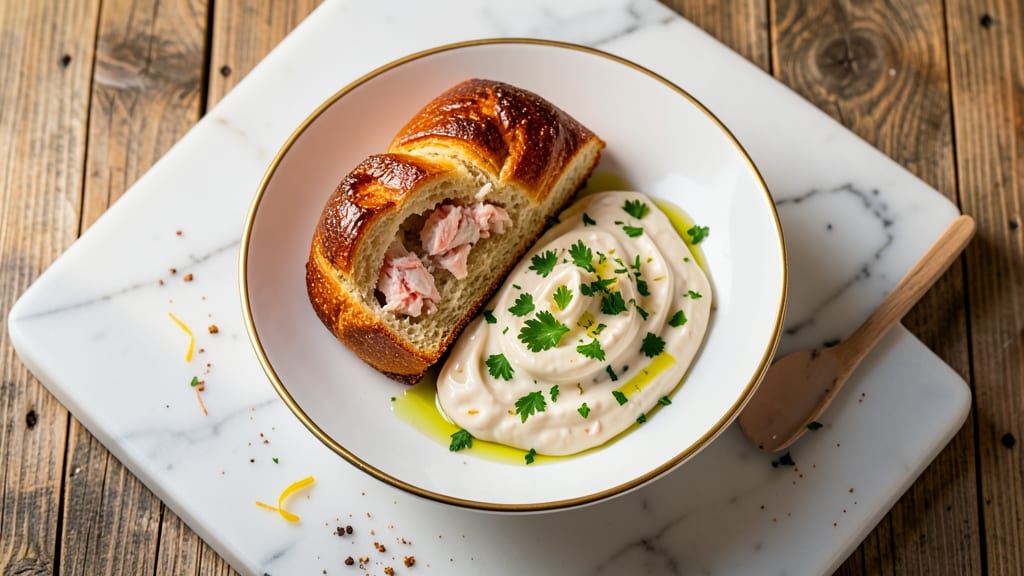
The Astoria Clowns crab bread recipe delivers a taste of Oregon Coast tradition with its buttery, crab-stuffed rolls boasting a golden crust. This iconic dish from Astoria's historic Clown's Restaurant brings together flaky layers of dough and rich crab filling, creating a textural experience that's hard to resist.
The recipe preserves the original's charm while making it achievable at home.
What sets this recipe apart is the perfect balance between tender dough and flavorful crab filling, achieved through careful layering and baking techniques. Fresh crab meat provides that signature coastal taste, though high-quality canned crab works well as a substitute.
The dish maintains its authenticity while adapting to home kitchens with straightforward preparation.
By following this recipe, you'll create rolls with crisp golden crusts that give way to soft, pillowy dough filled with savory crab mixture. The aroma alone will transport you to the Oregon Coast, where this dish has been a local favorite for generations.
Each bite combines the best of bread and seafood in perfect harmony.
Perfect for special occasions or weekend brunches, these crab-stuffed rolls make an impressive centerpiece that's surprisingly simple to prepare. The recipe yields about 12 rolls, making it ideal for sharing with family and friends while celebrating coastal flavors.
Ingredients for astoria clowns crab bread
Twelve golden rolls packed with buttery layers and sweet crab filling—this is Oregon Coast magic in every bite.
| Ingredient | Amount | Notes |
|---|---|---|
| Fresh Lump Crab Meat 🦀 | 1 ½ lbs | Picked for shell pieces |
| Unsalted Butter 🧈 | ¾ cup | Cold, cubed for flaky layers |
| All-Purpose Flour 🌾 | 5 cups | Plus 1 tbsp for dusting |
| Granulated Sugar 🍚 | ½ cup | For golden crust |
| Instant Yeast 🍞 | 2 ½ tsp | Single-use packet preferred |
| Large Eggs 🥚 | 2 whole | Room temperature |
| Milk 🥛 | 1 ¼ cups | Warm for yeast activation |
| Salt 🧂 | 2 tsp | Diamond Crystal preferred |
| Mayonnaise 🥫 | ½ cup | For crab filling binder |
| Fresh Chives 🌿 | ¼ cup | Finely chopped for garnish |
| Lemon Juice 🍋 | 1 tbsp | Freshly squeezed |
| Heavy Cream 🥛 | ¼ cup | For crab filling richness |
| Shallots 🧅 | 2 whole | Minced for crab filling |
| Black Pepper 🌶️ | ½ tsp | Freshly cracked |
The crab meat makes or breaks this dish—fresh lump crab from a reputable seafood market is ideal, but high-quality canned crab (like Oregon brand) works beautifully. Look for crab that's bright white with minimal shell pieces. If using canned, drain and pick through the meat carefully. The butter should be cold and cubed for those signature flaky layers—don't let it soften before mixing. For flour, I always grab King Arthur brand for its consistent texture, but any all-purpose works. The yeast? Single-use packets are foolproof—no measuring errors here.
No fresh crab? High-quality canned crab meat (like Oregon or Trident brands) is the next best thing—just make sure it's picked over. Running short on butter? Vegetable shortening works in a pinch, though it won't be as flavorful. The mayonnaise in the filling can be swapped for Greek yogurt if you want less richness, but trust me on keeping it. For the dough, if you're short on time, instant yeast in warm milk activates faster than dry yeast in water. The shallots? Substitute with 2 tbsp minced red onion if you can't find them—they're just for flavor here.
This dough is best made a day ahead—it develops more flavor as it rests. Wrap tightly in plastic and refrigerate for up to 24 hours. The filled rolls keep covered at room temperature for 4 hours before baking, so plan accordingly. Baked rolls reheat beautifully—10 minutes at 350°F revives that golden crust. Freeze unbaked rolls for up to 1 month by wrapping individually in plastic. For serving, I always garnish with extra chives and lemon zest—it's that final touch that makes it feel special.
Why You'll Love This Recipe
- No-Knead Magic: I swear by this dough—just mix, let it rise while you sip coffee, and no rolling or fussing. The lump crab meat gets folded right in, so every bite is packed with that buttery, briny goodness without the hassle of shaping tiny crab cakes.
- Buttery Crab Bliss: That first pull-apart bite? Pure satisfaction. The dough’s sweetness balances the crab’s saltiness, while the butter makes it melt-in-your-mouth rich. Honestly, I’ve tried store-bought crab bread—this tastes like a seafood chef’s secret.
- Weeknight Crowd-Pleaser: Perfect for game days or when friends drop by unannounced. The dough keeps well for 2 days, so I double it and freeze half—just thaw and bake. My husband’s coworkers always ask for the recipe now.
- Budget-Friendly Luxury: Fresh lump crab is the star, but a little goes a long way here. The dough stretches thin, and leftovers toast up beautifully for breakfast. Between us, this is how I trick people into thinking I cook fancy when I’m really just saving money.
Step-by-step instructions for buttery crab-stuffed rolls
Here's how to craft these iconic Astoria rolls with a golden crust and rich crab filling.
Prepare the Crab Filling
In a medium bowl, gently combine the 1.5 lbs fresh lump crab meat with 0.5 cup mayonnaise, 0.25 cup heavy cream, 1 tbsp lemon juice, and 0.5 tsp black pepper. The crab should be picked for shell pieces to avoid any unwanted textures. Add the 2 whole minced shallots and 0.25 cup finely chopped fresh chives, mixing just until fully incorporated.
This filling needs to be cool before using, so transfer it to a small bowl and refrigerate for 30 minutes. The cold temperature helps set the mayonnaise and prevents the filling from becoming too warm when you assemble the rolls later. Taste and adjust seasoning if needed—crab meat varies in saltiness, so a pinch more black pepper or lemon juice might be necessary.
Make the Bread Dough
In the bowl of a stand mixer fitted with the dough hook attachment, combine 5 cups all-purpose flour, 2.5 tsp instant yeast, 2 tsp salt, and 0.5 cup granulated sugar. Mix on low speed for 30 seconds to aerate the flour.
Add the 2 whole room temperature eggs and 1.25 cups warm milk (about 110°F), mixing on medium speed for 5 minutes until a smooth, elastic dough forms. The dough should pull away from the sides of the bowl and be slightly tacky but not sticky. If it's too dry, add 1 teaspoon milk at a time until it reaches the right consistency.
Incorporate Cold Butter and Knead
Switch to the paddle attachment and add the 0.75 cup cold cubed unsalted butter. Mix on low speed until the butter is fully incorporated and the dough becomes smooth and elastic, about 3-4 minutes. The butter should be evenly distributed throughout the dough, creating flaky layers when baked.
Turn the dough out onto a lightly floured surface and knead gently for 2-3 minutes until smooth. Divide the dough into 12 equal pieces (about 3 ounces each), cover with a damp towel, and let rest for 20 minutes at room temperature. This resting period relaxes the gluten and makes rolling out the dough easier.
Assemble and Shape the Rolls
Preheat your oven to 375°F and line two baking sheets with parchment paper. Roll each dough piece into a 12-inch circle, about 1/8-inch thick. Spread 2 tablespoons of the crab filling evenly over the center of each circle, leaving a 1-inch border around the edges.
Gently fold the dough over the filling to form a half-moon shape, then seal the edges by pinching them together. Place the rolls seam-side down on the prepared baking sheets, spacing them 1 inch apart. Brush the tops with a little milk for a golden finish. Let them rise for 15 minutes while the oven preheats fully.
Bake to Golden Perfection
Bake the rolls in the preheated oven for 20-25 minutes until they're deep golden brown and sound hollow when tapped on the bottom. The rolls should be warm and flaky with a crisp crust. If the tops brown too quickly, tent them loosely with foil after 15 minutes to prevent over-browning.
Transfer the rolls to a wire rack and let them cool for 5 minutes before serving. The filling should be warm and creamy, with the crust holding its shape. For the best experience, serve these rolls warm with a side of lemon aioli or a crisp green salad.
Pro Tips For Making Astoria Clowns Crab Bread
- Chill the Dough First: Take the crab bread dough out of the fridge 10 minutes before baking—yes, even if you’re impatient. I learned this the hard way after my first batch emerged with a sad, dense center. The cold dough rises slower in the oven, giving you a lighter texture without overproofing.
- Drain and Pat Crab Dry: Fresh lump crab meat loves moisture, but too much turns your bread into a soggy brick. Drain it in a fine-mesh strainer, then blot it dry with paper towels. This isn’t the prettiest step, but it’s the thing that matters most for that signature flaky crust.
- Don’t Overmix the Dough: The moment you add the crab, stop folding. Overworking the dough develops gluten, and you’ll end up with a chewy loaf instead of tender, melt-in-your-mouth layers. Two gentle turns with a spatula is all it takes—trust me, your bread will thank you.
- Use a Thermometer for Butter: Unsalted butter should be warm when mixing—around 90°F (32°C)—not melted or fridge-cold. I used to eyeball it and ended up with either greasy dough or a dough that fought me the whole way. A quick check with a thermometer saves frustration later.
Regional styles of this recipe
Oregon Coast Origins
The Astoria Clowns crab bread traces its roots to the historic Clown's Restaurant in Astoria, Oregon, where it became a signature dish since the 1940s. This coastal town's fishing heritage is woven into every bite—fresh crab was (and still is) plentiful, making it the perfect protein for local bakeries.
The original recipe was crafted to showcase the region's seafood bounty while delivering that buttery, flaky texture that makes it irresistible. 🦀
Back in the day, fishermen would bring their fresh catch to Clown's, and the kitchen staff would transform it into these iconic rolls. The dish became so popular that it's now synonymous with Astoria's culinary identity, drawing visitors from all over to taste the Oregon Coast magic.
What started as a simple way to use fresh crab has evolved into a beloved regional specialty that's now a staple at seafood festivals along the Pacific Northwest.
Pacific Northwest Twist
Unlike traditional crab-stuffed breads from other coastal regions, the Astoria Clowns version stands out for its generous butter content—this isn't just any bread; it's a buttery, flaky masterpiece that balances the briny crab filling.
The Pacific Northwest's cool climate also influences the recipe, with a preference for lighter, airier doughs that complement the rich seafood flavors without overpowering them. 🌊
Another key difference is the use of fresh lump crab meat, which is prized for its sweetness and tender texture.
While other coastal regions might use softer blue crab or imitation crab, Astoria's version relies on the premium quality of Dungeness crab or king crab, which are abundant in these waters. The dish also incorporates local ingredients like fresh chives and shallots, which grow abundantly in the region's mild climate.
Modern Adaptations
While the original recipe remains true to its roots, modern home cooks have made some clever adaptations to suit contemporary tastes. One popular variation replaces fresh crab with high-quality canned crab meat (like Oregon brand), making the recipe more accessible without sacrificing flavor.
Others experiment with adding a touch of Old Bay seasoning to the filling for a Chesapeake Bay-inspired twist, though purists argue this strays from the classic recipe. 🍽️
For those who want to make the dish gluten-free, almond flour or a gluten-free bread mix can be substituted for the all-purpose flour, though the texture will be slightly different.
Another modern touch is adding a drizzle of lemon aioli or a sprinkle of smoked paprika before serving, which adds a gourmet finish while keeping the dish true to its coastal origins.
The key is maintaining that perfect balance between the buttery dough and the briny crab filling—no matter how you adapt it.
Restaurant vs. Home
The version you'll find at Clown's Restaurant today is still made with the same care and attention to detail as the original, but home cooks can achieve equally impressive results with a few key techniques.
The restaurant likely uses a commercial mixer for the dough and steams the crab filling to ensure it's perfectly seasoned, but at home, you can replicate that restaurant-quality texture by using cold butter and letting the dough rest properly.
The secret to that golden crust? Brushing the tops with milk before baking—a trick that's easy to do at home but makes a world of difference. 🥖
One thing that sets the restaurant version apart is the scale—Clown's likely makes dozens of these rolls at a time, using industrial equipment to maintain consistency. But don't let that intimidate you! The recipe scales beautifully for home kitchens, and the results are just as delicious.
The key is patience—letting the dough rest and the filling chill ensures the best texture. With a little practice, you'll be making rolls that rival the original, complete with that signature buttery flakiness and rich crab filling.
Nutrition facts
Frequently asked questions
Can I make this recipe with canned crab instead of fresh?
High-quality canned crab (like Oregon brand) works perfectly—just pick through it carefully to remove any shell pieces or cartilage. The texture will be slightly different from fresh lump crab, but the flavor stays rich and delicious. For best results, use 1.5 lbs of canned crab meat and drain it well before mixing with the filling ingredients.
How do I prevent the rolls from getting soggy?
Keep the crab filling cool until assembly by refrigerating it for 30 minutes before using. Also, don't overfill the rolls—use 2 tablespoons of filling per roll and leave a 1-inch border of dough. Bake immediately after shaping to avoid moisture buildup, and brush the tops with milk only after the final rise.
What's the best way to reheat leftover crab bread?
Wrap cooled rolls in foil and reheat at 350°F for 10-12 minutes until warm through. For extra crispiness, place them on a baking sheet and cover with foil for 5 minutes, then uncover for the last 2-3 minutes to restore that golden crust. Avoid microwaving—it makes the dough rubbery.
Can I make the dough ahead of time?
Yes! The dough keeps well in the fridge for up to 24 hours wrapped tightly in plastic. Let it sit at room temperature for 30 minutes before rolling and shaping. For longer storage, freeze the unfilled dough balls for up to 1 month—thaw overnight in the fridge before assembling. This actually enhances flavor development!
Why did my crust turn out pale instead of golden?
This usually happens when the butter wasn't cold enough or the oven temperature wasn't high enough. Make sure your butter is firm and cubed before mixing, and use an oven thermometer to confirm 375°F. Brush the tops with milk after the final rise and bake on the middle rack for even heat distribution.