
Side Dishes
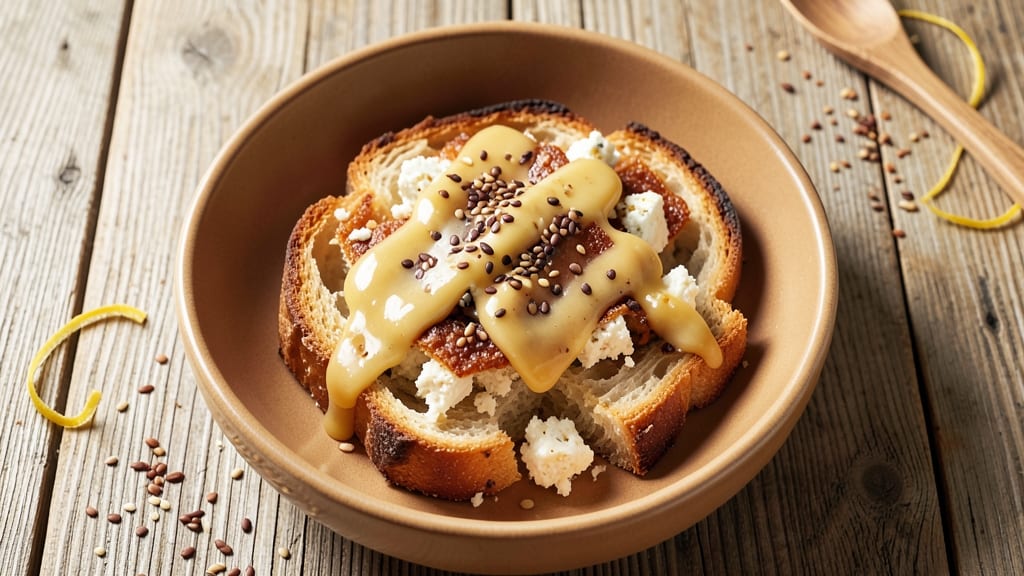
Aubree's feta bread delivers the perfect balance of flaky layers and briny, crumbly cheese throughout every bite. This recipe transforms simple dough into a golden, herbed loaf studded with chunks of feta that melt slightly during baking, creating pockets of salty richness.
The secret lies in proper yeast activation and gentle handling to preserve those tender cheese pieces while developing a crisp, buttery crust.
What makes this bread truly special is how the feta integrates without making the dough too heavy—just enough to create those irresistible cheese pockets while maintaining a light, airy texture.
The dough comes together in under 10 minutes, then proofs for 2 hours, giving you plenty of time to prepare other dishes while dinner simmers. The result is a loaf that's crisp on the outside, tender on the inside, and packed with salty, herby goodness in every slice.
Once baked, this bread becomes an instant crowd-pleaser—perfect for soaking up soups, pairing with charcuterie boards, or serving alongside roasted meats. The aroma alone will have everyone gathering around the table, and the first bite delivers that perfect combination of flaky, buttery layers and salty cheese crumbles.
With just a few simple ingredients and careful technique, you'll achieve restaurant-quality results that taste even better than store-bought versions.
The beauty of this recipe is its versatility—use it as a side dish, appetizer, or even as a base for open-faced sandwiches. The herbed feta filling can be adjusted to suit your taste, whether you prefer more garlic, extra herbs, or a touch of lemon zest.
Let's get started on creating this delicious, cheesy loaf that will become a staple in your dinner rotation.
Ingredients for aubree's feta bread
Eight simple ingredients transform into a golden, herby loaf packed with melty feta pockets.
| Ingredient | Amount | Notes |
|---|---|---|
| All-Purpose Flour 🌾 | 5 cups | Sifted for light texture |
| Active Dry Yeast 🍞 | 2 ¼ tsp | Ensure it's fresh |
| Granulated Sugar 🍚 | 1 tbsp | For yeast activation |
| Salt 🧂 | 1 tsp | Kosher or sea salt |
| Unsalted Butter 🧈 | ½ cup | Cold, cubed for dough |
| Whole Milk 🥛 | ½ cup | Warmed to room temp |
| Garlic Cloves 🧄 | 2 whole | Minced for flavor |
| Fresh Rosemary 🌿 | 1 tbsp | Finely chopped leaves |
| Fresh Thyme Leaves 🌿 | 1 tbsp | Finely chopped |
| Crumbled Feta Cheese 🧀 | 1 ½ cups | High-quality, briny feta |
| Lemon Zest 🍋 | 1 tsp | Brightens the flavor |
| Olive Oil 🫒 | 2 tbsp | For brushing crust |
| Coarse Sea Salt 🧂 | 1 tbsp | For sprinkling crust |
| Sesame Seeds 🌾 | 1 tbsp | Optional for topping |
The feta is the star here—Barilla brand or Kalamata feta from the Mediterranean section at Whole Foods or Trader Joe's works best. Look for blocks or wedges instead of pre-crumbled (the crumbles get gummy). If you can't find fresh rosemary, dried works at half the amount, but fresh has that piney aroma that makes this bread smell like a Greek taverna. The butter should be cold when you cube it—room temperature butter makes the dough too soft. For the flour, King Arthur or Gold Medal brands give the best rise and texture.
No fresh herbs? Dried rosemary and thyme will work, but cut the amount to half a teaspoon each. Swap the feta for goat cheese or pecorino if you prefer a milder flavor. The lemon zest is non-negotiable for brightness—organic lemons from the store work fine, but skip the zest if your lemons are bitter. For a richer dough, add 1 tablespoon sour cream to the wet ingredients. The dough will be slightly sticky, but that's normal—just don't overwork it or the gluten will develop too much. If you're short on time, use instant yeast and skip the sugar (it's not needed with instant yeast).
This dough needs 2 hours to proof at room temperature—don't rush it! Cover it with a damp towel to keep it from drying out. Once shaped, let it rest for 10 minutes before baking—this helps the cheese distribute evenly. The bread keeps well for 3 days wrapped in a cool, dark place, or freeze it for 3 months in slices. For extra crispiness, brush the crust with melted butter after baking. The sesame seeds? Only add them if you're feeling fancy—they add a nice crunch but aren't essential.
Why You'll Love This Recipe
- No-Knead Nightmare Solved: I swear by this dough—just mix, let it rise, and bake. The butter and yeast do all the heavy lifting while you sip your coffee.
- Feta Magic: That salty, tangy bite from the feta cubes? It’s the star. The buttery crust and fluffy interior make every pull-apart bite worth it.
- Weeknight Hero: Slice it for sandwiches, toast it for breakfast, or serve it warm with dinner. It’s the one loaf that works for everything—no stress, no fuss.
- Budget Baked Good: Flour, butter, yeast—these are pantry staples. One batch feeds four, and leftovers? They disappear faster than I can say “second helping.”
Step-by-step instructions for aubree's feta bread
Here's how to bake this cheesy, herby masterpiece with perfect texture every time.
Activate the Yeast and Mix the Dough
In a large bowl, combine the 5 cups All-Purpose Flour and 1 tsp Salt. Sift the flour first for a lighter texture—I promise you'll notice the difference. In a separate small bowl, whisk together the 0.5 cup Whole Milk (warmed to room temperature), 1 tbsp Granulated Sugar, and 2.25 tsp Active Dry Yeast. Let it sit for 5-10 minutes until it becomes frothy. This tells you the yeast is alive and ready to work.
Create a well in the center of your flour mixture and pour in the yeast mixture along with the 0.5 cup Unsalted Butter (cold, cubed). Using a wooden spoon or your hands, gently mix until a shaggy dough begins to form. Here's the thing—don't overwork it yet. We'll let the dough develop naturally as it rises. Add the 1.5 cups Crumbled Feta Cheese, 1 tbsp Fresh Rosemary, 1 tbsp Fresh Thyme Leaves, and 1 tsp Lemon Zest now and mix them in thoroughly. The cheese should be evenly distributed throughout the dough.
Knead and First Rise
Turn the dough onto a lightly floured surface and knead for 8-10 minutes until smooth and elastic. You'll know it's ready when it springs back slowly when pressed. This step develops gluten, which gives the bread its structure. I like to use my hands for this—it's more intuitive than a mixer for dough this rich with cheese.
Place the dough in a lightly greased bowl, cover it with a damp kitchen towel, and let it rise in a warm place for 1-1.5 hours or until doubled in size. The kitchen towel keeps it from drying out, which is especially important with this cheese-loaded dough. You'll see it puff up beautifully—this is when all the magic happens. The dough should feel light and airy when you press it gently with one finger.
Shape and Second Rise
Punch down the dough to release any air bubbles, then turn it out onto a floured surface. Gently shape it into a loaf, tucking the ends under for a neat finish. Place it in a greased 9x5-inch loaf pan (sprayed with 2 tbsp Olive Oil for extra shine). Cover again and let it rise for another 30-45 minutes until it's just above the rim of the pan. This second rise ensures the bread will be light and airy, not dense.
Preheat your oven to 375°F while the dough rises. This high temperature will give you that beautiful golden crust we're after. The cheese inside will melt perfectly, creating those irresistible pockets of gooey goodness. Real talk: if you skip the second rise, your bread will be flat and dense—don't skip this (I learned the hard way).
Bake to Golden Perfection
Bake the bread for 35-40 minutes until the top is golden brown and the internal temperature reaches 190°F. You'll know it's done when it sounds hollow when tapped on the bottom. The aroma will fill your kitchen—trust me, it's worth the wait. For extra crispiness, brush the top with a little more olive oil after 20 minutes of baking.
Remove the bread from the oven and let it cool in the pan for 10 minutes. Then transfer it to a wire rack. While still warm, sprinkle the top with 1 tbsp Coarse Sea Salt and 1 tbsp Sesame Seeds for that perfect finishing touch. The salt enhances all the flavors, and the sesame seeds add a delightful crunch. Let it cool completely before slicing—this prevents the cheese from oozing out everywhere.
Slice and Serve
Once fully cooled, slice the bread into 8 even pieces (about 1-inch thick each). You'll see those beautiful pockets of melted feta cheese throughout—this is what makes this bread so special. Serve it warm with a pat of butter or alongside your favorite soup. The combination of herby, cheesy goodness with the crispy crust is simply irresistible.
Each slice should have a perfect balance of crispy crust, tender crumb, and gooey feta. If you're feeling fancy, drizzle with a little olive oil and sprinkle with extra herbs before serving. This bread keeps well for 3-4 days at room temperature, though I doubt it will last that long in your house!
Pro Tips For Making Aubree'S Feta Bread
- Proof at Room Temp: Skip the fridge—let your yeast rise in a warm spot (like the oven with the light on) for 10–15 minutes before mixing. I used to toss it in the fridge for "slow fermentation," but this recipe’s butter-heavy dough needs quick action to avoid gummy texture. Warmth wakes up the yeast faster, and you’ll see bubbles in under 20 minutes.
- Cut Butter Cold: Grate your unsalted butter (yes, grate it) and keep it in the freezer until you’re ready to mix. I learned this the hard way—soft butter melts into the dough, making it greasy and hard to shape. Cold grated butter distributes evenly and creates those perfect flaky layers when baked.
- Don’t Overwork the Dough: Mix just until the flour is mostly incorporated, then stop. I used to knead like I was punishing the dough, but this recipe’s feta and butter make it delicate. Overworking = tough bread. A few gentle folds after the first rise (2–3 minutes max) is enough—let the gluten relax.
- Brush with Butter: After shaping, brush the top with melted butter before baking. I was skeptical—"more butter?!"—but it crisps the crust and balances the saltiness of the feta. Use about 1 tablespoon, spread lightly, and don’t skip the final sprinkle of flaky salt. Trust me, it’s the thing that matters most.
Storing and reheating this dish
Room-Temp Storage
Keep your freshly baked feta bread at room temperature in an airtight container or wrapped tightly in plastic wrap with a damp towel over it. This maintains moisture and prevents drying for up to 3 days.
I store mine in a ceramic bread box—the porous material helps regulate humidity better than plastic. For extra freshness, place a slice of lemon inside the container to absorb any excess moisture. 🍋
Refrigerator Refresh
If you need to store leftovers longer than 3 days, pop the bread in the fridge for up to 5 days. The cold air will firm up the crust and preserve the feta pockets.
To revive stale bread, preheat your oven to 300°F, wrap the loaf in aluminum foil, and warm for 10-15 minutes. For a crispier texture, brush with melted butter and toast in the oven for 5 extra minutes.
Freezer-Friendly Slices
Slice the bread before freezing—this prevents a single giant block of thawed bread. Wrap each slice in plastic wrap, then stack them in a freezer bag with parchment paper between layers. Label with the date and freeze for up to 3 months.
To reheat, microwave individual slices for 20-30 seconds or toast directly in a toaster oven at 350°F for 3-4 minutes. The crust will crisp up beautifully! ❄️
Reviving Stale Bread
If your bread loses its crispness, don’t toss it! Place slices in a single layer on a baking sheet and bake at 350°F for 5-7 minutes until golden. For a quick fix, sprinkle with water and microwave for 15 seconds—the steam will restore softness.
I also love turning stale slices into french toast or breadcrumbs for future recipes.
Cheese Pocket Preservation
The feta pockets are the star—protect them during storage! If you refrigerate or freeze, avoid overpacking the container. The cheese can get gummy if squished. For extra protection, brush the crust with olive oil before storing to lock in moisture.
When reheating, cover loosely with foil to prevent drying out those melty pockets. 🧀
Nutrition facts
Frequently asked questions
Can I substitute goat cheese for the feta?
Yes, you can! Goat cheese works beautifully and adds a tangy twist. Use 1.5 cups of crumbled goat cheese (like Chèvre) and reduce the salt slightly to ½ tsp since goat cheese is often salted. For extra richness, mix half feta and half goat cheese. The texture will be slightly softer than feta's crumbly bite, but the flavor is equally delicious.
Why did my bread turn out dense instead of light?
Dense bread usually means one of two things: either the yeast didn't activate properly (check for frothiness before mixing) or you skipped the second rise. The second rise is crucial—it should last 30-45 minutes until the dough just peeks above the pan. Also, avoid over-kneading; this dough needs gentle handling to keep the cheese pockets tender. If your kitchen is cold, place the rising dough near a warm oven with the light on to speed up fermentation.
How can I make this bread without a loaf pan?
Shape the dough into a free-form loaf on a parchment-lined baking sheet and bake at 375°F for 25-30 minutes until golden. Brush with olive oil halfway through baking for extra crispiness. For a rustic look, score the top with a sharp knife before baking. The crust will be thicker, but the inside will remain tender. This works especially well if you're making individual rolls instead of a loaf.
Can I add other herbs or spices to this recipe?
Try adding ½ tsp dried oregano, ¼ tsp red pepper flakes for heat, or 1 tsp lemon pepper for a zesty kick. For a Mediterranean twist, mix in 1 tbsp chopped kalamata olives with the feta. Just be mindful not to overpower the delicate herby flavors—stick to 1-2 additional herbs max. The key is balance, so taste the dough before final shaping.
How do I know when the bread is fully baked?
Your bread is done when the internal temperature reaches 190°F and the crust is a deep golden brown. Tap the bottom—it should sound hollow. The edges should pull away slightly from the pan. If unsure, bake for 5 more minutes as feta bread can continue cooking after removal. Let it cool in the pan for 10 minutes before transferring to avoid a gummy texture.