
Side Dishes
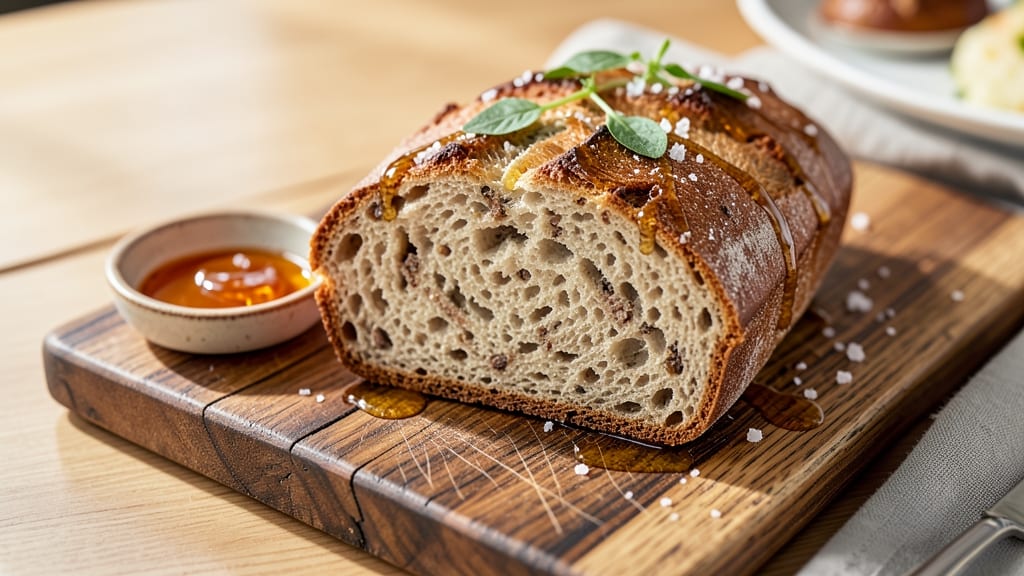
This Australian bread recipe delivers the rustic charm of Outback baking with its signature crispy crust and airy, golden crumb. 🌟 What sets it apart?
A traditional blend of wholemeal flour and a touch of honey, creating a loaf that's both hearty and subtly sweet—just like the bread you'd find in a bushland campfire setting.
The secret lies in the slow fermentation, which develops deep flavor without the need for yeast, making it both authentic and foolproof for home bakers.
What makes this recipe special is its versatility—perfect for sandwiches, toast, or even served alongside a hearty stew. The dough requires minimal handling, with just a 30-minute prep time followed by a 2-hour rise, ensuring you can bake it without rushing.
The result? A loaf with a crunchy exterior and a soft, open crumb that's impossible to resist. This isn't just bread; it's a taste of Australia's culinary heritage, brought to life in your own kitchen.
By the time it emerges from the oven, you'll have a loaf that's golden, fragrant, and packed with rustic character. The crust holds up perfectly for slicing, while the interior remains tender and slightly chewy—ideal for soaking up gravy or spreading with butter.
Whether you're baking for a family meal or treating yourself to a homemade loaf, this recipe delivers restaurant-quality results with just a few simple ingredients and patience.
For those who love experimenting, this bread adapts beautifully to variations—add seeds for extra texture, swap in rye flour for a darker loaf, or even bake it as a sourdough-style damper for a deeper flavor.
The possibilities are endless, but the foundation remains the same: a foolproof, culturally rich loaf that's as satisfying to make as it is to eat. Let's get started!
Ingredients for australian bread
Nine ingredients transform into a rustic loaf with crispy crust and golden crumb - just like bushland campfire bread.
| Ingredient | Amount | Notes |
|---|---|---|
| Wholemeal Flour 🌾 | 3 ½ cups | High protein for structure |
| Honey 🍯 | ¼ cup | Wildflower for subtle floral notes |
| Warm Water 💧 | 1 ½ cups | 105°F for ideal activation |
| Instant Yeast 🍞 | ½ tsp | For reliable fermentation |
| Salt 🧂 | 1 tsp | Diamond Crystal preferred |
| Olive Oil 🫒 | 2 tbsp | Extra-virgin for richness |
| Sesame Seeds 🌻 | 1 tbsp | For traditional crust texture |
| Cornmeal 🌽 | 2 tbsp | For dusting baking tray |
| Coarse Sea Salt 🧂 | 1 tbsp | For final crust sprinkle |
The wholemeal flour is non-negotiable here—King Arthur or Caputo brands deliver the best texture. Hunt for Australian wholemeal flour at specialty stores if you can, but any high-protein blend works. Honey? Wildflower or manuka adds subtle floral depth—skip the clover if you want that authentic Outback taste. Warm the water to 105°F (just warm to the touch) to activate the yeast properly without killing it. I always use Diamond Crystal salt—it dissolves better than table salt and enhances flavor without overpowering. The olive oil should be extra-virgin, but don't stress if you only have regular—just use it sparingly.
No honey? Maple syrup or agave works in a pinch (reduce by 1 tbsp), but the flavor won't be identical. Running low on sesame seeds? Poppy or flaxseeds give a different texture but still look beautiful. The yeast is the only tricky ingredient—if your kitchen is cold, proof it first in warm water with a pinch of sugar. For the cornmeal, Bob's Red Mill is my go-to, but any fine cornmeal will do. The coarse sea salt for the crust? Maldon or Jacobsen flakes are perfect, but regular coarse salt works too—just sprinkle it generously. If you're feeling adventurous, swap half the wholemeal for rye flour for a deeper flavor.
This dough is forgiving—it can rise overnight in the fridge if you're baking in the morning. For best results, shape the loaf 2 hours before baking to let the gluten relax. The crust gets its signature crunch from the steam method: place a metal tray on the oven rack while preheating, then pour 1 cup hot water in it when loading the bread. Store wrapped at room temp for 2 days, or freeze the whole loaf for up to 3 months. Toast slices straight from the freezer—no thawing needed!
Why You'll Love This Recipe
- Five-Minute Mix: I swear, the dough comes together faster than I can boil the kettle. Just toss the wholemeal flour, honey, and warm water—no kneading, no fuss—while the yeast does its magic in minutes. Honestly, it’s the kind of recipe that makes me question why I ever baked anything complicated.
- Honey-Gold Crust: That caramelized honey crust? It’s what turns this from bread to moment. The wholemeal base keeps it hearty, but the honey adds this unexpected sweetness that pairs perfectly with butter—or straight from the oven, fingers first. (Yes, even on a Tuesday night.)
- Leftover Hero: This bread doesn’t just last—it improves. Toast it the next day for crispy, nutty bites, or turn slices into French toast with the leftover honey. Between us, I’ve had it for breakfast, lunch, and dinner without getting tired of it. That’s reliability.
- Budget Bakery Win: Wholemeal flour and honey are pantry staples, and you’re using them all. No expensive add-ins, no wasted ingredients—just pure, satisfying bread that costs pennies per slice. It’s the kind of recipe that makes me feel like I’m feeding my family gold, even when I’m just stretching the grocery budget.
Step-by-step instructions for Australian bread: Outback-style crust with golden crumb
Here's how to craft that iconic Australian bread with a crispy crust and tender crumb.
👨🍳 Step 1: Activate the Yeast with Honey and Warm Water
In a large mixing bowl, combine the 1.5 cups warm water (tested at 105°F) with the 0.25 cup honey. Stir until the honey dissolves completely—this sweetness will feed the yeast and create subtle floral notes in the final bread. Sprinkle the 0.5 tsp instant yeast over the surface and let it sit for 5 minutes until it becomes frothy.
This activation step is crucial—you should see bubbles forming and the mixture expanding slightly. If nothing happens after 5 minutes, your yeast might be dead. Here's the thing—Australian bread relies on this fermentation kick to develop that signature open crumb structure, so don't skip this checkpoint.
👨🍳 Step 2: Mix the Dough with Olive Oil and Flour
Add the 3.5 cups wholemeal flour and 1 tsp salt to the yeast mixture. Using a wooden spoon or dough whisk, stir until a shaggy dough forms. Then add the 2 tbsp olive oil and mix vigorously for 2-3 minutes until the dough comes together and pulls away from the sides of the bowl.
Here's where it gets fun—the wholemeal flour will be heavier than white flour, so you might need to wet your hands slightly to handle it. The olive oil creates that signature richness that makes Australian bread stand out. Once the dough forms a cohesive ball, turn it out onto a lightly floured surface and knead for 5 minutes until smooth and elastic.
⏰ Step 3: Let the Dough Rise Until Nearly Doubled
Place the dough in a lightly oiled bowl, cover with a damp kitchen towel, and let it rise in a warm place for 1-1.5 hours until it has nearly doubled in size. You'll know it's ready when you poke the dough gently and it springs back slowly—this indicates proper gluten development.
I like to place my bowl on top of the oven with the light on for consistent warmth. The honey and yeast combination should give you a slightly faster rise than traditional bread dough. Don't over-rise it—you want it to be just under doubled when you shape it. This ensures that beautiful open crumb structure that's so characteristic of Australian bread.
🥘 Step 4: Shape and Prepare for Final Rise
Turn the risen dough onto a lightly floured surface and gently shape it into a round loaf. For that authentic Australian look, create a slight dimple in the center of the top. Place the shaped loaf on a baking sheet dusted with 2 tbsp cornmeal—this creates that classic rustic crust texture.
Cover the loaf again and let it rise for another 30-45 minutes until it has puffed up noticeably. The cornmeal will help create that crispy bottom crust while keeping the bread from sticking. Preheat your oven to 400°F during this final rise—you want the oven piping hot when you're ready to bake.
🔥 Step 5: Bake with Coarse Sea Salt for Crispy Crust
Bake the loaf for 30-35 minutes until it's deep golden brown and sounds hollow when tapped on the bottom. In the last 5 minutes of baking, sprinkle the 1 tbsp coarse sea salt and 1 tbsp sesame seeds over the top for that signature Australian crust texture.
This is the moment that matters: the coarse salt creates those beautiful crusty pockets while the sesame seeds add a delightful crunch. Let the bread cool on a wire rack for at least 20 minutes before slicing—this resting period allows the crumb to set properly and prevents a gummy texture.
Pro Tips For Making Australian Bread
- STIR THE HONEY IN: Mix the honey into the warm water first—it dissolves faster and sweetens the dough evenly. I used to just dump it in dry, and the bread always tasted like it had pockets of syrup.
- WEIGH THE FLOUR: Use a kitchen scale for the wholemeal flour—spooning it in leads to inconsistent texture. Wholemeal packs differently than white flour, and your bread will be denser if you guess.
- DON’T SKIP THE FIRST RISE: Let the dough double in a warm spot before shaping—even if it’s messy. I learned this the hard way when my first batch collapsed because I rushed it.
- USE A DAMP CLOTH: Cover the shaped loaf with a damp cloth while it proofs—keeps the crust from drying out too fast. I tried foil once, and the bread turned gummy instead of crisp.
Creative variations of australian bread
Damper Delight
This classic Australian Damper swaps yeast for a simple mix of wholemeal flour, baking powder, and butter, baked directly on hot coals for that iconic smoky flavor.
Use 2 cups wholemeal flour, 1 tbsp baking powder, ½ cup melted butter, and ¾ cup warm water—just mix, shape into a round, and bake at 425°F for 25-30 minutes on a preheated baking tray. The result?
A dense, slightly sweet loaf with a crispy crust, perfect for bushland picnics. 🌾
Sourdough Twist
For a sourdough-style Australian bread, replace 1 cup of wholemeal flour with 1 cup active sourdough starter (fed and bubbly). Reduce the instant yeast to ¼ tsp and let the dough ferment overnight at room temperature for deeper flavor.
Shape into a round, dimple the top, and bake as directed. The sourdough tang pairs beautifully with the honey’s sweetness, creating a complex, tangy-sweet loaf that’s perfect for breakfast toast. 🍯
Seed-Enhanced Crunch
Add texture and nutrition by mixing 2 tbsp sunflower seeds or 1 tbsp linseeds into the dough before the final rise. For extra crunch, sprinkle 1 tbsp pumpkin seeds on top before baking. These seeds not only boost fiber but also create a delightful contrast to the soft crumb.
I love using Australian-grown seeds for that extra rustic touch—just toast them lightly in a dry pan for 2 minutes before adding to enhance their flavor. 🌻
Rye-Inspired Depth
Swap ½ cup wholemeal flour for ½ cup dark rye flour to create a richer, heartier loaf with a molasses-like depth. Rye’s robust flavor pairs perfectly with the honey and olive oil, adding a subtle earthiness.
For best results, use German-style rye flour (like Pillsbury Dark Rye) and increase the water slightly—rye flour absorbs moisture differently. The crust will be darker and more aromatic, with a slightly chewy texture. ✨
Herb-Infused Freshness
Brighten up your loaf by adding 1 tbsp finely chopped fresh rosemary or thyme to the dough during mixing. These herbs complement the honey’s sweetness and add a fragrant, earthy note that’s perfect for pairing with roasted meats.
For a stronger flavor, use dried herbs (reduce to ½ tbsp) and steep them in the warm water before mixing. The herbs also make this bread a fantastic accompaniment to lamb or kangaroo dishes, adding an authentic Aussie touch. 🌿
Sweet Potato Swirl
Give your bread a vibrant twist by swirling in ½ cup mashed roasted sweet potato into the dough before shaping. The natural sweetness of the potato enhances the honey’s flavor while adding moisture and a beautiful golden hue.
Roast 1 small sweet potato (peeled and cubed) at 400°F for 25 minutes, then mash it before mixing into the dough. This variation works especially well if you’re serving the bread with Vegemite or jam for breakfast. 🍠
Nutrition facts
Frequently asked questions about Australian bread
Why does this bread have a dimple in the center?
The dimple isn't just decorative—it creates steam during baking, which helps develop that signature crispy crust while keeping the crumb tender. This traditional technique also prevents cracking by allowing the bread to expand evenly. Think of it as the bread's secret to that perfect Outback-style texture!
Can I make this without honey?
Yes, but you'll lose some of the bread's subtle floral notes. Replace the 0.25 cup honey with 0.25 cup maple syrup or 0.25 cup agave nectar, though the flavor won't be identical. For a savory version, omit it entirely and increase the water by 2 tbsp to maintain dough consistency. The bread will still taste delicious!
How do I know when the bread is fully baked?
Look for three signs: deep golden brown crust, a hollow sound when tapped on the bottom, and an internal temperature of 190-200°F. The sesame seeds should be toasted and the coarse salt crystals should look dry. If unsure, bake 5 more minutes—better to overbake slightly than underbake!
What's the best way to store this bread?
Wrap the cooled loaf tightly in plastic wrap or place it in an airtight container to maintain freshness. It stays good at room temperature for 2-3 days. For longer storage, freeze the whole loaf (up to 3 months)—thaw overnight or toast straight from frozen for crispy results.
Why did my bread turn out dense instead of light?
This usually happens from over-kneading (which develops too much gluten) or under-proofing. Try kneading for only 5 minutes next time, and let the dough rise until it's just under doubled—not fully puffed. Also ensure your yeast is fresh and your water is 105°F (not hot). The wholemeal flour needs gentle handling!