
Side Dishes
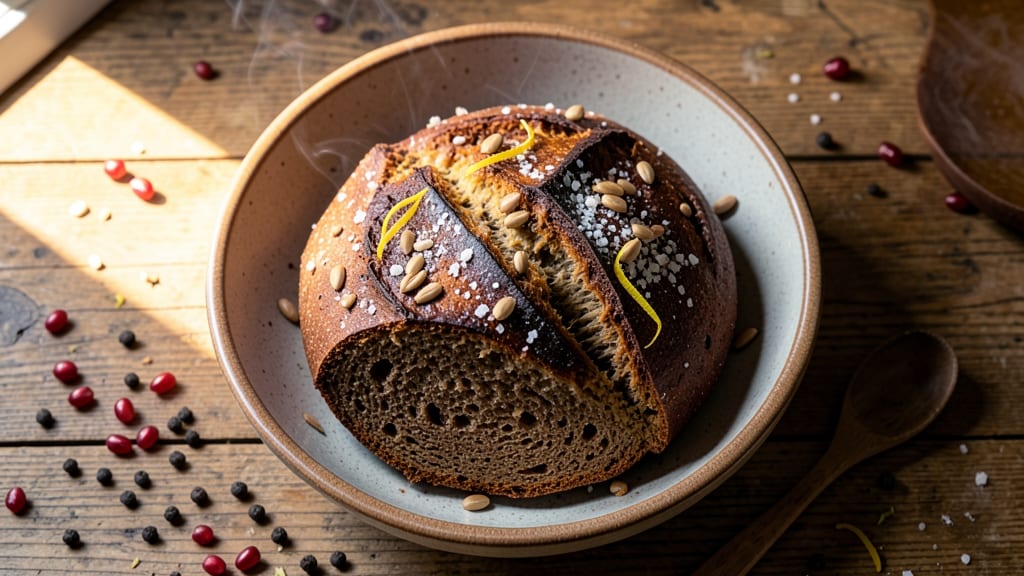
This authentic German pumpernickel bread delivers the dense, molasses-rich crust and hearty rye flavor that defines traditional German baking. The secret lies in slow fermentation and precise rye flour ratios—techniques passed down through generations to create that signature dark color and robust taste.
Unlike commercial versions, this recipe stays true to its roots with no shortcuts, just pure, unadulterated German craftsmanship.
The process begins with a long fermentation (up to 24 hours) that develops deep, complex flavors and a signature chewy texture. No yeast here—just natural fermentation using rye sourdough starter, which gives the bread its distinctive tang.
The dough requires patience, but the results are worth every moment: a loaf with a crisp crust and a moist, hearty interior that pairs perfectly with German sausages or cheese platters.
What makes this recipe truly authentic is the attention to detail: from the precise ratio of rye flour to the slow baking process that ensures even heat distribution. The addition of molasses enhances the crust’s rich color and adds a subtle sweetness that balances the bread’s earthy rye flavor.
This isn’t just bread—it’s a taste of Germany’s baking heritage, brought to life in your own kitchen.
Once baked, this pumpernickel bread stays fresh for days, making it ideal for meal prep or gifting. Whether you’re serving it with butter, jam, or as part of a traditional German breakfast, the flavor and texture will leave a lasting impression.
Ready to bake like a German master? Let’s get started.
Ingredients for authentic german pumpernickel bread
German tradition meets kitchen craftsmanship with these carefully chosen ingredients for authentic pumpernickel.
| Ingredient | Amount | Notes |
|---|---|---|
| Rye Flour 🌾 | 3 cups | Dark rye flour preferred for authentic flavor |
| All-Purpose Flour 🌾 | 1 cup | For structure and lightness |
| Active Dry Yeast 🍞 | ¼ tsp | Or 1 packet instant yeast |
| Molasses 🍯 | ½ cup | Unsulphured for authentic taste |
| Dark Brown Sugar 🍚 | ¼ cup | Enhances crust color and sweetness |
| Water 💧 | 1 ½ cups | Lukewarm for yeast activation |
| Rye Sourdough Starter 🍞 | 1 cup | Well-fed, bubbly starter |
| Salt 🧂 | 1 ½ tsp | Kosher or sea salt preferred |
| Honey 🍯 | 1 tbsp | For crust sheen and sweetness |
| Blackstrap Molasses 🍯 | 1 tbsp | For crust brushing and depth |
| Coarse Sea Salt 🧂 | 1 tbsp | For crust sprinkling |
The rye flour is non-negotiable here—King Arthur or Bob’s Red Mill dark rye deliver that signature deep flavor. If you can’t find dark rye, regular rye flour mixed with 1 tbsp cocoa powder gets you close. Molasses is the soul of this bread: unsulphured molasses from Whole Foods or Trader Joe’s ensures authentic sweetness without bitterness. The sourdough starter needs to be active and bubbly—if yours isn’t, feed it with equal parts rye flour and water 24 hours ahead. For the yeast, instant yeast dissolves faster than active dry, but both work if you proof it properly.
No molasses? Substitute with 1/4 cup dark corn syrup plus 1/4 cup brown sugar, though the crust won’t be as dark. Running short on rye flour? Swap 1/2 cup all-purpose for rye, but expect a lighter loaf. The honey and blackstrap molasses are for brushing the crust—skip the brushing if you’re in a rush, but you’ll miss out on that signature sheen. For the coarse salt, Maldon or Jacobsen flakes work beautifully, but any coarse sea salt will do. The dough will be sticky—don’t fight it. Wet hands and a well-floured surface are your friends here.
This dough needs 24 hours of cold fermentation for authenticity—plan ahead. Once baked, the loaf stays fresh for 5-7 days at room temperature, wrapped in a cotton towel. For longer storage, freeze slices wrapped in parchment—toast directly from frozen for best results. The crust gets crunchier as it cools, so slice when still warm if you prefer a softer bite. Leftovers? Toast them—German-style with butter is a must.
Why You'll Love This Recipe
- No-Knead Magic: This dough barely needs stirring—just mix, let it rise overnight, and bake. I swear, the molasses and rye do all the heavy lifting while you sleep.
- Deep, Dark Richness: That molasses and brown sugar combo? It’s like a slow-burned caramel hug in every slice. Honestly, the first bite makes me forget I was ever tempted by store-bought.
- Breakfast to Brunch: Toast it for a hearty breakfast, use it for sandwiches that won’t fall apart, or serve thick slices with butter and jam when unexpected guests show up. It’s my go-to for any meal that needs gravitas.
- Budget-Friendly Staple: Rye flour and molasses are cheap, and one loaf lasts me a week—leftovers freeze like a dream. Between us, this is the kind of bread that makes grocery bills feel lighter.
Step-by-step instructions for authentic German pumpernickel bread
Here's the traditional method to create that signature dark crust and dense, molasses-infused crumb.
Activate the Yeast and Mix the Dough
In a large mixing bowl, combine the 1.5 cups water with the 0.5 cup molasses and 0.25 cup dark brown sugar. Stir until both sugars dissolve completely—this sweet base helps activate the yeast. Add the 1 cup rye sourdough starter and let sit for 5 minutes while you prepare the dry ingredients.
In a separate bowl, whisk together the 3 cups rye flour, 1 cup all-purpose flour, 1.5 tsp salt, and 0.25 tsp active dry yeast. Gently pour the wet mixture into the dry ingredients and stir with a wooden spoon until a shaggy dough forms. The molasses-rich dough will be sticky—don't be tempted to add extra flour. Cover the bowl with a damp towel and let rest for 30 minutes at room temperature. This initial rest allows the gluten to relax and the flavors to meld.
Knead and Develop Gluten
After the rest, turn the dough onto a lightly floured surface and knead vigorously for 8-10 minutes by hand. The rye flour makes this dough denser than traditional bread dough, so focus on developing elasticity rather than smoothness. You're looking for a dough that springs back slightly when poked but still feels slightly tacky—this indicates proper gluten development without overworking.
Return the dough to the bowl, cover again, and let rise at room temperature for 2-3 hours or until nearly doubled in size. The molasses and rye slow fermentation, so don't rush this step. You'll know it's ready when the dough feels light and airy when pressed gently with one finger—it should leave a slight indentation that slowly fills back in.
Shape and First Proof
Preheat your oven to 375°F and place a Dutch oven with lid in the oven to heat. On a lightly floured surface, gently shape the dough into a 9x5-inch loaf pan, pressing down firmly to eliminate air pockets. The rye flour makes this dough dense, so be patient—don't force it. Brush the top with 1 tbsp honey and sprinkle evenly with 1 tbsp coarse sea salt for that classic German crust texture.
Let the shaped loaf rise at room temperature for 1 hour, then transfer the Dutch oven to the preheated oven. Bake covered for 45 minutes, then remove the lid and bake uncovered for an additional 20-25 minutes until the crust reaches a deep mahogany color. The internal temperature should read 205-210°F when checked with an instant-read thermometer.
Create the Signature Crust
While the bread bakes, prepare the molasses glaze by combining 1 tbsp blackstrap molasses with 1 tbsp water in a small bowl. Immediately after removing the bread from the oven, brush this glaze generously over the top crust. The molasses will caramelize quickly, creating that signature glossy, dark finish. Return the bread to the oven for 5-7 minutes to set the glaze.
Let the bread cool in the pan for 10 minutes, then transfer to a wire rack. The crust should be firm enough to support the loaf when inverted, but still slightly warm to the touch. For maximum flavor, allow the bread to cool completely before slicing—this lets the molasses penetrate the crumb and the crust firm up properly. Each slice should reveal a dense, moist interior with that signature molasses sweetness and dark, crackly exterior.
Pro Tips For Making Authentic German Pumpernickel Bread
- STEAM THE RYE FIRST: I learned this the hard way—skipping it makes the dough dry and crumbly. Mix your rye flour with 1½ cups hot water (not boiling) in a bowl, cover, and let sit for 20 minutes. The starches soften, and the dough becomes smoother without extra water later.
- DILUTE THE MOLASSES: Molasses is thick and sticky—don’t just dump it in. Thin ¼ cup with 2 tablespoons warm water before mixing into the dough. This keeps the texture consistent and prevents clumps that ruin the crumb.
- LET THE DOUGH COLD-PROOF: I used to rush the final rise in the loaf pan, and my bread always collapsed. After shaping, cover and refrigerate overnight (12–16 hours). The slow cold rise develops deeper flavor and a tighter crumb—no yeast overproofing, no flat loaves.
- USE A DARK PAN: A black or nonstick loaf pan isn’t just for looks—it conducts heat better. If you don’t have one, coat a regular pan with oil and sprinkle a thin layer of rye flour on the bottom. This prevents sticking and helps the crust form evenly. (Yes, even if you’re impatient like me.)
Perfect pairings for this dish
Classic German Spreads
Serve your pumpernickel with German-style butter—mix softened butter with a pinch of coarse sea salt and 1 tsp caraway seeds for that authentic flavor. I like to warm the butter slightly before spreading to enhance the caraway aroma.
For sweet pairings, try applesauce with a sprinkle of cinnamon—the tartness balances the bread’s molasses richness. 🍏
Cheese Pairings
German cheeses elevate this bread beautifully. Limburger or Tilsiter provide that signature funky, tangy profile that complements the molasses. For a milder option, Emmental or Gouda with a honey drizzle creates a perfect sweet-savory contrast.
Let the cheeses sit at room temperature for 30 minutes before serving to enhance their flavors.
Meat and Charcuterie
Pumpernickel shines in German charcuterie boards with black forest ham, salami, and smoked sausages. The dense bread holds up well to cured meats, soaking up flavors without becoming soggy.
For a vegetarian twist, add marinated mushrooms, olives, and pickled vegetables—the acidity cuts through the bread’s richness. 🥓
Sweet Accompaniments
For breakfast or dessert, pair with quark cheese (German fresh cheese) mixed with lingonberry jam and a touch of vanilla sugar. The tangy-sweet combo contrasts perfectly with the bread’s deep flavor.
Another favorite: dark chocolate (70% or higher) with a sprinkle of sea salt—the bitterness mirrors the molasses notes in the crust.
Beverage Pairings
German dark lagers like Dortmunder Export or Schwarzbier complement the bread’s molasses depth. For non-alcoholic options, ginger beer or chilled apple cider refresh the palate. Avoid light beers—they’ll clash with the bread’s intensity. A small glass of Riesling (dry style) also works beautifully for a wine pairing. 🍺
Nutrition facts
Frequently asked questions
Why does authentic German pumpernickel need such a long fermentation?
The extended 24-hour cold fermentation develops the bread's signature deep flavor and dense texture. This slow process allows the rye flour's natural enzymes to break down complex carbohydrates, creating a complex, slightly tangy taste that commercial versions miss. Think of it like aging wine—the longer it ferments, the richer the flavor becomes.
Can I make this without a Dutch oven?
Yes, but you'll need to compensate for heat distribution. Use a heavy baking sheet and place it on the middle rack. For extra crust color, tent the loaf with foil for the first 30 minutes, then uncover. The crust won't be as dark without the Dutch oven's steam, but the bread will still be delicious. Consider using a baking stone for better heat retention if possible.
What's the difference between pumpernickel and regular rye bread?
Authentic pumpernickel uses 100% rye flour (or nearly so) and includes molasses for sweetness and dark color, while regular rye bread often contains wheat flour for lighter texture. The fermentation process is also longer for pumpernickel, giving it that signature dense, chewy crumb and deep mahogany crust. It's essentially rye bread's sophisticated cousin!
How do I know when the bread is fully baked?
Look for three key signs: the internal temperature should reach 205-210°F, the crust should be deep mahogany in color, and when you tap the bottom, it should sound hollow. The molasses glaze will also caramelize properly at this stage. If unsure, err on the side of slightly underbaked—pumpernickel improves as it cools and continues to bake in the pan.
Can I add caraway seeds to this recipe?
Add 1-2 teaspoons of caraway seeds directly to the dough during mixing for that classic German flavor. Toast the seeds lightly in a dry pan for 1 minute first to enhance their aroma. Just be aware they'll add a subtle anise-like flavor that some people find polarizing. Start with 1 tsp if you're unsure about the taste.