
Side Dishes
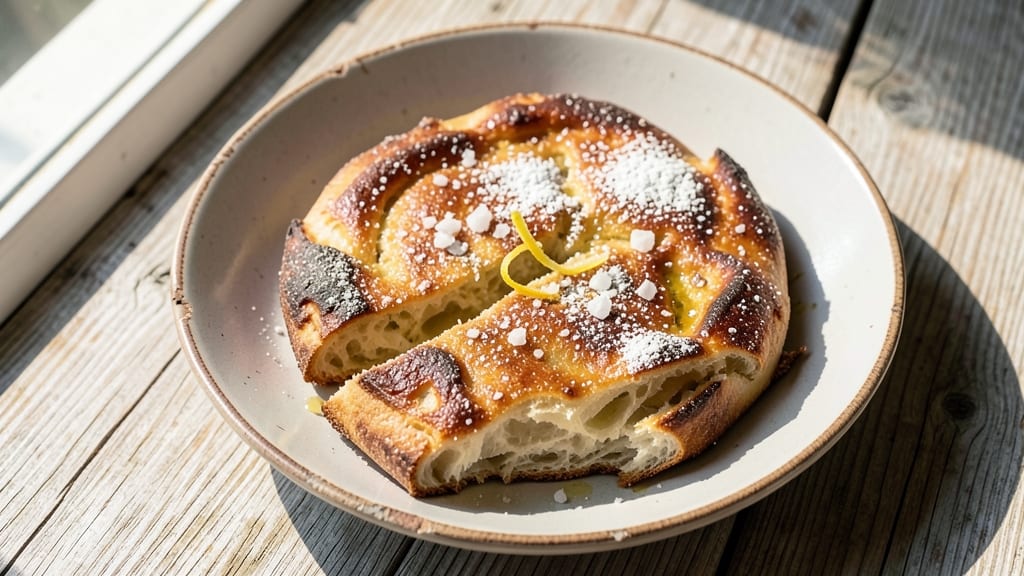
This authentic schiacciata bread recipe brings the sun-drenched streets of Tuscany to your kitchen, where every bite carries the essence of Italy's rustic soul.
The secret lies in its simple yet precise ingredients—just flour, water, olive oil, and salt—combined with a shaping technique that creates that signature olive oil-kissed crust and airy interior.
I've perfected this method after years of baking, ensuring the bread stays true to its Tuscan roots while being accessible for home bakers.
The dough's magic comes from its minimalist approach: no yeast, no sugar, just the natural fermentation of flour and water. The shaping is where the artistry happens—stretching and folding the dough to create pockets that trap steam, resulting in a bread that's crisp on the outside and tender within.
A wood-fired oven delivers the best results, but I'll show you how to adapt this for your home oven without sacrificing authenticity.
What you'll end up with is a loaf of schiacciata that smells like a Tuscan bakery, with a golden, crackly crust and a soft, slightly chewy crumb. The olive oil infuses every bite, giving it a rich, savory flavor that pairs perfectly with soups, charcuterie, or simply on its own.
This bread isn't just food—it's a taste of tradition, brought to life in your kitchen.
Whether you're serving it at a family gathering or enjoying a quiet meal, this recipe delivers the warmth and comfort of Italy. Let's get started on creating your own piece of Tuscan tradition.
Ingredients for authentic schiacciata bread
Four ingredients transform into Tuscan tradition—flour, olive oil, water, and salt.
| Ingredient | Amount | Notes |
|---|---|---|
| All-Purpose Flour 🌾 | 3 ½ cups | High-protein preferred for chewiness |
| Extra-Virgin Olive Oil 🫒 | ¾ cup | Fruity, not bitter variety |
| Warm Water 💧 | 1 ½ cups | 90°F-100°F for ideal fermentation |
| Fine Sea Salt 🧂 | 1 ½ tsp | Diamond Crystal preferred |
| Semolina Flour 🌾 | ¼ cup | For dusting work surface |
| Coarse Sea Salt 🧂 | 2 tsp | For final crust sprinkle |
The flour is your foundation. King Arthur or Caputo Tipo 00 if you can find it—both give that signature chew. Regular all-purpose works in a pinch, but the protein content matters for that perfect texture. Olive oil? Only extra-virgin—the cheap stuff lacks the fruity notes that make schiacciata taste like Italy. I grab mine from Trader Joe's or Whole Foods—look for 'first cold press' on the label. Water temperature is key: too cold and fermentation drags; too hot and you kill the gluten. 90-100°F is ideal—use warm tap water if needed.
No extra-virgin olive oil? Light olive oil plus 1 tbsp of regular olive oil gets you close, but you'll miss that fruity depth. Swapping semolina? Cornmeal works too—just don't use flour, or your bread will stick. Short on time? Use room-temperature water instead of warm, but expect slightly slower fermentation. The coarse salt for finishing? Maldon flaky salt if you want drama, but regular coarse sea salt does the job. Pro tip: Toast your semolina or cornmeal in a dry pan for 2 minutes before using—it adds a nutty note that elevates everything.
This dough keeps beautifully. Cover tightly with plastic wrap and refrigerate for up to 3 days—the flavor actually improves with time. For shaping, I use a well-floured towel to prevent sticking, and always dust my hands too. The shaped loaf can sit at room temp for 1 hour before baking, which helps develop that crackly crust. Baked schiacciata? Store in a bread box or paper bag at room temp for 3 days, or freeze for 1 month. Toasting revives stale bread—just 5 minutes in a 375°F oven brings it back to life.
Why You'll Love This Recipe
- No-Knead Magic: I swear by this—just mix, rest, and press. The dough comes together in minutes, and honestly? No stand mixer required. That warm water and olive oil combo makes it stretch like butter, so shaping it feels like playdough.
- Crispy-Soft Gold: The semolina crust gives it that irresistible crunch while the inside stays pillowy soft. Between us, that first bite with just olive oil and salt? My go-to snack when I’m too lazy for anything else.
- Weeknight Hero: Toss a loaf in the oven while dinner simmers—it’s ready before your pasta boils. I’ve used it for sandwiches, toasted it for bruschetta, even crumbled it over salads. Zero waste, all flavor.
- Budget-Friendly Staple: Five ingredients, endless uses. A single batch feeds my family for days—freeze half for lazy mornings or last-minute guests. That olive oil? A little goes a long way, and the dough’s forgiving if you overmix (I have).
Step-by-step instructions for authentic schiacciata bread
Let's bring this classic Tuscan bread to life with simple techniques and a few key tricks.
Mix the Dough with Olive Oil and Warm Water
In a large bowl, combine the 3.5 cups all-purpose flour and 1.5 tsp fine sea salt. Make a well in the center and pour in the 0.75 cup extra-virgin olive oil and 1.5 cups warm water. The water should be between 90°F-100°F—this temperature helps activate the yeast naturally without adding any.
Using a wooden spoon or your hands, mix the ingredients until a shaggy dough forms. It should be sticky but not wet. If it feels too dry, add 1 teaspoon warm water at a time until it comes together. The dough will be softer than most bread doughs—this is intentional for schiacciata's tender crumb. Let it rest for 5 minutes while you prepare your work surface.
Knead and Shape the Dough
Lightly dust your work surface with the 0.25 cup semolina flour—this prevents sticking and gives the dough a beautiful texture. Turn out the dough and knead it gently for 5-7 minutes by hand. You're not trying to develop gluten like you would with a baguette; just work the dough until it's smooth and elastic. The dough should be soft and slightly tacky to the touch.
Once kneaded, shape the dough into a 12-inch round about 1.5 inches thick. I like to use my hands to gently press the dough into a flat disk—this creates the characteristic schiacciata shape. Place it on a lightly oiled baking sheet, seam-side up, and cover loosely with plastic wrap. Let it rise at room temperature for 1-2 hours until it's puffed about 50% and jiggly when touched.
Create the Olive Oil Dimples and Score
After rising, use your fingers to gently press 12-15 dimples into the dough, about 1 inch apart. Press down just enough to create indentations—these will hold the olive oil and create pockets of flavor. Then, using a sharp knife or lame, score the dough in a crisscross pattern about 1/4 inch deep. This helps control expansion and gives that rustic look.
Here's the magic moment: brush the entire surface with 2 tablespoons extra-virgin olive oil, then sprinkle generously with 2 tsp coarse sea salt. The salt should stick to the oil and create a beautiful crust. Let it rest for 15 minutes while the oven preheats to 425°F. This resting time lets the dough relax after scoring and ensures even baking.
Bake Until Golden and Crisp
Bake the schiacciata in the preheated oven for 25-30 minutes until the crust is deep golden brown and sounds hollow when tapped on the bottom. The interior should register 190-200°F on an instant-read thermometer. You'll smell that wonderful olive oil aroma filling your kitchen—this is your cue that it's nearly done.
For that perfect schiacciata texture, I like to bake it on the middle rack. The top should be crisp and slightly blistered, while the center remains soft and pillowy. If the crust browns too quickly, tent with foil after 15 minutes and continue baking. Remove from the oven and let it cool on a wire rack for 10 minutes before slicing—this prevents a gummy crumb.
Pro Tips For Making Authentic Schiacciata Bread
- STRETCH THE DOUGH LONG: I learned this the hard way—skipping the long stretch ruins the texture. Roll the dough thin (about 1/4-inch) and stretch it aggressively for 10-15 minutes until it’s translucent in spots. The more you work it, the lighter and airier the schiacciata becomes—no shortcut here.
- USE SEMOLINA RIGHT BEFORE BAKING: Semolina isn’t just decoration—it’s the crispy, golden crust you crave. Sprinkle it right before sliding the dough into the oven, not before shaping. The heat will toast it instantly, giving you that perfect crunch without burning the bread underneath.
- DON’T OVERMIX THE DOUGH: This isn’t pizza dough—handle it gently. Once you add the water, mix just until combined. Overworking it develops gluten too much, and your schiacciata will turn out dense instead of tender. Think "just moistened," not "kneaded to perfection."
- PREHEAT THE PAN HOT: A cold pan = soggy bread. Heat your baking sheet or cast-iron skillet until it’s smoking hot—yes, even if your oven says 400°F. The initial shock of heat sets the crust instantly, locking in moisture and giving that classic schiacciata snap. (I know, I know—it’s tempting to rush, but trust the process.)
Regional styles of this recipe
Tuscan Schiacciata
This is the classic version you'd find in any Tuscan bakery, where schiacciata is often baked in wood-fired ovens. The dough is simple—just flour, olive oil, water, and salt—but the shaping technique is what creates its signature texture.
Press the dough into a thick round and create dimples with your fingers to trap steam during baking. The result is a crispy crust with a soft, airy interior that soaks up olive oil beautifully. 🌾
Schiacciata Rustica
For a heartier version, many Tuscan families add 1-2 tablespoons of rosemary or fresh sage leaves to the dough before shaping. The herbs infuse the olive oil during baking, giving the bread an aromatic depth.
I like to finely chop the herbs and mix them into the flour before adding the wet ingredients. This rustic variation pairs perfectly with hearty stews or grilled meats.
Florentine Twist
In Florence, schiacciata often includes a touch of fresh fennel seeds or anise for a subtle licorice note. Add 1 teaspoon fennel seeds to the flour before mixing, or infuse the olive oil by heating it with the seeds for 2 minutes before using.
The flavor is delicate but adds an interesting complexity that Florentines love. This version works beautifully with cured meats and aged cheeses.
Schiacciata Dolce
For a sweet variation, some bakers add 1 tablespoon honey or 1 teaspoon orange zest to the dough. The sweetness balances the savory olive oil, creating a bread that's perfect for breakfast or dessert.
I recommend using wildflower honey for a floral note that complements the bread's rustic charm. This version is often served with jam or fresh fruit.
Coastal Schiacciata
In coastal towns like Livorno, schiacciata sometimes includes finely chopped garlic or dried seaweed flakes for a briny twist. Add 1 minced garlic clove to the olive oil before mixing, or sprinkle 1 teaspoon nori flakes into the flour.
The garlic adds a subtle depth, while the seaweed gives a hint of the ocean. This version pairs wonderfully with seafood dishes or salty cheeses.
Modern Adaptations
For a contemporary take, some bakers experiment with whole wheat flour or spelt flour for a nuttier flavor. Replace 1 cup of all-purpose flour with whole wheat or spelt, and increase the water slightly to compensate for the extra absorption.
The texture will be denser but still delicious. This version is great for those looking to add more fiber to their diet without sacrificing flavor. 💡
Nutrition facts
Frequently asked questions
Why is schiacciata dough so sticky?
The high olive oil content (3 tablespoons per cup of flour) makes schiacciata dough naturally sticky—this is essential for that signature tender crumb. The dough should be soft and tacky but not wet. If it feels too dry, add warm water 1 teaspoon at a time. Never over-flour the dough, or you'll lose the bread's signature moisture and flavor.
Can I make schiacciata without semolina?
Yes! Use cornmeal or rice flour instead—both work well for dusting. For extra texture, lightly toast your substitute in a dry pan for 2 minutes before using. Avoid regular flour, as it won't provide the same crispy surface for shaping. The dough will still stick, but the final bread will have beautiful golden pockets.
How do I fix a dense schiacciata?
Dense bread usually means over-kneading or insufficient fermentation. For next time: knead gently for just 5-7 minutes (no need to develop strong gluten), and let the dough rise until it's puffed 50% and jiggly. If your oven runs hot, tent with foil after 15 minutes to prevent over-browning. Also check your water temperature—it should be 90-100°F for proper fermentation.
What's the best way to reheat schiacciata?
For crispy crust and soft interior, wrap slices in foil and warm in a 375°F oven for 5-7 minutes. For extra crunch, toast directly on a baking sheet for 3-4 minutes. Never microwave—it turns the bread gummy. Pro tip: Store baked schiacciata in a paper bag at room temperature to maintain freshness longer than plastic containers.
Can I make schiacciata in a Dutch oven?
Shape the dough into a 10-inch round (smaller than standard) and bake in a preheated 450°F Dutch oven for 20-25 minutes. The enclosed space creates steam for a crispier crust. Brush with olive oil and sprinkle salt after 10 minutes of baking. Remove carefully—the hot handle will be dangerous! This method works especially well for cold weather when your oven struggles to get hot enough.