
Side Dishes
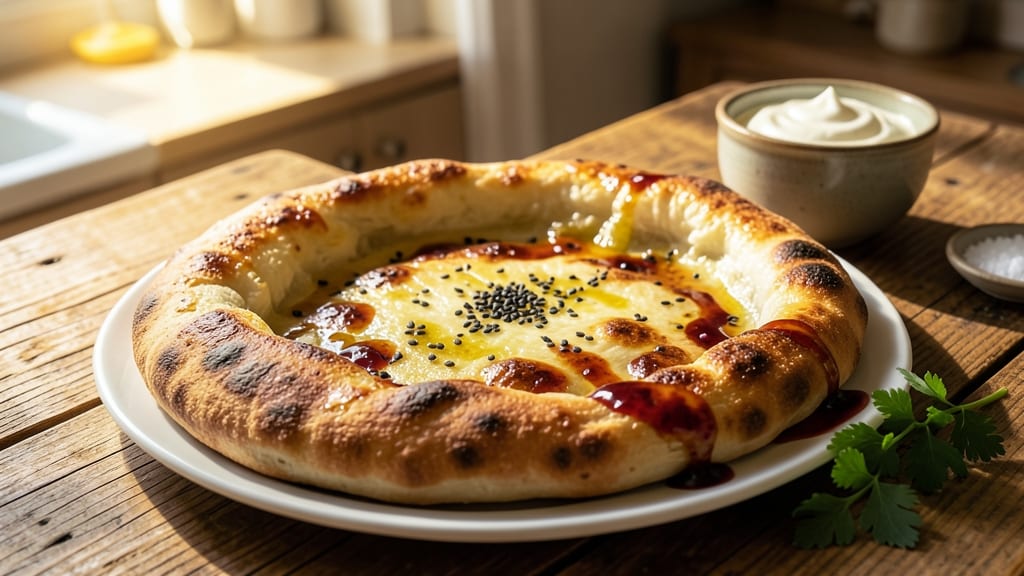
The authentic Turkish pide bread recipe brings the heart of Istanbul to your kitchen with its signature flaky layers and rich, savory fillings. 🌟 This traditional dish transforms simple dough into a crispy, golden masterpiece that's perfect for sharing—whether as a meal on its own or paired with grilled meats and fresh salads.
The secret lies in the yeasted dough's slow fermentation, which creates those irresistible air pockets and tender texture.
What sets this recipe apart is its balance of tradition and approachability. While authentic pide requires a stone oven for that signature char, we'll adapt the technique for home kitchens using high-heat pans.
The filling—traditionally minced lamb with kaşar cheese—can be customized with modern twists like spinach and feta for a vegetarian option. Every layer of dough is rolled thin, brushed with olive oil, and stuffed generously before baking to crispy perfection.
By the time you pull this pide from the oven, you'll have a dish that's crispy on the outside, tender within, and bursting with flavor from the spiced filling.
The aroma alone will draw everyone to the table, and the first bite delivers that perfect combination of flaky dough and savory, cheesy goodness. This is Turkish comfort food at its finest—authentic, satisfying, and impossible to resist.
Whether you're serving it at a family gathering or enjoying it as a special weekend meal, this pide bread brings a taste of Turkey's culinary traditions to your home. Let's get started on creating your own masterpiece.
Ingredients for authentic turkish pide bread
Four cups flour, a pinch of yeast, and the magic of slow fermentation.
| Ingredient | Amount | Notes |
|---|---|---|
| All-Purpose Flour 🌾 | 4 cups | Unbleached preferred for best texture |
| Active Dry Yeast 🍞 | ¼ tsp | Tested for freshness first |
| Granulated Sugar 🍚 | 1 tbsp | Feeds yeast for fermentation |
| Salt 🧂 | 1 ½ tsp | Kosher or sea salt preferred |
| Warm Water 💧 | 1 ¼ cups | 110°F for optimal yeast activation |
| Extra-Virgin Olive Oil 🫒 | ½ cup | High quality for brushing |
| Kaşar Cheese 🧀 | 1 ½ cups | Shredded, semi-hard variety |
| Ground Lamb 🥩 | ¾ lb | 80/20 fat ratio preferred |
| Onion 🧅 | 1 whole | Yellow, finely chopped |
| Garlic Cloves 🧄 | 3 cloves | Minced for filling |
| Ground Cumin 🌿 | ½ tsp | Toasted for deeper flavor |
| Ground Red Pepper 🌶️ | ¼ tsp | Adjust for heat preference |
| Salted Butter 🧈 | 2 tbsp | For filling richness |
| Fresh Parsley 🌿 | ¼ cup | Chopped, for garnish |
The flour is non-negotiable here. King Arthur or Gold Medal brands give the best texture—no shortcuts with all-purpose. The yeast needs to be fresh, so test it in warm water with a pinch of sugar first (it should foam within 5-10 minutes). For the lamb, ask your butcher for 80/20 ground chuck—the fat keeps it juicy. Kaşar cheese is the star, but Parmesan or mozzarella work in a pinch. If you can't find kaşar, shred it yourself from a block—pre-shredded gets gummy. The olive oil should be fruity and peppery—Colavita or Bertolli are solid choices.
No lamb? Ground beef or even turkey works, but keep the fat ratio high. Out of cumin? Dried oregano at half the amount gives a similar earthy note. The parsley is optional but worth it—it brightens up the whole dish. For the dough, don't rush the fermentation. Let it rise 1-2 hours until it's puffy and jiggly. If your kitchen's cold, place the bowl in a warm spot (like near the oven with the light on). The filling can be prepped ahead—it actually tastes better the next day as flavors meld.
Dough keeps 2 days wrapped in plastic in the fridge, but bring it to room temp before rolling. The filling can be made 3 days ahead and stored in an airtight container. For freezing, shape the pide into individual portions before baking, then freeze on a tray before transferring to bags. Reheat in a 375°F oven for 10-15 minutes until crispy. Leftovers? Slice and toast in a pan with extra olive oil—like a crispy flatbread sandwich. Worth every minute of the wait.
Why You'll Love This Recipe
- I’ll be real: this bread is my go-to for lazy dinners, potlucks, or when I’m too tired to plan. Toss it with cheese and olives for a quick lunch, or serve it warm with yogurt and pickles for a meal that feels fancy but takes 10 minutes to assemble.
- Five-Ingredient Magic: Honestly, you’re looking at a dough that requires nothing but flour, yeast, sugar, salt, and warm water—no fancy starters or special tools. That’s right, your pantry already has everything you need, and the kneading? Just 5 minutes of elbow grease (or a mixer if you’re feeling lazy).
- Crispy-Chewy Perfection: Between us, that golden crust with a pillowy center? It’s the kind of texture that makes you pause mid-bite. The yeast does its thing overnight (or even just a few hours), so by the time you bake it, every slice is ridiculously satisfying—no sad, dry edges here.
- Weeknight Hero: I’ll be real: this bread is my go-to for lazy dinners, potlucks, or when I’m too tired to plan. Toss it with cheese and olives for a quick lunch, or serve it warm with yogurt and pickles for a meal that feels fancy but takes 10 minutes to assemble.
Step-by-step instructions for authentic Turkish pide bread
Let's make this traditional Turkish delight with its signature flaky layers and rich filling.
👨🍳 Step 1: Prepare the Yeast Dough
In a large bowl, combine the 4 cups all-purpose flour and 1.5 tsp salt. Make a well in the center and add the 0.25 tsp active dry yeast and 1 tbsp granulated sugar. Pour in the 1.25 cups warm water (around 110°F) and let it sit for 5 minutes until the yeast activates and forms bubbles.
I like to mix this by hand first to distribute the yeast evenly. Then add the 0.5 cup extra-virgin olive oil and knead for 8-10 minutes until the dough becomes smooth and elastic. You'll know it's ready when it springs back when pressed. This step is crucial for developing the gluten that creates those signature flaky layers.
🥘 Step 2: Create the Spiced Lamb Filling
While the dough rests, prepare the filling by cooking the 0.75 lb ground lamb in a skillet over medium heat until browned. Add the 1 whole onion (finely chopped) and cook until soft. Stir in the 3 cloves garlic cloves (minced), 0.5 tsp ground cumin, and 0.25 tsp ground red pepper. Cook for 3-4 minutes until fragrant.
Remove from heat and let cool slightly. Then mix in the 2 tbsp salted butter and 1.5 cups shredded Kaşar cheese, reserving some for topping. This filling should be warm but not hot when you assemble the pide—it helps melt the cheese perfectly during baking.
🍳 Step 3: Assemble the Pide Dough
Divide the dough into 4 equal portions and roll each into a 12-inch circle on a floured surface. Place 1/4 of the lamb filling in the center of each circle, then fold the edges toward the center, pleating as you go to create the traditional pide shape. This folding technique is what gives pide its distinctive look and helps trap the filling.
Place each assembled pide on a parchment-lined baking sheet, leaving space between them. Brush the tops with a little extra-virgin olive oil and sprinkle with the reserved Kaşar cheese. This final touch adds that golden, bubbly crust that makes pide so irresistible.
🔥 Step 4: Bake to Golden Perfection
Preheat your oven to 425°F. Bake the pide for 20-25 minutes until the crust is deep golden brown and the cheese is melted and bubbly. The edges should be crispy while the center remains soft and pillowy—this is the hallmark of well-made pide.
I know it's tempting to peek, but resist! Opening the oven too early can cause the bread to deflate. When you do remove it, the aroma will fill your kitchen—trust me, it's worth the wait. Let the pide rest for 5 minutes before serving to allow the filling to set slightly.
🍽️ Step 5: Garnish and Serve
Transfer the pide to a cutting board and sprinkle with the 0.25 cup chopped fresh parsley for a pop of color and freshness. Serve warm, sliced into wedges. The contrast of crispy crust, melted cheese, and tender lamb filling in every bite is what makes this dish so special.
For an authentic experience, serve with a side of yogurt or a simple green salad. The flaky layers and rich filling will have you reaching for seconds—just like in Turkish homes where pide is a beloved centerpiece.
Pro Tips For Making Authentic Turkish Pide Bread
- STRETCH AND TURN: Dough too stiff? After mixing flour, yeast, sugar, and salt, add warm water slowly—about 1 cup at a time—while stretching the dough between wet palms. Turkish pide needs that tender, slightly tacky texture; if it cracks when you pull it, you’ve gone too dry.
- SALT THE WATER: Skip adding salt to the dough directly. Instead, dissolve 1 teaspoon of salt in the warm water first—this distributes evenly and prevents dry, uneven patches in the final bread. (Yes, even if the recipe says otherwise.)
- PUNCH DOWN HARD: After the first rise, punch down the dough with the heel of your hand—not a gentle fold—until it deflates by half. This develops gluten and mimics the dense, chewy texture of street-corner pide. (I used to be gentle; now I’m aggressive.)
- STEAM THE CRUST: Before baking, brush the shaped pide with water (not oil) and let it sit for 5 minutes. The steam creates that signature blistered, golden crust without burning the edges. Preheat your oven to 500°F (260°C) and use a pizza stone or baking sheet—no parchment.
Wine and beer pairings for this recipe
Turkish White Wines
For pide, I reach for crisp Turkish whites that complement the rich lamb and cheesy dough without overpowering it.
Try Boğazkere from the Aegean region—its citrusy acidity and mineral notes cut through the richness beautifully. Narince, another local favorite, offers floral and peach undertones that pair perfectly with the cumin-spiced filling. Serve these whites slightly chilled (45-50°F) to enhance their refreshing qualities. 🍷
Greek Assyrtiko
If you can't find Turkish wines, don't worry—Greek Assyrtiko from Santorini is an excellent substitute. Its bright acidity and lemony finish mirror the fresh herbs in pide while standing up to the bold flavors.
Look for a dry, unoaked version to avoid any oak tannins that might clash with the dish. I keep a bottle of Gaia Assyrtiko on hand specifically for Turkish-inspired meals.
Light Turkish Beers
For beer lovers, Turkish Efes Pilsen is the classic choice—its crisp, clean flavor and light body won't compete with the pide's rich filling. If you prefer something more local, try Anadolu Efes or Tekel, both of which offer a refreshing contrast.
Serve them well-chilled (40-45°F) to complement the warm, savory pide. A frosty glass of Efes is practically a Turkish tradition with pide.
Raki Pairing
For a truly authentic experience, serve Turkish raki—an anise-flavored spirit—on the side. While it's traditionally sipped after meals, a small glass alongside pide enhances the meal's cultural authenticity.
The licorice notes in raki complement the cumin and lamb beautifully. Just remember, it's best served ice-cold (38-40°F) in small glasses with water added to dilute it.
Non-Alcoholic Options
Don't want alcohol? Try Turkish ayran—a refreshing yogurt drink with a tangy kick that cleanses the palate between bites. For something more substantial, ayran with a splash of mint syrup adds a cooling contrast to the warm pide.
Another great option is Turkish tea (çay), served in small glasses—its bold flavor and warmth make it a perfect companion to pide.
Nutrition facts
Frequently asked questions
Can I make pide without a stone oven at home?
While traditional pide is baked in a stone oven, you can achieve great results with a high-heat home oven. Use a heavy baking sheet or cast-iron skillet to mimic the stone's heat retention. Preheat your oven to 425°F and place the baking sheet inside for 10 minutes before adding the pide. This helps create that crispy, golden crust. For extra authenticity, try baking on a pizza stone if you have one.
What's the difference between pide and lahmacun?
Both are Turkish flatbreads, but they're quite different! Lahmacun is a thin, crispy flatbread topped with spiced minced meat and herbs, baked until the crust is paper-thin. Pide, on the other hand, has flaky layers with a filling inside, like a stuffed flatbread. Lahmacun is more like a savory crepe, while pide is a hearty, stuffed bread that's perfect for sharing. The dough for lahmacun is also typically rolled much thinner.
How do I store leftover pide?
Leftover pide stays fresh for 2-3 days when stored in an airtight container at room temperature. For longer storage, wrap individual portions in foil and freeze for up to 3 months. To reheat, bake at 375°F for 10-15 minutes until crispy again. You can also revive stale pide by brushing with olive oil and reheating in a skillet over medium heat for 2-3 minutes per side.
Can I make pide with vegetarian fillings?
Yes! Swap the lamb for a mix of sautéed mushrooms, spinach, and feta cheese. For extra protein, add chickpeas or lentils. You can also use eggplant and herbs with a sprinkle of kaşar or mozzarella. The key is keeping the filling moist but not too wet, so it doesn't make the dough soggy. Try adding a pinch of smoked paprika for depth if you're avoiding meat.
Why did my pide turn out dense instead of flaky?
Dense pide usually means the dough didn't get enough fermentation time or wasn't kneaded properly. Make sure your yeast is active and the dough rises until it's doubled in size (1-2 hours). Also, kneading for 8-10 minutes develops the gluten needed for those signature layers. If your kitchen is cold, place the dough in a warm spot to help it rise. Overworking the dough can also make it tough, so handle it gently when rolling.