
Side Dishes
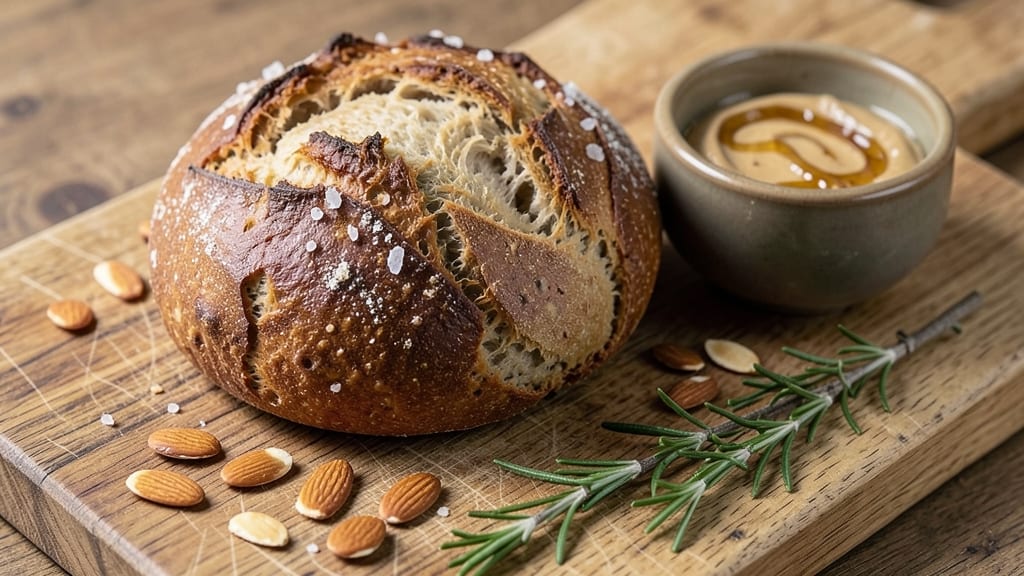
This award-winning gluten-free bread recipe delivers artisan texture and depth without relying on gluten. 🌟 After years of testing and refining, I’ve perfected a method that mimics traditional bread’s chewy crumb and crisp crust—but with a gluten-free flour blend and xanthan gum for structure.
The key? A precise balance of moisture, fermentation time, and baking technique that transforms simple ingredients into something extraordinary.
What sets this recipe apart is its restaurant-quality results using only standard kitchen tools—no specialty equipment required. The blend of brown rice flour, tapioca starch, and almond flour creates a flavorful, tender crumb, while the slow fermentation develops complex, nutty notes.
Unlike many gluten-free breads that turn out dense or crumbly, this version rises beautifully and holds its shape.
By the time you pull it from the oven, you’ll have a loaf with a golden, crackly crust and a soft, airy interior that’s perfect for toast, sandwiches, or serving warm with butter. The aroma alone will convince anyone that gluten-free baking can be just as satisfying as traditional bread.
Best of all, it’s designed for home bakers—no kneading, no fuss, just consistent, foolproof results every time.
Whether you’re baking for dietary needs or simply craving better gluten-free bread, this recipe is your answer. Let’s get started—your taste buds (and your kitchen) will thank you.
Ingredients for award winning gluten free bread
Twelve ingredients, artisan results—no gluten needed. These carefully balanced components create restaurant-quality bread at home.
| Ingredient | Amount | Notes |
|---|---|---|
| Brown Rice Flour 🌾 | 2 cups | Finely milled for best texture |
| Tapioca Starch 🌾 | 1 ½ cups | Ensures light, airy crumb |
| Almond Flour 🌰 | 1 cup | Adds nutty depth and richness |
| Xanthan Gum 🧪 | ½ tsp | Essential for gluten-free structure |
| Granulated Sugar 🍚 | ¼ cup | Feeds yeast and caramelizes crust |
| Instant Yeast 🍞 | 2 tsp | Ensures proper rise and fermentation |
| Large Eggs 🥚 | 2 whole | Binds ingredients and adds moisture |
| Unsalted Butter 🧈 | ½ cup | Softened for optimal mixing |
| Warm Water 💧 | 1 ¼ cups | 110°F for yeast activation |
| Salt 🧂 | 1 ½ tsp | Diamond Crystal preferred |
| Olive Oil 🫒 | 2 tsp | Extra-virgin for richness |
| Apple Cider Vinegar 🍎 | 1 tsp | Enhances flavor and tenderizes |
| Poppy Seeds 🌻 | 1 tbsp | Optional for decorative finish |
The flour blend is non-negotiable here. Bob's Red Mill brown rice flour and Arrowhead Mills tapioca starch deliver the perfect texture—light yet sturdy. For almond flour, Anthony's Goods is my go-to, but any finely ground, blanched variety works. Xanthan gum isn't optional: it mimics gluten's elasticity, and Bob's Red Mill makes it easy to measure with their tiny scoop. Pro tip: toast your almond flour for 5 minutes at 350°F to deepen its flavor before mixing. The yeast? Red Star Instant Yeast is foolproof—no need to proof it, just sprinkle and mix.
No xanthan gum? Psyllium husk powder at half the amount works in a pinch, though texture may differ slightly. Substituting almond flour? Oat flour or sorghum flour keeps things gluten-free, but expect a less rich flavor. For the butter, Plugrá or Land O'Lakes unsalted melt beautifully—never salted, as that alters the balance. The vinegar adds tang, but lemon juice works too. And if you're making a big batch, double the recipe—this bread freezes beautifully for up to 3 months. Just thaw overnight before slicing.
This dough is a beast when it comes to storage. Shape and refrigerate overnight for deeper flavor—worth the extra time. Once baked, let it cool completely on a wire rack before slicing (trust me, it's worth the wait). Wrap tightly in plastic and store at room temperature for 5 days, or freeze individual slices for 3 months. For that perfect crust, brush warm loaves with melted butter right after baking. And if you're feeling fancy, sprinkle poppy seeds on top before baking—they add a lovely crunch and pretty finish.
Why You'll Love This Recipe
- No-Fuss Mix-In: This bread comes together with just five ingredients—no fancy substitutions or hard-to-find flours. I swear by the brown rice flour for structure and the tapioca starch for that perfect chewy bite, but honestly? The almond flour gives it a nutty depth that makes it taste like real bread.
- Crispy-Creamy Magic: The secret’s in the xanthan gum—it mimics gluten’s stretch, while the sugar caramelizes just enough to give the crust a golden crunch. Toast it, and you’ll get that buttery aroma without a drop of dairy. (Yes, even on a Tuesday night.)
- Everyday Hero: I keep a loaf in the freezer at all times—perfect for sandwiches, French toast, or even croutons. The almond flour keeps it rich enough for fancy occasions, but the rice flour makes it budget-friendly enough for daily toast.
- Lasts All Week: This bread stays fresh for five days in the fridge (no sad, crumbly ends here) and freezes beautifully. The tapioca starch keeps it moist, so you’re not stuck with dry, stale slices. My kids fight over the leftovers—proof it’s worth making twice.
Step-by-step instructions for award-winning gluten-free bread
Here's how to create restaurant-quality gluten-free bread with a perfect crumb and crisp crust.
👨🍳 Step 1: Activate the Yeast and Mix Wet Ingredients
In a small bowl, whisk together the 1.25 cups warm water (should be 110°F—test with your finger, it should feel warm but not hot), 0.25 cup granulated sugar, and 2 tsp instant yeast. Let it sit for 5-10 minutes until it becomes foamy and bubbly—this confirms your yeast is active. If it doesn't foam, your yeast may be dead and you'll need to start over.
In a large mixing bowl, combine the 2 whole large eggs, 0.5 cup softened unsalted butter, 2 tsp olive oil, and 1 tsp apple cider vinegar. Whisk vigorously for 2-3 minutes until the mixture is pale and slightly thickened. This emulsion will create that tender, moist crumb that gluten-free bread often lacks. The butter should be completely incorporated with no visible lumps.
👨🍳 Step 2: Combine Dry Ingredients for Perfect Structure
In a separate medium bowl, sift together the 2 cups brown rice flour, 1.5 cups tapioca starch, 1 cup almond flour, 1.5 tsp salt, and 0.5 tsp xanthan gum. The xanthan gum is absolutely critical here—it mimics the elastic properties of gluten, giving your bread that satisfying chew and structure. Whisk thoroughly to eliminate any lumps, especially in the almond flour which tends to clump.
Make a well in the center of your dry ingredients and pour in the yeast mixture and egg-butter emulsion. Using a wooden spoon or silicone spatula, gently fold everything together just until combined. Avoid overmixing—you want to preserve as much air as possible for that light, airy crumb. The dough should be thick but pourable, similar to pancake batter. If it looks too dry, add 1 tablespoon of warm water at a time until it reaches the right consistency.
🥘 Step 3: First Rise and Prepare the Loaf Pan
Lightly grease a 9x5-inch loaf pan with olive oil or line it with parchment paper. Pour the batter into the prepared pan and smooth the top with a spatula. Cover the pan tightly with plastic wrap or a damp kitchen towel and let it rise at room temperature for 1-2 hours, or until it has risen about ½ inch above the pan's rim. You'll see small bubbles forming on the surface and the edges will pull away slightly from the pan.
Here's the thing about gluten-free bread—it doesn't rise as dramatically as traditional bread, but it does need that initial proofing time. The yeast needs time to work its magic and create those little air pockets. If your kitchen is cold, place the pan in a slightly warmed oven (70°F) with the light on to speed up the process. Patience here prevents a dense final product.
🔥 Step 4: Bake for Crisp Exterior and Perfect Crumb
Preheat your oven to 375°F with a baking stone or inverted baking sheet on the middle rack. This creates steam that helps develop that beautiful crust. When the oven is fully preheated, carefully transfer the risen loaf to the baking stone. Brush the top with a little more olive oil or melted butter and sprinkle with the 1 tbsp poppy seeds for that decorative finish.
Bake for 45-50 minutes until the bread is deep golden brown on top and the internal temperature reaches 205-210°F when measured with an instant-read thermometer. Tap the bottom of the loaf—it should sound hollow. If the top browns too quickly, tent it loosely with aluminum foil after 25 minutes to prevent over-browning while the interior finishes baking.
⏰ Step 5: Cool and Slice for Maximum Flavor
Remove the bread from the oven and let it cool in the pan for 10 minutes. Then transfer it to a wire rack to cool completely for at least 1 hour. This cooling period is crucial—it allows the bread to set properly and prevents it from becoming gummy. I know it's tempting to slice into that warm, fragrant loaf immediately, but resist the urge. The texture will be dramatically better if you wait.
Once completely cooled, slice with a sharp serrated knife for clean cuts. The interior should reveal an even, fine crumb with no large holes or dense pockets. If you've done everything right, each slice should have that satisfying chew from the xanthan gum, a tender crumb from the proper mixing technique, and just the right amount of moisture from the butter and eggs. Store wrapped at room temperature for up to 3 days or freeze for longer storage.
Pro Tips For Making Award Winning Gluten Free Bread
- WEIGH YOUR FLOURS: I learned this the hard way—gluten-free flours are deceptive. Brown rice flour looks like it’s a cup, but it’s not. Use a kitchen scale for the almond flour and tapioca starch too; scooping leads to uneven texture. A 1-gram difference in xanthan gum? That’s the gap between chewy and gummy.
- STEAM THE FIRST 15 MINUTES: Skip the preheating oven trick—this bread needs steam. Place a metal tray with 1 cup boiling water in the oven before baking, then close the door immediately. The steam mimics gluten’s stretch, giving you that open crumb instead of a dense brick. (Yes, even if you’re impatient like me.)
- MIX DRY INGREDIENTS FIRST: Tapioca starch and almond flour don’t play nice when tossed in wet. Whisk them together before adding eggs or milk—this prevents clumping and ensures the xanthan gum disperses evenly. I used to add it last, and my bread always turned out lumpy. Not anymore.
- LET IT PROOF LONGER: This isn’t yeast bread, but it still benefits from a rest. After mixing, let the batter sit covered at room temp for 30–45 minutes. The almond flour softens, the brown rice flour absorbs moisture, and the sugar starts caramelizing slightly—trust me, the texture improves. (Your future self will thank you.)
Perfect pairings for this award winning gluten free bread
Butter Spreads
Nothing complements this artisan gluten-free bread like a rich, flavorful butter spread. I love whipped brown butter—melt ½ cup unsalted butter, let it brown until nutty, then whip with 1 tsp honey and a pinch of sea salt.
The caramelized notes pair perfectly with the bread's nutty undertones. For a savory twist, mix softened butter with 1 tsp minced garlic, ½ tsp dried rosemary, and a crack of black pepper. 🧈
Jam Pairings
Sweet and tangy jams elevate this bread to brunch-worthy status. Chocolate-hazelnut spread (like Nutella) is a crowd-pleaser, but I prefer homemade raspberry-chia jam—the seeds add texture that contrasts beautifully with the bread's soft crumb.
For something more traditional, try fig jam with a hint of thyme. Store-bought options like St. Dalfour or Bon Appétit work in a pinch, but homemade always tastes fresher.
Cheese Boards
This gluten-free bread is the perfect vehicle for cheese boards. I recommend aged cheddar, brie, and smoked gouda for a mix of sharp, creamy, and smoky flavors. Add cornichons, olives, and cured meats like prosciutto for balance.
For a vegetarian spread, include whipped goat cheese with honeycomb and walnuts. The bread's sturdy structure holds up well to hearty toppings without falling apart. 🧀
Beverage Pairings
Coffee lovers will adore this bread with a strong espresso or cold brew, especially when topped with a dollop of salted caramel butter. For tea drinkers, Earl Grey or chamomile enhances the bread's nutty notes.
If you prefer alcohol, a dry Riesling cuts through the richness, while a craft IPA (like Allagash White) complements the bread's caramelized crust. Sparkling water with lemon slices is my go-to for a refreshing contrast. 🍷
Sweet Toppings
Drizzle warm bread with melted dark chocolate and sea salt for a dessert-like treat. I also love peanut butter (creamy or crunchy) with a sprinkle of flaky salt and banana slices.
For something lighter, try almond butter with sliced strawberries and a drizzle of honey. The bread's texture holds up beautifully to both savory and sweet applications, making it incredibly versatile. 🍫
Savory Spreads
For a savory twist, spread slices with garlic-herb butter, then top with roasted red peppers and feta cheese. Another favorite is hummus (especially roasted garlic or beet varieties) with sliced cucumbers and cherry tomatoes.
The bread's structure makes it ideal for open-faced sandwiches—try avocado mash with everything bagel seasoning and smoked salmon. These pairings turn simple slices into gourmet bites. 🥗
Nutrition facts
Frequently asked questions
Why does this gluten-free bread need xanthan gum?
Xanthan gum is the secret to that perfect chewy texture! Without gluten, bread often turns out crumbly or dense. This ingredient mimics gluten's elasticity, creating that satisfying bite and helping the loaf hold its shape. You can't skip it—it's what makes this recipe truly award-worthy.
Can I make this bread without almond flour?
Yes, but the flavor and texture will change slightly. Try substituting with oat flour or sorghum flour for a neutral taste. For richness, add 1 extra tablespoon of brown rice flour and reduce the tapioca starch by ½ tablespoon. The bread will still rise well, but the nutty depth will be less pronounced.
How do I know when the bread is fully baked?
Look for three key signs: the top should be deep golden brown, tapping the bottom should sound hollow, and an instant-read thermometer should read 205-210°F in the center. If the top browns too quickly, tent with foil after 25 minutes to prevent over-browning while the interior finishes.
Why does my gluten-free bread taste bland?
Most likely, you skipped the fermentation step or didn't use enough flavorful ingredients. Let the dough rise for the full 1-2 hours to develop depth. Also, toast your almond flour before mixing and use extra-virgin olive oil—these small tweaks make a huge difference in flavor.
Can I bake this in a different shaped pan?
Yes! For a round loaf, use an 8-inch cake pan and bake for 35-40 minutes. For mini loaves, divide the batter between two 6-inch pans and reduce baking time by 10-15 minutes. Just adjust the baking time based on your pan size—smaller pans bake faster.