
Side Dishes
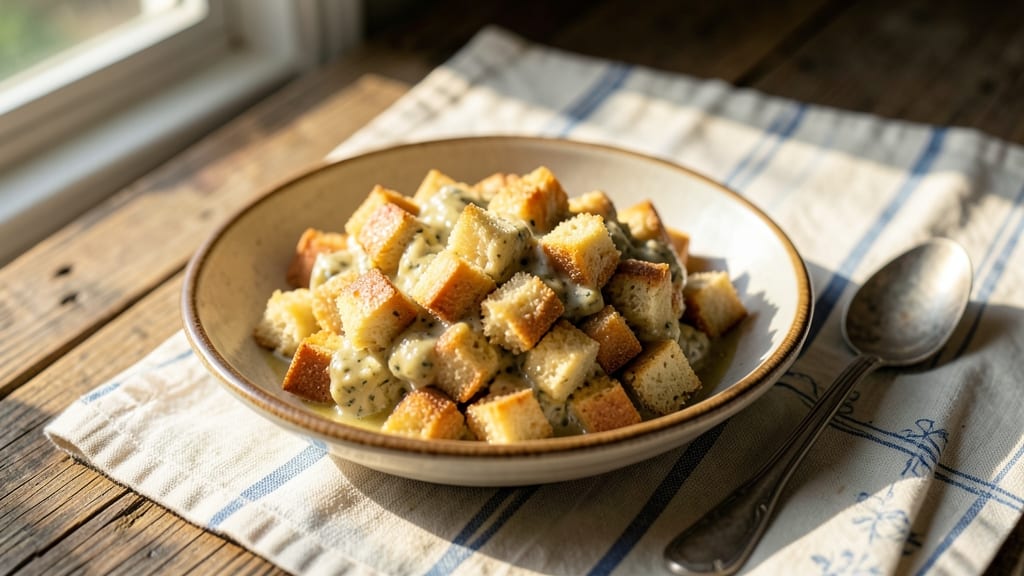
Betty Crocker's bread dressing recipe delivers that comforting, creamy texture we crave during holiday feasts and family gatherings. This classic sauce transforms simple ingredients into a rich, savory base that elevates casseroles and stuffing alike.
I've perfected the balance of tender bread, aromatic herbs, and just the right amount of broth to create a dressing that's both versatile and foolproof.
The secret lies in the soaking process—letting cubed bread absorb the flavorful liquid until it's fully saturated but still holds its shape. From there, you can blend it smooth or leave it chunky, depending on your preference.
This method ensures every bite delivers that satisfying combination of creamy, herby goodness that makes it a staple at any table.
What sets this recipe apart is its ability to transform ordinary meals into something special. Whether used as a side dish or as a crispy-topped casserole, this bread dressing brings warmth and comfort with every spoonful. The herbs infuse the mixture with subtle, aromatic notes that make it irresistible.
Ready in under an hour, this recipe is perfect for meal prep or last-minute gatherings. The flexibility allows you to customize it with your favorite seasonings or add-ins, ensuring it fits any menu. Let's create this timeless classic that brings families together.
Ingredients for betty crocker bread dressing
Six cups of bread cubes and a handful of herbs create this creamy, comforting classic.
| Ingredient | Amount | Notes |
|---|---|---|
| Day-Old Bread Cubes 🍞 | 6 cups | French or Italian bread preferred |
| Chicken Broth 🍲 | 2 cups | Low-sodium preferred, homemade or store-bought |
| Heavy Cream 🥛 | ½ cup | Full-fat for creaminess |
| Unsalted Butter 🧈 | ¼ cup | Cold, cubed for even melting |
| Fresh Sage Leaves 🌿 | ¼ cup | Chopped, stems removed |
| Fresh Thyme Leaves 🌿 | 1 tbsp | Chopped, or substitute dried |
| Celery Seeds 🥬 | 1 tsp | Ground for extra flavor |
| Salt 🧂 | ½ tsp | Adjust to taste |
| Black Pepper 🌶️ | ¼ tsp | Freshly ground preferred |
| Garlic Powder 🧄 | ½ tsp | Not garlic salt |
The bread is the star—day-old French or Italian gives the best texture, but stale bread works too. Costco or Trader Joe's sell those pre-cubed loaves, which saves time. If you're cubing yourself, aim for 1-inch pieces. The herbs? Fresh sage and thyme make all the difference, but dried works in a pinch (use half the amount). For the broth, low-sodium is key—you'll be adding salt later. I always double-check the celery seeds; those tiny guys pack a flavor punch.
No fresh herbs? Dried sage and thyme at half the amount work fine. Out of celery seeds? Extra black pepper or a pinch of ground mustard adds depth. Heavy cream too rich? Swap for half-and-half or whole milk (texture will be lighter). Want extra richness? Add 2 tbsp sour cream at the end. The butter should be cold when you add it—this keeps the dressing from getting greasy. If you're blending, start with half the liquid to control thickness.
This keeps beautifully—5 days in the fridge or 3 months frozen. For freezing, portion into airtight containers with a layer of broth on top to prevent drying. Reheat gently on the stove, stirring often. Leftovers taste even better the next day as flavors meld. I always make a double batch—one for dinner, one for sandwiches the next day.
Why You'll Love This Recipe
- I’ll be real: this recipe costs pennies but tastes like a restaurant side. Chicken broth stretches far, day-old bread is free if you plan ahead, and a few sage leaves go a long way. Plus, leftovers? They’re even better the next day—crispier, richer, and still delicious when reheated. That’s my kind of meal.
- No-Waste Magic: I swear by using day-old bread—no crusts, no fuss. Toss those stale cubes straight into the broth, and suddenly you’ve turned yesterday’s sandwich into today’s star. The bread soaks up the rich chicken broth like a dream, while the sage leaves add that earthy aroma that makes your kitchen smell like a Thanksgiving table.
- Creamy Without Effort: Here’s what sold me—the heavy cream and butter blend into a velvety texture that’s effortless to achieve. No whisking, no tempering, just melt the butter into the warm broth, stir in the cream, and let it thicken naturally. That crispy bread edge? Pure satisfaction when you bite into it.
- Holiday Hero: Between us, this is my secret weapon for Thanksgiving leftovers. Serve it warm alongside turkey, or pack it in jars for Christmas morning—it reheats beautifully and feels fancy without the stress. Honestly, it’s the kind of dish that makes you look like a cooking pro, even if you’re just reheating last night’s dinner.
Step-by-step instructions for herb-infused bread dressing
Here's how to transform simple ingredients into a rich, savory dressing that's perfect for holidays or weeknight meals.
Preheat and Prepare the Mixing Bowl
Preheat your oven to 350°F. This low temperature ensures the dressing cooks through gently without drying out. While the oven heats, place the 6 cups day-old bread cubes in a large mixing bowl. The bread should be completely dry—if it's fresh, spread it on a baking sheet and dry it in the oven for 10-15 minutes to remove excess moisture.
Real talk: Using day-old bread is non-negotiable here. Fresh bread absorbs too much liquid and turns soggy, no matter how long you bake it. Once the bread is dry, add the 0.25 cup unsalted butter and the 0.5 cup heavy cream to the bowl. Use your hands to break up the butter and distribute the cream evenly throughout the bread cubes. This step creates a creamy base that's essential for that classic dressing texture.
Add Aromatics and Seasonings
In a small bowl, whisk together the 2 cups chicken broth, 0.5 tsp salt, 0.25 tsp black pepper, 0.5 tsp garlic powder, and 1 tsp celery seeds. The celery seeds add a subtle, earthy depth that's characteristic of traditional bread dressing. Pour this mixture over the bread cubes and stir gently with a wooden spoon until everything is thoroughly combined.
Next, add the 0.25 cup chopped fresh sage leaves and 1 tbsp chopped fresh thyme leaves. The herbs should be finely chopped to distribute their flavor evenly. Give everything another stir, making sure the herbs are fully incorporated. Here's where it gets fun—taste the mixture now. You want it to be flavorful but not overwhelming. If you're using low-sodium broth, you might need to adjust the salt slightly to your preference.
Transfer to a Baking Dish and Bake
Transfer the bread mixture to a greased 9x13-inch baking dish. Press down gently but firmly to create an even surface. This helps the dressing bake uniformly and prevents any dry spots. Here's the thing—don't skip pressing it down. The dressing will expand as it bakes, and you want it to rise evenly for that perfect golden-brown crust.
Bake uncovered for 30-35 minutes until the top is golden brown and the edges are crispy. You'll know it's done when the center feels warm and the top has developed a beautiful crust. If it's browning too quickly, tent the dish loosely with aluminum foil to prevent over-browning while it continues to cook through.
Rest and Serve with Confidence
Remove the dressing from the oven and let it rest for 10-15 minutes before serving. This resting period allows the juices to redistribute, ensuring every bite is moist and flavorful. I know it's tempting to dig in right away, but trust me—waiting makes all the difference.
Once rested, cut into squares and serve warm. The dressing should have a crispy, golden-brown top with a creamy, herby interior. If you're serving this for a crowd, keep it covered in the oven on warm (170°F) until ready to serve. This keeps it perfectly warm and prevents it from drying out. Enjoy it alongside your holiday meal or as a comforting side dish any day of the week!
Pro Tips For Making Betty Crocker Bread Dressing
- TOAST THE BREAD FIRST: Pop those cubes in a 350°F oven for 5–7 minutes before adding liquid—this prevents a soggy, gluey mess. I learned this the hard way after making dressing that resembled wet cardboard.
- SALT THE BROTH: Season the chicken broth before mixing it in, not after. Unsalted butter and day-old bread are already mild, so salty broth makes a real difference. (Yes, even if the recipe says otherwise.)
- LOW AND SLOW TO SAVE: Simmer this dressing at 180°F (not a rolling boil) for 20–25 minutes. Rushing it turns the cream grainy, and you’ll end up with a watery, sad pile instead of rich, creamy perfection.
- STRAIN THE SAGE: Tear the sage leaves, not chop them—whole leaves infuse better and won’t turn the dressing into a leafy sludge. (And skip the dried stuff; fresh sage is the thing that matters most.)
Essential equipment for this recipe
Mixing Bowl Essentials
Start with a large, deep mixing bowl—I love my OXO Good Grips 5-quart bowl—to hold all the bread cubes and liquid without spilling. The depth helps prevent messes when stirring, especially with chunky herbs.
For blending, a high-powered blender like the Ninja BN601 handles thick mixtures better than basic models. 🥣
Baking Dish Must-Haves
A 9x13-inch baking dish is non-negotiable for even baking. I recommend Ceramic or glass (like Pyrex)—they distribute heat evenly and prevent sticking. Avoid dark-colored metal pans; they can cause uneven browning. Grease it with butter or nonstick spray before adding the mixture for easy release.
Herb Prep Tools
Fresh herbs need proper prep: A sharp chef's knife (I use Mercer Culinary Genesis) and a cutting board (like John Boos bamboo) make chopping sage and thyme efficient.
For dried herbs, a fine-mesh strainer helps measure precise amounts. A microplane works great for zesting citrus if you add a bright twist to your dressing.
Temperature Control Gear
An instant-read thermometer (I swear by ThermoWorks Thermapen ONE) ensures your dressing reaches 350°F perfectly. For crispy tops, a broiler pan or wire rack over a baking sheet helps create that golden crust.
If broiling, watch closely—it can burn quickly! A timer (like my KitchenAid digital timer) prevents overbaking.
Storage Solutions
For leftovers, airtight glass containers (like Ball mason jars) keep dressing fresh for 5 days in the fridge. For freezing, silicone molds (such as Nordic Ware) portion individual servings perfectly. Label everything with dates—I use masking tape and a Sharpie—to track freshness. 🧊
Optional Upgrades
Want extra richness? A stand mixer (like KitchenAid Artisan) whips up the dressing faster than hand-mixing. For crispy toppings, panko breadcrumbs toasted in a 350°F oven for 5 minutes add crunch.
A fine-mesh sieve strains any unwanted herb bits for a silky texture. These extras take your dressing from good to showstopping. ✨
Nutrition facts
Frequently asked questions
Can I use any type of bread for this dressing?
While you can technically use any bread, day-old French or Italian bread works best because it's sturdy enough to hold its shape after soaking. Avoid soft breads like brioche or challah—they'll turn mushy. For a quick solution, buy pre-cubed bread from Costco or Trader Joe's to save time.
Why does the recipe call for day-old bread?
Day-old bread is essential because fresh bread absorbs too much liquid and turns soggy during baking. The slight dryness helps the dressing maintain its texture while soaking up all those delicious flavors. If you only have fresh bread, dry it in the oven at 350°F for 10-15 minutes first.
Can I make this dressing ahead of time?
This dressing keeps beautifully in the fridge for 5 days or freezes for 3 months when stored in airtight containers. For freezing, add a layer of broth on top to prevent drying. Reheat gently on the stove, stirring occasionally, until warmed through.
What if my dressing turns out too dry or too wet?
Too dry? Add 1-2 tablespoons of warm broth or milk and mix well. Too wet? Bake uncovered for 5-10 extra minutes or broil for 2 minutes to crisp the top. The key is pressing the mixture firmly into the baking dish before baking—this helps control moisture distribution.
Can I make this dressing in a slow cooker?
Yes! Combine all ingredients in a 3-4 quart slow cooker on low for 2-3 hours, stirring occasionally. For extra crispiness, transfer to a baking dish and broil for 3-5 minutes at the end. The slow cooker method works well for meal prep—just adjust seasonings to taste before serving.