
Side Dishes
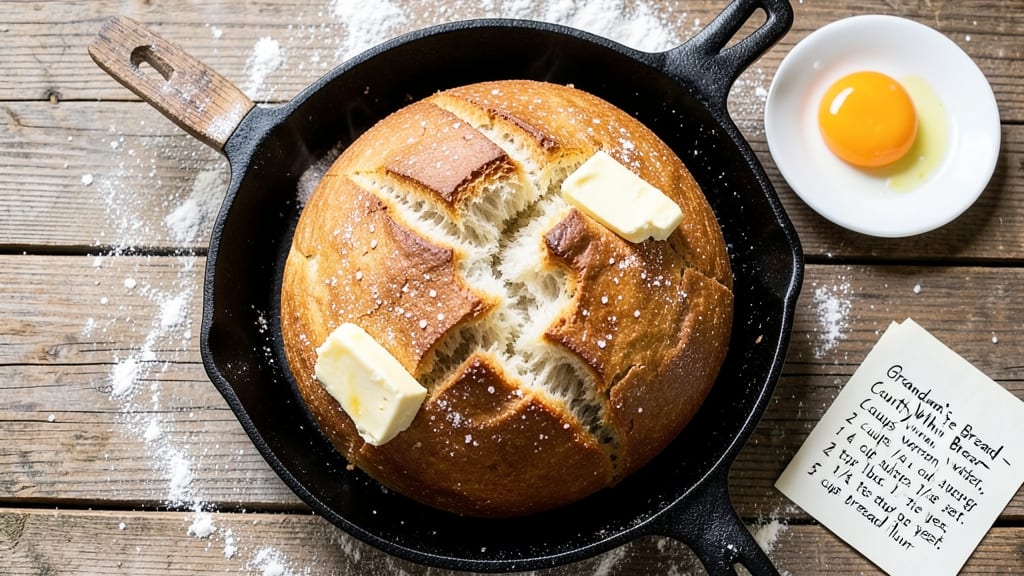
This Grandma's Country White Bread recipe delivers the kind of homemade crust and pillowy crumb that store-bought loaves can never match. The secret lies in slow fermentation and traditional techniques that create that perfect balance of crispy exterior and tender interior.
I've perfected this method over years of baking, just like my grandmother taught me—with patience and precision.
The dough comes together with simple ingredients—flour, yeast, water, and salt—but the magic happens during the kneading, proofing, and shaping. A Dutch oven creates that signature steam for a golden, rustic crust, while scoring the loaf before baking ensures an even rise.
This isn’t just bread; it’s a textural experience—crisp on the outside, soft and airy inside.
What makes this recipe truly special is the artisanal approach—no shortcuts, no substitutions. The slow fermentation develops deep flavor, and the crust achieves that perfect crunch without sacrificing tenderness. Whether you're serving it warm with butter or saving slices for sandwiches, this bread will become your new standard.
Ready to bake a loaf that tastes like home? Let’s get started with the step-by-step instructions that bring Grandma’s kitchen to yours.
Ingredients for grandma's country white bread
Simple pantry staples transform into a loaf with restaurant-quality crust and tender crumb.
| Ingredient | Amount | Notes |
|---|---|---|
| All-Purpose Flour 🌾 | 6 cups | High-protein preferred for structure |
| Active Dry Yeast 🍞 | 2 ¼ tsp | Fresh yeast preferred, not instant |
| Granulated Sugar 🍚 | 1 tbsp | Enhances yeast activation |
| Large Eggs 🥚 | 1 whole | Room temperature for even mixing |
| Unsalted Butter 🧈 | ½ cup | Cold, cubed for dough enrichment |
| Diamond Crystal Kosher Salt 🧂 | 2 tsp | Fine grain preferred |
| Warm Water 💧 | 2 cups | 110°F for optimal yeast activation |
| Cornmeal 🌽 | ½ cup | For dusting work surface |
| Extra-Virgin Olive Oil 🫒 | 1 tbsp | For dough shaping and scoring |
The flour is everything here—King Arthur or Gold Medal are my go-tos for that perfect balance of structure and tenderness. Bulk bins at Whole Foods often have higher-protein flour if you want to splurge, but the store brand works fine too. The yeast needs to be fresh, not expired—old yeast makes the whole loaf flat. For the butter, Land O'Lakes unsalted is reliable, but European-style butter (like Plugrá) adds extra richness. Keep everything cold until the dough comes together—warm butter makes the dough too sticky to handle.
No yeast? Sourdough starter at 1 tbsp works in a pinch, but the flavor will be different. Short on butter? Extra olive oil (2 tbsp) keeps the dough tender. The sugar can be swapped for honey (same amount), but it’ll make the crust slightly darker. For the water, filtered or bottled is best—tap water with strong chlorine can kill the yeast. If your kitchen’s humid, reduce the water by 1 tbsp to avoid a gummy dough. And for the love of bread, don’t skip the warm water step—yeast needs to activate properly.
This dough improves with time—ferment overnight in the fridge for even deeper flavor. Store wrapped in a clean kitchen towel for up to 3 days at room temp, or freeze shaped loaves for 3 months. To revive frozen dough, thaw in the fridge overnight. The scored loaf keeps its crunch for 2 days if stored in a paper bag—never plastic, or it’ll get soggy. Toast slices for maximum crispiness.
Why You'll Love This Recipe
- No-Fuss Dough: I swear, the only tools you need are a bowl and your hands. Just mix flour, yeast, sugar, eggs, and softened butter—no stand mixer, no fancy gadgets. Honestly, I’ve made this while watching TV, and it still turns out golden and soft every time.
- Buttery Soft Magic: That rich, creamy texture? All thanks to the butter and eggs working their charm. The crust gets just crisp enough to hold up to toast or sandwiches, but the inside stays pillowy—like a hug from Grandma’s kitchen.
- Weeknight Hero: This bread is my go-to for quick lunches, breakfast toast, or even a side for dinner. Slice it fresh for grilled cheese, freeze half for later, or serve warm with jam. I’ll be real: it’s the one recipe that never lets me down.
- Budget-Friendly Staple: Flour, yeast, sugar, eggs, butter—these are pantry basics that won’t break the bank. A single batch feeds my whole family, and leftovers keep beautifully for days. Between us, this is how I stretch groceries without sacrificing taste.
Step-by-step instructions for Grandma's country white bread
This classic recipe delivers that perfect homemade crust with a tender, pillowy interior every time.
Activate the Yeast and Mix the Dough
In a large mixing bowl, combine the 2 cups warm water (about 110°F) with the 1 tbsp granulated sugar and 2.25 tsp active dry yeast. Let it sit for 5-10 minutes until frothy—this confirms the yeast is alive and ready to work. If it doesn’t bubble, your yeast might be old or your water too hot.
Next, add the 6 cups all-purpose flour and 2 tsp diamond crystal kosher salt to the bowl. Make a well in the center and pour in the 1 whole large egg and 0.5 cup cold unsalted butter, cut into small cubes. Mix with a wooden spoon or dough whisk until a shaggy dough forms, then turn it out onto a lightly floured surface.
Knead Until Smooth and Elastic
Knead the dough for 8-10 minutes by hand, or use a stand mixer with a dough hook on medium speed for 5-6 minutes, until it becomes smooth, elastic, and slightly tacky. You’ll know it’s ready when it springs back slowly when poked.
Here’s the thing—don’t rush this step. Proper kneading develops gluten, which gives that signature chewy texture and crisp crust. If the dough sticks to your hands, wet your palms slightly instead of adding more flour—too much flour makes bread dense.
First Rise for Flavor Development
Lightly oil a large bowl, place the dough inside, and turn it to coat all sides. Cover with a clean kitchen towel and let it rise in a warm place for 1-1.5 hours, or until it doubles in size. The dough should feel light and airy when pressed gently.
I like to place the bowl near a slightly warm oven (with the light on) for even rising. If your kitchen is cold, a 5-minute microwave session with a bowl of hot water nearby works too. Patience here ensures that pillowy crumb we’re after.
Shape and Second Rise
Punch down the risen dough to release air, then divide it into 4 equal portions (about 1 pound each). Roll each piece into a smooth, round ball and place them on a baking sheet dusted with 0.5 cup cornmeal. Cover again and let rise for 30-45 minutes until puffy.
This second rise is shorter but crucial—it gives the loaves their final structure. If your kitchen is humid, you might need to reduce the time slightly to prevent overproofing. The dough should feel firm to the touch but still springy.
Bake to Golden Perfection
Preheat your oven to 375°F. Brush the tops of the loaves with 1 tbsp extra-virgin olive oil and score the surface of each with a sharp knife (about ½-inch deep) to control expansion. Bake for 25-30 minutes until the crust is deep golden brown and the internal temperature reaches 190°F.
For that classic country bread crust, I recommend baking on the middle rack. If the tops brown too quickly, tent loosely with foil. The bread is done when it sounds hollow when tapped on the bottom—this is your cue to pull it out while it’s still warm.
Pro Tips For Making Grandma'S Country White Bread
- Melt the Butter Slowly: I learned this the hard way—dumping cold butter into warm dough makes it clump like lumpy tapioca. Instead, cut the butter into small cubes and let them soften in the bowl before mixing. The dough will come together smoother, and your bread stays tender longer. (Yes, even if you're impatient like me.)
- Proof at Room Temp: Skip the fridge for the first rise—country bread needs warmth to wake up that yeast. Let the dough double in a cozy spot (like your oven with the light on) for about 1–1.5 hours. Cold dough rises slower, and you’ll end up with dense, flat loaves that taste like sad hockey pucks.
- Don’t Over-Knead the Dough: This isn’t a baguette—you’re not trying to build gluten for days. Knead just until the dough pulls away from the bowl and springs back when poked (about 8–10 minutes by hand). Overwork it, and your bread turns chewy instead of light and pillowy. (And yes, your arms will thank you.)
- Brush with Melted Butter: That last step where you slap on egg wash? Swap it for melted butter brushed on the top crust right after baking. It crisps up beautifully, adds richness, and makes every slice taste like it’s still warm from Grandma’s kitchen. (No, the egg wash isn’t "wrong"—but this is better.)
Flavor customization for this recipe
Sweet & Buttery Twist
Add 1 tbsp honey or 1 tbsp brown sugar to the dough for a subtle sweetness that pairs beautifully with savory toppings. I often swap the granulated sugar in the recipe for honey—it enhances the crust’s caramelization while keeping the crumb tender.
For extra indulgence, fold in 2 tbsp finely chopped candied pecans or chopped dried apricots before the final rise. 🍯
Herb & Garlic Infusion
Brighten the dough with 1 tbsp finely chopped fresh rosemary or 2 tbsp minced garlic mixed into the flour before kneading. The rosemary adds an earthy aroma, while garlic gives a savory depth perfect for sandwiches.
For a stronger flavor, infuse 2 tbsp olive oil with 1 tsp dried oregano and use it instead of plain oil for brushing the loaves. 🌿
Seeded & Nutty Crunch
Mix 2 tbsp sesame seeds, 2 tbsp sunflower seeds, or ¼ cup chopped walnuts into the dough for texture. Sprinkle them on top before baking for a rustic, crunchy finish. I love using a mix of poppy seeds and flaxseeds—they add a nutty flavor and beautiful speckles.
For extra richness, fold in 2 tbsp pumpkin seeds toasted in 1 tsp butter until golden. 🌰
Savory Cheese Variations
Swap 2 tbsp of the flour for 2 oz shredded cheddar, feta, or Parmesan for a cheesy loaf. I recommend using sharp cheddar for a tangy kick or goat cheese crumbles for a creamy twist.
For a Mediterranean touch, fold in 2 tbsp chopped kalamata olives or sun-dried tomatoes with the cheese. 🧀
Spiced & Warm Flavors
Add warmth with ½ tsp cinnamon, ¼ tsp nutmeg, or ½ tsp smoked paprika to the dough. These spices complement the buttery richness and work especially well with honey or brown sugar.
For a holiday twist, sprinkle 1 tsp pumpkin pie spice into the dough and top with a light dusting of powdered sugar after baking. 🎄
Whole Grain Boost
Replace 1 cup of the all-purpose flour with whole wheat flour, spelt flour, or rye flour for added fiber and nuttiness. I prefer white whole wheat flour because it’s lighter and doesn’t overpower the bread’s texture.
For a seed-based boost, mix in ¼ cup ground flaxseeds or chia seeds—they add omega-3s without altering the dough’s behavior. 🌾
Nutrition facts
Frequently asked questions
Why does this bread need two rises?
The first rise develops flavor through fermentation, while the second rise creates structure for that perfect pillowy crumb. Skipping either step can make the bread dense or flat. Think of it like stretching dough—each rise builds elasticity for a lighter texture.
Can I make this bread without a Dutch oven?
Yes! Use a heavy baking sheet or cast-iron skillet. For extra steam, place a tray of boiling water on the oven rack below. The crust won't be as crispy, but the interior will still be tender. A 375°F oven works best for even baking.
How do I know when the dough is kneaded enough?
Test it by poking the dough—if it springs back slowly (not immediately), it's ready. For hand-kneading, aim for 8-10 minutes until smooth and elastic. A stand mixer takes about 5-6 minutes on medium speed. Over-kneading can make the bread tough.
What’s the best way to store leftover bread?
Wrap cooled loaves in a clean kitchen towel and store at room temperature for 2-3 days. For longer storage, freeze shaped loaves for up to 3 months. To revive, thaw overnight in the fridge. Avoid plastic—it traps moisture and makes bread soggy.
Can I substitute butter with oil?
Yes! Replace the ½ cup butter with ⅔ cup olive oil (or melted butter). The dough will be slightly softer, but the texture stays tender. For extra richness, use a mix of both. Just note the oil adds subtle flavor, while butter creates a classic buttery aroma.