
Side Dishes
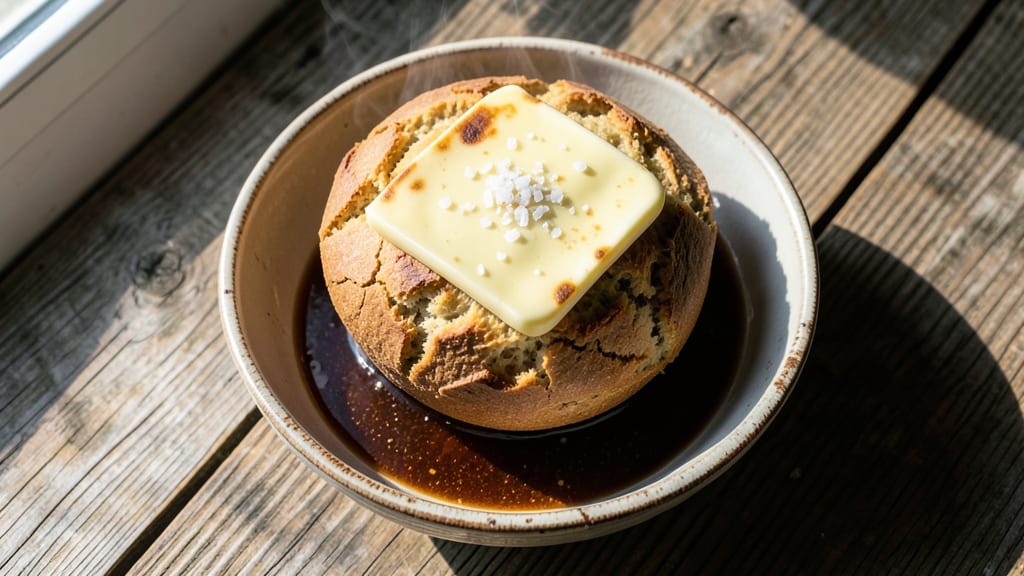
This Guinness beer bread recipe delivers a rich, malty crust with a surprisingly tender interior—all without a single knead. The secret lies in letting the beer activate the yeast while infusing the dough with deep, toasty flavor.
I first tried this during a rainy Sunday afternoon when I needed something hearty to pair with stew, and it became an instant staple in my kitchen.
The beauty of this recipe is its simplicity: just mix, let the dough rise, and bake. The Guinness beer replaces water, creating a moist, flavorful loaf with a crispy exterior that crumbles perfectly for dipping.
No yeast activation or complicated steps—just a few ingredients and about an hour of hands-off time. It’s the kind of bread that makes you feel like you’ve earned your dinner.
By the time it emerges from the oven, you’ll have a loaf with a golden, crackly crust that gives way to soft, slightly sweet crumb—every bite carries that signature Guinness depth.
The aroma alone will have your kitchen smelling like a cozy pub, and the texture is just right for soaking up soups or pairing with sharp cheeses. This is bread that feels like a reward, not a chore.
For extra richness, try adding a sprinkle of cheddar to the dough before baking, or brush the crust with melted butter for added shine. Serve warm with butter, or save slices for toast the next morning. Here’s how to make it—simple, satisfying, and impossible to resist.
Ingredients for guinness beer bread
Four simple ingredients transform into rich, malty bread—no kneading required.
| Ingredient | Amount | Notes |
|---|---|---|
| Guinness Beer 🍺 | 1 ¼ cups | Room temperature preferred |
| All-Purpose Flour 🌾 | 3 ½ cups | Plus 1 tbsp for dusting |
| Active Dry Yeast 🍞 | 2 ¼ tsp | Or 1 packet instant yeast |
| Granulated Sugar 🍚 | ½ cup | For yeast activation |
| Salt 🧂 | 1 tsp | Kosher or sea salt |
| Unsalted Butter 🧈 | ½ cup | Melted, full-fat preferred |
| Large Eggs 🥚 | 1 whole | Room temperature |
| Sharp Cheddar Cheese 🧀 | 1 cup | Shredded, optional for richness |
| Milk 🥛 | ¼ cup | Warmed for mixing |
The Guinness is the star here, so grab a cold one from the fridge—it’ll warm up while you mix. Use a fresh bottle; the carbonation helps activate the yeast, and the flavor is unmatched. For the flour, I always reach for King Arthur or Gold Medal—they’re reliable for bread baking. The yeast? Fresh is best, but if your packet’s past its expiration, toss it. A quick test: drop it in warm milk—it should foam in 5-10 minutes. No foam? Start over. The butter matters too—full-fat gives that rich, tender crumb you’re after.
No Guinness on hand? Stout beer works in a pinch, but the flavor won’t be as deep. Skip the cheddar? No problem—just leave it out or swap for Parmesan for a salty kick. Out of milk? Heavy cream or water in a pinch, but the bread won’t be quite as tender. The sugar is non-negotiable for yeast activation, but if you’re watching carbs, reduce to 2 tbsp and add 1 tsp honey. For extra richness, try adding 1 tbsp sour cream to the dough—it keeps the crumb ultra-moist. And if you’re feeling fancy, brush the baked loaf with extra melted butter for a golden, crackly crust.
This dough is hands-off after mixing. Let it rise for 1-1.5 hours in a warm spot—turn on your oven light or pop it near the stove. Once baked, the bread stays fresh for 2-3 days wrapped in a towel, but it’s best on day one. Slice it thick—the crust is worth the effort—and toast leftovers for a crispy second life. Freeze portions for up to 3 months; just thaw wrapped in a towel to keep it soft. Pro tip: Brush the crust with butter while warm—it’ll melt into the bread and make every bite richer.
Why You'll Love This Recipe
- No Yeast Hassle: I swear by this trick—just mix the warm beer with yeast and sugar, let it sit for 5 minutes, and it’s ready. No waiting for yeast to bloom separately, no guessing if it’s active. That dark, malty Guinness does all the work while you measure flour.
- Rich Without Effort: Between us, this bread tastes like you slaved over it for hours. The beer’s deep, toasty notes cut through the flour’s mildness, and that little pinch of salt? It’s the secret to making every bite feel indulgent. Honestly, I’ve had people ask if I baked it from scratch—nope, just 10 minutes of hands-off rising.
- Game for Any Meal: Slather it with butter for breakfast, tear it into sandwiches for lunch, or serve it warm with dinner. Even my picky-eating teenager grabs a slice when it’s still hot. And here’s what sold me—it’s the perfect side for stews, soups, or just plain as a snack. No leftovers? Too bad, because it disappears fast.
- Pantry Staple Magic: You’re already using stuff you’ve got: flour, sugar, salt. That half-empty bottle of Guinness? Now it’s the star. I make a double batch, freeze half, and pull it out when I’m too tired to bake. Budget-friendly? Absolutely. But more than that—it’s the kind of bread that makes you feel like you’ve outsmarted grocery store loaves.
Step-by-step instructions for Guinness beer bread
Here's how to make this hearty, no-knead bread with a rich malty crust.
Activate the Yeast with Warm Beer
In a large mixing bowl, combine the 1.25 cups Guinness Beer with the 0.5 cup Granulated Sugar. Stir until the sugar dissolves completely. The beer should be room temperature—if it's chilled, let it sit at room temperature for 10 minutes first. This warm liquid is perfect for activating the yeast.
Sprinkle the 2.25 teaspoons Active Dry Yeast over the beer mixture and let it sit for 5-10 minutes until it becomes frothy. You'll see bubbles form and the mixture will look slightly bubbly—this tells you the yeast is alive and ready to work. If it doesn't bubble, your yeast might be dead, and you'll need to start over with fresh yeast.
Mix the Dough with Wet and Dry Ingredients
Once the yeast is active, add the 3.5 cups All-Purpose Flour and the 1 teaspoon Salt to the bowl. Stir with a wooden spoon or your hands until a shaggy dough forms. You'll notice the dough is sticky—this is normal because of the beer's moisture content. Don't worry if it doesn't come together perfectly yet.
In a separate small bowl, whisk together the 1 whole Large Eggs, 0.5 cup Unsalted Butter (melted and slightly cooled), and 0.25 cup Milk (warmed). Pour this wet mixture into the flour and stir until just combined. The dough should hold together when pressed but still feel soft and slightly sticky. If it's too dry, add 1 tablespoon of the Guinness Beer to loosen it up.
Fold in the Cheddar Cheese (Optional)
If you're using the 1 cup Sharp Cheddar Cheese, sprinkle it evenly over the dough. Use your hands or a silicone spatula to gently fold the cheese into the dough until it's fully incorporated. The cheese adds richness and pairs perfectly with the malty beer flavor. If you're skipping the cheese, proceed directly to shaping the loaf.
This step is where the bread gets its signature depth of flavor. The cheese melts slightly during baking, creating pockets of gooey goodness in every bite. If the dough feels too sticky to handle, wet your hands slightly with water to prevent sticking.
Shape and Let the Dough Rise
Lightly dust a clean surface with 1 tablespoon All-Purpose Flour (from the extra amount noted in the ingredients). Turn the dough out onto the floured surface and gently shape it into a round loaf, about 8 inches in diameter. Place the loaf seam-side down in a greased 9-inch round cake pan or a similar-sized loaf pan.
Cover the pan loosely with plastic wrap or a clean kitchen towel and let the dough rise in a warm place for 1 to 1.5 hours, or until it has nearly doubled in size. You'll know it's ready when the top looks slightly domed and feels springy to the touch. Avoid letting it rise too long—overproofing can make the bread dense instead of light and airy.
Bake to a Rich, Golden Crust
Preheat your oven to 375°F while the dough rises. Once the dough has risen, place the pan in the center rack of the oven and bake for 30 to 35 minutes, or until the top is deep golden brown and the internal temperature reaches 200°F when tested with an instant-read thermometer.
The bread is done when it sounds hollow when tapped on the bottom and pulls away slightly from the sides of the pan. If the top browns too quickly, tent the loaf with aluminum foil to prevent over-browning. Let the bread cool in the pan for 10 minutes before transferring it to a wire rack to cool completely. This resting time ensures the crust sets and the crumb develops fully.
Pro Tips For Making Guinness Beer Bread
- Warm the Guinness First: Pour your Guinness into a warm (not hot) bowl before mixing—this wakes up the yeast faster than dumping cold beer straight into the dough. I learned this the hard way after a batch took forever to rise because I skipped it.
- Weigh Your Flour: Scooping flour from the bag packs in extra air, making your bread dense. Use a kitchen scale for accuracy—1 cup of all-purpose flour actually weighs about 125 grams, not the 150 you’d guess. Your bread will thank you with a lighter crumb.
- Don’t Overmix the Dough: Once the yeast starts bubbling, stop folding after 2-3 turns—overworking the gluten makes the bread tough. My first batch turned out like a brick because I kept kneading until it felt "right." Let the yeast do the work.
- Bake Until Internal Temp Hits 190°F: The bread looks done at 180°F, but pull it out at 190°F to guarantee a fully baked center. I used to rely on color alone and ended up with a gummy middle—now I trust the thermometer.
Wine and beer pairings for this guinness beer bread
Guinness Beer Pairings
The rich, malty flavor of Guinness in this bread pairs perfectly with its own beer family. Serve warm slices with a cold Guinness Draught—the creamy head and toasty notes complement the bread’s caramelized crust beautifully.
For a lighter option, try Guinness Foreign Extra Stout, which has a slightly sweeter profile that balances the bread’s depth. 🍺
Creamy Soups & Stews
This bread is a natural match for hearty soups like Irish stew or cream of mushroom. The dense, moist crumb soaks up broth beautifully while the malty crust adds texture. I often serve it with potato-leek soup—the buttery richness of the bread contrasts perfectly with the velvety soup.
For extra indulgence, sprinkle shredded cheddar on top of the soup before serving.
Sharp Cheeses
The bold flavors of this bread stand up to strong cheeses. Try pairing it with aged cheddar or blue cheese for a sophisticated bite. The malty notes in the bread cut through the sharpness, creating a perfect balance.
For a lighter option, brie or camembert works wonderfully—serve the bread warm with the cheese melted on top for a decadent appetizer. 🧀
Smoked Meats
Guinness beer bread is ideal for complementing smoked meats like pulled pork or brisket. The smoky flavors of the meat pair beautifully with the bread’s toasty, malty notes. Serve it alongside barbecue ribs for a complete meal—dip the bread into the leftover sauce for an extra flavor boost.
The bread’s sturdy crust holds up well to messy sauces.
Buttery Spreads
For a simple yet satisfying pairing, serve this bread with salted butter or herbed butter. The richness of the butter enhances the bread’s malty flavor, creating a comforting combination.
I also love spreading garlic aioli or whipped honey butter on warm slices. These spreads add a touch of sweetness or tang that balances the bread’s depth perfectly.
Coffee & Tea
Finish your meal with a warm beverage to complement the bread’s rich flavors. A dark roast coffee or Irish breakfast tea enhances the malty notes, creating a cozy, satisfying pairing. For something lighter, try chamomile tea—its floral notes provide a nice contrast to the bread’s boldness.
A small glass of Irish whiskey also pairs wonderfully for an after-dinner treat. ☕
Nutrition facts
Frequently asked questions
Why does this bread use Guinness instead of water?
The Guinness adds deep, malty flavor and activates the yeast perfectly—no need for extra water! The beer's natural sugars help create a moist, tender crumb while giving that signature toasty taste. Plus, it's what makes this bread taste like a cozy pub experience at home.
Can I make this bread without cheese?
The cheese is optional but adds richness. If you skip it, the bread will still be delicious—just slightly less decadent. For a vegetarian twist, try adding sun-dried tomatoes or caramelized onions instead. The beer flavor will still shine through.
How do I know when the dough is ready to bake?
Your dough is ready when it's nearly doubled in size and springs back slowly when gently pressed. The top should look domed, not flat. If it rises too quickly (under 1 hour), your kitchen might be too warm—try a cooler spot. Overproofing makes the bread dense, so keep an eye on it!
Can I make this bread in a different shape?
Yes! Shape it into a freeform loaf, braid it for a festive look, or press it into a 9x13-inch pan for a larger batch. For extra crispiness, try baking it as beer bread rolls—just reduce the baking time by 5-10 minutes. The beer flavor works in any shape!
Why did my bread turn out dense?
Dense bread usually means overproofing (too long a rise) or underproofing (not enough time). Check your yeast—if it didn't bubble in the beer, it was dead. Also, ensure your oven is at 375°F and the dough reaches 200°F internally. For extra lightness, let the dough rise in a warm oven with the light on.