
Side Dishes
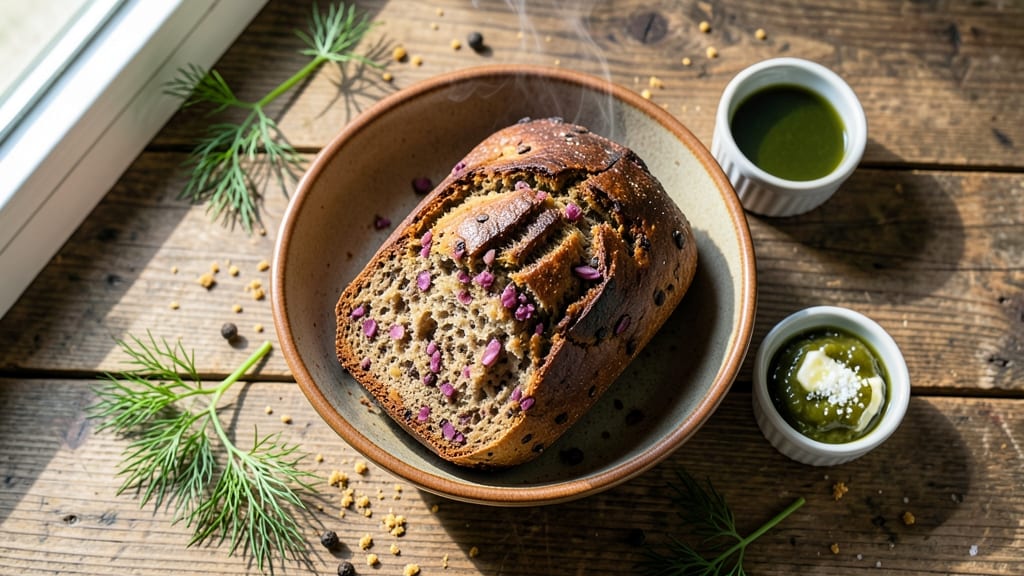
This sauerkraut rye bread recipe transforms a classic staple into something unexpectedly bold—where fermented tang meets rustic warmth in every bite. The secret lies in blending sauerkraut’s sharp brightness with rye’s earthy depth, creating a crust that crackles with flavor while the interior stays dense and satisfying.
I developed this after years of experimenting with sourdough variations, and the sauerkraut makes all the difference—it’s not just an ingredient, but the star.
The process is straightforward but requires patience: mixing a dough rich in whole grains, fermenting it overnight for deep flavor development, then baking until the crust achieves that perfect balance of crisp and chewy.
What sets this apart is how the sauerkraut’s acidity cuts through the rye’s heaviness, resulting in a bread that’s both hearty and refreshing. No special equipment is needed—just time and attention to detail.
By the time it emerges from the oven, you’ll have a loaf with a tangy-sauerkraut crust that shatters satisfyingly, a hearty rustic crumb that holds up to sandwiches or toast, and a flavor profile that’s impossible to ignore.
The aroma alone—fermented, caramelized, and slightly smoky—will have everyone asking for seconds. Perfect for pairing with sharp cheeses, smoked meats, or simply slathered with butter.
This recipe delivers restaurant-quality results at home, with adjustments for dietary preferences if needed. Whether you’re a seasoned baker or trying your hand at fermented doughs, the technique is foolproof once you understand the key steps. Let’s get started on a loaf that’s as impressive as it is delicious.
Ingredients for sauerkraut rye bread
Four cups of flour plus tangy sauerkraut—this is where bold flavor meets rustic tradition.
| Ingredient | Amount | Notes |
|---|---|---|
| Unbleached All-Purpose Flour 🌾 | 4 cups | For structure and texture |
| Dark Rye Flour 🌾 | 2 cups | For deep, earthy flavor |
| Sauerkraut 🥬 | 1 ½ cups | Unsalted, finely chopped |
| Active Dry Yeast 🍞 | ½ tsp | Or instant yeast |
| Granulated Sugar 🍚 | 1 tbsp | Feeds yeast for fermentation |
| Unsalted Butter 🧈 | ½ cup | Cold, cubed for flavor |
| Whole Milk 🥛 | 1 cup | Full-fat for richness |
| Large Egg 🥚 | 1 whole | Room temperature |
| Diamond Crystal Kosher Salt 🧂 | 1 ½ tsp | Adjusts to taste |
| Malt Powder 🌾 | 1 tsp | Enhances fermentation |
| Ground Fennel Seeds 🌿 | ½ tsp | For subtle anise flavor |
| Cornmeal 🌽 | ¼ cup | For dusting baking sheet |
| Water 💧 | 1 cup | Lukewarm for yeast activation |
The rye flour is non-negotiable here—King Arthur or Bob’s Red Mill are my go-tos for that deep, earthy punch. Sauerkraut quality matters too: look for cloudy liquid, not murky. I grab mine from Trader Joe’s or a local deli counter where it’s freshly fermented. The yeast needs to be fresh—test it by dropping in warm water with sugar; if it bubbles within 5 minutes, it’s good to go. For the butter, Plugrá or Land O’Lakes work well, but nothing beats the flavor of grass-fed if you can find it.
No dark rye flour? Substitute half with whole wheat, but the texture will be denser. Sauerkraut too sour? Mix in 1 tbsp of plain yogurt to mellow the acidity. Running low on malt powder? Dried malt extract at half the amount works in a pinch. The fennel seeds can be skipped if you’re sensitive to their anise note, but they’re worth it for that subtle depth. For the milk, any full-fat dairy works—even evaporated or powdered in a bind, though texture may vary slightly.
This dough needs time—at least 8 hours at room temperature or overnight in the fridge. The longer it ferments, the more complex the flavor. Shape it gently to avoid overworking the gluten, and let it rest before baking. The crust will keep for 3 days at room temperature wrapped in a clean kitchen towel, but it’s best served fresh. For longer storage, freeze slices wrapped in parchment—toast straight from frozen for maximum crispiness.
Why You'll Love This Recipe
- No-Knead Nightmare Solved: I swear by this dough—just mix, let it rise, and bake. No stand mixer, no fuss, no waiting around for hours like my failed sourdough experiments. The dark rye flour does all the heavy lifting while you sip your coffee.
- Tangy Crunch Magic: That sauerkraut isn’t just filling—it’s transformative. The lactic bite cuts through the bread’s slight sweetness, and the texture? Crispy crust, soft interior, with little pockets of fermented crunch. Honestly, I’ve never met a bread that tasted this alive.
- Weeknight Sandwich Hero: Between us, this bread turns my sad lunches into actual meals. Toast it, pile on smoked salmon, or just eat it plain with a smear of cream cheese—it’s the star of my breakfast, snack, or emergency dinner. (Yes, even on a Tuesday night.)
- Pantry Goldmine: I make a double batch on Sundays because the rye flour stays fresh forever, and the sauerkraut? It’s cheap and lasts months. Leftovers? Toast them up—same great taste, zero waste. My wallet and my taste buds thank me every time.
Step-by-step instructions for sauerkraut rye bread
Let's create a rustic loaf with a tangy crust and dense, flavorful interior.
Activate the Yeast and Prepare the Sauerkraut Mixture
In a small bowl, combine the 1 cup lukewarm water, 1 tbsp granulated sugar, and 0.5 tsp active dry yeast. Let it sit for 5-10 minutes until frothy—this confirms the yeast is active. If it doesn't bubble, your yeast may be dead, and you'll need to start over.
In a separate bowl, finely chop the 1.5 cups sauerkraut using a knife or food processor. The goal is to create a smooth, paste-like consistency that will integrate seamlessly into the dough. This step is crucial for distributing the sauerkraut's tangy flavor evenly throughout the loaf.
Mix the Wet and Dry Ingredients
In the bowl of a stand mixer fitted with the dough hook attachment, combine the 4 cups unbleached all-purpose flour, 2 cups dark rye flour, 1.5 tsp diamond crystal kosher salt, 1 tsp malt powder, and 0.5 tsp ground fennel seeds. Mix on low speed for 30 seconds to evenly distribute the dry ingredients.
Add the yeast mixture, 1 cup whole milk, 1 whole large egg, and the chopped sauerkraut to the dry ingredients. Mix on low speed for 2 minutes, then increase to medium speed for 5 minutes until the dough begins to pull away from the sides of the bowl. The dough should be shaggy but cohesive at this stage.
Incorporate the Butter and Knead
Cut the 0.5 cup unsalted butter into small cubes and add them to the dough while the mixer is running on low speed. Gradually increase the speed to medium and knead for 5-7 minutes until the butter is fully incorporated and the dough becomes smooth and elastic. You'll know it's ready when it forms a windowpane—press your fingers into the dough and gently pull apart; if it stretches without tearing, it's properly kneaded.
Transfer the dough to a lightly floured surface and shape it into a round loaf. Place it in a lightly greased bowl, cover with a damp towel, and let it rise in a warm place for 1-2 hours, or until it has doubled in size. This resting period allows the gluten to relax and the yeast to ferment, developing the bread's signature tangy flavor.
Shape and Proof the Dough
Punch down the risen dough to release any air bubbles, then shape it into a 9x5-inch loaf pan or a round boule for a free-form loaf. If using a loaf pan, lightly grease it with butter or oil and dust it with 0.25 cup cornmeal to prevent sticking. For a free-form loaf, place the dough on a parchment-lined baking sheet.
Cover the dough again and let it proof for an additional 30-45 minutes until it has risen slightly and feels springy to the touch. Preheat your oven to 375°F during this time. The dough should be just slightly puffy—overproofing can lead to a dense, flat loaf.
Bake to a Golden, Tangy Perfection
Bake the loaf for 35-40 minutes until the crust is deep golden brown and it sounds hollow when tapped on the bottom. For a loaf pan, the internal temperature should reach 190-200°F. If baking a free-form loaf, rotate it halfway through for even browning.
Remove the bread from the oven and let it cool on a wire rack for at least 30 minutes before slicing. This resting period allows the moisture to redistribute, ensuring each slice is tender and flavorful. The crust should be crisp and slightly tangy, while the interior remains dense and hearty—a perfect balance of textures and flavors.
Pro Tips For Making Sauerkraut Rye Bread
- Drain, Rinse, Repeat: Your sauerkraut’s juice is liquid gold—but too much makes dough gummy. Drain it in a colander, then rinse the kraut under cold water to wash off excess brine. Pat it very dry with a towel before adding it to the dough. (Yes, even if it feels like overkill.)
- Proof Yeast at 105°F: Rye flour’s acidity can kill yeast if you’re too casual. Mix the yeast with warm water (105°F—use a thermometer) and a pinch of sugar, then wait exactly 10 minutes for it to foam before adding it to the dough. No bubbles? Start over.
- Knead Like You Mean It: Rye dough is stubborn. After mixing the wet ingredients, hit it with 8-10 minutes of real kneading—by hand or mixer—until it’s smooth and slightly springy. Skimp here, and your bread turns dense. (I used to cut corners; now I don’t.)
- Shape Tight, Rest Long: Roll the dough into a log and pinch the seams shut like you’re wrapping a gift. Let it rest 30 minutes under a towel before baking—this relaxes the gluten and keeps the sauerkraut bits from sinking to the bottom. (Trust me, your bread won’t collapse.)
Dietary considerations for this recipe
Gluten-Free Adaptations
For a gluten-free version, replace the 4 cups all-purpose flour and 2 cups dark rye flour with 3 cups gluten-free all-purpose flour blend (like Bob’s Red Mill 1:1) and 1 cup gluten-free rye flour. Add 1 tbsp xanthan gum to mimic gluten’s binding properties.
The sauerkraut’s acidity helps balance the denser texture, but expect a slightly crumbly result. I’ve tested this with King Arthur gluten-free flour—it yields the best rise. 🌾
Low-Carb/Keto Options
Transform this into a keto-friendly loaf by swapping flours for 4 cups almond flour and 1 cup coconut flour. Reduce the sauerkraut to 1 cup (its acidity can overpower low-carb doughs) and add 1 extra egg for structure.
Use unsweetened almond milk instead of whole milk, and increase the butter to 0.75 cup for moisture. Proof times will be shorter—monitor closely for 20-30 minutes total. 🥥
Dairy-Free Modifications
Replace the 1 cup whole milk and 0.5 cup butter with 1 cup unsweetened coconut milk (full-fat for richness) and 0.5 cup dairy-free butter (like Miyoko’s or Earth Balance).
The coconut milk adds subtle sweetness that complements the sauerkraut’s tang. For extra richness, stir in 1 tbsp nutritional yeast during mixing—it mimics the umami depth of dairy. 🥛
Allergen-Friendly Notes
This recipe is naturally egg-free if you omit the egg (add 1 tbsp ground flaxseed + 3 tbsp water as a binder). For nut allergies, use sunflower seed flour instead of almond flour in low-carb versions.
Always check sauerkraut labels—some brands process in shared facilities with nuts or dairy. I recommend Bubbies brand for certified allergen-free options. 🚫
Soy-Free Considerations
Most rye flours and sauerkraut contain no soy, but verify labels if sensitive. The malt powder (often barley-based) is typically soy-free, but some brands use soy lecithin as an emulsifier.
Substitute with 1 tbsp additional sugar if needed. For yeast, Red Star Vegetarian Support Formula is soy-free and works beautifully here. Always double-check ingredient lists! 🌱
Nutrition facts
Frequently asked questions
Why does my sauerkraut rye bread taste too sour?
The sauerkraut’s acidity can overpower the dough if not balanced. To fix this, reduce the amount to 1 cup instead of 1.5 cups or mix in 1 tbsp plain yogurt with the sauerkraut before adding it to the dough. Also, ensure your yeast is fresh—dead yeast won’t ferment properly, leaving the sourness unchecked.
Can I make this bread without a stand mixer?
The dough can be mixed by hand using a large bowl and wooden spoon. Knead for 10-12 minutes until smooth and elastic. The key is patience—work the dough vigorously to develop gluten, especially since rye flour is denser. A dough scraper helps too!
How do I store leftover sauerkraut rye bread?
Wrap the cooled loaf tightly in a clean kitchen towel or beeswax wrap, then place it in a paper bag at room temperature for 3 days. For longer storage, slice and freeze individual portions between parchment paper. Toast straight from frozen for maximum crispiness—no thawing needed!
What’s the best way to reheat sliced bread?
For crispy crusts, toast slices in a 375°F oven for 5-7 minutes on a baking sheet. For softer bread, warm in a toaster or air fryer at 350°F for 3-4 minutes. Microwaving works in a pinch, but it can make the crust soggy. Always reheat from room temperature.
Can I substitute sauerkraut with another fermented ingredient?
While sauerkraut’s tang is unique, you could try fermented carrot kraut (milder) or kimchi (spicier). Use the same amount, but reduce salt in the recipe by 0.5 tsp since fermented veggies already contain sodium. The texture will differ slightly—sauerkraut blends smoothly, while kimchi adds more texture.