
Side Dishes
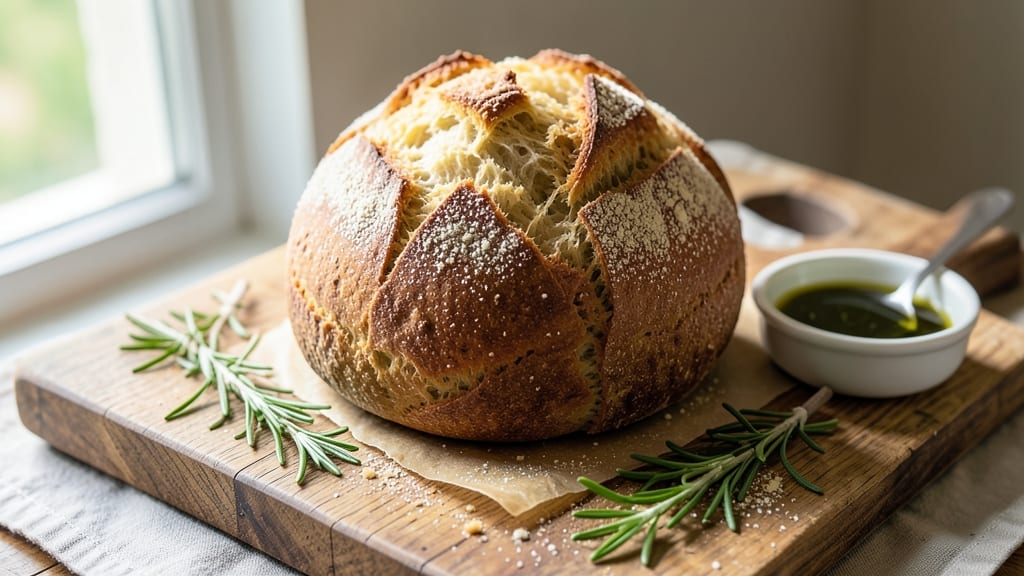
This semolina bread recipe brings that rustic Italian crunch you crave—crispy crust, tender crumb, and a nutty flavor that makes every bite satisfying. 💛 Standing on a step stool in my Nonna’s kitchen in Sicily, I learned how semolina transforms simple dough into something extraordinary.
The secret? A long fermentation and high heat that creates that signature crunch.
What makes this recipe special is how foolproof it is—no fancy equipment, just flour, water, yeast, and a little olive oil. You’ll knead the dough, let it rise, then bake it at 400°F until golden brown.
The semolina gives it that irresistible texture, while the crust stays crispy for days. It’s the kind of bread that disappears faster than you can slice it.
By the time you pull it from the oven, you’ll have a loaf with a crackly crust and a soft, airy interior—perfect for dipping in olive oil or pairing with soups. The aroma alone will have everyone asking what’s for dinner. Ready to bake? Let’s get started!
This recipe works for both round loaves and rolls, so you can shape it however you like. Add garlic or herbs for extra flavor, or keep it classic. Either way, it’s a game-changer for your dinner table.
Ingredients for semolina bread
Four simple ingredients transform into golden, crunchy semolina bread—just flour, yeast, water, and olive oil.
| Ingredient | Amount | Notes |
|---|---|---|
| Semolina Flour 🌾 | 2 cups | Fine grind preferred for texture |
| All-Purpose Flour 🌾 | 2 cups | For structure and rise |
| Active Dry Yeast 🍞 | 0.03 oz | 1 packet (2.25g) or 1 tsp |
| Granulated Sugar 🍚 | 1 tbsp | Feeds yeast for rise |
| Warm Water 💧 | 1 ¼ cups | 110°F for yeast activation |
| Extra-Virgin Olive Oil 🫒 | ¼ cup | For dough elasticity |
| Salt 🧂 | 1 ½ tsp | Fine sea salt preferred |
| Cornmeal 🌽 | ¼ cup | For dusting baking surface |
| Coarse Sea Salt 🧂 | 1 tbsp | For crust enhancement |
| Garlic Powder 🧄 | 1 tsp | Optional for flavor boost |
| Fresh Rosemary 🌿 | ½ tsp | Chopped, optional garnish |
The semolina is non-negotiable here—it’s what gives that signature crunch. Bob’s Red Mill or King Arthur brands work best, but any fine-ground semolina will do. If you can’t find it, durum wheat flour is your next best bet. The yeast? Fresh is ideal—check the expiration date, and if it’s past its prime, toss it. Warm water is key: it should feel like bathwater, not boiling. Too hot and you’ll kill the yeast. Too cold and it won’t activate. I always use a thermometer to check at 110°F.
No semolina? Substitute with extra all-purpose flour, but expect a softer crust. Short on olive oil? Melted butter works too, though it’ll add richness. Want more flavor? Add 1 tsp dried oregano or 1/2 tsp fennel seeds to the dough. The cornmeal is just for dusting—skip it if you’ve got flour. For the coarse salt, Maldon or Diamond Crystal are my go-tos, but any flaky sea salt will do. If you’re making this ahead, freeze the shaped loaves for up to 1 month—bake straight from frozen, adding 5-10 minutes.
This dough is forgiving, but don’t rush the rise. 1-2 hours at room temp is ideal, or let it ferment overnight in the fridge for deeper flavor. The crust stays crisp for 2-3 days if stored in a paper bag, but it’s best eaten fresh. For rolls, halve the recipe and bake in a muffin tin. The aroma alone will have your whole house asking what’s for dinner—trust me on that.
Why You'll Love This Recipe
- No-Knead Magic: I swear by this dough—just mix, let it rise, and bake. The semolina gives it that rustic texture without any fuss, and honestly? I’ve made it while scrolling through my phone.
- Toasty Crunch Factor: That semolina crust? It’s the star—crispy enough to hold up to soups but soft enough to tear with your hands. The sugar caramelizes just enough to add a subtle sweetness that makes every bite feel like a treat.
- Lunchbox Hero: Between us, this bread is my go-to for sandwiches, toast, or even as a side for pasta. It stays fresh for days (yes, even on a Tuesday night), and the kids actually ask for it—no complaints.
- Pantry Staple Payoff: Semolina is cheap, and this recipe stretches a little flour far. Plus, the yeast makes it rise faster than my old sourdough attempts, so I’m always winning—whether feeding the family or saving leftovers for tomorrow.
Step-by-step instructions for semolina bread
Here's how to create that perfect crusty exterior and crumbly interior everyone loves.
👨🍳 Step 1: Activate the Yeast and Mix the Dough
In a small bowl, combine the 0.03 oz active dry yeast with the 1 tbsp granulated sugar and ½ cup of the 1.25 cups warm water (around 110°F). Let it sit for 5-10 minutes until it becomes frothy. This step is crucial—if the yeast doesn't bubble, it's not active, and your bread won't rise properly.
In a large mixing bowl, whisk together the 2 cups semolina flour, 2 cups all-purpose flour, and 1.5 tsp salt. Add the yeast mixture and remaining ¾ cup warm water, then pour in the 0.25 cup extra-virgin olive oil. Mix with a wooden spoon until a shaggy dough forms. Here's the thing—semolina flour is heavier than all-purpose, so don't be surprised if the dough feels dense at first.
🍳 Step 2: Knead Until Elastic
Turn the dough onto a lightly floured surface and knead for 8-10 minutes until smooth and elastic. You'll know it's ready when it springs back slowly when poked. Semolina dough is firmer than regular bread dough, so use the heel of your hand to press and fold rather than stretching it. If it feels too sticky, add 1 tbsp all-purpose flour at a time until it comes together cleanly.
Real talk: This is where patience pays off. The semolina gives that signature crumbly texture, but you need to work the dough enough to develop the gluten for structure. Don't rush it—under-kneading leads to dense, crumbly bread that doesn't hold together well.
🥘 Step 3: First Rise and Shape
Lightly oil a large bowl, place the dough inside, and cover with a damp towel. Let it rise in a warm place for 1-2 hours or until doubled in size. The dough should feel light and airy when pressed gently. If it doesn't rise much, your yeast might not have been active enough—next time, check the water temperature more carefully.
Once risen, punch down the dough and shape it into a round loaf on a baking sheet dusted with 0.25 cup cornmeal. This prevents sticking and gives that rustic texture on the bottom. Cover again and let it rise for another 30-45 minutes. The second rise helps develop flavor and ensures a good oven spring when baking.
🔥 Step 4: Bake to Golden Perfection
Preheat your oven to 375°F. Brush the loaf with a little water and sprinkle evenly with 1 tbsp coarse sea salt and 1 tsp garlic powder. This creates that signature crusty exterior. Bake for 35-40 minutes until the bread is deep golden brown and sounds hollow when tapped on the bottom.
Here's the moment that matters: The bread should have a crisp, crackly crust with a soft, crumbly interior. If the top browns too quickly, tent it loosely with foil after 20 minutes to prevent over-browning. For extra flavor, sprinkle 0.5 tsp chopped fresh rosemary on top just before baking.
⏰ Step 5: Cool and Serve
Let the bread cool on a wire rack for at least 15 minutes before slicing. This prevents the crumb from turning gummy. Semolina bread is best served warm, so if you're not slicing it immediately, wrap it in a clean kitchen towel to keep it soft.
Slice it thick—this bread holds up better than most—and serve with olive oil for dipping or alongside soups and stews. The crust should shatter slightly, revealing that tender, crumbly interior that makes this bread so special. Store leftovers in an airtight container for up to 3 days, or freeze for longer storage.
Pro Tips For Making Semolina Bread
- Bloom the Yeast First: Skip mixing yeast straight into dry ingredients—dissolve it in warm water (110°F/43°C) with sugar first, then let it foam for 5-10 minutes. I learned this the hard way when my semolina dough took forever to rise because the yeast was sluggish from dry contact.
- Sift the Semolina: Semolina is coarse—sift it with the all-purpose flour to avoid dense pockets in your bread. I used to just dump it in, and the texture ended up gritty instead of light and airy.
- Don’t Over-Knead: Semolina dough is forgiving but not stretchy—knead just until smooth (about 5-7 minutes). Overworking it turns the crumb tough, and you’ll end up with a bread that’s more like a brick.
- Steam the Loaf: Place a metal tray of boiling water in the oven for 10 minutes before baking, then remove it. The steam keeps the semolina’s crust from drying out too fast—my first attempts cracked open like a sunbaked riverbed.
Regional styles of semolina bread
Sicilian Rustic Loaf
This is the version my Nonna made every Sunday, shaped into a round ciambella with a crispy crust that shatters when you break it open. The secret? A longer fermentation—let the dough rise for 2 hours at room temperature, then transfer it to the fridge overnight.
The slow rise develops deeper flavor and that signature crackly crust. Shape it into a thick ring, about 10 inches in diameter, and bake at 375°F for 40-45 minutes until golden. The center should stay soft while the edges become crisp.
Serve warm with olive oil and balsamic vinegar for dipping—it’s the perfect Sicilian touch. 🌾
Italian-American Twist
My Italian-American neighbors in Brooklyn adapted this bread by adding 1 tsp dried oregano and ½ tsp fennel seeds to the dough for a Mediterranean kick. They also shape it into small rolls—about 2 inches in diameter—baking them in a muffin tin for 20-25 minutes at 375°F.
The rolls stay crispy for days and pair perfectly with garlic butter or tomato sauce. For extra flavor, brush the baked rolls with garlic-infused olive oil before serving. This version is a crowd-pleaser at holiday gatherings. 🍞
Southern Italian Pane di Semola
In Calabria, this bread is often baked in a clay oven at 450°F for a smoky, rustic flavor. For home cooks, preheat your oven to 425°F and bake the loaf directly on the rack for 30 minutes before transferring to a baking sheet. The high heat gives a deeper caramelization.
Add ½ tsp red pepper flakes to the dough for a subtle kick, or sprinkle coarse sea salt and black pepper on top before baking. This version is heartier and perfect for pairing with ricotta and honey or prosciutto. 🌶️
Modern Twist: Garlic & Herb
For a contemporary take, mix 2 tbsp minced garlic and 1 tbsp chopped fresh rosemary into the dough before shaping. Brush the baked loaf with garlic-infused olive oil and sprinkle with extra coarse sea salt before serving.
This version is perfect for charcuterie boards or as a side for roasted meats. The garlic and herbs infuse the bread with a fragrant aroma that pairs beautifully with aged cheeses like pecorino or manchego. 💛
Neapolitan-Style Semolina Rolls
In Naples, semolina bread is often made into small, soft rolls called pizzelle, though not to be confused with the waffle-like cookies. For this version, halve the recipe and shape the dough into 1-inch balls.
Place them on a baking sheet dusted with cornmeal and bake at 375°F for 15-20 minutes until golden. Brush with olive oil and sprinkle with flaky salt while still warm. These rolls are perfect for breakfast with coffee or as a side for pasta dishes. 🍃
Nutrition facts
Frequently asked questions
Why does semolina bread have that unique crunchy texture?
Semolina's coarse texture creates those signature crispy bits while the all-purpose flour adds structure. The high heat baking (around 375°F) caramelizes the sugars in the semolina, creating that satisfying crunch. The longer fermentation also helps develop that perfect crackly crust you can't get with regular bread.
Can I make this bread without semolina flour?
Yes, but expect a softer texture. Replace the 2 cups semolina with 1 cup semolina + 1 cup all-purpose flour, or use 2 cups fine durum wheat flour as a substitute. The crunch will be less pronounced, but the bread will still be delicious. For best results, use a mix of 1 cup semolina + 1 cup bread flour to maintain some texture.
How do I store semolina bread to keep it crispy?
Store it in a paper bag at room temperature for up to 3 days—this prevents sogginess. For longer storage, freeze the bread (unsliced) for up to 1 month. To revive, warm in a 350°F oven for 5-10 minutes until crispy again. Never refrigerate—this makes the crust stale faster.
Can I add herbs or spices to this recipe?
Try 1 tsp dried oregano, ½ tsp fennel seeds, or 1 tbsp minced garlic mixed into the dough. For extra flavor, brush the baked loaf with garlic-infused olive oil and sprinkle with coarse sea salt. My Nonna always added a pinch of red pepper flakes for a subtle kick in Southern Italian versions.
Why did my semolina bread turn out dense instead of crumbly?
Under-kneading or skipping the second rise are common culprits. Semolina dough needs 8-10 minutes of kneading to develop gluten properly. Also, ensure your yeast is active (it should bubble within 5-10 minutes when mixed with warm water). If the dough didn't rise enough, try letting it ferment overnight in the fridge next time for better flavor and structure.