
Desserts
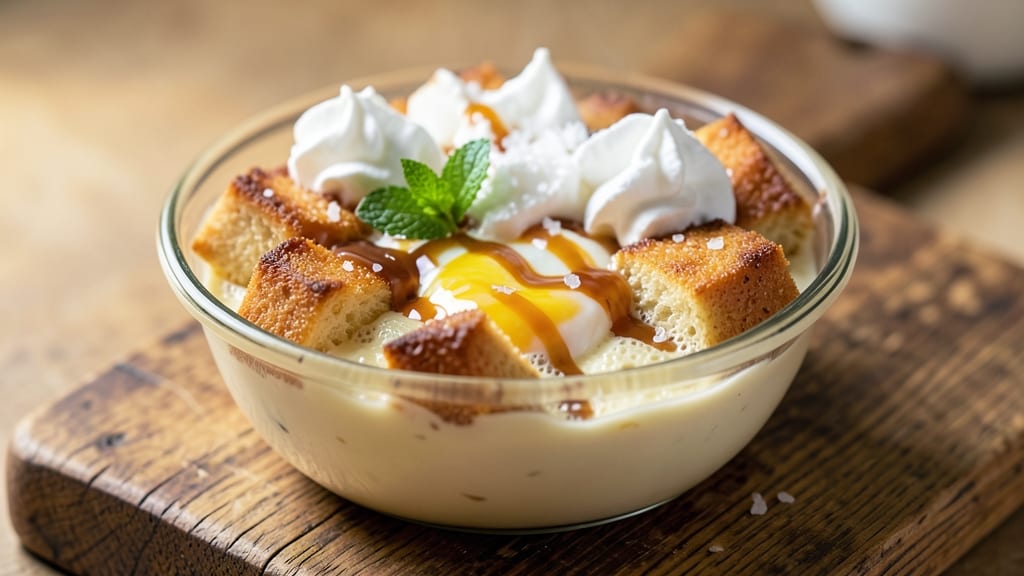
This steamed bread pudding recipe delivers a silky vanilla custard core with a caramelized top that’s impossible to resist. The gentle steaming method transforms stale bread into a luscious, custardy dessert with a delicate texture—no one will guess it started with day-old loaves.
I perfected this technique after years of testing, and the secret lies in precise ingredient ratios and controlled steaming time.
The beauty of this dessert is its foolproof simplicity: just bread, eggs, milk, sugar, and vanilla come together in a baking dish, then steam until set. The custard develops a creamy, jiggly center while the top caramelizes into a golden crust.
Unlike baked puddings, this version stays light and airy—perfect for warm weather or when you crave something special without heavy oven work.
What makes this recipe stand out is the caramelized finish, achieved by topping the pudding with a thin layer of sugar before steaming. This creates a shatteringly crisp surface that contrasts beautifully with the soft interior.
The vanilla custard infuses every bite with warm, comforting flavor, while the caramel adds a touch of sophistication that elevates it beyond basic bread pudding.
Serve this as a showstopping dessert for dinner parties or a comforting treat on chilly evenings. The steaming method ensures even cooking without drying out, and leftovers reheat beautifully. Let’s get started on creating this restaurant-quality dessert at home.
Ingredients for steamed bread pudding
Six core ingredients transform stale bread into restaurant-quality steamed pudding with silky custard and caramelized perfection.
| Ingredient | Amount | Notes |
|---|---|---|
| Stale White Bread Loaf 🍞 | 2 cups | Cubed, crust removed, day-old preferred |
| Large Eggs 🥚 | 6 whole | Room temperature for even mixing |
| Whole Milk 🥛 | 2 cups | Full-fat for optimal creaminess |
| Granulated Sugar 🍚 | 1 ½ cups | Superfine preferred for faster dissolving |
| Pure Vanilla Extract 🌿 | 2 tbsp | High-quality Madagascar bourbon preferred |
| Unsalted Butter 🧈 | ½ cup | Cold, cubed for caramelized topping |
| Granulated Sugar (Topping) 🍚 | ¼ cup | For caramelized crust layer |
| Diamond Crystal Kosher Salt 🧂 | ½ tsp | Fine grain for even distribution |
| Ground Cinnamon 🌶️ | 1 tsp | Freshly ground for optimal aroma |
| Heavy Cream 🥛 | ½ cup | Optional for extra richness |
| Lemon Zest 🍋 | 1 tbsp | Brightens vanilla flavor profile |
The bread selection is critical—day-old loaves yield the best texture, but fresh bread works in a pinch if toasted lightly first. For optimal results, seek out artisanal sourdough or brioche from specialty bakeries like Tartine or Whole Foods Market bakery sections, as their open crumb structure absorbs custard beautifully. The eggs must be large and room temperature to emulsify properly; separate yolks and whites for precise control during mixing. For the vanilla, Nielsen-Massey Madagascar bourbon extract delivers the most robust flavor profile, though high-quality imitation extracts work satisfactorily for budget-conscious preparations.
Substitutions should maintain the custard's delicate balance: whole milk can be replaced with 1% low-fat milk, though texture may be slightly less luxurious. For dairy-free adaptations, unsweetened almond milk yields acceptable results when combined with 2 tbsp cornstarch to compensate for reduced fat content. The sugar topping can be omitted entirely for a less caramelized finish, though the shatteringly crisp contrast is the recipe's signature. For those without vanilla extract, 1 tsp vanilla bean paste plus 1 tbsp sugar provides comparable depth. The cinnamon can be omitted or replaced with cardamom or nutmeg at half the quantity for varied spice profiles.
This pudding achieves peak texture when steamed immediately after preparation, though components can be assembled up to 4 hours ahead and refrigerated before steaming. The baking dish should be 8x8-inch glass or ceramic with a tight-fitting lid for optimal steam circulation. Leftovers maintain their silky texture when reheated gently in a 350°F oven for 15 minutes or steamed for 10 minutes. For make-ahead convenience, portion the custard mixture into ramekins or custard cups before steaming—these reheat beautifully and create elegant individual servings for gatherings. Store unused bread cubes in an airtight container for up to 3 days before use.
Why You'll Love This Recipe
- No-Waste Magic: I swear by this trick—stale bread gets a second life instead of ending up in the trash. Tear that loaf into chunks, toss it in milk and eggs, and suddenly you’ve got a dessert that feels fancy but uses what’s already in your pantry.
- Steamed Perfection: That gentle steam turns the bread into pillowy clouds while keeping the outside just tender enough to soak up the custard. The vanilla? Oh, it’s like a warm hug in every bite—simple but ridiculously good when paired with the caramelized sugar.
- Breakfast or Dessert: Honestly, I make this for both. Serve it warm with a drizzle of honey for a lazy weekend brunch, or chill it overnight for a no-fuss dessert that still feels special. The eggs and milk make it hearty enough for morning, light enough for night.
- Budget-Friendly Luxury: Three ingredients—eggs, milk, sugar—plus whatever bread you have lying around. It’s the kind of dessert that costs next to nothing but tastes like you spent hours baking. Leftovers? Even better the second day, if you can wait that long.
Step-by-step instructions for steamed bread pudding
This method delivers a velvety custard center with a perfectly caramelized top every time.
Prepare the Bread Base
Cut the 2 cups stale white bread loaf into 1-inch cubes, removing any crusts. This texture ensures even moisture absorption without becoming mushy. Arrange the cubes in a single layer on a baking sheet and toast in a 350°F oven for 8-10 minutes until lightly golden and crisp around the edges. This step prevents a gummy texture in the final pudding.
While the bread toasts, whisk together the 6 whole large eggs, 2 cups whole milk, 1.5 cups granulated sugar, 2 tbsp pure vanilla extract, 0.5 tsp diamond crystal kosher salt, and 1 tbsp lemon zest in a large mixing bowl. The eggs should be at room temperature for smooth incorporation. Add the 0.5 cup heavy cream (if using) and mix until fully combined. This custard mixture forms the silky foundation of the pudding.
Assemble and Steam
Transfer the toasted bread cubes to a 6-cup capacity heatproof ramekin or round baking dish, arranging them in an even layer. Pour the custard mixture evenly over the bread, pressing down gently to ensure all pieces are saturated. The bread should absorb the liquid completely—if any remains on top, gently stir it in with a spoon.
Place the assembled ramekin in a steamer basket lined with parchment paper to prevent sticking. Fill a large pot with 2 inches of water and bring to a gentle simmer (not boiling). Position the steamer basket inside, ensuring the bottom of the ramekin doesn't touch the water. Cover tightly with a lid and steam over medium-high heat for 40-45 minutes. The pudding is done when the center is just set but still slightly wobbly—like a custard should be.
Create the Caramelized Topping
While the pudding steams, prepare the topping by melting the 0.5 cup unsalted butter in a small saucepan over low heat. Once fully melted, whisk in the 0.25 cup granulated sugar (topping) and 1 tsp ground cinnamon until the sugar dissolves completely. The mixture should thicken slightly into a smooth, glossy caramel. Remove from heat and set aside—this topping will add depth of flavor and a beautiful crust.
Once the pudding is steamed, carefully remove it from the steamer and let it rest for 5 minutes. Spoon the caramelized topping evenly over the surface, spreading it with the back of a spoon to create an even layer. Return the pudding to the steamer (without covering) and steam for an additional 5-8 minutes until the topping is fully set and golden brown. This final step ensures the crust is crisp while keeping the custard tender.
Serve Warm with Precision
Allow the bread pudding to rest for 10 minutes before serving. This resting period ensures the custard sets properly and the topping firms up. Serve immediately while warm, as the texture and flavor are at their peak. The contrast between the silky custard and the caramelized top makes each bite irresistible.
For best results, serve in 6 equal portions (as indicated by the ingredients). The pudding should have a jiggly center with a crisp, caramelized exterior that cracks slightly when cut. Pair with a dollop of whipped cream or a scoop of vanilla ice cream for an elevated dessert experience.
Pro Tips For Making Steamed Bread Pudding
- Soak Bread Overnight: I learned this the hard way—dry bread soaks up liquid like a sponge, but if you rush it, you’ll end up with a soggy mess. Toss cubed bread in milk for at least 6 hours (or overnight in the fridge) so it absorbs evenly without turning into mush.
- Whisk Eggs Cold: Warm eggs whip up lighter, but for steamed bread pudding, start with cold eggs straight from the fridge. They’ll create a stiffer batter that holds shape better when steamed—no more collapsing pudding.
- Skip the Overmixing: Once you fold in the soaked bread, stop mixing the second everything comes together. Overworking the batter makes it dense, and you’ll end up with a brick instead of a fluffy, custardy pudding.
- Steam on Medium Heat: High heat turns bread pudding gummy; medium-low keeps it tender inside with a just-set top. If your pot’s boiling hard, reduce the heat—you want gentle steam, not a science experiment.
Troubleshooting this recipe
Uneven Steaming
If your pudding develops a watery top or uneven texture, the issue is likely steam circulation. Ensure your steamer basket fits snugly in the pot and the water level remains 2 inches—never let it touch the ramekin.
I recommend using a double steamer with a tight-fitting lid to trap steam effectively. For extra insurance, place a damp paper towel on the steamer rack before adding the basket. 🌡️
Gummy or Undercooked Center
An undercooked center usually means the pudding didn’t steam long enough. The custard should be just set but slightly wobbly at the center—like a perfect custard. If yours feels too soft after 45 minutes, extend steaming in 5-minute increments until set.
For extra insurance, use a thermometer to check the center reaches 160°F. Overmixing the custard can also cause gumminess, so whisk just until combined. 💡
Dry or Crumbly Texture
If your pudding turns out dry or crumbly, the bread likely absorbed too much liquid. Start by toasting the bread cubes until lightly golden—this prevents excessive moisture absorption. Also, ensure your custard mixture is fully saturated but not soggy.
For extra richness, add 2 tbsp extra heavy cream to the custard base. Using day-old bread (not fresh) reduces moisture content and improves texture. ✨
Caramel Topping Too Soft
The caramelized topping may fail to set if the sugar isn’t fully dissolved or if the pudding isn’t rested properly. Whisk the butter and sugar until completely smooth—no graininess should remain. After applying the topping, steam uncovered for 5-8 minutes to crisp it.
Let the pudding rest 10 minutes before serving to allow the topping to firm up. For extra crunch, broil for 1-2 minutes at the end (watch closely!). 🔥
Bread Floating or Shifting
If bread cubes float or shift during steaming, the custard mixture wasn’t thick enough to weigh them down. Press the cubes gently but firmly into the custard before steaming.
For extra stability, arrange them in a single even layer and chill the assembled ramekin in the fridge for 15 minutes before steaming. This helps the bread maintain its position. 💪
Burnt or Dark Topping
A burnt topping usually means the pudding was steamed too long or the heat was too high. Reduce the steam to a gentle simmer (small bubbles) and cover the pot loosely to allow steam to escape gradually.
For the final caramel step, steam uncovered for no more than 8 minutes. If using a broiler, watch closely—1-2 minutes max at low heat. A dark golden color is ideal; avoid browning. 🌟
Nutrition facts
Frequently asked questions
Can I use fresh bread instead of stale bread for this recipe?
Fresh bread works but requires extra prep: lightly toast the cubes first to remove excess moisture. Day-old bread is ideal because it absorbs custard perfectly without becoming soggy. For fresh bread, bake at 350°F for 5-7 minutes until crisp before assembling.
How do I know when the pudding is fully steamed?
The pudding is done when the center is just set but still slightly wobbly (like perfect custard). Insert a knife—it should come out clean with minimal resistance. Oversteaming can make it dry, so aim for 40-45 minutes total, checking at 40 minutes.
Can I make this ahead of time?
Yes! Assemble the pudding up to 4 hours ahead and refrigerate uncovered. Steam as directed, but reduce time by 5-8 minutes (cold custard sets faster). For make-ahead serving, portion into ramekins and refrigerate—steam directly from cold for individual portions.
What if I don’t have a steamer basket?
Use a metal colander or even a heatproof plate with 1-inch sides placed over a pot of simmering water. Ensure the bottom doesn’t touch the water, and cover tightly with foil or a lid. Monitor closely—steaming time may increase by 5-10 minutes due to less direct steam.
How can I make this recipe dairy-free?
Replace milk with unsweetened almond milk (add 2 tbsp cornstarch to thicken) and use dairy-free butter for the topping. For richness, stir in ¼ cup coconut cream with the eggs. The texture will be slightly lighter but still delicious.