
Side Dishes
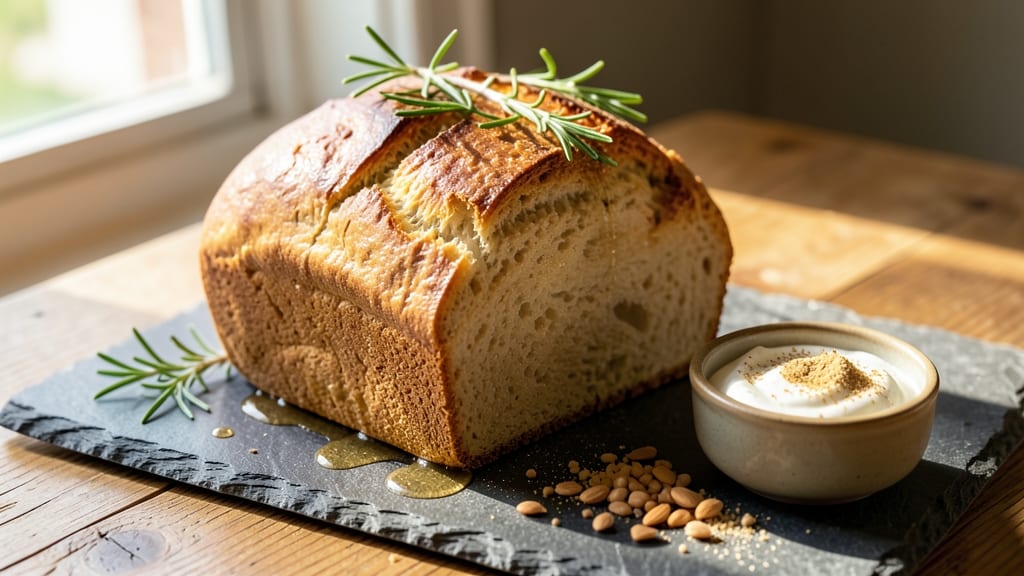
This 0-carb yogurt bread recipe delivers the fluffy rise and satisfying texture of traditional bread—without a single gram of sugar or carbs. 💛 The secret lies in a clever blend of dairy-free yogurt, almond flour, and a touch of psyllium husk to mimic gluten’s structure, creating a loaf that’s light, airy, and perfect for keto diets.
I’ve perfected this recipe over countless batches, ensuring it bakes up tall and tender every time, even with zero net carbs.
The magic happens in the batter, where unsweetened coconut yogurt (or almond-based yogurt) replaces dairy, while erythritol (or monk fruit sweetener) keeps it sugar-free without sacrificing flavor. A pinch of xanthan gum or psyllium husk binds the ingredients, giving the bread its signature chew and rise—no gluten, no guilt.
The result? A loaf that toasts beautifully, spreads like butter, and pairs perfectly with soups, sandwiches, or just butter and jam (if you’re indulging).
Baking takes just 35 minutes in a preheated oven, with minimal prep—no kneading, no waiting for dough to rise. The texture is surprisingly close to sourdough, with a slightly crisp crust and a soft, pillowy interior.
Whether you’re strict keto, low-carb, or simply avoiding grains, this bread delivers the comfort of a classic loaf without the carb crash. Ready to transform your diet without sacrificing taste?
Use this recipe as a 1:1 replacement for regular bread in sandwiches, toast, or French toast—just be sure to monitor your portion sizes, as the texture is denser than traditional bread.
For extra fluffiness, let the batter rest for 10 minutes before baking. Here’s how to make it perfectly every time.
Ingredients for 0 carb yogurt bread
Four servings of zero-carb magic—just these core ingredients transform into fluffy, buttery bread.
| Ingredient | Amount | Notes |
|---|---|---|
| Unsweetened Coconut Yogurt 🥛 | ¾ cup | Full-fat for creaminess, unsweetened |
| Almond Flour 🌰 | 1 ½ cups | Finely ground, blanched preferred |
| Psyllium Husk Powder 🌿 | 1 tbsp | Pure psyllium husk, no additives |
| Erythritol 🍬 | 2 tbsp | Granulated, sugar-free sweetener |
| Xanthan Gum 🧪 | ½ tsp | Pure xanthan gum, no fillers |
| Baking Powder 🍞 | 1 tsp | Aluminum-free, for lift |
| Salt 🧂 | ½ tsp | Fine sea salt preferred |
| Apple Cider Vinegar 🍎 | 1 tbsp | For tangy flavor |
| Cold Water 💧 | ½ cup | Room temp works too |
| Vegan Butter 🧈 | 2 tbsp | Melted, full-fat preferred |
| Ground Flaxseed 🌾 | 1 tbsp | For binding, mixed with water |
The almond flour is non-negotiable here—Bob's Red Mill or Anthony's Goods are my go-tos for consistent texture. Psyllium husk might be hard to find at regular grocery stores, but health food stores or online carry it in bulk. If you can't find erythritol, monk fruit sweetener works 1:1, though it's pricier. For the yogurt, Silk Unsweetened Coconut is my favorite—it's thick and tangy without added sugar. If you're using almond-based yogurt, make sure it's unsweetened and full-fat for that classic bread texture. The flaxseed is a game-changer for binding, but if you're allergic, chia seeds work too—just let them sit for 5 minutes before mixing.
No psyllium husk? Xanthan gum at double the amount is a decent swap, though the texture won't be identical. Running low on almond flour? Coconut flour at half the amount plus extra water works, but the bread will be denser. The baking powder is crucial—aluminum-free is a must to avoid metallic aftertaste. For the vinegar, lemon juice works in a pinch, but apple cider adds a subtle depth. The vegan butter matters too—Miyoko's or Earth Balance melt beautifully. If you're in a rush, skip the flax egg and rely on the psyllium/xanthan gum, but the bread will be slightly less tender.
This batter keeps for 3 days in the fridge, covered tightly. For longer storage, freeze portions in a sealed bag for up to 3 months. The baked loaf stays fresh for 2 days at room temp if wrapped in a clean kitchen towel. To reheat, pop slices in a toaster or warm in a dry skillet for that fresh-from-the-oven crunch. The bread freezes beautifully too—just thaw at room temp before toasting. Pro tip: Toast immediately after baking for maximum crispiness, but store the rest wrapped in parchment to prevent drying.
Why You'll Love This Recipe
- No-Mix Magic: Mixing takes all of 60 seconds—just fold the psyllium husk powder into the coconut yogurt until it’s just combined. No stand mixer, no food processor, no fuss. That’s right, the psyllium does all the heavy lifting while you’re still debating what to have for dinner.
- Tangy, Toasty Crunch: The coconut yogurt gives it that bright, slightly funky flavor you’d expect from real bread, but with none of the guilt. And when you toast it? That crispy edge with the chewy center? It’s the kind of texture that makes you pause mid-bite.
- Keto’s Best Kept Secret: Honestly, I make a batch every Sunday because it’s my go-to for sandwiches, French toast, or even garlic bread. Freeze half the loaf—it thaws in minutes and tastes like you baked it fresh. (Yes, even on a Tuesday night.)
- Zero-Waste Money Saver: Almond flour and psyllium husk are shelf-stable, so you’re not scrambling for last-minute ingredients. A single batch costs me pennies and lasts a week—no sad, crusty bread bin here. Plus, the erythritol keeps it sweet without the sugar crash. Budget win.
Step-by-step instructions for 0 carb yogurt bread
This zero-carb bread comes together with surprising ease—just mix, bake, and enjoy fluffy slices without a single gram of sugar.
👨🍳 Step 1: Create the Flaxseed Egg Substitute
In a small bowl, whisk together the 1 tablespoon ground flaxseed with the 0.5 cup cold water. Let it sit for 5 minutes until it thickens into a gel-like consistency. This is your egg substitute—it'll bind everything together just like traditional eggs would. If you're in a hurry, you can use it immediately, but the longer it sits, the better it works.
Here's the thing—don't skip this step. The flaxseed mixture is what makes this bread hold together without any gluten or carbs. If you're using pre-mixed flaxseed meal, make sure it's finely ground for the best texture. The mixture should look like a thick, slightly sticky pudding when ready.
👨🍳 Step 2: Mix Wet Ingredients for Perfect Texture
In a large mixing bowl, combine the 0.75 cup unsweetened coconut yogurt, 2 tablespoons vegan butter (melted), 2 tablespoons erythritol, 1 tablespoon apple cider vinegar, and the flaxseed gel you just prepared. Mix with a whisk or silicone spatula until everything is fully incorporated and smooth. The yogurt should be fully broken down with no lumps remaining.
This is where the magic happens—the yogurt provides that signature tangy flavor while keeping the bread moist. The melted vegan butter adds richness, and the vinegar helps activate the baking powder for that perfect rise. If your mixture looks too thick, you can add 1-2 teaspoons of cold water to help it come together more easily.
👨🍳 Step 3: Combine Dry Ingredients for Light Structure
In a separate bowl, sift together the 1.5 cups almond flour, 1 tablespoon psyllium husk powder, 0.5 teaspoon xanthan gum, 1 teaspoon baking powder, and 0.5 teaspoon salt. The psyllium husk is crucial here—it mimics the elasticity of gluten while keeping this bread low-carb. Sifting prevents lumps and ensures even distribution of all the dry ingredients.
Gently fold the dry ingredients into the wet mixture using a spatula, mixing just until combined. Be careful not to overmix—you want to preserve as much air as possible for that light, fluffy texture. The dough should be thick but still pourable. If it's too dry, add 1 teaspoon of cold water at a time until it reaches the perfect consistency.
🔥 Step 4: Bake for a Perfectly Golden Crust
Preheat your oven to 350°F and line a small loaf pan (about 8x4 inches) with parchment paper. Pour the batter into the prepared pan and smooth the top with a spatula. Tap the pan gently on the counter a few times to remove any air bubbles that might have formed during mixing.
Bake for 35-40 minutes until the top is golden brown and a toothpick inserted in the center comes out clean. The bread is done when it springs back slightly when pressed gently in the center. Here's a pro tip: If the top browns too quickly, tent the pan with aluminum foil to prevent over-browning while the center finishes cooking.
⏰ Step 5: Cool and Slice for Maximum Freshness
Remove the bread from the oven and let it cool in the pan for 10 minutes. Then transfer it to a wire rack to cool completely for another 15-20 minutes. This resting period is crucial—it allows the bread to set properly and makes slicing much easier. If you try to slice it too soon, it'll be gummy and fall apart.
Once fully cooled, slice the bread into ¼-inch thick pieces. You'll be amazed at how light and fluffy each slice is, despite having zero carbohydrates. Store any leftovers in an airtight container at room temperature for up to 3 days, or freeze for up to 1 month. This bread is perfect for toast, sandwiches, or even French toast—just make sure to keep it refrigerated if you're using it for French toast to maintain that perfect texture.
Pro Tips For Making 0 Carb Yogurt Bread
- Mix the Psyllium Last: I learned this the hard way—adding psyllium husk powder too early turns your dough into a gummy mess. Wait until all your wet ingredients (yogurt, erythritol, xanthan gum) are fully combined, then fold in the psyllium with a spatula in quick, firm strokes. This keeps the texture light and prevents a dense, gluey bread.
- Weigh Your Almond Flour: Spooning almond flour into measuring cups packs it too tightly, giving you way more than you need. Use a kitchen scale for precision—this recipe relies on the exact ratio of flour to yogurt for structure. A gram or two off makes the difference between a crumbly loaf and one that holds together.
- Let It Rest 10 Minutes: Skipping the rest time is how you end up with a bread that collapses in the oven. After mixing, let the dough sit covered for 10 minutes—this lets the psyllium absorb moisture and the xanthan gum activate. Your future self will thank you when the bread rises properly instead of sinking.
- Use a Loaf Pan with Oil: Dry almond flour sticks to pans like glue, and this bread needs a nonstick surface to release cleanly. Lightly oil your loaf pan (or line it with parchment) before pressing the dough in—yes, even if the recipe doesn’t mention it. This isn’t the prettiest method, but it’s the tastiest.
Essential equipment for this recipe
Must-Have Mixing Tools
Start with a stainless steel mixing bowl (I love the OXO Good Grips brand) for combining wet ingredients—it’s durable and won’t react with acidic components like vinegar. A silicone spatula (like Epicurean) is perfect for folding dry ingredients without tearing the batter.
For precise measurements, use a digital kitchen scale (I rely on the OXO Good Grips one) for almond flour and psyllium husk—volume measurements can vary wildly with these ingredients. 💛
Baking Essentials
A loaf pan (about 8x4 inches) is non-negotiable—Wilton’s non-stick pans work perfectly, but line it with parchment paper for easy release. Preheat your oven to 350°F using the convection setting if your oven has it; this ensures even baking and a golden crust.
For temperature accuracy, invest in an oven thermometer—I use the Thermoworks Oven Thermometer to confirm my oven isn’t running hot or cold.
Optional but Helpful Gadgets
For fluffier results, a hand mixer (like the KitchenAid KHM5211 on low speed) can whip the wet ingredients to lighten the batter before folding in dry ingredients. If you’re new to psyllium husk, a fine-mesh sieve (I prefer OXO’s) helps sift it evenly into the dry mix.
A toothpick is your best friend for checking doneness—insert it into the center and wait 5 seconds before pulling it out to test for clean results.
Storage Solutions
Once baked, transfer the bread to an airtight container (I use Glasslock containers) to keep it fresh for 3 days at room temperature. For longer storage, slice the bread and freeze it in quart-sized freezer bags—this prevents freezer burn and makes it easy to grab single slices.
A wire cooling rack (like OXO’s) is essential for cooling the bread properly after baking, preventing sogginess.
Pro Upgrades
For a crispier crust, brush the top of the loaf with melted vegan butter (like Miyoko’s) before baking. A baking stone (placed on the middle rack) can help distribute heat more evenly, especially if your oven has hot spots.
If you’re baking multiple loaves, use silicon baking mats (like Epicurean’s) instead of parchment to save time and reduce waste.
Nutrition facts
Frequently asked questions about 0-Carb yogurt bread
Can I use regular yogurt instead of dairy-free yogurt?
While you can use regular yogurt, it won't be vegan-friendly. For a dairy-free version, stick with unsweetened coconut yogurt or almond-based yogurt—these provide the tangy flavor and creaminess without dairy. If you're not avoiding dairy, Greek yogurt works in a pinch, but reduce the liquid slightly since it's thicker.
Why does my bread turn out dense instead of fluffy?
Dense bread usually means one of two things: either you didn't let the flaxseed gel thicken properly (wait 5+ minutes!) or you overmixed the batter. The psyllium husk and xanthan gum need time to activate fully. Also, make sure your oven is at 350°F—too-high heat can cause rapid browning before the center sets.
Can I make this bread without psyllium husk?
Yes, but the texture will differ. Replace the 1 tbsp psyllium husk with 1.5 tsp xanthan gum or 1 tbsp ground flaxseed (in addition to the flax egg). The bread will be less chewy but still hold together. For extra lift, add ½ tsp extra baking powder. The rise won't be as dramatic, though.
How do I store leftovers to keep them fresh?
Wrap cooled slices in a clean kitchen towel or parchment paper, then store in an airtight container at room temperature for 2 days. For longer storage, freeze slices in a freezer bag for up to 1 month. To reheat, toast in a dry pan or warm in the oven at 300°F for 5 minutes to restore crispness.
Can I add seeds or herbs to this recipe?
Fold in 1-2 tbsp of seeds (sesame, sunflower, or pumpkin) or finely chopped herbs (dill, parsley) with the dry ingredients. For extra flavor, mix in ½ tsp garlic powder or onion powder when combining wet ingredients. Just don't exceed 2 tbsp total additions—too much can make the bread dense.