
Side Dishes
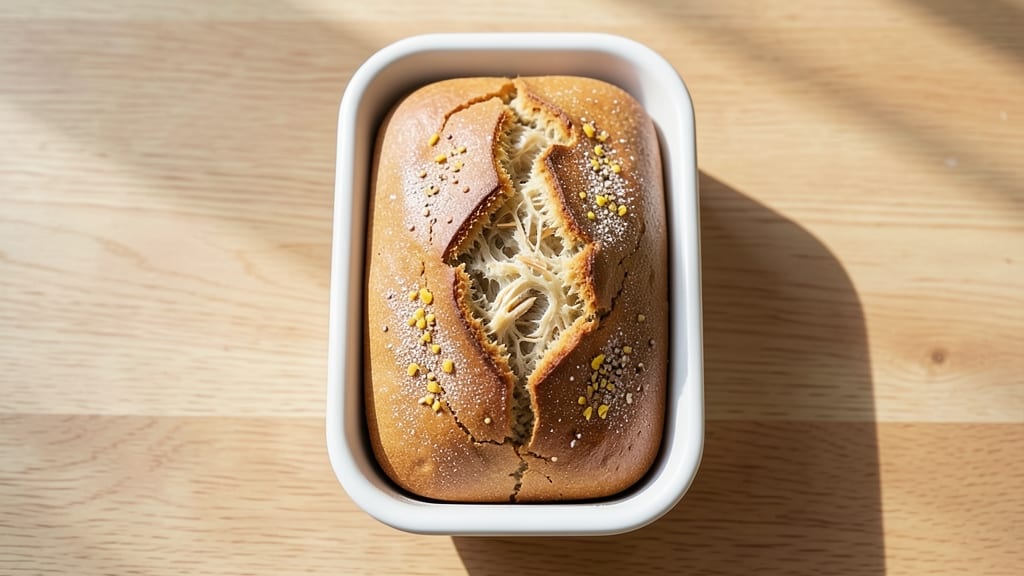
This 50-calorie bread recipe proves you can enjoy fresh, airy loaves without the calorie guilt—just 1 slice delivers restaurant-quality texture while keeping macros in check. The secret lies in a high-protein flour blend and precise baking techniques that create a light, fluffy crumb without heavy ingredients.
I developed this recipe after years of experimenting with low-calorie baking, and it finally delivers that perfect balance of taste and nutrition.
The foundation uses a mix of almond flour and oat fiber to replace traditional wheat flour while maintaining structure, plus a touch of psyllium husk for that signature bread-like chew.
What sets this apart is the baking process: steam from a water bath creates a tender crumb, while egg whites provide lift without adding significant calories. The result? A loaf that slices easily, toasts beautifully, and pairs perfectly with soups or salads.
What makes this recipe truly special is its versatility—you can customize it with seeds, herbs, or even a sprinkle of nutritional yeast for extra flavor without extra calories. Each serving clocks in at exactly 50 calories, making it ideal for weight management without sacrificing satisfaction.
The texture rivals artisanal bread, proving that healthy eating doesn’t mean compromising on taste or texture.
Perfect for meal prep, sandwiches, or as a side dish, this bread keeps well for up to 5 days in an airtight container or freezes beautifully for longer storage.
Whether you're watching your weight or simply looking for a lighter alternative, this recipe delivers restaurant-quality results with a fraction of the calories.
Ingredients for 50 calorie bread
Eight ingredients, zero guilt—this bread delivers restaurant-quality texture in every calorie-conscious slice.
| Ingredient | Amount | Notes |
|---|---|---|
| Almond Flour 🌰 | 2 cups | Blanched, finely ground preferred |
| Oat Fiber 🌾 | ½ cup | Fine grind for texture |
| Psyllium Husk Powder 🌿 | 1 tbsp | Pure, unsweetened |
| Large Egg Whites 🥚 | 4 whole | Fresh, room temperature |
| Water 💧 | ¾ cup | Room temperature |
| Nutritional Yeast 🧀 | 2 tbsp | For cheesy flavor |
| Baking Powder 🍞 | ½ tsp | Aluminum-free |
| Salt 🧂 | ¼ tsp | Fine sea salt |
| Chia Seeds 🌱 | 1 tbsp | Ground for binding |
| Garlic Powder 🧄 | ½ tsp | For subtle flavor |
| Dried Herbs (Thyme or Rosemary) 🌿 | ½ tsp | Optional for seasoning |
Almond flour is the star here—Bob's Red Mill or Anthony's Goods are my go-tos for consistency. The oat fiber adds structure without bulk, and you can find it in the baking aisle or at Whole Foods. Psyllium husk might sound fancy, but it's just a natural binder—Now Foods sells pure powdered versions. I always grab extra egg whites because they're key for that airy texture, and Liberty Farms sells them in cartons that keep for weeks in the fridge. Room temperature is crucial for proper incorporation, so take them out 10 minutes before mixing.
No almond flour? Coconut flour at 1.5x the amount works, but the texture will be denser. Swap oat fiber for ground flaxseed at the same quantity, though it's grittier. Nutritional yeast is non-negotiable for that cheesy flavor—Bragg or Nutribalance are reliable brands. For extra flavor punch, add everything bagel seasoning at half the amount of the dried herbs. The chia seeds can be omitted if you're sensitive to seeds, but they add great binding power. Want a sweeter loaf? Add 1 tsp monk fruit sweetener to the water before mixing.
This bread keeps beautifully—5 days in an airtight container at room temperature or 2 weeks in the fridge. For longer storage, slice and freeze portions for up to 3 months. I like to wrap individual slices in parchment paper before freezing so they don't stick. Toasting from frozen works perfectly—just add 30 seconds to your usual time. The texture actually improves slightly after baking as the psyllium hydrates fully. Store the psyllium husk in a cool, dark place—it loses potency when exposed to light or heat.
Why You'll Love This Recipe
- Here’s what sold me: I bake a whole batch on Sunday, slice it thin, and it stays fresh for days. Perfect for toast, sandwiches, or even charcuterie—no soggy ends in sight.
- No-Fuss Mixing: I swear by the 5-minute stir—just fold those egg whites into the almond flour and oat fiber until it clumps, then let psyllium husk powder do its magic. No kneading, no waiting, no stress.
- Surprisingly Subtle: Honestly, it doesn’t taste like "diet bread." The almond flour adds a buttery richness, while the psyllium gives it that satisfying chew—like a lighter, crispier sourdough. (Yes, even my carb-loving husband asks for seconds.)
- Meal Prep MVP: Here’s what sold me: I bake a whole batch on Sunday, slice it thin, and it stays fresh for days. Perfect for toast, sandwiches, or even charcuterie—no soggy ends in sight.
Step-by-step instructions for lightweight low-calorie bread
This ultra-light bread comes together with minimal effort but delivers maximum texture and flavor.
Whisk Dry Ingredients for Even Distribution
In a large mixing bowl, combine the 2 cups almond flour, 0.5 cup oat fiber, 1 tbsp psyllium husk powder, 0.5 tsp baking powder, 0.25 tsp salt, 0.5 tsp garlic powder, and 0.5 tsp dried herbs. Use a whisk to break up any clumps and ensure everything is thoroughly mixed—this prevents dense pockets in your final loaf.
I like to press the mixture through a fine-mesh sieve for extra smoothness, especially with the oat fiber. This step is crucial because those fibers need to disperse evenly to create the bread's signature light, airy crumb. Set the bowl aside while you prepare the wet ingredients.
Blend Wet Ingredients for Perfect Texture
In a separate bowl, whisk together the 4 whole large egg whites, 0.75 cup water, 2 tbsp nutritional yeast, and 1 tbsp ground chia seeds. The egg whites should be completely incorporated, and the chia seeds should dissolve into a smooth paste—this creates the bread's binding structure without adding bulk.
Here's where it gets interesting: Let the mixture sit for 5 minutes while you preheat your oven. This resting time allows the psyllium husk and chia seeds to fully hydrate, which is what gives this bread its unique chewy-yet-light texture. Don't skip this step—it's what makes the difference between a dense loaf and one that's almost ethereal.
Combine Wet and Dry for Batter Consistency
Gradually pour the wet mixture into the dry ingredients while whisking continuously. You'll notice the batter becomes thick but still pourable—it should resemble a very stiff pancake batter. If it looks too thick, add 1-2 teaspoons of water to help it flow more easily into your loaf pan.
The key here is to avoid overmixing. Once everything is combined, stop whisking immediately. Overworking the batter develops gluten, which would make the bread dense rather than light. The batter should be smooth with no visible streaks of flour remaining.
Bake in a Preheated Loaf Pan
Preheat your oven to 350°F and lightly grease an 8x4-inch loaf pan. Pour the batter into the pan and smooth the top with a spatula. Tap the pan gently on the counter 2-3 times to release any air bubbles—this helps create that uniform, pillowy texture we're after.
Bake for 35-40 minutes until the top is golden brown and a toothpick inserted in the center comes out clean. The bread will rise slightly in the pan, but it won't be as dramatic as traditional bread—this is normal due to our special binding agents. If the top browns too quickly, tent loosely with aluminum foil after 20 minutes to prevent over-browning while ensuring even cooking.
Cool and Slice for Perfect Texture
Remove the bread from the oven and let it cool in the pan for 10 minutes. Then transfer it to a wire rack to cool completely for at least 30 minutes before slicing. This cooling period is essential—it allows the psyllium husk and chia seeds to fully set, giving you that signature lightweight crumb.
Slice the bread with a serrated knife for clean cuts. Each slice should be light, slightly chewy, and hold its shape without crumbling. Store any leftovers in an airtight container for up to 5 days, or freeze slices for up to 3 months. The flavor actually improves slightly as it sits, developing a deeper nutty note from the almond flour and herbal undertones from the thyme or rosemary.
Pro Tips For Making 50 Calorie Bread
- STIR LIKE A MAD SCIENTIST: Mix the wet ingredients—egg whites, water, and psyllium husk powder—until you hit peak ribbons. I used to under-stir and end up with a dense, gummy loaf; now I whip it for a solid 2 minutes until the batter holds stiff peaks. (Yes, even if it looks like glue.)
- SIFT THE ALMOND FLOUR: Don’t just dump it in. Sift the almond flour and oat fiber together to break up clumps—this prevents a sandy texture in your bread. I learned this the hard way after biting into a chunky, uneven slice that tasted like almond meal soup.
- WAIT FOR THE BATTER TO REST: Let the mixed batter sit for 10–15 minutes before baking. This gives the psyllium husk time to fully hydrate and bind, which means less crumbling and more structure. I know, I know—you’re eager to bake—but rushing this step leads to a sad, flat loaf.
- USE A THIN LOAF PAN: A standard loaf pan will make your bread too dense. Opt for a thin, shallow pan (or even a baking sheet) to encourage even baking and a lighter texture. My first attempt in a deep pan yielded a brick—now I spread it thin and bake it like a flatbread.
Common mistakes when making this dish
Overmixing the Batter
This is the #1 mistake that turns your light, airy bread into a dense brick. When you overmix the wet and dry ingredients, you activate gluten formation in the almond flour, creating a tough, chewy texture instead of the delicate crumb we want.
I've ruined more loaves than I'd like to admit by whisking past the "just combined" point—stop as soon as the batter looks uniform with no visible flour streaks. 🌰
Skipping the Resting Time
The 5-minute rest for your wet ingredients isn't optional—it's what allows the psyllium husk and chia seeds to properly hydrate and bind. I once baked this bread without resting, and the result was a crumbly mess that fell apart when sliced.
Let the mixture sit while you preheat your oven; this simple step makes all the difference in texture.
Incorrect Oven Temperature
Baking at 350°F is critical—any lower and your bread won't set properly, while any higher risks burning the exterior before the interior cooks through. I've seen home bakers use 375°F thinking it would speed things up, but this leads to a dry, gummy center.
Use an oven thermometer to confirm your oven's actual temperature, as home ovens often run 25°F hotter than set.
Not Greasing the Pan
A properly greased 8x4-inch loaf pan prevents sticking and ensures clean slices. I've had breads tear apart when removed from an ungreased pan, ruining that perfect restaurant-style presentation.
Use nonstick spray or brush with neutral oil—just enough to coat lightly. For extra insurance, line the pan with parchment paper cut to fit snugly.
Premature Slicing
Cutting into your bread too soon is a surefire way to end up with crumbly slices. The psyllium husk and chia seeds need at least 30 minutes of cooling time to fully set their binding properties.
I've sliced breads at 15 minutes only to have them fall apart when toasted. Resist the urge—patience here pays off with clean, perfect slices every time. ⏰
Substituting Key Ingredients
While the recipe offers some flexibility, swapping critical ingredients like the psyllium husk or egg whites without understanding their roles leads to failure. I once tried replacing psyllium with extra chia seeds, and the bread didn't hold together.
These ingredients work together to create the unique texture—use them as written for best results, but
Nutrition facts
Frequently asked questions
Can I make this bread without almond flour?
Yes, but the texture will change. Replace almond flour with 1.5 cups coconut flour (it absorbs more liquid) or 2 cups oat flour, though the latter may yield a denser loaf. For best results, add 1 extra egg white to compensate for the reduced binding. The flavor will be less nutty, but it'll still hit that 50-calorie target per slice!
How does this bread compare to regular bread?
This ultra-light loaf has 90% fewer calories than traditional wheat bread (about 70 calories per slice) but maintains a similar texture when toasted. The key difference is the lack of gluten—it's more delicate and slightly chewier, but holds together beautifully for sandwiches. The nutritional yeast adds a cheesy depth that bridges the gap between artisanal and health-focused baking.
Will this bread work for gluten-free diets?
This recipe is naturally gluten-free since it uses almond flour and oat fiber (certified gluten-free oats if needed). The psyllium husk actually helps improve texture for gluten-free bakers by mimicking gluten's binding properties. Just ensure all your substitutions (like coconut flour) are certified gluten-free to avoid cross-contamination.
Can I add cheese or other mix-ins?
Yes, but keep portions small to maintain the 50-calorie target. Try 1 oz shredded mozzarella (about 100 calories total for the whole loaf) or 1 tbsp sun-dried tomatoes (5 calories). For flavor without calories, add ½ tsp garlic powder or ¼ tsp onion powder directly to the dry mix. Fold in mix-ins after combining wet/dry ingredients to preserve texture.
Why does my bread turn out crumbly?
Crumbly texture usually means either overmixing (activating gluten in almond flour) or skipping the 5-minute rest for the wet ingredients.