
Side Dishes
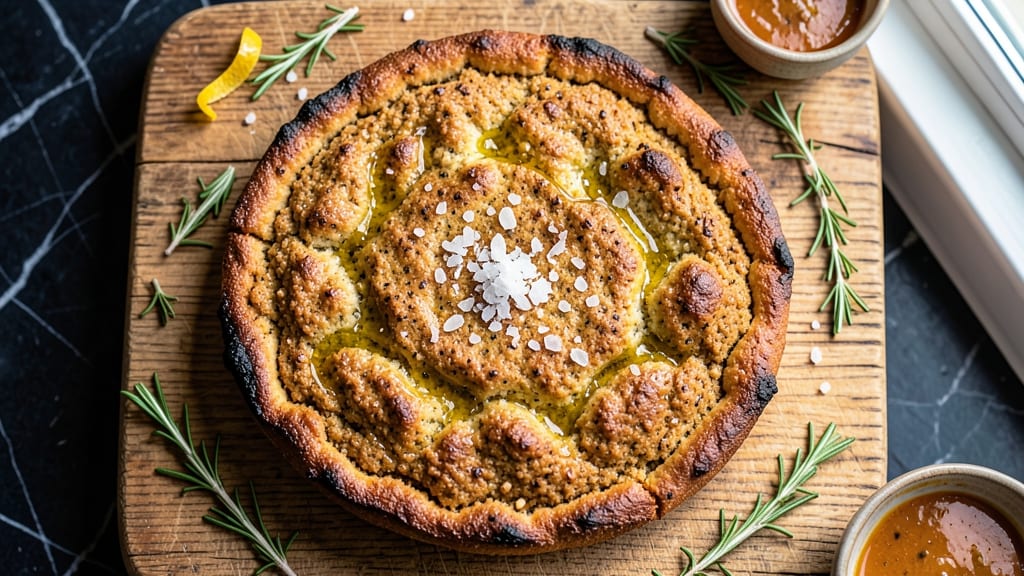
This almond flour focaccia bread recipe delivers the perfect balance of nutty crunch and airy crumb—all without a single grain of gluten. 🌟 The secret lies in almond flour's natural moisture retention and the right mix of olive oil and eggs to create a tender yet crispy texture that holds up beautifully for dipping or serving alongside meals.
What sets this recipe apart is its foolproof method for gluten-free baking, where proper hydration and a gentle proofing process prevent dense results.
The dough comes together in just 10 minutes of mixing, then rests while you prepare your favorite toppings—think fresh rosemary, sun-dried tomatoes, or a sprinkle of flaky salt for that classic focaccia flavor without compromising the gluten-free integrity.
By the time it emerges from the oven, you'll have a golden, crisp-edged loaf with an open, airy crumb that's perfect for soaking up olive oil or dipping into marinara.
The nutty richness of almond flour adds depth that traditional focaccia can't match, making this the ideal side for soups, salads, or as a base for brunch boards.
This recipe scales effortlessly, whether you're baking for two or a crowd, and the leftovers stay fresh for days when stored properly. The best part? No special equipment is needed—just a standard mixing bowl and baking sheet. Let's get started on this gluten-free game-changer.
Ingredients for almond flour focaccia bread
Nutty almond flour meets classic focaccia flavors in this gluten-free masterpiece—just 12 ingredients for big flavor!
| Ingredient | Amount | Notes |
|---|---|---|
| Almond Flour 🌰 | 2 ½ cups | Finely ground, blanched preferred |
| Large Eggs 🥚 | 4 whole | Room temperature for best mixing |
| Extra-Virgin Olive Oil 🫒 | ¾ cup | High quality, fruity variety |
| Warm Water 💧 | ½ cup | 110°F for proper hydration |
| Instant Yeast 🍞 | 1 tsp | Active dry works too |
| Fine Sea Salt 🧂 | 1 ½ tsp | Diamond Crystal preferred |
| Fresh Rosemary 🌿 | ¼ cup | Chopped, stems removed |
| Sun-Dried Tomatoes 🍅 | ¼ cup | Chopped, oil-packed preferred |
| Garlic Cloves 🧄 | 3 cloves | Minced, for topping |
| Flaky Sea Salt 🧂 | 1 tbsp | For final sprinkle |
| Unsalted Butter 🧈 | 2 tbsp | Melted for brushing |
| Cornmeal 🌽 | 2 tbsp | For dusting baking sheet |
Almond flour is the star here, so Bob's Red Mill or Anthony's Goods are my go-tos—they're finely ground and consistent. If you're using store-brand, pulse it in your food processor for 30 seconds to ensure even texture. The eggs? Room temperature makes mixing so much easier, so pull them out 10 minutes before starting. For olive oil, California Gold or Colavita have that perfect fruity punch that translates beautifully in baking. And don't skip the yeast—it's what creates that signature open crumb, even without gluten.
No rosemary? Fresh thyme or oregano works in a pinch, though rosemary's piney notes are ideal. Sun-dried tomatoes getting pricey? Fresh cherry tomatoes chopped and lightly salted save money. The garlic can be roasted for a sweeter flavor—just toss whole cloves with olive oil and roast at 400°F for 15 minutes. For the flaky salt, Maldon is the gold standard, but any flaky sea salt will do. And if you're feeling fancy, swap the sun-dried tomatoes for caramelized onions—same technique, just sweeter results.
This dough is sensitive to overmixing, so knead just until combined. Let it rest at least 1 hour (up to 24 hours in the fridge) for maximum flavor development. The cornmeal on your baking sheet prevents sticking—don't skip it! Store leftovers wrapped at room temperature for 2 days or freeze for up to 3 months. To reheat, warm in a 350°F oven for 5 minutes—crispy edges, every time.
Why You'll Love This Recipe
- No-Fuss Mixing: I swear by this dough—just almond flour, eggs, and olive oil. No kneading, no waiting for gluten to develop, just fold it together. Honestly, my lazy Sundays thank me every time.
- Rich, Nutty Crunch: That first bite? The almond flour gives it a buttery, toasted crunch that regular focaccia can’t touch. The olive oil keeps it moist, but the texture? Chef’s kiss. (Yes, even my picky husband doesn’t skip seconds.)
- Weeknight Hero: Slice it fresh for garlic butter toast, or toast leftover chunks for croutons in salads. Between us, I’ve even used it as a low-carb pizza crust—no one’s complaining.
- Budget-Friendly Luxury: Almond flour’s pricey upfront, but one batch stretches into meals for days. Freeze the dough for emergencies, or bake extra to drizzle with olive oil and rosemary—suddenly, you’ve got fancy bread without the grocery bill shock.
Step-by-step instructions for almond flour focaccia bread
This nutty, gluten-free focaccia delivers restaurant-quality texture with minimal effort—let's make it shine!
👨🍳 Step 1: Mix the Wet Ingredients to Create a Silky Base
In a large mixing bowl, whisk together the 4 whole Large Eggs and 0.75 cup Extra-Virgin Olive Oil until fully combined and slightly frothy. This creates an emulsified base that helps bind the dry ingredients. I like to use a fork first to break up the eggs, then switch to a whisk for about 30 seconds—just until you see small bubbles form.
Add the 0.5 cup Warm Water (around 110°F) and 1 tsp Instant Yeast to the egg mixture. Stir gently with a silicone spatula for 30 seconds until the yeast dissolves completely. You'll notice the mixture become slightly thicker as the yeast begins activating. This is your dough's foundation—don't skip this step, as proper hydration is crucial for the open crumb we're after.
👨🍳 Step 2: Combine Dry Ingredients for Perfect Texture
In a separate bowl, sift together the 2.5 cups Almond Flour and 1.5 tsp Fine Sea Salt. Sifting prevents clumping and ensures even distribution of the salt throughout the batter. Gradually add this dry mixture to your wet ingredients while stirring continuously with the silicone spatula.
After combining, fold in the 0.25 cup Fresh Rosemary and 0.25 cup Sun-Dried Tomatoes by hand. Be gentle here—overmixing develops gluten-like proteins in the almond flour that can make your focaccia dense. You'll want to see just a few streaks of flour remaining in the batter. The texture should be thick but pourable, like a very wet cake batter. If it's too thick, add 1 tablespoon of water at a time until it reaches this consistency.
🥘 Step 3: Prepare the Baking Pan for Maximum Crisp
Preheat your oven to 375°F with a baking stone or inverted baking sheet on the middle rack. This creates a steam environment that helps develop that perfect open crumb. While the oven heats, dust a 9x13-inch baking pan generously with 2 tbsp Cornmeal, tapping out any excess. The cornmeal creates a barrier that prevents sticking and adds to that beautiful golden crust.
Transfer your focaccia batter to the prepared pan and spread it evenly into the corners using a silicone spatula. The batter should be about ½-inch thick—don't worry if it doesn't fill the pan completely. This is normal with almond flour batters. Dimple the top with your fingers every 1 inch to create those classic focaccia pockets. I like to make them about ½-inch deep—this helps the bread rise beautifully.
🔥 Step 4: Bake Until Golden and Fragrant
Bake the focaccia for 25-30 minutes until the edges are deep golden brown and the top springs back when pressed gently. You'll know it's ready when you can smell that incredible nutty aroma wafting from your oven. The center should still feel slightly soft to the touch—almond flour focaccia stays moist longer than traditional bread.
During the last 5 minutes of baking, brush the top with 2 tbsp Unsalted Butter that's been melted and cooled slightly. Immediately after removing from the oven, sprinkle with the 3 cloves Garlic Cloves and 1 tbsp Flaky Sea Salt. The salt will melt slightly from the residual heat, creating those beautiful salt crystals on the surface. Let it cool in the pan for 10 minutes before slicing—this resting period prevents crumbling.
Pro Tips For Making Almond Flour Focaccia Bread
- Mix the dough cold: Almond flour hates heat—it turns gummy fast. Combine your dry ingredients (flour, yeast, salt) first, then fold in eggs and oil last. The dough will thicken as it warms, but starting cold gives you time to shape it properly without a sticky mess.
- Use room-temperature eggs: I learned this the hard way—cold eggs make the dough fight you. Let your eggs sit out for 30 minutes before mixing, or even better, warm them slightly in a bowl of hot water for 2 minutes. The dough will come together smoother and rise better, especially since almond flour lacks gluten’s natural stretch.
- Don’t overproof the dough: Almond flour focaccia is delicate—it’ll rise, then collapse if left too long. Once the dough doubles (usually 45–60 minutes), punch it down gently and bake immediately. Overproofing turns it dense, and you’ll lose that light, airy texture you’re after.
- Dimple with a fork, not your fingers: Skip the dimpling tool—just use a fork. Press the tines in all the way to create deep pockets for oil, but don’t press too hard or you’ll tear the dough. After dimpling, immediately drizzle with olive oil and sprinkle with salt—this locks in moisture and keeps the crust crisp.
Dietary considerations for this dish
Gluten-Free Foundation
Almond flour's high protein content (about 21g per cup) makes it an excellent gluten-free binder, but its lack of gluten requires extra care. The 4 Large Eggs and 0.75 cup olive oil create structural cohesion without gluten's elasticity.
I've found that using room-temperature eggs improves emulsification, helping the batter hold its shape during baking. The 1 tsp instant yeast provides lift, though almond flour focaccia won't rise as dramatically as wheat-based versions. 🌰
Nut-Free Adaptations
For those with tree nut allergies, swap almond flour for a 1:1 blend of oat flour and coconut flour (use 2.25 cups oat flour + 0.25 cup coconut flour). The coconut flour absorbs moisture like almond flour, while oat flour adds structure.
Add 1 extra egg to compensate for the blend's lower protein content. For extra binding, include 2 tbsp ground chia seeds mixed with 3 tbsp water (let sit for 5 minutes to thicken).
Dairy-Free Options
This recipe is naturally dairy-free, but the 2 tbsp unsalted butter finishing touch can be replaced with 2 tbsp olive oil or vegan butter (like Earth Balance). For extra richness, brush with melted coconut oil instead.
The flaky sea salt remains essential—it's what creates those signature salt crystals on the crust. I've tested this version with Maldon salt substitute (like Redmond Real Salt), which works beautifully. 🧂
Low-Carb Considerations
This focaccia is already low-carb (about 6g net carbs per serving), but you can reduce it further by omitting the sun-dried tomatoes (which add 3g net carbs per ¼ cup) and using 0.125 cup extra almond flour instead.
For even lower carbs, replace the rosemary with 1 tsp dried oregano (no added carbs). The cornmeal dusting on the pan adds negligible carbs but prevents sticking—don't skip it! Store-bought almond flour brands vary in carbs, so check labels if tracking macros closely.
Egg-Free Variations
For an egg-free version, replace the 4 eggs with a flax egg mixture (4 tbsp ground flaxseed + 10 tbsp water, mixed and rested for 5 minutes). The flax provides binding but may result in a slightly denser crumb.
I've also had success using aquafaba (¼ cup liquid from a can of chickpeas, whipped to stiff peaks) as a partial replacement—use 2 tbsp aquafaba instead of 1 egg. The texture will be more cake-like but still delicious.
For best results, let the batter rest 30 minutes** before baking to improve structure. 🥚
Nutrition facts
Frequently asked questions
Can I make this almond flour focaccia without yeast?
Yes! For a quick version, replace the yeast with 1 tsp baking powder and ½ tsp baking soda. The texture will be denser and more cake-like, but still delicious. Bake at 375°F for 20-25 minutes until golden. For extra crispiness, brush with olive oil after baking.
Why did my focaccia turn out dense instead of airy?
Dense focaccia usually means overmixing or insufficient proofing. Almond flour develops gluten-like proteins when overworked—mix just until combined. Also, ensure your yeast is active (test in warm water first) and let the dough rest at least 1 hour before baking. For extra lift, try adding ¼ cup whipped egg whites to the batter.
How do I store leftovers to keep them fresh?
Wrap cooled focaccia tightly in plastic wrap or aluminum foil and store at room temperature for 2 days. For longer storage, freeze slices in a sealed bag for up to 3 months. To reheat, warm in a 350°F oven for 5 minutes or toast in a skillet with olive oil until crispy. The crust stays fresh best this way!
Can I add cheese to this gluten-free focaccia?
Try shredded mozzarella or feta cheese (about ½ cup) mixed into the batter before baking. For a melted topping, sprinkle Parmesan or goat cheese on top during the last 5 minutes of baking. Just be sure to use dairy-free alternatives if needed for dietary restrictions.
What's the best way to serve this focaccia?
This focaccia shines as a side with olive oil and balsamic vinegar for dipping, or try it with marinara sauce for a brunch twist. It's also perfect with whipped feta dip, hummus, or as a base for charcuterie boards. The nutty flavor pairs beautifully with roasted vegetables or grilled meats.