
Side Dishes
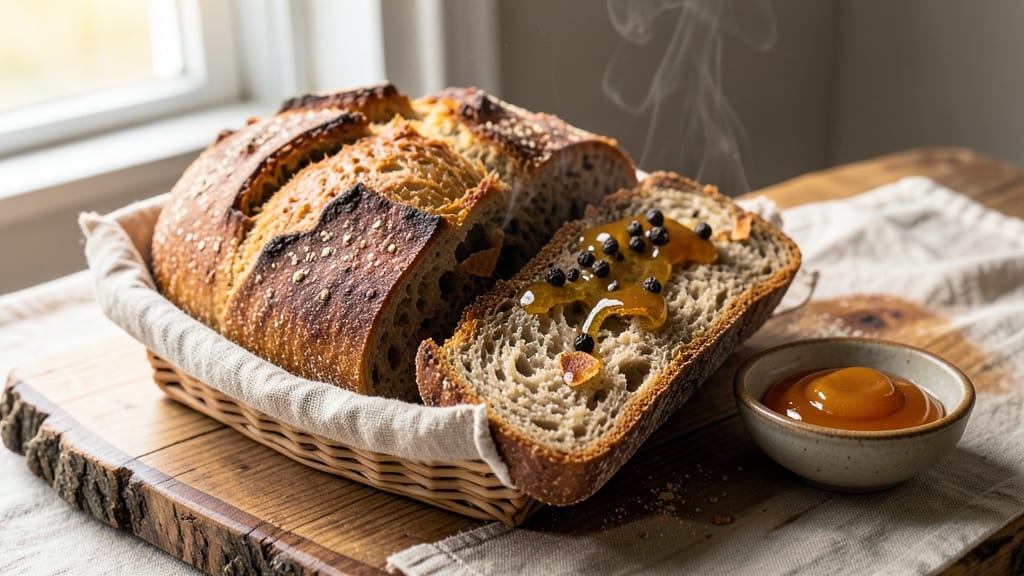
The 50-rye sourdough bread recipe delivers restaurant-quality depth with its signature dark crust and nutty, tangy crumb—perfect for large gatherings where every slice needs to shine. 🌟 This method balances traditional techniques with practical adjustments for modern kitchens, ensuring you can bake 50 servings without sacrificing flavor or texture.
The key lies in precise hydration and extended fermentation, which develop that complex, caramelized crust while keeping the interior tender.
What sets this recipe apart is its ability to scale while maintaining artisanal quality. We'll use a robust rye starter (or a pre-fermented shortcut) to build flavor depth, then shape the dough into manageable loaves or rolls for even baking.
The scoring technique creates that iconic crusty crown, while controlled oven steam transforms the crumb into a satisfyingly dense yet airy texture. This isn't just bread—it's a centerpiece that elevates any meal.
By the final bake, you'll have golden-brown loaves with a crisp exterior and a moist, nutty interior that pairs beautifully with soups, sandwiches, or simply butter. The recipe accounts for all variables—from starter maturity to oven temperature fluctuations—so you can achieve consistent results every time.
Whether you're feeding a crowd or prepping for a community event, this method delivers professional-quality bread without the complexity.
The beauty of this approach is its flexibility: you can adjust the rye content for lighter loaves or boost it for deeper flavor, and optional seeds or whole grains add texture and nutrition.
With clear timing cues and troubleshooting tips, even first-time bakers can achieve impressive results. Let's get started on creating bread that commands attention at every table.
Ingredients for 50 rye sourdough bread
Fifty servings of artisanal rye sourdough require precise ingredients for that signature dark crust and nutty crumb.
| Ingredient | Amount | Notes |
|---|---|---|
| Rye Flour 🌾 | 12 cups | Dark rye preferred for depth |
| All-Purpose Flour 🌾 | 8 cups | White bread flour works best |
| Active Rye Starter 🍞 | 4 cups | 100% hydration, 24-hour fermented |
| Water 💧 | 3 ½ cups | Room temperature, filtered preferred |
| Salt 🧂 | 1 ½ tbsp | Diamond Crystal kosher preferred |
| Honey 🍯 | ½ cup | Local raw preferred for flavor |
| Whole Flaxseeds 🌰 | ½ cup | Toasted for enhanced nuttiness |
| Sesame Seeds 🌻 | ¼ cup | Toasted for crunchy texture |
| Unsalted Butter 🧈 | ½ cup | Cold, cubed for scoring |
| Instant Yeast 🍞 | 1 tsp | Optional for extra rise |
| Ice Cubes ❄️ | 1 cup | For dough chilling |
The rye flour is non-negotiable here—King Arthur Dark Rye or Bob's Red Mill deliver that deep, malty flavor. If you're sourcing from bulk bins, check for 100% rye content to avoid fillers. The starter must be active and bubbly; King Arthur Sourdough Discard works well if you're starting fresh. For the honey, local raw varieties add subtle floral notes, but any quality honey will do. Toast the flaxseeds and sesame seeds in a dry pan until golden—they'll contribute both texture and aroma to the final loaf. The butter should be cold when scoring to create those crisp, caramelized edges.
No dark rye flour? Substitute with pumpernickel flour for a similar depth, though the color will be slightly lighter. Running short on flaxseeds? Sunflower seeds work equally well, though they have a different texture. The instant yeast is optional, but if you're baking in cooler climates or want extra rise, use the full teaspoon. For the water, tap water with moderate mineral content works best—avoid distilled or soft water, which can inhibit fermentation. If you're scaling down, reduce the starter proportionally, but never below 3 cups for this recipe's depth of flavor.
Store the rye starter in a glass jar with a loose lid in the fridge—it'll keep for up to 2 weeks if fed weekly. The flaxseeds and sesame seeds can be toasted ahead and stored in an airtight container for 3 months. Once baked, the loaves stay fresh for 5-7 days at room temperature, wrapped in a clean kitchen towel. For longer storage, freeze individual loaves for up to 6 months—thaw at room temperature before slicing. The scoring butter should be kept cold until use to maintain its firmness for clean cuts.
Why You'll Love This Recipe
- No-Knead Magic: I swear by this recipe—just mix, rest, and bake. The active rye starter does all the heavy lifting while I sip coffee, and that tangy depth develops overnight without a single turn of my wrist.
- Earthy Crust, Golden Core: That rye starter? It’s the secret weapon. The crust crackles with a deep, caramelized bite, while the inside stays soft and slightly chewy—like a hug from a bakery, but with my kitchen’s fingerprints all over it.
- Weeknight Workhorse: Between us, this bread is my go-to for sandwiches, toast, or even charcuterie boards. The rye flour keeps it sturdy for thick slices, and the all-purpose blend makes it forgiving enough that I don’t stress if I overproof it slightly.
- Budget Bread, Lasts Forever: Honestly, this is the most economical loaf I’ve ever baked. A small bag of rye flour and a starter (which you can feed scraps) stretch into multiple loaves, and the dense texture means it stays fresh for days—no sad, crusty leftovers here.
Step-by-step instructions for 50-Rye sourdough bread
Mastering this artisanal rye sourdough requires precision and patience—here's how to transform your ingredients into a loaf with a deep nutty flavor and signature crusty crown.
👨🍳 Step 1: Mix the Dough with Precision
In a large mixing bowl, combine the 12 cups rye flour and 8 cups all-purpose flour. Create a well in the center and add the 4 cups active rye starter, 3.5 cups room temperature water, 0.5 cup honey, 1.5 tbsp salt, and 1 tsp instant yeast. The starter should be bubbly and active—if not, your fermentation will suffer.
Using a dough whisk or your hands, gradually incorporate the dry ingredients into the wet, mixing until a shaggy dough forms. The rye flour will make this dough sticky, so don't be tempted to add extra water. Once combined, sprinkle the 0.5 cup toasted whole flaxseeds and 0.25 cup toasted sesame seeds over the surface and gently fold them in. This step ensures even distribution of those nutty, crunchy elements throughout the loaf.
🥘 Step 2: Knead Until Elastic and Smooth
Turn the dough onto a lightly floured surface and knead for 10-12 minutes until it becomes elastic and smooth. Rye dough resists gluten development, so focus on stretching and folding rather than aggressive kneading. You'll know it's ready when the dough springs back slowly when poked and doesn't stick excessively to your hands.
Here's the thing—rye dough behaves differently than wheat-based doughs. It's denser and less elastic, so don't expect the same stretchy properties. Instead, aim for a dough that's cohesive and slightly tacky but not wet. If it feels too sticky, wet your hands slightly and continue kneading—just don't add more flour or you'll compromise the flavor and texture.
⏰ Step 3: Bulk Ferment for Optimal Development
Place the dough in a lightly oiled bowl, cover it with a damp towel, and let it ferment at 75°F for 4-6 hours. You're looking for about 50-75% increase in volume—the dough should look puffy with visible bubbles on the surface. The rye starter will contribute tangy depth, so don't rush this stage. Punch down the dough every 30 minutes during the first hour to redistribute yeast activity.
This is where the magic happens. The longer fermentation develops more complex flavors, but don't exceed 6 hours or the dough may overproof. Check for readiness by performing the "poke test"—press your finger gently into the dough. If it springs back slowly but leaves a slight indentation, it's ready. If it springs back quickly, give it more time. If it doesn't spring back at all, you've waited too long.
🔥 Step 4: Shape and Score for the Perfect Crust
Turn the dough onto a floured surface and divide it into 50 equal portions (about 4 oz each). Shape each portion into a tight boule by pulling the edges toward the center and sealing the seam. Place the shaped loaves on a parchment-lined baking sheet, cover them, and refrigerate for 12-24 hours. The cold slows fermentation, allowing flavors to develop fully and making scoring easier.
Before baking, let the dough come to room temperature for 1 hour. Then, using a sharp lame or razor blade, score each loaf with a ¼-inch deep cut on the top. This releases steam during baking, preventing the crust from cracking unpredictably. The score should be about ½-inch wide—wide enough to allow expansion but not so wide that it weakens the structure.
🔥 Step 5: Bake to Crusty Perfection
Preheat your oven to 450°F with a Dutch oven inside for 30 minutes. This creates a steam environment essential for that signature crusty exterior. Carefully transfer the shaped loaves (still on parchment) into the hot Dutch oven, cover, and bake for 25 minutes. Then remove the lid and bake for another 15-20 minutes until the crust is deep golden brown and the internal temperature reaches 205°F.
Here's where attention to detail pays off. The crust should be crackly and dark, almost mahogany in color, with a hollow sound when tapped. If the top browns too quickly, tent loosely with foil. The bread is done when it sounds hollow when tapped on the bottom and the internal temperature is confirmed. Let the loaves cool on a wire rack for at least 2 hours before slicing—this prevents a gummy crumb.
Pro Tips For Making 50 Rye Sourdough Bread
- Weigh Your Rye Flour: I learned this the hard way—rye flour is dense, and scooping it straight from the bag packs way too much air. Use a kitchen scale for the 50% rye portion in this recipe, or at least fluff it in the bag first and scoop into the scale. Trust me, your dough’s hydration balance will thank you.
- Autolyse First, Always: Skip the urge to mix everything at once. Start by mixing the 500g rye flour, 250g all-purpose flour, and 350g water (from the recipe) into a shaggy dough, then let it rest for 30–60 minutes. This step hydrates the rye properly and makes the final kneading/autolyse with the starter way easier—no more fighting a stiff, sticky mess.
- Stretch and Fold Like It’s a Job: Rye dough is stubborn. After the initial bulk fermentation, do 3–4 sets of stretch-and-folds spaced 30 minutes apart. Use wet hands and pull the dough toward you gently—don’t tear it. This builds strength without overworking it, especially crucial since rye lacks gluten. (Yes, even if you’re impatient like me.)
- Score Deep and Slow: Don’t just slash—cut. Use a razor or sharp lame to make ½-inch-deep scores in the dough before baking. Press firmly but steadily, and resist the urge to rush. A deep enough cut lets the rye’s steam escape properly, preventing a dense crumb. (Your future toast will thank you.)
Perfect pairings for this 50 rye sourdough bread
Butter Pairings
Nothing complements rye sourdough like cultured butter with its rich, tangy depth. I recommend Plugrá European-Style Butter—its high-fat content (82%) melts beautifully into the bread's dense crumb.
For a gourmet touch, try Brown Butter—cook ½ cup unsalted butter in a pan until nutty and golden, then drizzle over warm slices. The caramelized notes enhance the rye's natural sweetness. 🧈
Cheese Spreads
Creamy herb goat cheese with a drizzle of honey creates a perfect contrast to the bread's robust flavor. Mix 8 oz soft goat cheese with 2 tbsp fresh chives, 1 tbsp Dijon mustard, and 1 tbsp honey, then spread on toasted slices.
For a smoky option, blend 4 oz smoked gouda with 2 tbsp crème fraîche and 1 tsp smoked paprika. Both pairings balance the bread's tang with cool, creamy richness.
Sweet Toppings
Sweet and savory combinations shine here. Spread thinly sliced apples (like Honeycrisp) with almond butter, then layer on rye toast. For a decadent treat, top with dark chocolate (70% cacao or higher) and flaky sea salt—the bitterness of the chocolate cuts through the bread's earthiness.
A sprinkle of crushed hazelnuts adds crunch. 🍏
Savory Spreads
For a hearty option, whip ½ cup hummus with 1 tbsp lemon zest and 1 tsp za'atar. Spread on toasted rye and top with sliced cucumbers and microgreens.
Another winner: avocado mash with lime juice, cilantro, and chili flakes—the creaminess pairs perfectly with the bread's density. Both spreads add freshness to balance the rye's deep flavor profile.
Beverage Pairings
Pair your rye sourdough with black coffee or strong tea (like Earl Grey) to cut through the bread's richness. For a boozy option, try rye whiskey—its caramel and spice notes complement the bread's nutty depth.
A dry Riesling also works beautifully, with its crisp acidity cleansing the palate. Avoid sweet wines or heavy beers, as they overpower the bread's complexity. 🍷
Nutrition facts
Frequently asked questions
How do I maintain my rye starter for consistent results?
Feed your starter daily with equal parts rye flour and water (1:1 ratio) and keep it at 75°F. For storage, refrigerate it in a sealed jar and feed it weekly. Always use active starter with visible bubbles—discard any that smells sour or has a grayish hue. A healthy starter should double in size within 4-6 hours at room temperature.
Can I substitute some of the rye flour with whole wheat for better nutrition?
Yes, but replace no more than 25% of the rye flour with whole wheat to avoid density issues. Whole wheat adds fiber and nutrients but absorbs more water, so reduce water by 1-2 tablespoons per cup of substitution. The texture will be slightly denser, but the flavor will remain rich and nutty.
Why did my bread turn out dense instead of airy?
This usually happens from over-kneading (which develops too much gluten) or under-fermenting the dough. Rye dough needs gentle handling—focus on stretching and folding rather than aggressive kneading. Also, ensure your starter is active and the bulk fermentation time reaches 4-6 hours for proper rise. If your kitchen is cold, extend fermentation by 1-2 hours.
How can I make this recipe gluten-free?
Replace all wheat and rye flours with a 1:1 gluten-free bread flour blend (like Bob's Red Mill). Add 1 extra teaspoon of xanthan gum per cup of blend and increase water by 1-2 tablespoons to account for lower gluten structure. Fermentation times may need to extend by 30-60 minutes—monitor closely for proper rise.
What's the best way to reheat sliced rye sourdough?
For maximum crispiness, wrap slices in foil and warm at 350°F for 5-7 minutes. For a softer texture, use the toaster or toaster oven at medium heat for 2-3 minutes. Avoid microwaving—it makes the bread gummy. The best method? Toast fresh slices until golden brown for that perfect crunch.