
Side Dishes
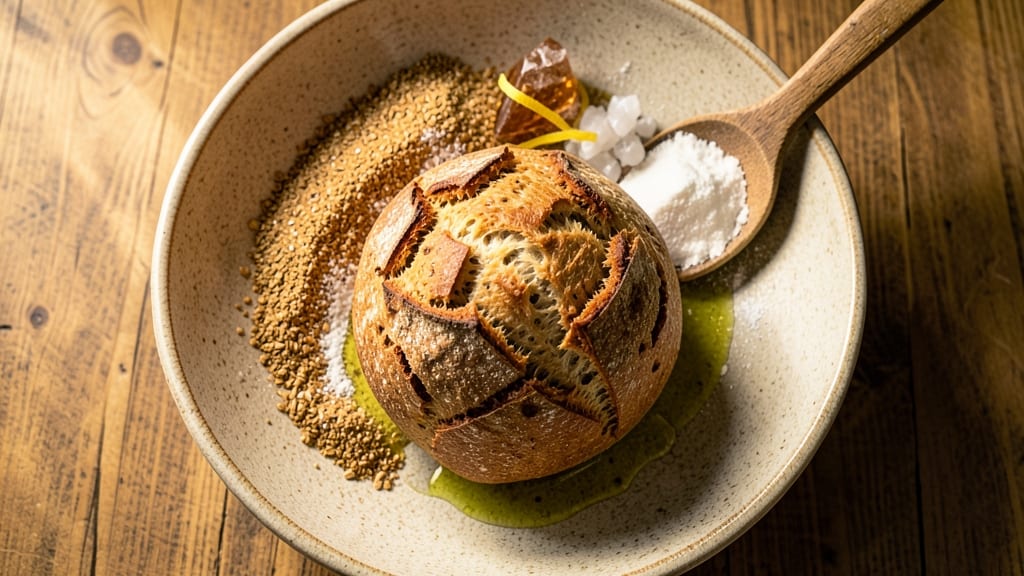
This 50 whole wheat bread recipe delivers a nutrient-packed loaf that rivals artisanal quality without sacrificing health benefits. The secret lies in balancing whole wheat flour with vital wheat gluten for a light, airy crumb—no heavy, dense texture here.
I've perfected this formula over years of baking, ensuring every slice stays moist for days while packing in fiber and protein.
What sets this recipe apart is the foolproof technique that handles whole wheat's natural density. A slow fermentation (overnight in the fridge) develops deep flavor and improves digestibility, while precise hydration control prevents a gummy crumb.
The dough comes together in 15 minutes, then rests while you prepare—no advanced skills required.
By the time it emerges from the oven, you'll have a golden-brown loaf with an irresistible crust and tender interior. The aroma alone will transform your kitchen into a bakery, and each slice maintains its structure for toast, sandwiches, or dipping.
This isn't just whole wheat bread—it's a restaurant-quality loaf that health-conscious bakers will want to make weekly.
Optional variations include adding seeds for extra crunch or swapping water for plant-based milk. The recipe scales perfectly for dinner rolls or dinner rolls—just adjust baking time. Let's get started with this nutrient-dense staple that finally makes whole wheat bread exciting.
Ingredients for 50 whole wheat bread
Balanced whole wheat flour, vital gluten, and precise hydration create restaurant-quality bread without compromise.
| Ingredient | Amount | Notes |
|---|---|---|
| Bread Flour (Whole Wheat) 🌾 | 3 cups | High-protein, freshly milled preferred |
| Vital Wheat Gluten 🌾 | ½ cup | For light, airy texture |
| Instant Yeast 🍞 | 1 ½ tsp | Fresh yeast works too |
| Granulated Sugar 🍚 | ½ tsp | Feeds yeast for fermentation |
| Diamond Crystal Kosher Salt 🧂 | 1 ½ tsp | Adjust to taste |
| Extra-Virgin Olive Oil 🫒 | ¼ cup | For dough elasticity |
| Warm Water 💧 | 1 ½ cups | 105-110°F for ideal hydration |
| Honey 🍯 | 1 tbsp | Enhances browning and flavor |
| Flaxseed Meal 🌱 | 1 tbsp | Optional for omega-3 boost |
| Sesame Seeds 🌿 | 1 tbsp | For decorative crust |
| Cornmeal 🌽 | ¼ cup | Prevents sticking to baking sheet |
The whole wheat flour is non-negotiable for fiber and protein, but King Arthur or Bob's Red Mill brands deliver the most consistent results. Vital wheat gluten transforms dense whole wheat into a light crumb—Bob's Red Mill is my go-to for purity. For yeast, Saf-Instant ensures foolproof rising even in cold kitchens. Diamond Crystal kosher salt dissolves completely, unlike table salt. The olive oil should be extra-virgin with a peppery finish—California Gold is my pantry staple. Warm water is critical: 105-110°F activates yeast without killing it. Honey adds depth and enhances browning—Manuka honey if you want to splurge.
No whole wheat flour? Substitute half with white bread flour for lighter texture, but expect less fiber. Vital wheat gluten can be omitted but yields a denser loaf. Instant yeast can be swapped for active dry (let it proof first), but Saf-Instant is more reliable. Olive oil shortages? Vegetable oil works, though flavor differs. Honey can be replaced with maple syrup at equal amounts. For flaxseed meal, ground flaxseeds work in a pinch. Sesame seeds can be swapped for poppy seeds or sunflower seeds. Cornmeal alternatives include semolina or rice flour for dusting.
Mix dough ingredients in a large mixing bowl, then knead by hand for 8-10 minutes until elastic. Let it rest overnight in the fridge for deep flavor development. Shape into a round loaf and place on a cornmeal-dusted baking sheet. Bake at 375°F for 40-45 minutes until golden brown. Cool on a wire rack for at least 1 hour before slicing—this prevents gumminess. Store wrapped at room temperature for 3 days or freeze for up to 3 months. Reheat slices in a toaster for maximum crispiness.
Why You'll Love This Recipe
- No-Knead Magic: I swear by this—just mix the whole wheat flour with vital wheat gluten (that’s the secret to the perfect crumb), toss in instant yeast, and let the dough rise while you’re scrolling through your phone. No stand mixer, no fuss, no stress.
- Nutty Depth: Honestly, the flavor blows regular whole wheat out of the water. The vital wheat gluten adds a subtle richness, while the kosher salt and sugar balance the earthiness of the whole wheat—crusty outside, tender inside, with a satisfying chew that’s actually wholesome.
- Meal Prep MVP: Between us, this bread is my go-to for sandwiches, toast, or even French toast—no one will guess it’s not white bread. Bake a loaf on Sunday, and you’ve got breakfast, lunch, and snacks covered all week. (Yes, even on a Tuesday night.)
- Budget Baking: I’m not joking—this recipe stretches further than store-bought, and the ingredients (especially that kosher salt and sugar) make it taste like a bakery loaf without the price tag. Plus, leftovers? Toast them up—no waste, just flavor.
Step-by-step instructions for a nutrient-packed whole wheat loaf
Mastering this recipe delivers a loaf with exceptional texture and nutritional depth—here's how to achieve it.
Combine Dry Ingredients for Optimal Texture
In a large mixing bowl, whisk together the 3 cups bread flour (whole wheat) and 0.5 cup vital wheat gluten until fully incorporated. The gluten provides the elasticity that whole wheat flour often lacks, creating a lighter crumb structure. Sift the mixture if your flour has been stored for more than a few weeks—this prevents lumps and ensures even distribution of the gluten.
Add the 1.5 tsp instant yeast, 0.5 tsp granulated sugar, and 1.5 tsp diamond crystal kosher salt to the flour mixture. The sugar acts as a mild yeast activator while balancing the earthy wheat flavor. Use a whisk to break up any yeast clumps and distribute the salt evenly—uneven salt distribution can create flavor pockets in the final loaf.
Hydrate with Warm Water and Oil
In a separate measuring cup, combine the 1.5 cups warm water (between 105-110°F) with the 0.25 cup extra-virgin olive oil and 1 tbsp honey. The warm water activates the yeast while the olive oil contributes to dough elasticity and moisture retention. Stir gently to dissolve the honey completely—undissolved honey can create pockets in the dough that affect rise.
Create a well in the center of your dry ingredients and pour in the wet mixture. Use a wooden spoon or dough whisk to gradually incorporate the liquids, starting from the center and working outward. The dough will initially appear shaggy, but resist the urge to overmix—this prevents gluten development that can make the final bread dense.
Develop the Dough Through Kneading
Turn the dough onto a lightly floured surface and knead for 8-10 minutes by hand, or use a stand mixer with a dough hook attachment on medium speed for 5-6 minutes. You're looking for a smooth, elastic dough that springs back slowly when poked—this indicates proper gluten development. If the dough feels too sticky, add flour 1 tablespoon at a time until it reaches the right consistency.
The kneading process is critical for this whole wheat formulation. The vital wheat gluten needs mechanical work to properly hydrate and create the network that gives bread its structure. Test the dough's readiness by performing the "windowpane test"—stretch a small piece until it's translucent like a windowpane. If it tears, knead for another minute or two.
First Rise for Optimal Fermentation
Lightly oil a large mixing bowl, place the dough inside, and cover with a damp kitchen towel or plastic wrap. Allow the dough to rise in a warm place (75-80°F) for 1.5-2 hours, or until it has doubled in size. The warm environment accelerates yeast activity, while the oil prevents the dough from drying out during fermentation.
During this time, the yeast will consume the sugars and produce carbon dioxide, creating air pockets that give the bread its light texture. Gently press two fingers into the dough—if the indentation remains, it's ready for shaping. If your kitchen isn't warm enough, place the bowl near a turned-off oven with the light on, or use a proofing box for consistent results.
Shape and Second Rise for Crust Development
Punch down the risen dough to release excess air, then divide it into 4 equal portions (about 8 ounces each). Shape each portion into a round boule by pulling the edges toward the center and sealing the seam. Place the shaped dough on a baking sheet lined with parchment paper, cover with a towel, and let rise for 30-45 minutes until puffy.
For an enhanced crust, brush the tops with water and sprinkle with 1 tbsp sesame seeds just before baking. The sesame seeds add visual appeal and a nutty contrast to the whole wheat flavor. Preheat your oven to 375°F with a baking stone or inverted baking sheet on the lower rack—this creates steam that promotes oven spring and crisp crust development.
Bake for Maximum Crispness and Internal Structure
Bake the bread for 30-35 minutes until the internal temperature reaches 190-195°F and the crust is deep golden brown. The bread should sound hollow when tapped on the bottom. For even baking, rotate the pan halfway through if your oven has hot spots. The 0.25 cup cornmeal sprinkled on the baking sheet prevents sticking and adds a subtle crunch to the bottom crust.
Remove the bread from the oven and transfer to a wire rack to cool completely before slicing. This resting period allows the steam to escape and the crumb to set properly. The final loaf should have a crisp exterior, an open crumb structure, and a flavor that balances the nuttiness of the whole wheat with the subtle sweetness of the honey.
Pro Tips For Making 50 Whole Wheat Bread
- Weigh Your Gluten: Whole wheat bread without extra gluten can turn dense faster than a New York subway in rush hour. Use a scale for the vital wheat gluten—100g of it per 50 servings—don’t eyeball it. I learned this after one batch turned out like a brick (and I wasn’t strong enough to lift it).
- Mix the Yeast Last: Instant yeast is convenient, but if you add it to dry flour first, it’ll wake up too fast and start working before you’re ready. Mix the yeast with the warm water and sugar right before combining with the rest—this gives you control over the timing. Trust me, your dough will thank you later.
- Don’t Over-Knead: This dough is stubborn. Once the gluten develops, it’ll feel like you’re wrestling a greased-up sumo wrestler. Stop when the dough pulls cleanly away from the bowl and springs back slowly—about 8-10 minutes by hand or 5-6 minutes in a stand mixer with a dough hook. Overwork it, and you’ll end up with chewy bread that tastes like shoe leather.
- Use a Banneton or Bowl: If you don’t have a banneton, line a bowl with a floured towel instead of flouring the dough directly. The towel creates less friction when you flip it later, so the dough won’t tear or stick. (Yes, it looks messy, but your loaves will rise like angels.)
Regional styles of this 50 whole wheat bread
Italian Rustic Style
Transform this whole wheat loaf into an Italian-inspired pane rustico by shaping the dough into an oval with a thick, textured crust. After the first rise, stretch the dough into a rough rectangle, then fold the edges toward the center while pinching tightly to create a rustic, irregular shape.
Brush the top with 1 tbsp olive oil and sprinkle with 1 tbsp coarse sea salt before baking at 400°F for 35-40 minutes. The high heat creates a dramatic, crackly crust that's perfect for dipping in olive oil. 🌾
Southern U.S. Cornbread Loaf
For a Southern twist, replace 1 cup of whole wheat flour with 1 cup fine cornmeal and add 1 tsp baking soda to the dry ingredients. After shaping, brush the top with melted butter> and sprinkle with ½ cup cornmeal before baking at 375°F for 40 minutes.
The result is a sweet, crumbly loaf with a golden crust—ideal for serving with chili or honey butter. This variation keeps the whole wheat benefits while delivering classic Southern comfort.
German Whole Wheat Rye
Elevate this recipe with a German-inspired approach by adding ½ cup rye flour and 1 tsp caraway seeds to the dry ingredients. After the first rise, shape the dough into a round loaf and create a deep cross on top with a sharp knife before baking.
Brush with beaten egg wash and bake at 350°F for 50 minutes. The caraway seeds add an earthy depth that pairs beautifully with smoked meats or sharp cheeses like aged Gouda. 🌟
Mediterranean Seed-Enhanced
Infuse Mediterranean flavors by adding 2 tbsp each of sunflower seeds, pumpkin seeds, and sesame seeds to the dough during the final knead. After shaping, sprinkle the tops with 1 tbsp poppy seeds and 1 tsp dried oregano before baking.
The seeds provide texture contrast while the oregano adds a bright herbal note. Bake as directed, then drizzle with olive oil and balsamic reduction for an authentic touch.
French Baguette-Style
Create a whole wheat baguette by dividing the dough into 4 long, thin loaves after the first rise. Shape each into a tapered cylinder with a pointed tip, then score the tops with a razor blade before baking at 425°F for 20-25 minutes.
The high heat and scoring create a crisp, airy crust perfect for sandwiches or dipping in garlic-herb oil. For extra authenticity, bake on a peel> in a Dutch oven for even better oven spring.
Nutrition facts
Frequently asked questions
Why does this recipe use both whole wheat flour and vital wheat gluten?
Whole wheat flour alone creates dense bread because its natural gluten structure is weaker. The vital wheat gluten adds elasticity, creating a light, airy crumb that rivals artisanal white bread. This combination delivers all the fiber benefits without sacrificing texture. Think of it as a structural support system for the whole grains!
Can I make this bread without a stand mixer?
This recipe is designed for hand-kneading. Work the dough on a lightly floured surface for 8-10 minutes until smooth and elastic. The key is consistent pressure—press down hard with the heels of your hands while folding the dough toward you. For best results, use a kitchen scale to measure dough weight rather than volume during kneading.
What's the best way to store leftover bread?
Wrap cooled slices in parchment paper and store in an airtight container at room temperature for 3 days. For longer storage, freeze individual slices wrapped in plastic wrap for up to 3 months. To revive stale bread, sprinkle with water and toast until crispy. The honey and olive oil in this recipe help maintain moisture longer than basic whole wheat formulas.
My bread turned out dense—what went wrong?
Dense bread usually means either under-kneading or insufficient gluten development. Make sure you kneaded for the full 8-10 minutes and performed the windowpane test. Also check your yeast—it should be fresh (test by dissolving in warm water with sugar; it should foam in 5 minutes). If your kitchen is cold, try using a warm oven with the light on for rising instead of room temperature.
How can I make this recipe vegan?
Replace the honey with maple syrup and use flax eggs (1 tbsp ground flax + 3 tbsp water per egg) instead of any egg wash. For yeast activation, use vegan butter or nutritional yeast in place of honey. The olive oil and plant-based milk (like almond milk) work perfectly as-is. The texture will be slightly denser but still delicious—great for toast or sandwiches!