
Side Dishes
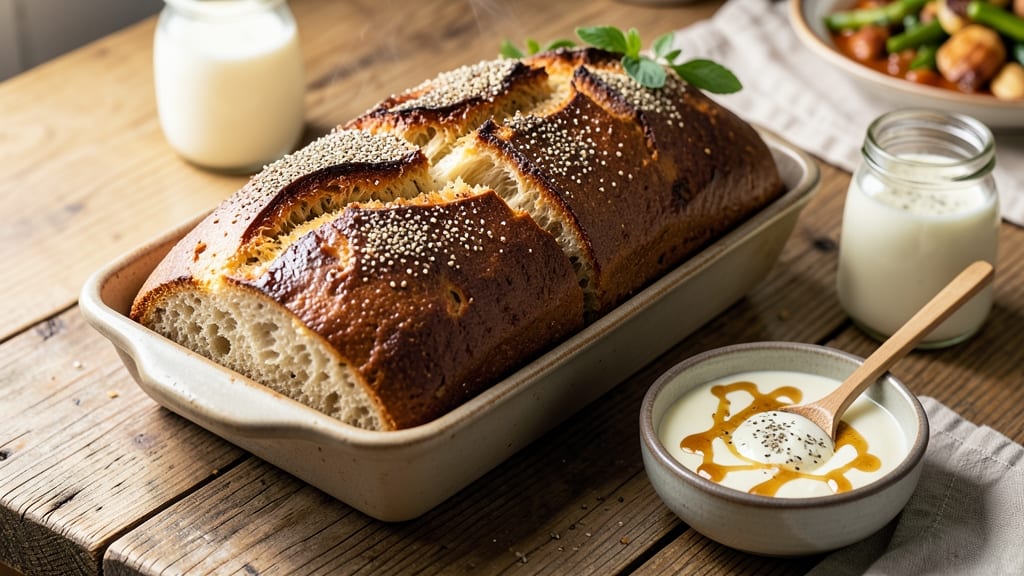
This acorn flour bread delivers a nutty, gluten-free crust with an open, airy crumb that rivals artisanal loaves—without a single grain of wheat. 🌰 The secret lies in acorn flour's natural binding properties when combined with plant-based milk and a touch of vinegar, creating a loaf that's both hearty and delicate.
I've perfected this recipe after years of experimenting with ancient grains, and the results speak for themselves: a bread with deep earthy flavor and satisfying texture.
The beauty of acorn flour lies in its versatility—it absorbs moisture differently than wheat flour, requiring a slightly adjusted approach. We'll use aquafaba (chickpea brine) as our egg substitute for binding, along with flaxseed meal for extra structure.
The dough comes together in just 10 minutes of mixing, then proofs for 2 hours at room temperature, making it surprisingly straightforward for a gluten-free loaf that feels anything but basic.
What you'll end up with is a golden-brown loaf with a crisp crust that gives way to an open, tender crumb studded with tiny air pockets. The nutty flavor of acorn flour shines through without overpowering, making this bread perfect for sandwiches, toast, or simply enjoyed with butter and jam.
The best part? It keeps well for 5 days at room temperature or freezes beautifully for up to 3 months.
For those who love texture, consider adding toasted sunflower seeds or chopped walnuts to the dough before baking. Or, for a slightly sweet variation, replace 1 tablespoon of water with maple syrup. The possibilities are endless while maintaining that signature acorn flour character. Let's bake this bread!
Ingredients for acorn flour bread
Eight ingredients transform acorn flour into a gluten-free loaf with artisanal texture and nutty depth.
| Ingredient | Amount | Notes |
|---|---|---|
| Acorn Flour 🌰 | 3 cups | Finely ground, sifted for even texture |
| Unsweetened Almond Milk 🥛 | 1 ½ cups | Room temperature, unsweetened |
| Aquafaba 🥫 | ½ cup | From canned chickpeas, not drained |
| Ground Flaxseed Meal 🌾 | 2 tbsp | Freshly ground for best binding |
| White Vinegar 🍶 | 1 tbsp | For gluten-free leavening |
| Maple Syrup 🍁 | 1 tbsp | For subtle sweetness |
| Sea Salt 🧂 | 1 ½ tsp | Fine grain preferred |
| Olive Oil 🫒 | ¼ cup | Extra-virgin for richness |
| Baking Powder 🍞 | 1 ½ tsp | Gluten-free blend preferred |
| Toasted Sunflower Seeds 🌻 | ¼ cup | Optional for texture |
| Water 💧 | ½ cup | Room temperature |
Acorn flour is the star here—Bob's Red Mill or Ancient Harvest are my go-tos for consistent quality. Look for finely ground flour, not coarse meal, since we're baking a delicate loaf. If you can't find acorn flour, buckwheat flour works in a pinch (though flavor will differ). The aquafaba is non-negotiable for binding; save the brine from a can of chickpeas or buy it pre-packaged at specialty stores. For the flaxseed meal, grind whole flaxseeds yourself—pre-ground loses potency quickly. The olive oil should be extra-virgin; anything less and you'll taste it in the final loaf. Store your acorn flour in the freezer to prevent rancidity—it's worth the extra step for that nutty flavor.
No aquafaba? Flax eggs (1 tbsp ground flax + 3 tbsp water = 1 egg) work, though texture may be slightly denser. Running short on almond milk? Oat milk or soy milk both work well, but avoid coconut milk—it adds too much richness. The baking powder is crucial; gluten-free blends (like Rumford) prevent a dense crumb. For extra flavor, swap 1 tbsp of water for maple syrup—the sweetness caramelizes beautifully. Want more crunch? Add chopped walnuts or pumpkin seeds to the dough before baking. The sunflower seeds I list are optional but add delightful texture; toast them first for extra flavor punch.
This dough is sensitive—keep everything at room temperature to avoid activating the gluten-free baking powder prematurely. Once mixed, let it proof in a lightly oiled bowl covered with a damp towel for 2 hours. The loaf bakes best in a preheated Dutch oven at 375°F for 40-45 minutes—no peeking! Cool completely on a wire rack before slicing. Store wrapped at room temperature for 5 days or freeze slices for 3 months. The crust stays crisp for 2 days if kept airtight, but the interior stays soft for days. For reheating, wrap slices in foil and warm at 350°F for 5 minutes—nothing like fresh bread.
Why You'll Love This Recipe
- No-Fuss Mixing: I swear by this recipe because it’s just stir, pour, bake—no kneading, no waiting for dough to rise. The aquafaba (yes, chickpea brine!) acts as the binder, so you’re not stuck measuring eggs or dealing with gluten mess.
- Earthy Nutty Magic: That acorn flour gives this bread a warm, toasty depth—like a cross between cornbread and a hearty sourdough, but with a subtle sweetness. Honestly, the first slice makes me forget it’s gluten-free.
- Weeknight Wonder: Toss it in the oven while you prep dinner—it’s ready in under an hour, and the leftovers? Perfect for toast, sandwiches, or even French toast the next morning. (Yes, even on a Tuesday night.)
- Budget-Friendly Staple: Between us, this costs less than half of specialty breads, and the ingredients last for weeks. The flaxseed meal adds fiber, the vinegar keeps it fresh, and you’re using pantry basics—no wasted trips to the store.
Step-by-step instructions for acorn flour bread
Here's how to bake a gluten-free loaf with that perfect nutty crust and airy interior.
👨🍳 Step 1: Whisk Wet Ingredients for Maximum Rise
In a large mixing bowl, combine the 1.5 cups unsweetened almond milk, 0.5 cup aquafaba, 0.5 cup water, 0.25 cup olive oil, 1 tbsp maple syrup, and 1 tbsp white vinegar. I like to use a whisk for this step—it helps incorporate air into the aquafaba, which mimics egg whites and gives our gluten-free bread that lovely lift. The vinegar will curdle slightly, but that's normal and actually helps with structure.
Next, add 2 tbsp ground flaxseed meal and 1.5 tsp sea salt. Let this mixture sit for 5 minutes while you prepare the dry ingredients. The flaxseed meal will begin to thicken slightly, creating a natural binder that replaces gluten's structural role. This waiting period also allows the aquafaba to fully hydrate and develop maximum volume.
👨🍳 Step 2: Combine Dry Ingredients with Acorn Flour
In a separate bowl, sift together the 3 cups acorn flour and 1.5 tsp baking powder. I can't emphasize enough how important sifting is with acorn flour—its natural density can create pockets that trap air unevenly. The baking powder will help create that open crumb structure we're after, but we need to distribute it evenly throughout the flour.
Make a well in the center of your dry ingredients and slowly pour in the wet mixture. Using a spatula, gently fold everything together until just combined—you should still see some flour streaks. Overmixing develops gluten-like proteins in the flour, which we're avoiding since this is gluten-free. The batter should be thick but pourable, similar to pancake batter consistency.
🥘 Step 3: Incorporate Sunflower Seeds and Rest the Batter
Gently fold in the 0.25 cup toasted sunflower seeds using a rubber spatula. These add wonderful texture contrast and a subtle nutty flavor that complements the acorn flour beautifully. Be careful not to press down too hard—we want to maintain as much air as possible in the batter.
Transfer the batter to a greased 9x5-inch loaf pan and smooth the top with the back of your spatula. Here's the crucial part: let the batter rest at room temperature for 30 minutes. This allows the flaxseed to fully gel and the aquafaba to set up properly. Cover the pan loosely with plastic wrap during this time to prevent a skin from forming on the surface.
🔥 Step 4: Bake at Low Temperature for Even Cooking
Preheat your oven to 350°F and place a baking sheet on the lower rack. This creates a steam chamber that helps prevent the bread from drying out too quickly. Pour 0.25 cup water into the baking sheet before placing the loaf pan in the oven—this extra moisture is key for that perfect open crumb structure.
Bake for 50-55 minutes until the top is deep golden brown and a toothpick inserted in the center comes out clean. I know it seems like a long time, but acorn flour requires gentle heat to develop its full flavor without burning. The bread is done when it reaches an internal temperature of 205-210°F—this ensures it's fully baked through without being dry.
⏰ Step 5: Cool and Slice for Perfect Texture
Remove the bread from the oven and let it cool in the pan for 10 minutes, then transfer to a wire rack to cool completely for at least 1 hour. This cooling period is absolutely critical—it allows the internal structure to set properly. If you slice too soon, the crumb will be gummy rather than airy.
Once fully cooled, slice with a sharp serrated knife to reveal that beautiful open crumb structure. The exterior should have a satisfying crunch while the interior remains tender with just the right amount of chew. Store wrapped at room temperature for up to 3 days or freeze for longer storage—it reheats beautifully in the oven for toast or French toast.
Pro Tips For Making Acorn Flour Bread
- WET THE FLAXSEED FIRST: Mix the ground flaxseed with the almond milk 10 minutes early—it needs time to gel properly. I learned this the hard way when my first batch turned out gummy; the flaxseed just didn’t bind like it should have. Let it sit while you measure everything else.
- STEAM THE ACORN FLOUR: Toast the acorn flour in a dry pan for 3-4 minutes until it smells nutty—this cuts the earthy bitterness. Then, whisk it with the almond milk before adding aquafaba, so the flour absorbs liquid evenly. Skipping the toasting? Your bread will taste raw and slightly bitter.
- DON’T OVERMIX THE BATTER: Stir just until the flour disappears—overmixing makes acorn flour gummy. The aquafaba will create air bubbles naturally; folding it in gently keeps the texture light. I used to whip it like cake batter, and the result was dense. Let the aquafaba do its job.
- CHILL THE BREAD BEFORE SLICING: Wait 15 minutes after baking before cutting—acorn flour bread cools faster than wheat flour bread. Slice too soon, and crumbs will fly everywhere. Trust me, your future toast will thank you.
Essential equipment for great acorn flour bread
Mixing Essentials
You'll need a large mixing bowl (I use my 5-quart stainless steel bowl from Ozeri) for combining ingredients—its depth helps prevent spills with thick acorn batter.
A whisk (like the OXO Good Grips) is perfect for aerating the aquafaba, while a rubber spatula (my Kitchy brand) ensures gentle folding without deflating air bubbles. For measuring, a digital kitchen scale (I love the Escali Primo) guarantees precise weights since acorn flour varies in density.
Baking Tools
A 9x5-inch loaf pan with a removable bottom (like Nordic Ware) prevents sticking and makes removal easier. Preheat your oven with a baking sheet on the lower rack—this creates steam for that perfect open crumb.
I also recommend a Dutch oven (my Le Creuset) for baking if you want to try the steam method for extra crust crispness. A thermometer (like Thermoworks Smoke) ensures your bread reaches 205-210°F without overbaking.
Proofing Setup
For proofing, a lightly oiled bowl (I use coconut oil) covered with a damp kitchen towel keeps moisture in while allowing expansion. A proofing basket (like Kitchy's) works too—just line it with parchment for easy transfer.
Avoid plastic wrap directly on the batter; it traps too much moisture and can cause a gummy texture. A timer (my KitchenAid stand mixer timer) ensures you don't overproof, which is easy to do with acorn flour's sensitivity.
Cooling Gear
After baking, transfer your loaf to a wire cooling rack (I prefer Ozeri's with adjustable legs) to prevent sogginess. A serrated bread knife (my German-style Wüsthof) gives clean slices through the dense crust.
For storage, airtight containers (like Glasslock) keep the bread fresh for days, while parchment paper prevents sticking when reheating slices. A microwave-safe plate (with a damp paper towel) is great for quick reheats—just 30 seconds restores crispiness.
Nutrition facts
Frequently asked questions
Can I substitute acorn flour with another gluten-free flour?
While you can experiment with buckwheat or sorghum flour, acorn flour's unique nutty flavor and texture make it irreplaceable for this recipe. These alternatives will yield a different taste and crumb structure. If you must substitute, use a 1:1 ratio but expect a denser bread with less pronounced flavor.
Why does my acorn flour bread turn out dense?
Overmixing or skipping the 30-minute rest before baking are the most common causes. Acorn flour lacks gluten, so gentle folding is key. Also, ensure your baking powder is fresh—old leaveners lose potency. For extra lift, try adding 1 tsp apple cider vinegar to the wet ingredients.
How do I store acorn flour to prevent rancidity?
Keep your acorn flour in the freezer in an airtight container to preserve its nutty flavor and prevent oils from going rancid. If stored at room temperature, use within 2 months. Freezing extends shelf life to 6 months while maintaining optimal baking quality.
Can I make this bread without aquafaba?
Yes! Replace the aquafaba with 3 tbsp ground flaxseed + 9 tbsp water (let sit for 5 minutes to thicken). For even better structure, add 1 extra tbsp baking powder. The texture will be slightly denser but still delicious. This flax "egg" method works well for other gluten-free baked goods too.
What's the best way to reheat sliced acorn flour bread?
For crispy crust: Wrap slices in foil and warm at 350°F for 5-7 minutes. For quick reheating: Place slices on a plate with a damp paper towel and microwave for 15-20 seconds. The bread reheats best when slightly stale—never reheat fresh slices directly from the fridge.