
Breakfast & Brunch
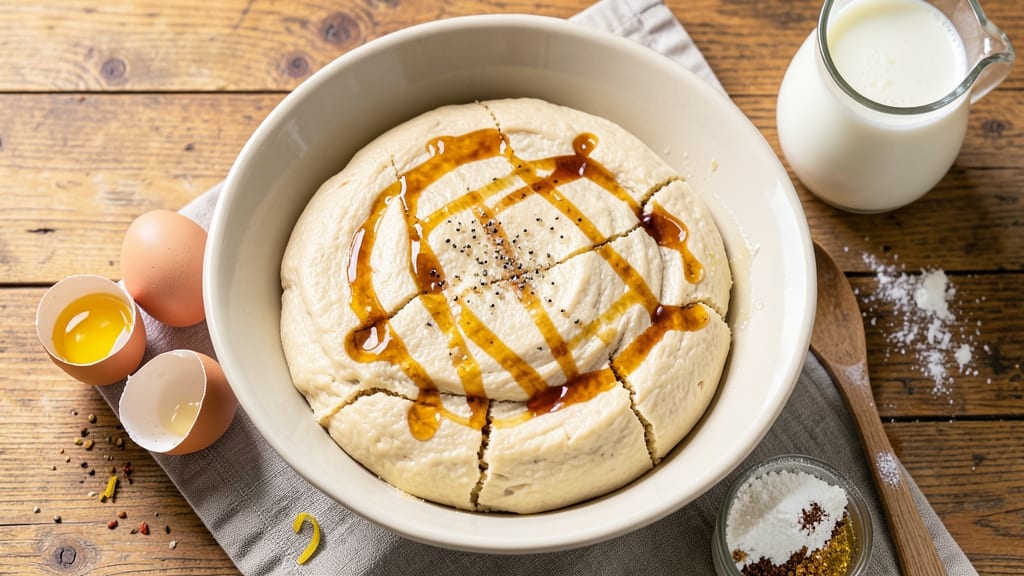
Adding egg to bread transforms ordinary loaves into rich, tender masterpieces with a moist crumb and golden crust. The eggs provide structure, moisture, and that irresistible sheen—critical for brioche, challah, or any enriched dough.
Without them, bread often turns out dense or dry, but with the right technique, you’ll achieve professional-quality results every time.
The secret lies in balancing egg quantity with other fats like butter, which prevents overdevelopment and maintains a tender texture. Too much egg creates a heavy loaf; too little leaves it dry.
This recipe uses 2 large eggs per 4 cups flour, a ratio that delivers the perfect harmony of richness and lightness while ensuring a perfect rise and oven-spring.
What you’ll end up with is bread that’s impossibly soft inside yet sturdy enough to hold its shape, with a crackly crust that begs to be slathered with butter. The eggs also enhance browning, giving your loaf that appetizing golden hue.
Whether you’re baking sweet brioche for French toast or savory challah for sandwiches, this method guarantees restaurant-quality results at home.
Ready in about 3 hours (including proofing), this recipe is ideal for weekend baking projects. The process is straightforward but requires patience—kneading, resting, shaping, and baking all contribute to that moist crumb and perfect rise. Let’s get started on creating bread that will impress even the most discerning taste buds.
Ingredients for adding egg to bread
Twelve ingredients transform ordinary dough into restaurant-quality bread with a moist crumb and golden crust—eggs are the secret weapon.
| Ingredient | Amount | Notes |
|---|---|---|
| Large Eggs 🥚 | 2 whole | Room temperature for even mixing |
| All-Purpose Flour 🌾 | 4 cups | Bread flour preferred for structure |
| Unsalted Butter 🧈 | ½ cup | Cold, cubed for even distribution |
| Granulated Sugar 🍚 | ¼ cup | Enhances browning and moisture |
| Instant Yeast 🍞 | 0.03 oz | Or 2¼ tsp for quick activation |
| Whole Milk 🥛 | ½ cup | Warmed to 110°F for yeast activation |
| Salt 🧂 | 1 tsp | Diamond Crystal preferred |
| Honey 🍯 | 1 tbsp | Feeds yeast and adds sweetness |
| Vanilla Extract 🌸 | ½ tsp | Pure, high-quality extract |
| Cinnamon 🌿 | ½ tsp | Ground, for subtle warmth |
| Active Dry Yeast 🍞 | 0.03 oz | Optional backup for instant yeast |
| Cornmeal 🌽 | ¼ cup | For dusting bread pans |
| Egg Yolks 🥚 | 1 whole | Separated for egg wash |
The eggs here are non-negotiable—they deliver that irresistible sheen and professional oven-spring. Pasture-raised eggs from Trader Joe's or Whole Foods have richer yolks, but any large eggs work. Room temperature is key—cold eggs create dense bread. The butter? European-style unsalted like Plugrá melts beautifully, but regular unsalted butter works too. For the yeast, Saf-Instant is foolproof—no proofing required, but if you've got active dry yeast, proof it in warm milk for 5 minutes first. The honey isn't just for sweetness; it feeds the yeast for a better rise. Pro tip: Weigh your flour if possible—4 cups is roughly 16 oz, but sifting changes volume.
No eggs? Flax eggs (1 tbsp ground flax + 3 tbsp water = 1 egg) work, but texture will differ—expect a denser crumb. Swapping butter for vegetable shortening keeps it vegetarian but loses flavor. The vanilla extract can be skipped, but almond extract at half the amount adds depth. For a sweeter loaf, boost sugar to ⅓ cup. The cinnamon is optional but enhances browning—Ceylon cinnamon has a milder taste. If your yeast isn't fresh, test it first: proof ¼ tsp in warm milk for 10 minutes—if it bubbles, it's active. The cornmeal isn't just for dusting; it adds a subtle crunch to the crust. And those egg yolks for the wash? Don't skip them—they create that golden, crackly finish that makes your bread look like it came from a bakery.
Store dough in the fridge for up to 24 hours—this actually improves flavor. Shape the loaves at least 1 hour before baking for a better rise. The finished bread keeps for 3 days at room temperature, wrapped tightly in plastic, or 1 week in the fridge. For longer storage, freeze fully cooled loaves for up to 3 months. To reheat, wrap in foil and warm at 300°F for 10 minutes. The egg wash? Brush on just before baking—it sets quickly. And if you're making multiple loaves, preheat your oven with a Dutch oven inside for that perfect steam environment. Trust me, your bread will thank you.
Why You'll Love This Recipe
- No Yeast Struggle: Mixing in that egg and instant yeast? It rises faster than my coffee on weekends. No waiting around for dough to proof—just 20 minutes of hands-off magic while you stir a pot of soup or fold laundry.
- Buttery Sweet Payoff: That melted butter folded into the dough? It’s like a hug for your taste buds. The sugar caramelizes just enough to give every bite a whisper of richness—no fancy ingredients, just pure, satisfying flavor.
- Brunch or Snack: Serve it warm with jam for a lazy Sunday morning, or slice it cold for lunchbox sandwiches. Honestly, I’ve even thrown it into a French toast casserole—because why not? Works for breakfast, dessert, or a quick pick-me-up.
- Pantry Staple Power: Flour, sugar, butter, eggs—these are things I always have. No last-minute grocery runs, no expensive specialty items. And the leftovers? Toast them up the next day for a crispy, comforting bite. Budget-friendly doesn’t get much better.
Step-by-step instructions for enriching bread with eggs
Here's how to incorporate eggs for that irresistible moist crumb and golden crust every time.
Prepare the Egg Wash for Shine and Crisp
Separate the 1 whole egg yolks from the remaining 2 whole large eggs. In a small bowl, whisk the 1 whole egg yolks with 1 tablespoon honey until fully combined. This mixture will create that beautiful, glossy finish on your bread. The honey not only adds sweetness but also helps develop a deeper golden-brown crust through the Maillard reaction.
Set this egg wash aside for later. For the remaining 2 whole large eggs, crack them into a medium bowl and whisk them lightly—just until the whites and yolks are blended. You want to incorporate air gently; over-whisking will create too many bubbles, which can deflate during mixing. Room temperature eggs blend more smoothly, so if they're cold, let them sit at room temperature for 10-15 minutes before using.
Mix Wet Ingredients for Optimal Yeast Activation
In a separate bowl, warm the 0.5 cup whole milk to 110°F—just warm enough to feel comfortable when touching the outside of the container. This temperature is crucial for activating the 0.025 oz instant yeast without killing it. Add the warm milk to the whisked 2 whole large eggs along with the 0.25 cup granulated sugar, 0.5 tsp vanilla extract, and 0.5 tsp cinnamon. Stir gently to combine, ensuring the sugar dissolves completely.
Here’s the thing—this mixture should feel like a thin batter, almost like a simple syrup. The sugar and honey will feed the yeast, while the warmth of the milk kickstarts fermentation. If your mixture looks too thick, add a splash more milk (1-2 tablespoons) to reach the right consistency. This step ensures your dough will rise smoothly and develop that perfect, tender crumb.
Combine Wet and Dry Ingredients for Structure and Moisture
In a large mixing bowl, combine the 4 cups all-purpose flour and 1 tsp salt. Make a well in the center and pour in the wet ingredient mixture. Using a wooden spoon or dough whisk, gently fold the flour into the wet ingredients until just combined. Avoid overmixing—you want to preserve the gluten structure while incorporating the eggs evenly. The dough should look shaggy and slightly sticky at this stage.
Now, add the 0.5 cup unsalted butter, cubed and cold. Using your hands or a dough scraper, work the butter into the dough until it’s fully incorporated. The butter should coat the flour evenly, creating tiny pockets that will contribute to a tender, moist crumb. If the dough feels too dry, add 1-2 tablespoons of the warm milk to bring it together. The goal is a soft, pliable dough that holds its shape when pressed but still feels slightly tacky—this ensures the eggs distribute evenly and enhance moisture without making the bread gummy.
Knead and Rest for Even Egg Distribution
Turn the dough onto a lightly floured surface and knead for 8-10 minutes until smooth and elastic. The eggs will make the dough softer, so resist the urge to over-knead—focus on developing just enough gluten to create structure while keeping the texture tender. If the dough feels too sticky, wet your hands slightly to prevent tearing. Once kneaded, place the dough in a lightly greased bowl, cover it with a damp towel, and let it rise in a warm place for 1-2 hours, or until doubled in size.
This resting period allows the yeast to ferment fully and the eggs to distribute evenly throughout the dough. The rise will be slightly slower than with yeast-only dough, but the result—a moist, airy crumb—is worth the wait. Here’s a pro tip: if your kitchen isn’t warm enough, place the bowl near a slightly warm oven (off) with a cup of boiling water to create a cozy environment for rising.
Shape, Proof, and Apply the Egg Wash for a Golden Crust
Once the dough has risen, punch it down gently to release air, then shape it into a loaf or your desired form. Place it in a greased 9x5-inch loaf pan dusted with 0.25 cup cornmeal for easy removal. Cover the dough again and let it proof for an additional 30-45 minutes until it rises just above the pan’s rim. This final proof ensures the bread has maximum volume and a light texture.
Preheat your oven to 375°F. Brush the risen dough generously with the reserved egg wash, using the back of a spoon to spread it evenly over the top. Bake for 30-35 minutes, until the bread is golden brown and sounds hollow when tapped on the bottom. The egg wash not only adds shine but also promotes browning, giving your bread that bakery-fresh appearance and crisp crust. Let it cool for 10 minutes before slicing—this ensures a clean cut and prevents a gummy crumb.
Pro Tips For Making Adding Egg To Bread
- Warm the eggs first: I learned this the hard way—cold eggs straight from the fridge will shock your warm dough and slow the yeast down. Whisk them in a bowl with a splash of warm water (not hot) until they’re the same temperature as your hands before mixing. The dough will come together faster, and you’ll avoid that sad, sluggish rise.
- Use room-temp butter: Cold butter cubes will create pockets of resistance in your dough, making it tough to knead and resulting in a dense loaf. Let your butter sit out for 30-45 minutes until it’s soft enough to press with your finger but not greasy. If you’re in a rush, microwave it for 10 seconds—just don’t overdo it.
- Don’t overmix after adding eggs: Once you fold in the eggs, stop mixing the second everything is just combined. Overworking the dough after this point develops gluten excessively, which can make your bread gummy instead of tender. Think "gentle folds" until the dough holds together when pressed—no need to go full bread-maker mode.
- Skip the extra sugar if your yeast is fresh: That extra teaspoon of sugar in the dough? It’s only necessary if your yeast is old or weak. If you’ve just opened a new packet of instant yeast, trust the label’s instructions—your bread will rise just fine without it. I used to add it religiously, but now I only toss it in when the dough feels sluggish.
Essential equipment for perfect results
Essential Mixing Tools
Start with a large mixing bowl (I love my 5-quart stainless steel from Amazon Basics) to handle the sticky dough comfortably. A wooden spoon or dough whisk prevents overmixing while combining wet and dry ingredients.
For kneading, use a lightly floured surface—I prefer a marble pastry mat (like OXO Good Grips) to keep things clean and prevent sticking. 🥚
Precision Measuring
Accurate measurements are critical when adding eggs to bread. Use a digital kitchen scale (I recommend OXO Good Grips) for flour and butter to avoid volume inconsistencies. For liquids, a liquid measuring cup with clear markings ensures you hit the 0.5 cup milk and 1 tbsp honey targets precisely.
Eggs should be large—weigh them to confirm (about 50g each with shell).
Proofing Essentials
A proofing basket (like Kitchy or Nordic Ware) helps shape loaves beautifully, but a greased 9x5-inch loaf pan works too. For warm proofing, I use a proofing box (or a baking stone on the lowest oven rack with a bowl of boiling water).
A damp kitchen towel keeps dough from drying out during the 1-2 hour rise. 🌾
Baking Gear
For that golden crust, preheat your oven with a Dutch oven (I use Le Creuset) inside for steam circulation. A pastry brush (like West Bend) applies the egg wash evenly.
After baking, let bread cool on a wire rack (not the counter) to prevent sogginess. For storage, use airtight containers or beeswax wraps to maintain freshness.
Optional Upgrades
For extra convenience, a stand mixer (like KitchenAid) with a dough hook simplifies kneading. A thermometer (I use Thermoworks) ensures accurate milk temperature (110°F). For egg separation, a fine-mesh strainer catches stray shells. These tools elevate the process but aren’t strictly necessary for beginners.
Nutrition facts
Frequently asked questions
Why does adding egg make bread denser?
Eggs add fat and protein to bread dough, which creates a more cohesive structure than flour alone. The extra proteins in eggs strengthen the gluten network, but too much can make bread heavy. The key is balance—this recipe uses 2 eggs per 4 cups flour with butter to maintain lightness while adding richness. Overmixing or too many eggs can lead to density.
Can I substitute eggs in enriched bread?
Yes! For 1 egg, try ¼ cup applesauce (adds moisture), ¼ cup Greek yogurt (tangy flavor), or ¼ cup mashed banana (sweetness). For texture, 1 flax egg (1 tbsp ground flax + 3 tbsp water) works but may make bread slightly denser. Eggs provide structure and browning that substitutes can't fully replicate.
How do I fix dough that's too sticky?
If your dough feels too tacky, add 1-2 tablespoons flour at a time until it's pliable but not dry. Wet hands help handle sticky dough without tearing. For extra insurance, chill the dough for 15 minutes before shaping—this firms it up. Remember, slightly sticky dough is normal with eggs and butter!
Why did my egg bread turn out dry?
Dry bread usually means overbaking or insufficient fat/moisture. Check your oven temperature—375°F is ideal. For extra moisture, try adding 1 tablespoon milk to the dough or brushing the crust with more egg wash. Store bread in an airtight container to prevent drying overnight.
What's the best way to store egg-enriched bread?
Wrap cooled bread tightly in plastic or aluminum foil and store at room temperature for 2-3 days. For longer storage, freeze slices in a ziplock bag for up to 3 months. To reheat, wrap in foil and warm at 300°F for 10 minutes. The egg wash helps preserve freshness longer than plain bread!