
Side Dishes
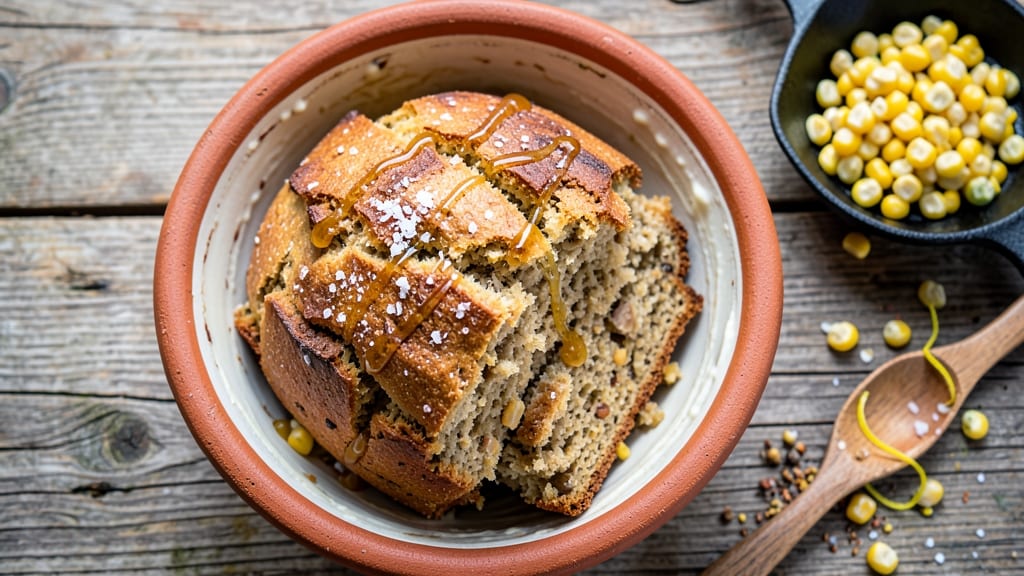
This African corn bread recipe delivers the perfect balance of a crispy crust and sweet corn flavor that transports you straight to West African kitchens. The secret lies in using fresh corn kernels—whether fresh, frozen, or canned—and a touch of honey or brown sugar to enhance the natural sweetness.
I developed this recipe after years of experimenting with traditional West African corn breads, which often feature a slightly denser texture and deeper flavor profile than their American counterparts.
The beauty of this recipe is its simplicity: just a handful of ingredients come together to create a bread that's both comforting and impressive. Cornmeal forms the base, while baking powder ensures a light yet sturdy crumb.
The addition of buttermilk creates a tender interior, while a sprinkle of coarse sugar on top adds that signature caramelized crust. What makes this version special is the way the corn flavor truly shines through without overpowering the bread's natural texture.
By the time it emerges from the oven, you'll have golden-brown corn bread with a crispy exterior that gives way to a moist, slightly sweet interior. The aroma alone will have everyone gathering around the table, and each bite delivers that perfect harmony of corn sweetness and buttery richness.
This is the kind of bread that pairs beautifully with soups, stews, or even as a side to grilled meats.
For those who love to experiment, try adding a pinch of cayenne for heat or fresh herbs like thyme for depth. The recipe scales easily, so you can make a single loaf for a weeknight dinner or double the batch for a crowd. Let's get baking!
Ingredients for african corn bread
Just twelve ingredients transform simple pantry staples into West African-inspired corn bread with a crispy crust.
| Ingredient | Amount | Notes |
|---|---|---|
| Cornmeal 🌽 | 1 ½ cups | Fine-ground preferred for texture |
| All-Purpose Flour 🌾 | 1 cup | For structure and binding |
| Buttermilk 🥛 | 1 cup | Full-fat for richness |
| Fresh Corn Kernels 🌽 | 1 ½ cups | Fresh, frozen or canned |
| Granulated Sugar 🍚 | ½ cup | Light brown for caramel notes |
| Baking Powder 🧂 | 2 tsp | Aluminum-free preferred |
| Salt 🧂 | 1 tsp | Kosher or sea salt |
| Unsalted Butter 🧈 | ½ cup | Melted, room temperature |
| Large Egg 🥚 | 1 whole | Room temperature for mixing |
| Honey 🍯 | ¼ cup | Wildflower preferred |
| Fresh Thyme Leaves 🌿 | 1 tbsp | Chopped, optional for depth |
| Coarse Sugar 🍚 | ¼ cup | For topping, caramelized crust |
The cornmeal is non-negotiable here—Bob's Red Mill fine-ground is my go-to, but any good-quality cornmeal works. For the corn kernels, fresh is ideal, but frozen works perfectly too (thaw first). If you're using canned corn, drain it well and pat dry. The buttermilk should be full-fat for that rich, tender crumb—Kroger brand is reliable, but any full-fat buttermilk will do. Fresh thyme adds depth, but it's optional if you're keeping it simple. For the sugar, light brown adds subtle caramel notes that complement the corn flavor beautifully.
No cornmeal? Polenta or grits can substitute at the same amount, though texture will differ slightly. Short on buttermilk? Mix 1 tbsp lemon juice or vinegar with 1 cup milk to mimic it. The honey can be swapped for maple syrup or agave, though honey's floral notes are hard to beat. If you're avoiding gluten, use a 1:1 gluten-free flour blend instead of all-purpose. For a deeper African flavor, add 1/4 tsp ground ginger or allspice to the dry ingredients. The coarse sugar topping is key for that signature caramelized crust—don't skip it!
This bread keeps well for 3 days in an airtight container at room temperature, though it's best enjoyed fresh. For longer storage, wrap tightly in plastic and freeze for up to 3 months. Reheat slices in a 350°F oven for 5-10 minutes to restore crispiness. I like to make a double batch and freeze half—perfect for quick breakfasts or sides. The aroma alone will have your whole house smelling like a West African market!
Why You'll Love This Recipe
- No-Fuss Mix-In: I swear by this recipe because it’s the kind of thing you can toss together while scrolling through your phone—just blend the fresh corn kernels into the batter, pour it in, and let the oven do the work. No fancy techniques, no waiting for dough to rise, just straightforward baking.
- Sweet-Savory Magic: The buttermilk keeps it tender while the sugar caramelizes just enough to balance the earthy cornmeal, and those fresh kernels? They add this little burst of summery sweetness that makes every bite feel like a hug. Honestly, it’s the kind of flavor that sticks with you.
- Weeknight Workhorse: This bread is my go-to for breakfast, brunch, or even a light dinner—pair it with scrambled eggs, chili, or just slather it with butter and jam. It reheats beautifully too, so it’s perfect for meal prep when you’ve got better things to do than cook every night.
- Pantry Staple Power: Between us, this recipe is a budget win. Cornmeal and flour are cheap, buttermilk stretches further than you’d think, and you can use canned corn if fresh isn’t an option. Plus, leftovers toast up like a dream, so you’re not stuck with stale bread sitting around.
Step-by-step instructions for African corn bread
Here's how to achieve that signature crispy crust and sweet corn flavor burst every time.
Prepare the Wet Ingredients
In a medium bowl, whisk together the 1 cup buttermilk, 0.5 cup granulated sugar, 1 whole large egg, and 0.25 cup honey until fully combined. The mixture should be smooth with no visible streaks of egg or sugar. I like to use a fork first to break up any lumps in the honey, then switch to a whisk for thorough mixing.
Next, melt the 0.5 cup unsalted butter in a small saucepan over low heat. Watch carefully as it melts completely, then remove from heat and let it cool slightly. The butter should be warm but not hot when you add it to the wet ingredients. This prevents scrambling the egg when combined with the other liquids.
Pour the melted butter into the wet ingredient mixture and stir gently to incorporate. The batter will appear slightly thickened and glossy. Set this mixture aside while you prepare the dry ingredients. This step ensures all your wet components are properly emulsified before combining with the dry elements.
Combine Dry Ingredients
In a separate large bowl, sift together the 1.5 cups cornmeal, 1 cup all-purpose flour, 2 teaspoons baking powder, and 1 teaspoon salt. Sifting prevents lumps and ensures even distribution of the leavening agents throughout the batter. Use a whisk to gently combine these dry ingredients until they're uniformly mixed.
Add the 1.5 cups fresh corn kernels to the dry mixture and toss gently to distribute them evenly. These kernels will provide that signature sweet corn flavor burst in every bite. If using frozen corn, make sure it's completely thawed before adding to prevent dense pockets in your bread.
Finally, fold in the 1 tablespoon chopped fresh thyme leaves if using. The thyme adds an earthy depth that complements the sweet corn and buttermilk perfectly. This herb is optional but adds wonderful complexity to the flavor profile.
Mix Wet and Dry Ingredients
Create a well in the center of your dry ingredients and pour in the wet ingredient mixture. Using a rubber spatula, gently fold everything together just until combined. Be careful not to overmix—you should still see some dry ingredient streaks. Overmixing develops gluten and can result in a dense, tough bread rather than the tender crumb we're aiming for.
The batter will be thick and slightly sticky, similar to a very thick pancake batter. This consistency is perfect for achieving that crispy crust while maintaining a tender interior. If you're concerned about the batter being too thick, you can add 1-2 tablespoons of milk or water to help with mixing, but don't exceed this amount as it can affect the texture.
Prepare for Baking
Preheat your oven to 375°F. Generously grease a 9-inch cast iron skillet or baking dish with butter or oil, then sprinkle with a little cornmeal to prevent sticking. The cast iron helps create that signature crispy crust we're after.
Pour the batter into the prepared skillet and smooth the top with a spatula. Sprinkle the 0.25 cup coarse sugar evenly over the top of the batter. This sugar will caramelize during baking, creating that beautiful golden crust with a slight crunch.
Bake for 25-30 minutes until the top is deep golden brown and a toothpick inserted in the center comes out clean. The edges should be crispy while the center remains moist. If you notice the top browning too quickly, tent the skillet with aluminum foil to prevent over-browning while the center finishes cooking.
Rest and Serve
Remove the corn bread from the oven and let it cool in the skillet for 5 minutes. This resting period allows the internal structure to set slightly, making it easier to slice without falling apart. The residual heat will continue to develop those caramelized sugar crystals on the crust.
Transfer the corn bread to a wire rack and let it cool completely before slicing. The contrast between the crispy exterior and tender interior will be most pronounced when served at room temperature. This bread pairs beautifully with soups, stews, or as a side dish to any meal.
For best results, serve within 2-3 days or store in an airtight container at room temperature. The flavors will continue to develop as it sits, making each slice even more delicious with time.
Pro Tips For Making African Corn Bread
- STEAM THE CORN FIRST: Dump those fresh corn kernels in a pot with 1 cup of water, cover, and bring to a boil for exactly 5 minutes—no more, or they’ll turn mushy. After draining, plunge them into ice water for 30 seconds to stop the cooking. This keeps the texture bright and prevents your bread from tasting like overcooked porridge.
- WEIGH THE FLOUR: Measuring flour by scooping from the bag is a recipe for disaster. Use a kitchen scale for the all-purpose flour—this bread’s structure depends on precise ratios. I learned this after making two batches that were either dense as a brick or as airy as a cloud (neither of which was right).
- DON’T OVERMIX THE BATTER: Once you fold in the buttermilk and cornmeal, stir just until combined—lumpy is fine. Overmixing develops the gluten in the all-purpose flour, and you’ll end up with a tough, chewy loaf instead of the tender, slightly crumbly texture this bread needs. Think "just enough to hold it together," not "whip it into submission."
- USE A CAST-IRON SKILLET: Skip the nonstick pan—this bread needs the even, dry heat of cast iron to get that deep golden crust on the bottom. Preheat it for 5 minutes on medium-high before pouring in the batter, and resist the urge to poke it with a knife while it bakes. (Yes, I’ve done that too.)
Wine and beer pairings for these flavors
West African Lager
A crisp, slightly malty West African lager like Nigerian Guinness Foreign Extra Stout might seem unexpected, but its deep roasted notes actually complement the caramelized sugar crust beautifully. The stout's coffee and chocolate undertones pair wonderfully with the corn's natural sweetness, creating a rich, satisfying contrast.
Serve slightly chilled to enhance the bread's crispy texture and let the beer's body cut through the richness. 🍺
Fruity African Beers
For something lighter, try a South African fruit beer like Black Label or Savanna Dry. These beers feature citrus and tropical fruit flavors that brighten the corn bread's sweetness.
The effervescence helps cleanse your palate between bites, making each mouthful feel fresh. I love pairing this combination with a hearty West African stew for a complete meal experience.
Sweet Wine Pairings
A medium-sweet Moscato d'Asti from Italy offers a delightful contrast with its floral and peach notes. The wine's slight sweetness mirrors the corn bread's natural sugars while its acidity balances the richness.
For a local option, try a South African Chenin Blanc with honeyed notes—it enhances the bread's caramelized crust beautifully. Serve both at 50-55°F for optimal flavor.
Non-Alcoholic Options
For a refreshing non-alcoholic pairing, try a ginger beer like Feather Ginger Beer. The spicy kick complements the corn bread's sweetness while adding a zesty contrast.
Alternatively, a sparkling hibiscus tea (common in West African cuisine) with a touch of honey offers a unique, culturally relevant pairing that enhances the bread's flavors without overpowering them. 💛
Regional Beer Adaptations
In West Africa, traditional beers like Dolo (a millet-based drink from Burkina Faso) or Pombe (an East African fermented brew) can be served alongside for an authentic experience. These drinks have earthy, slightly tangy profiles that harmonize perfectly with the corn bread's sweet and savory notes.
For a modern twist, try a West African-inspired craft lager with notes of vanilla and caramel.
Nutrition facts
Frequently asked questions about African corn bread
Can I use cornmeal substitutes if I don't have any?
Yes! For a similar texture, try polenta or grits in a 1:1 ratio. If you're avoiding gluten, use a 1:1 gluten-free flour blend instead of all-purpose flour. The bread will still be delicious, though the texture may be slightly denser.
Why does my African corn bread turn out too dense?
Overmixing the batter develops gluten, making the bread tough. Mix just until combined—you should still see dry streaks. Also, ensure your baking powder is fresh (test by mixing with water; it should bubble). Using buttermilk at room temperature helps achieve a lighter texture.
How do I get the perfect crispy crust?
Use a 9-inch cast iron skillet for even heat distribution. Sprinkle coarse sugar on top before baking—it caramelizes beautifully. Bake at 375°F for 25-30 minutes until golden brown. For extra crispiness, broil for 1-2 minutes at the end.
Can I make this recipe without buttermilk?
Mix 1 tbsp lemon juice or vinegar with 1 cup milk and let sit for 5 minutes to curdle. This mimics buttermilk's tanginess. For a richer flavor, use full-fat milk instead of reduced-fat. The bread will still turn out tender and delicious.
What are the best ways to serve leftover corn bread?
Toast slices in a 350°F oven for 5-10 minutes to restore crispiness. It also pairs well with soups, stews, or as a side to grilled meats. For a sweet twist, serve with honey butter or jam. Store in an airtight container for up to 3 days or freeze for 3 months.