
Side Dishes
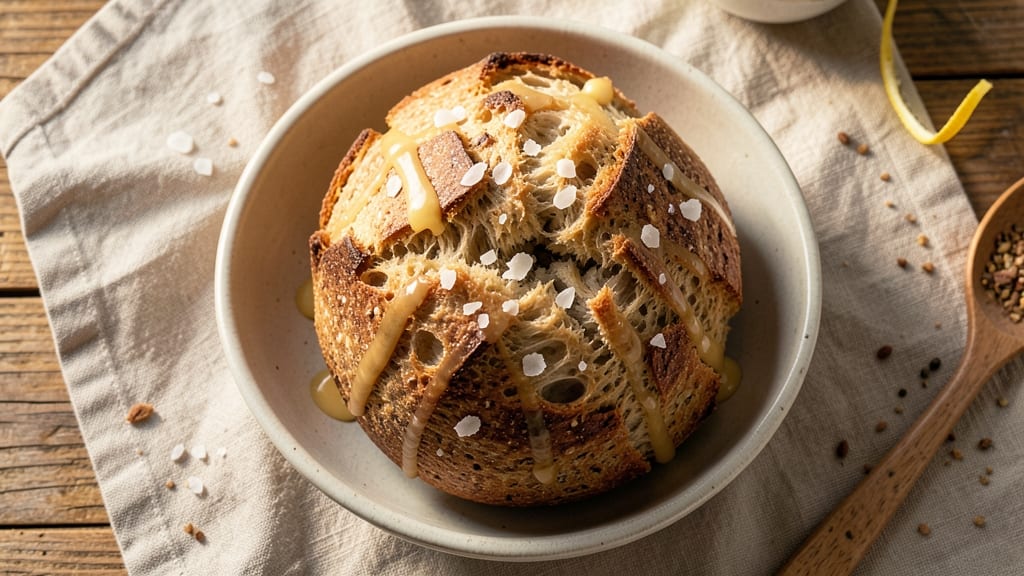
This airy whole wheat bread recipe transforms dense, heavy loaves into light, cloud-like perfection with a nutty richness you'd expect from white bread. The secret lies in precise hydration and gluten development—techniques that create an open crumb structure without sacrificing whole grain goodness.
I've baked hundreds of loaves, and this method consistently delivers that coveted "pull-apart" texture with a crisp crust. What sets this recipe apart is the balance of whole wheat flour with a touch of vital wheat gluten, which strengthens the structure while maintaining airiness.
The dough requires patience—resting at room temperature and proofing slowly—but the results are worth every minute. You'll end up with a loaf that's light enough to eat for breakfast yet substantial enough to serve as a dinner roll.
The aroma alone will fill your kitchen with warmth, and each slice reveals an open, even crumb with just the right amount of chew. This bread pairs beautifully with soups, sandwiches, or simply toasted with butter.
The recipe includes optional additions like seeds or herbs for extra flavor, but the base remains simple and foolproof. Perfect for meal prep, gifting, or satisfying your homemade bread cravings. Let's get started—your kitchen will thank you.
Ingredients for airy whole wheat bread
Light, nutty, and perfect for any occasion—just these ingredients transform dense whole wheat into cloud-like bread.
| Ingredient | Amount | Notes |
|---|---|---|
| Whole Wheat Flour 🌾 | 3 ½ cups | Unbleached, high-protein preferred |
| Vital Wheat Gluten 🌾 | ½ cup | For structure and lightness |
| Instant Yeast 🍞 | 2 tsps | Or 1 packet active dry |
| Granulated Sugar 🍚 | 1 tbsp | Feeds yeast for rise |
| Salt 🧂 | 1 ½ tsps | Diamond Crystal preferred |
| Unsalted Butter 🧈 | ½ cup | Cold, cubed for flavor |
| Warm Water 💧 | 1 ½ cups | 110°F for ideal yeast activation |
| Honey 🍯 | 1 tbsp | Or maple syrup for vegan option |
| Sunflower Seeds 🌻 | ¼ cup | Optional for texture |
| Fresh Rosemary 🌿 | 1 tbsp | Chopped, optional herb |
| Cornmeal 🌽 | ½ cup | For dusting loaf pan |
| Egg Wash 🥚 | 1 whole | 1 egg beaten with water |
| Coarse Sea Salt 🧂 | 1 tsp | For crust sprinkle |
The flour is everything here. King Arthur or Bob's Red Mill whole wheat flours have the best protein structure for lightness. Vital wheat gluten is non-negotiable—it gives you that white bread airiness without sacrificing whole grain goodness. I always grab mine from King Arthur's bulk section—cheaper than single-serving packages. For yeast, Saf-Instant is my go-to because it doesn't need proofing, but active dry works if you give it the extra 10 minutes. The butter should be cold when you mix it in—this keeps the dough from getting too soft. If your kitchen runs hot, chill the butter cubes for 20 minutes before adding.
No honey? Maple syrup or agave works perfectly—just use the same amount. Short on seeds? Sesame or flaxseeds add a nice crunch too. Rosemary is optional but adds that cozy, herbal note that makes this bread feel special. If you're making this ahead, you can prep the dough up to 24 hours early and let it rest in the fridge—just bring it to room temp before shaping. For the egg wash, I like to add a splash of milk (or plant milk) to make it extra shiny. And trust me on the cornmeal—it prevents sticking better than flour for this recipe.
This dough is a patient one. After mixing, let it rest 1 hour at room temperature before shaping—this relaxes the gluten and gives you that perfect open crumb. Shape the loaf gently; overworking it will make it tough. Proof time varies with your kitchen—1-2 hours until doubled is ideal. For storage, keep wrapped at room temp for 2 days, or freeze the whole loaf for up to 3 months. To revive, wrap in a damp towel and warm in a 350°F oven for 10 minutes. The best part? It gets better the next day as the crumb firms up.
Why You'll Love This Recipe
- No-Knead Magic: This bread rises like a dream—just mix, wait, and bake. The vital wheat gluten gives it that light, cloud-like texture whole wheat alone can’t match, and honestly? I’ve made it while scrolling through my phone.
- Sweet & Savory Balance: That touch of granulated sugar caramelizes just enough to make every slice taste like a little treat, but don’t worry—it’s not cloying. The salt cuts through the earthiness of the whole wheat, so it’s never bland.
- Meal Prep Hero: Slice it fresh, toast it later. I keep a loaf wrapped in the fridge for days—perfect for quick sandwiches, charcuterie boards, or even croutons. (Yes, even on a Tuesday night.)
- Pantry Staple Power: Whole wheat flour and yeast? Things you already own. No fancy ingredients, no last-minute grocery runs. My kids think it’s "normal bread," but I know the secret—it’s secretly my budget-friendly, nutrient-packed MVP.
Step-by-step instructions for airy whole wheat bread
Here's how to transform dense whole wheat into a loaf so light it practically floats.
Mix the Dough with Vital Wheat Gluten
In a large bowl, whisk together the 3.5 cups whole wheat flour, 0.5 cup vital wheat gluten, 2 tsps instant yeast, 1 tbsp granulated sugar, and 1.5 tsps salt. The gluten is what makes this bread light—it mimics the elasticity of white flour. I like to use a whisk first to aerate the dry ingredients before adding liquids.
Cut the 0.5 cup unsalted butter into small cubes and add them to the dry mix. The cold butter will create pockets of fat that make the bread tender. Pour in the 1.5 cups warm water (about 110°F) and 1 tbsp honey, then stir until a shaggy dough forms. The honey helps feed the yeast while adding subtle sweetness. Let the dough rest for 5 minutes—this gives the gluten time to hydrate properly.
Knead Until Silky and Elastic
Turn the dough onto a lightly floured surface and knead for 8-10 minutes until smooth and elastic. I know it seems like a lot, but whole wheat dough needs extra time to develop gluten. You'll know it's ready when the dough springs back slowly when poked and feels silky to the touch.
If the dough feels too sticky, add 1 tablespoon of flour at a time until it comes together cleanly. Shape it into a ball, place it back in the bowl, and cover with a damp towel. Let it rise in a warm place for 1-2 hours, or until it has nearly doubled in size. The dough should feel light and airy—this is when the magic happens.
Shape and Second Rise for Maximum Airiness
Punch down the risen dough and divide it into 4 equal portions. Roll each into a log shape and place them seam-side down in a 9x5-inch loaf pan dusted with 0.5 cup cornmeal. The cornmeal prevents sticking and adds a subtle crunch to the crust. Cover the pan with a towel and let the dough rise again for 30-45 minutes—this second rise ensures those light, airy pockets.
While the dough rises, preheat your oven to 375°F. The second rise is crucial—you want the dough to puff up slightly in the pan. If it doesn't rise much, it's okay; just proceed to baking. Brush the tops with the egg wash (1 egg beaten with water) and sprinkle with 1 tsp coarse sea salt for a golden, flavorful crust.
Bake to Perfection with Steam
Bake the bread for 30-35 minutes until the top is deep golden brown and the internal temperature reaches 205°F. I place a tray of water in the oven during the first 10 minutes to create steam—this prevents the crust from drying out too quickly and helps the bread rise even more.
You'll know it's done when the loaf sounds hollow when tapped on the bottom. Let it cool in the pan for 10 minutes, then transfer to a wire rack. The bread will continue to firm up as it cools, but it's worth the wait—this is when the texture truly becomes light and airy.
Add Optional Seeds and Herbs
Once cooled, slice the bread and sprinkle the cut surfaces with 0.25 cup sunflower seeds and 1 tbsp chopped fresh rosemary for extra texture and aroma. The seeds add a satisfying crunch, while the rosemary infuses a fragrant, earthy note. Store the bread wrapped in a clean towel at room temperature for up to 3 days, or freeze for longer storage.
This bread is best enjoyed fresh—light as clouds but with the nutty richness of whole wheat. The key is the vital wheat gluten and proper kneading; don't skip those steps if you want that signature airiness. Trust the process, and you'll have a loaf that rivals even the lightest white bread.
Pro Tips For Making Airy Whole Wheat Bread
- STOP OVER-MIXING THE DOUGH: Whole wheat flour is heavy and dense—once you add the vital wheat gluten and water, resist the urge to keep kneading. Two minutes of gentle stretching and folding is enough; overworking it will make the bread tough instead of airy.
- WEIGH YOUR FLOUR: Scooping whole wheat flour from the bag packs it down, giving you way more than you need. Use a kitchen scale for accuracy—this isn’t the time to eyeball it. A gram off here means a dense loaf later.
- LET THE YEAST REST: Instant yeast is fast, but it still needs a moment to activate properly. Mix it with warm water and sugar first, then wait exactly 5 minutes before adding it to the flour. Skipping this step means weaker gluten development, which kills airiness.
- ADD VITAL WHEAT GLUTEN LAST: Sprinkle the vital wheat gluten over the flour after you’ve mixed everything else. This keeps it from clumping and ensures it distributes evenly—no dry pockets, no dense spots. Just toss it in like you’re seasoning a salad.
Flavor customization for this airy whole wheat bread
Sweet Variations
Add 1 tbsp cinnamon and ½ cup raisins to the dough for a sweet loaf perfect for French toast or breakfast. I like to use King Arthur whole wheat flour for this version—it handles the extra moisture better.
For extra richness, replace the honey with 2 tbsp maple syrup and fold in ¼ cup chopped walnuts before the final rise. 🍯
Herb-Infused Twist
Swap the rosemary for 1 tbsp dried thyme or 1 tbsp fresh dill for a bright, herby flavor. I often add 1 tsp garlic powder to the dry ingredients for a savory kick that pairs well with soups. For a Mediterranean touch, sprinkle ¼ cup chopped Kalamata olives on top before baking—just
Seed and Nut Mix
Boost texture with ¼ cup pumpkin seeds and ¼ cup chopped pecans mixed into the dough. Toast the seeds and nuts in a dry pan for 3-4 minutes until fragrant before adding. For a crunchy topping, press ¼ cup sesame seeds into the egg wash before baking. This version keeps well for 4 days if stored in an airtight container. 🌻
Spiced and Smoky
Add 1 tsp smoked paprika and ½ tsp cayenne pepper to the dry ingredients for a subtle smoky heat. I like to pair this with ¼ cup sunflower seeds for contrast.
Brush the baked loaf with 1 tbsp melted butter mixed with ½ tsp honey while still warm for extra richness. This version works beautifully as a side for hearty stews. 🔥
Savory Garlic and Parmesan
Mix 2 tbsp grated Parmesan cheese and 1 tbsp minced garlic into the dough for an Italian-inspired twist. Sprinkle the top with ¼ cup coarse sea salt and 1 tbsp chopped parsley after baking.
This version is perfect for sandwiches or alongside pasta dishes. Store leftovers in the fridge for up to 3 days in a sealed container. 🧀
Nutrition facts
Frequently asked questions
Why does my whole wheat bread turn out dense instead of airy?
Whole wheat flour absorbs more water than white flour, which can make bread dense if not handled properly. The key is using vital wheat gluten (it mimics white flour's elasticity) and kneading for 8-10 minutes to fully develop gluten. Also, don't skip the 1-hour rest after mixing—this relaxes the gluten for better rise. If your dough feels too sticky, add flour 1 tbsp at a time.
Can I substitute vital wheat gluten with something else?
Vital wheat gluten is essential for airy texture, but you can try 1 extra cup of bread flour (instead of whole wheat) mixed with 2.5 cups whole wheat flour for a lighter loaf. However, this will reduce the whole grain benefits. For a gluten-free version, use a 1:1 gluten-free flour blend with xanthan gum, but expect a denser result. The gluten is what creates those signature air pockets!
How do I know when the dough is fully proofed?
Your dough is ready when it's puffy and springs back slowly when gently poked with a finger. For the first rise, it should nearly double in size (1-2 hours). For the second rise in the pan, look for 30-50% expansion (about 30-45 minutes). If your kitchen is cold, place the dough near a warm oven (off) with a bowl of hot water to speed up fermentation. Never overproof—it leads to a flat, gummy loaf.
What's the best way to store this bread to keep it fresh?
Wrap the cooled loaf in a clean kitchen towel or beeswax wrap and store at room temperature for 2-3 days. For longer storage, freeze the whole loaf (up to 3 months). To revive, wrap in a damp towel and warm in a 350°F oven for 10 minutes. Avoid plastic bags—they trap moisture and make bread soggy. The bread actually improves overnight as the crumb firms up!
Can I make this bread without an egg for the wash?
Yes! Replace the egg wash with 2 tbsp milk (or plant milk) mixed with 1 tbsp melted butter for shine. For a completely vegan version, use 1 tbsp olive oil mixed with 1 tbsp water. Brush it on just before baking—this creates that golden crust while keeping the bread moist. The egg wash isn't just for aesthetics; it also helps with browning and texture.