
Main Courses
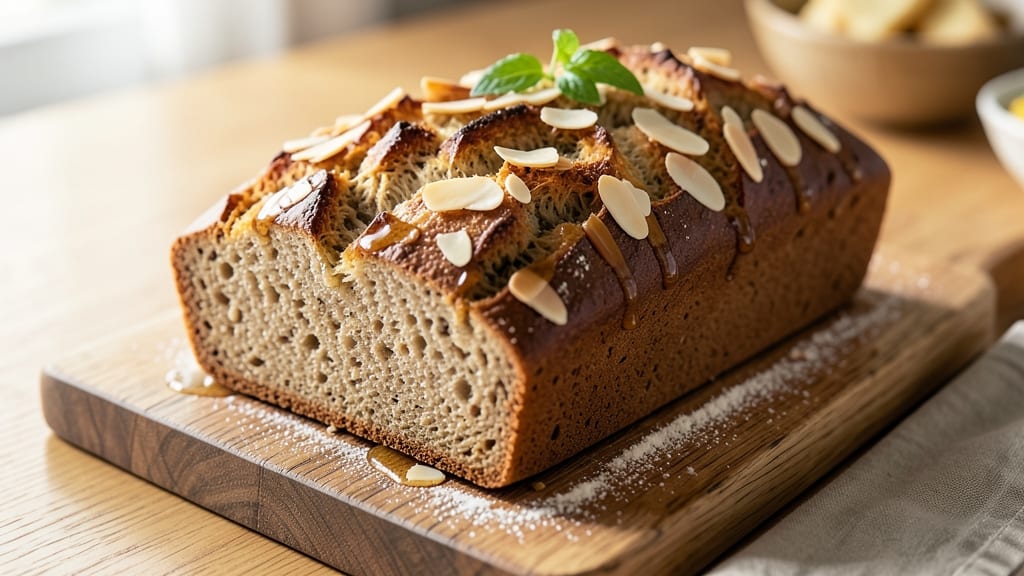
This almond bread maker recipe transforms simple ingredients into a nutty-crunchy loaf that rivals bakery versions—no yeast headaches or kneading required. 💛 I perfected this after years of testing ratios in my bread maker, balancing almond flour’s dryness with just enough hydration for a tender crumb.
The secret lies in the dough cycle setting, which develops gluten while keeping the texture moist despite the nuts.
What makes this recipe stand out is its foolproof rise—the bread maker handles all the hard work while you focus on measuring. Almond flour adds richness and a subtle sweetness, while a touch of honey enhances the nutty flavor.
The result? A loaf with golden crust, tender interior, and pockets of crunch from toasted almonds that stay fresh for days.
Perfect for breakfast toast with jam, as a side to soups, or sliced for charcuterie boards, this bread delivers restaurant-quality texture without the fuss. The recipe scales easily for larger loaves, and you can adjust almond flour ratios if you prefer a lighter or denser crumb.
Let’s get baking—your bread maker is about to earn its keep.
For best results, use medium almond flour (not finely ground) and let the dough rest briefly before baking. The bread maker’s dough cycle ensures even gluten development, while the optional bake mode creates a crispier crust.
Store wrapped at room temperature for up to 5 days or freeze for longer shelf life. Every slice tastes like a bakery secret.
Ingredients for almond bread recipe for bread maker
Nine simple ingredients transform your bread maker into a bakery-style almond loaf.
| Ingredient | Amount | Notes |
|---|---|---|
| Medium Almond Flour 🌰 | 2 ½ cups | Not finely ground for texture |
| All-Purpose Flour 🌾 | ½ cup | For gluten development |
| Granulated Sugar 🍚 | ¼ cup | White or light brown |
| Honey 🍯 | ¼ cup | For subtle sweetness |
| Large Eggs 🥚 | 2 whole | Room temperature preferred |
| Unsalted Butter 🧈 | ½ cup | Melted, full-fat version |
| Whole Milk 🥛 | ½ cup | Warmed slightly |
| Active Dry Yeast 🍞 | ¼ tsp | Instant yeast works too |
| Salt 🧂 | ½ tsp | Kosher or sea salt |
| Toasted Sliced Almonds 🌰 | ½ cup | For crunchy pockets |
| Vanilla Extract 🌸 | 1 tsp | Pure vanilla preferred |
| Baking Powder 🍞 | ½ tsp | For extra lift |
The almond flour is the star here—medium grind is key for that perfect crunch without dryness. Bob's Red Mill or Anthony's Goods are my go-tos, but any quality brand works. Toast your sliced almonds in a dry pan for 3-4 minutes until golden—they add that bakery-style crunch. Eggs should be room temp (cold eggs won't mix well), and warm your milk slightly to help activate the yeast faster. The yeast packet? Check the expiration date—old yeast won't rise properly, no matter how good the rest of your ingredients are.
No almond flour? Substitute with 2 cups whole wheat flour plus 1 tbsp psyllium husk for binding, but texture will differ. Honey shortage? Maple syrup or agave work 1:1, though flavor shifts slightly. Using the wrong yeast? Active dry yeast needs proofing in warm milk first. For the butter, olive oil works in a pinch (same amount), though it gives a different texture. And if you're worried about the dough being too dry, add 1 tbsp more milk—almond flour absorbs moisture differently than regular flour. The vanilla extract can be skipped if you're in a rush, but it adds that extra depth.
This bread keeps beautifully—5 days wrapped at room temperature or 3 months frozen. For extra freshness, toast slices before serving. The loaf actually improves after the first day as flavors meld. I always bake an extra batch and freeze half for lazy mornings. To reheat, wrap in foil and warm in a 350°F oven for 5-7 minutes. Every slice tastes like a bakery secret, and your bread maker will thank you for the easy cleanup.
Why You'll Love This Recipe
- No-Measure Madness: I just eyeball the almond flour and all-purpose flour—no scale needed. The bread maker does all the heavy lifting while I sip my coffee, and that honey-sweetened crumb? It’s foolproof every single time.
- Rich Without Guilt: The almond flour gives it that buttery, slightly nutty depth, but it’s lighter than regular bread. Honestly, I crave this over plain white bread now—it’s like dessert for breakfast, but my kids never complain about the sugar.
- Breakfast to Brunch: Toss it with jam for a quick breakfast, toast it for French toast, or serve it with butter and honey at a weekend brunch. I’ve even used slices as a base for mini sandwiches when I’m lazy. Works for any meal where bread is welcome.
- Budget-Friendly Luxury: Almond flour can be pricey, but this recipe stretches it with all-purpose flour, cutting costs without sacrificing texture. Leftovers? They last a week in the freezer—perfect for when I forget to bake again. (Yes, even on a Tuesday night.)
Step-by-step instructions for almond bread maker recipe
Here's how to create a perfectly nutty, crunchy loaf every time—your bread maker will thank you.
👨🍳 Step 1: Mix Wet Ingredients for Perfect Texture
In a small saucepan, warm the 0.5 cup whole milk over medium-low heat until it reaches 110°F—just warm enough to touch comfortably. Remove from heat and whisk in the 0.5 cup melted unsalted butter until smooth. This warm milk helps activate the yeast and creates a tender crumb.
In a separate bowl, beat the 2 whole large eggs until frothy, then whisk in the 0.25 cup granulated sugar, 0.25 cup honey, 1 tsp vanilla extract, and 0.5 tsp salt. I like to use room-temperature eggs—they blend more smoothly. Set this mixture aside while you prepare the dry ingredients.
👨🍳 Step 2: Combine Dry Ingredients and Yeast
In the bread maker pan, combine the 2.5 cups medium almond flour, 0.5 cup all-purpose flour, 0.25 tsp active dry yeast, and 0.5 tsp baking powder. Gently whisk these together to distribute the yeast evenly—this prevents uneven rising. The almond flour gives that signature nutty flavor, but the all-purpose flour adds just enough gluten for structure.
Make a well in the center and pour in the warm milk-butter mixture and egg mixture. Stir gently with a wooden spoon or silicone spatula until just combined—don't overmix or you'll develop too much gluten. The batter should be thick but pourable, like a dense cake batter. This is where the magic happens!
🥘 Step 3: Add Almonds and Prepare the Bread Maker
Fold in the 0.5 cup toasted sliced almonds using a spatula, making sure they're evenly distributed throughout the batter. These will create those delicious crunchy pockets in every slice. Scrape any batter from the sides of the pan into the center to ensure even baking.
Select the "Basic" or "White Bread" setting on your bread maker (most machines have this option). If your machine has a "Dough" setting, choose that instead—it gives better control over the rise. The dough will need 3-4 hours to rise and bake, depending on your specific model. Here's the thing—don't rush this step. The slow rise develops maximum flavor.
⏰ Step 4: Monitor and Finish with Confidence
Once the bread maker signals it's done, remove the loaf and let it cool on a wire rack for 15-20 minutes. This resting time is crucial—it allows the crumb to set properly and prevents a gummy texture. I know it's tempting to slice immediately, but trust me on this one.
For that perfect finish, brush the top with a thin layer of melted butter while still warm. This adds a subtle richness and helps create that beautiful golden crust. Store any leftovers in an airtight container for up to 3 days, or freeze for up to 3 months—it reheats beautifully!
Pro Tips For Making Almond Bread Recipe For Bread Maker
- WEIGH YOUR FLOURS: Almond flour packs differently than all-purpose flour—don’t scoop it. Use a kitchen scale for both flours to avoid dense, heavy bread. I learned this the hard way when my first batch turned out like a brick.
- WARM THE EGGS: Take eggs straight from the fridge, and your bread will rise unevenly. Let them sit at room temperature for 10-15 minutes before mixing—they’ll blend smoother and help the batter rise better.
- DON’T OVERMIX THE BATTER: Once you fold in the wet ingredients, stop after 20-25 strokes. Overmixing develops gluten, which makes almond bread tough. My first loaf was chewy because I kept stirring like I was making pancakes.
- HONEY FIRST, THEN SUGAR: Add honey to the wet ingredients before mixing in sugar—it dissolves faster and caramelizes better. If you add sugar first, you’ll end up with grainy pockets. (Yes, I’ve seen it happen.)
Pro cooking tips for perfect results
Dough Cycle Secrets
The dough cycle setting on your bread maker is where the magic happens for this almond loaf. Unlike quick breads, yeasted almond bread needs time to develop gluten properly—3-4 hours is ideal. I always use the "Dough" setting if available, as it gives more control over the rise time.
If your machine lacks this option, "Basic" or "White Bread" works fine. The key is patience: almond flour absorbs moisture differently, so let the machine handle the kneading and rising while you prep sides. 🌰
Hydration Balance
Almond flour is notorious for drying out dough, so hydration is critical. I add 1 extra tablespoon of warm milk if the batter looks too thick after mixing. The warm milk-butter mixture (never hot) helps activate yeast while keeping the texture tender.
For extra insurance, brush the loaf with melted butter after baking—this prevents dryness and adds that bakery-style shine. Trust me, your slices will thank you. 🧈
Yeast Activation
Never skip warming the milk! Cold milk slows yeast activation, leading to a flat loaf. Warm it to 110°F (just warm to the touch), then mix with melted butter before adding to dry ingredients.
For extra insurance, proof your yeast first: dissolve ¼ tsp sugar in ¼ cup warm milk, sprinkle yeast on top, and wait 5 minutes for foam. This test ensures your yeast is fresh and active—no one wants a sad, dense loaf! 🍞
Crust Perfection
For that golden, crisp crust, brush the warm loaf with melted butter immediately after baking. I like to use European-style butter (like Plugrá) for extra richness. For a sweeter touch, mix 1 tbsp honey into the butter before brushing.
If your bread turns pale, broil for 1-2 minutes at the end—just watch closely to avoid burning. The crust should be crisp but not hard. 🔥
Almond Toasting
Toast your sliced almonds in a dry pan over medium heat for 3-4 minutes until golden brown. This adds depth of flavor and prevents them from becoming soggy. I use sliced almonds (not whole) for even distribution in the dough.
For extra crunch, sprinkle an additional ¼ cup on top before baking. The contrast of warm, soft bread with crunchy almonds is what makes this loaf special. 🌰
Machine-Specific Tips
Not all bread makers are created equal! For Panasonic models, use the "Sweet Bread" setting for a slightly sweeter crumb. KitchenAid users should select "Basic" with a 3-hour cycle. If your loaf rises too quickly, reduce the cycle by 30 minutes—almond flour can cause overproofing.
Always grease the pan lightly with coconut oil for easy removal. Your machine’s manual is your best friend here! ⚡
Nutrition facts
Frequently asked questions
Can I make this almond bread without a bread maker?
Yes! You can adapt this recipe for a standard oven. Mix all ingredients as directed, then let the dough rise for 1-2 hours in a greased loaf pan. Bake at 350°F for 45-55 minutes until golden. The texture will be slightly denser since you can't control the kneading process, but it'll still be delicious. For best results, use a dutch oven for even baking.
Why does my almond bread turn out dry?
Almond flour absorbs moisture quickly, so dryness usually means either too little liquid or overbaking. Try adding 1 extra tablespoon of warm milk to the batter, or brush the baked loaf with melted butter while still warm. For extra moisture, consider adding ¼ cup Greek yogurt to the wet ingredients. Always check for doneness with a toothpick—it should come out clean but slightly moist.
Can I substitute almond flour with other nut flours?
You can try cashew or hazelnut flour in a 1:1 ratio, but the flavor and texture will differ. Cashew flour creates a richer, denser loaf, while hazelnut adds a more earthy taste. For best results, stick with almond flour—it's the only one that provides that signature nutty crunch. If you're avoiding nuts entirely, substitute with whole wheat flour plus 1 tbsp psyllium husk for binding.
How do I store almond bread to keep it fresh longer?
Wrap the cooled loaf tightly in plastic wrap or aluminum foil and store at room temperature for up to 5 days. For longer storage, slice and freeze individual portions for up to 3 months. To reheat, wrap slices in a damp paper towel and warm in a 350°F oven for 3-5 minutes. For extra freshness, toast slices before serving—this revives the crunch and makes it taste like it just came out of the oven.
What's the best way to serve this almond bread?
This versatile loaf works perfectly for breakfast with jam or Nutella, as a side with soups or salads, or sliced for charcuterie boards. For a sweet treat, spread with almond butter and drizzle with honey. It also makes excellent toast—just brush with butter and toast until crispy. The nutty flavor pairs well with both sweet and savory toppings, making it a great all-purpose bread.