
Side Dishes
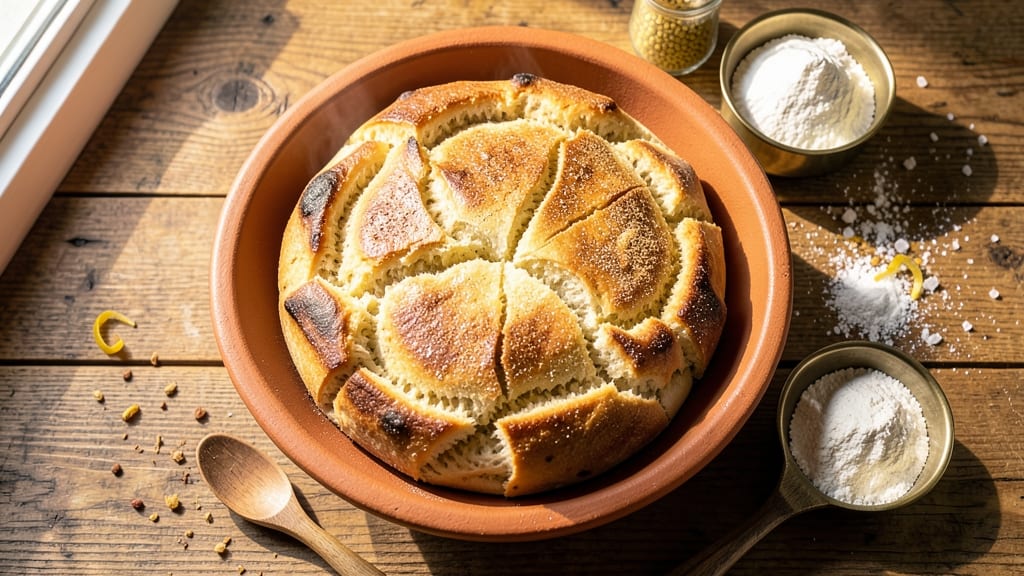
This Ambasha bread recipe delivers the signature Ethiopian flatbread with its signature crumbly crust and aromatic spices—perfect for serving with stews or spice blends like berbere.
The traditional method uses teff flour for a distinct earthy flavor, but we'll adapt it for home kitchens with accessible ingredients while keeping the authentic texture intact. What sets Ambasha apart is its unique combination of crispy edges and tender interior, achieved through careful kneading and high-heat baking.
The dough comes together with simple ingredients like flour, yeast, and warm water, but the magic happens in the rolling and baking process. Unlike many flatbreads, Ambasha develops its signature texture by being rolled thin and baked quickly on a hot skillet or mitad (traditional Ethiopian griddle).
This method ensures the edges crisp up while the center remains soft and pliable. The spices—typically cardamom, cinnamon, and nutmeg—infuse the dough with warm, aromatic notes that complement Ethiopian dishes beautifully.
What you'll achieve is a batch of golden-brown flatbreads with deliciously crispy edges that crumble slightly when torn, while the interior stays tender and slightly chewy. These breads are versatile enough to serve as a side for stews, wraps for kitfo (spiced beef), or even as a base for sandwiches.
The aroma alone will transport you to an Ethiopian restaurant, but the texture and flavor make it even more rewarding to bake at home.
Whether you're new to Ethiopian cuisine or a seasoned fan, this recipe bridges tradition and accessibility. The dough is forgiving, and the baking process is straightforward once you master the skillet technique. Let's get started on creating the perfect batch of Ambasha bread for your table.
Ingredients for ambasha bread
Ethiopian spices and traditional techniques meet accessible ingredients for this iconic flatbread.
| Ingredient | Amount | Notes |
|---|---|---|
| All-Purpose Flour 🌾 | 3 cups | High-protein preferred for chewiness |
| Active Dry Yeast 🍞 | ¼ tsp | Ensure yeast is fresh for best rise |
| Granulated Sugar 🍚 | ½ tsp | Activates yeast for proper fermentation |
| Salt 🧂 | ½ tsp | Diamond Crystal preferred for accuracy |
| Ground Cardamom 🌿 | ¼ tsp | Freshly ground for maximum aroma |
| Ground Cinnamon 🌶️ | ¼ tsp | True cinnamon, not cassia |
| Ground Nutmeg 🌶️ | ⅛ tsp | Freshly grated for best flavor |
| Warm Water 💧 | 1 ¼ cups | 105-110°F for optimal yeast activation |
| Vegetable Oil 🫒 | 2 tbsp | For dough enrichment and elasticity |
| Unsalted Butter 🧈 | 2 tbsp | Cold, cut into small pieces |
| Sesame Seeds 🌰 | 2 tbsp | Toasted for enhanced flavor |
The spices are non-negotiable for authentic flavor. Penzeys or Spicewalla carry high-quality ground cardamom and cinnamon—worth the investment for this recipe. Look for true cinnamon (Cinnamomum verum) rather than cassia, which has a stronger, slightly bitter profile. Nutmeg should be freshly grated if possible, though pre-ground works in a pinch. The flour is where texture magic happens: King Arthur or Caputo high-protein flours create that signature chew. If you can't find teff flour, all-purpose works beautifully—just add a pinch of turmeric for color and earthiness.
No cardamom? Allspice at half the amount adds warmth, though it won't be identical. Substitute cinnamon with 1/4 tsp ginger powder if needed, but the cardamom is truly essential. For dairy-free versions, replace butter with cold coconut oil—just know the texture will be slightly less tender. The yeast must be active: test it in warm water with sugar—if it foams within 5 minutes, it's good to go. Sesame seeds can be omitted if unavailable, but they add that signature Ethiopian crunch. For extra authenticity, toast them in a dry skillet until golden before using.
Dough keeps for 2 days wrapped in plastic in the fridge, though it's best used fresh. The baked bread stays crisp for about 3 hours at room temperature, after which reheat in a dry skillet for 30 seconds per side. For meal prep, freeze unbaked dough balls—thaw and proceed as directed. These reheat beautifully from frozen, though the crust will be slightly softer. Store sesame seeds in a cool, dark place for up to 6 months; ground spices lose potency after 3 months—buy small quantities to maintain freshness.
Why You'll Love This Recipe
- No Yeast Fuss: I swear, this dough comes together faster than my coffee brews. Just mix the flour, sugar, and yeast—no kneading, no waiting around. The cardamom’s warm spice does all the heavy lifting while you’re still debating what’s for dinner.
- Cardamom Magic: That tiny pinch of ground cardamom? It’s the secret weapon. Sweet, earthy, and just a little floral—it turns ordinary bread into something that smells like a bakery. Honestly, I’ve caught myself sniffing the dough just to relive the moment.
- Weeknight Hero: Freezes like a dream, so I bake a batch on Sundays and pull out slices whenever I’m craving something fresh. Toast it straight from frozen, or reheat for sandwiches—no one will guess it’s not fresh-baked. (Yes, even on a Tuesday night.)
- Pantry Staple: Five ingredients, zero specialty items. If you’ve got flour, sugar, and yeast, you’re already halfway there. Between us, this is the bread I reach for when I’m too tired to shop or too broke to splurge. Reliable. Simple. Always a win.
Step-by-step instructions for Ethiopian spiced flatbread
Master the art of ambasha with this precise method for a perfectly spiced, crumbly-textured Ethiopian flatbread.
Activate the Yeast and Prepare the Dough Base
In a small bowl, combine the 1.25 cups warm water (between 105-110°F) with the 0.5 tsp granulated sugar and 0.25 tsp active dry yeast. Let it sit for 5-7 minutes until frothy—this confirms the yeast is alive and ready to work. If it doesn't bubble, your yeast is stale and needs replacing.
In a large mixing bowl, whisk together the 3 cups all-purpose flour, 0.5 tsp salt, 0.25 tsp ground cardamom, 0.25 tsp ground cinnamon, and 0.125 tsp ground nutmeg. The warm yeast mixture should now be fully activated. Pour it into the flour mixture and stir with a wooden spoon until a shaggy dough forms. Add 2 tbsp vegetable oil and 2 tbsp cold unsalted butter, cut into small pieces, and knead by hand for 8-10 minutes until smooth and elastic. The dough should feel slightly tacky but not sticky—add a touch more flour if needed.
Rest and Develop the Dough
Lightly oil a large bowl, place the dough inside, and cover with a damp kitchen towel. Let it rise in a warm place for 1-2 hours or until doubled in size. The dough should feel spongy and spring back slowly when pressed. This resting period allows the gluten to relax and the flavors to meld.
After the initial rise, punch down the dough to release air bubbles. Divide it into 4 equal portions (about 8 oz each) and shape each into a smooth ball. Cover again and let rest for 30 minutes before shaping. This second rest ensures even baking and prevents cracking during rolling.
Shape and Score the Flatbreads
On a lightly floured surface, roll each dough ball into an 8-inch round, about ¼-inch thick. The edges should be slightly thicker than the center to create that signature ambasha texture. Transfer the shaped breads to a parchment-lined baking sheet, cover with a towel, and let rest for 15 minutes while preheating the oven to 375°F.
Just before baking, score each flatbread with 4 shallow cuts radiating from the center to the edges, about ½-inch deep. This creates the traditional ambasha pattern and prevents excessive puffing. Brush the tops lightly with water and sprinkle evenly with 2 tbsp sesame seeds, pressing them gently into the dough.
Bake to Golden Perfection
Bake the flatbreads on the middle rack for 12-15 minutes until the edges are deep golden brown and the centers feel firm to the touch. Rotate the baking sheet halfway through for even browning. The bread should develop a crumbly yet slightly crisp exterior with a soft, pillowy interior.
Remove from the oven and let cool for 5 minutes before serving. The aroma of cardamom, cinnamon, and nutmeg will fill your kitchen—this is your reward for precise technique. Serve warm with your favorite Ethiopian dishes, or enjoy as a side with butter and honey for a sweet-savory contrast.
Pro Tips For Making Ambasha Bread
- Weigh Your Flour: I learned this the hard way—scooping flour from the bag packs it too loosely, and your dough ends up dry and crumbly. Use a kitchen scale for precise measurements (about 450g for this recipe), and sift it first to avoid lumps. That’s the thing that matters most for a tender, pillowy ambasha.
- Bloom the Yeast Warm: Cold water kills yeast before it even starts working. Mix the yeast, sugar, and a splash of warm water (around 110°F/43°C—just warm to the touch) first, then let it sit for 5-10 minutes until frothy. If it doesn’t bubble, your bread will taste flat no matter what you do.
- Skip the Over-Kneading: This isn’t the prettiest method, but it’s the tastiest: knead just until the dough pulls away from the bowl (about 8-10 minutes by hand). Overworking it develops too much gluten, and your ambasha will turn out tough instead of soft and fluffy. Less is more here.
- Toast the Cardamom: Ground cardamom loses its punch fast, but a quick toast in a dry pan for 30 seconds amplifies its aroma and warmth. Let it cool before mixing into the dough—it’ll make your bread smell like a spice market, not just "yeasty bread." (Yes, even if you’re impatient like me.)
Make-ahead tips for ambasha bread
Dough Prep Ahead
Make the dough up to 2 days in advance—it keeps beautifully in an airtight container in the fridge. After the initial rise, shape the dough balls, wrap them tightly in plastic wrap, and refrigerate.
When ready to bake, let them sit at room temperature for 30 minutes to relax before rolling. This head start lets the flavors develop deeper overnight, giving you a more aromatic bread when you bake. 💫
Freezer-Friendly Dough
For long-term prep, freeze the shaped dough balls on a floured tray until solid, then transfer to a freezer bag with parchment between layers. Thaw in the fridge overnight before proceeding with the rolling and baking steps.
The texture stays intact, though the crust may be slightly softer after freezing—just brush with water before baking to restore crispiness. 🧊
Baked Bread Storage
Ambasha bread stays crisp for about 3 hours at room temperature, but it's best served fresh. For leftovers, store in an airtight container at room temperature for up to 2 days.
To revive stale bread, heat a dry skillet over medium heat and warm each piece for 20-30 seconds per side until golden and crisp again. 🔥
Reheating Tricks
For microwave reheating, place bread between damp paper towels and heat on medium power for 15-20 seconds. The moisture helps restore the crispy texture without overcooking.
If using an oven, wrap the bread in foil and heat at 350°F for 5 minutes—this method preserves the crumbly edges better than microwaving. 💡
Batch Baking Tips
Double the recipe and bake in batches to avoid overcrowding the oven. Keep the first batch warm in a 200°F oven while baking the second batch—this ensures all breads finish at the same temperature.
For large gatherings, bake all dough balls at once, then reheat individual pieces as needed. The key is maintaining that golden-brown crust at serving time. ✨
Make-Ahead Serving
Prep everything except the final baking step the night before. Store shaped and scored flatbreads in the fridge, then bake fresh in the morning. This works perfectly for brunch or when hosting—just brush with water and sprinkle sesame seeds right before popping into the oven.
The crowd will never guess it wasn't freshly made! 🌟
Nutrition facts
Frequently asked questions
Why does traditional Ambasha bread use teff flour, and can I substitute it?
Teff flour gives Ambasha its signature earthy flavor and slightly tangy note, but it's not essential. For a perfect substitute, use all-purpose flour and add ½ tsp turmeric for color and depth. The texture will be slightly different but still delicious. Traditional Ethiopian versions often blend teff with wheat flour for a balance of flavor and structure.
What's the best way to achieve that signature crumbly crust?
For the perfect crumbly texture, roll the dough ¼-inch thick with slightly thicker edges, then bake on a hot skillet or in the oven until deep golden brown. The key is high heat (375°F) and proper scoring—cutting shallow lines before baking helps create those crispy, crumbly edges while preventing puffing.
Can I make Ambasha bread without yeast?
Yes, but the texture will differ. For a yeast-free version, replace the yeast with 1 tsp baking powder and ½ tsp baking soda, plus reduce the water by 2 tbsp. The bread will be denser and less airy, but still delicious. This method works well for quick prep when you don't have time for rising.
How do I store leftover Ambasha bread to keep it crispy?
Store in an airtight container at room temperature for up to 2 days, but revive crispiness by warming in a dry skillet for 20-30 seconds per side over medium heat. For longer storage, freeze baked bread wrapped in foil—reheat in a 350°F oven for 5 minutes to restore texture. Never microwave for crispiness!
What's the best way to serve Ambasha bread?
Ambasha shines with Ethiopian stews like doro wat or misir wat, or use it to wrap spiced beef (kitfo). For a sweet option, serve with honey and butter, or make mini sandwiches with shiro (chickpea stew). The crispy edges make it perfect for dipping—just tear and enjoy!