
Side Dishes
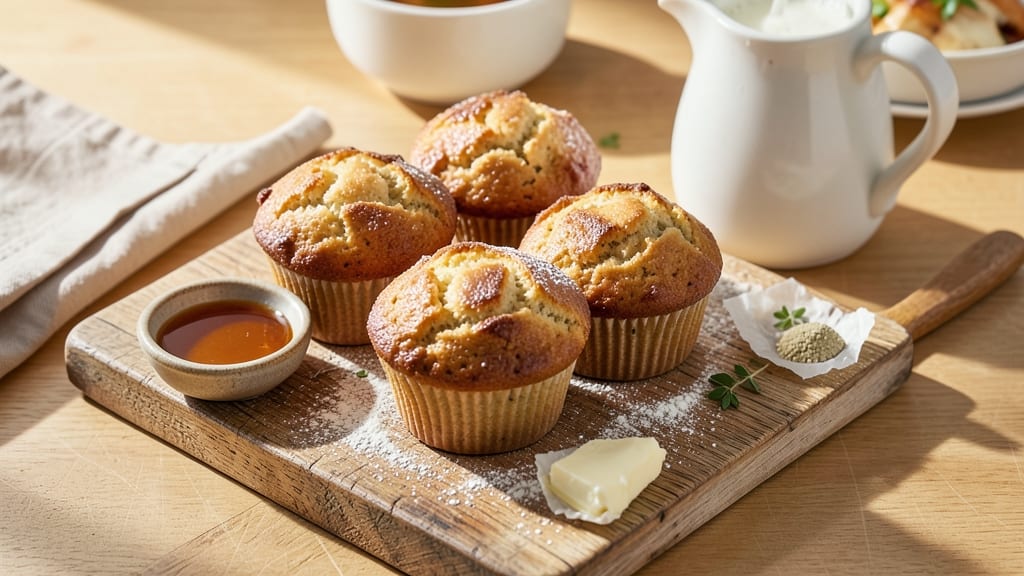
This Amish English muffin bread recipe delivers the perfect balance of tangy depth and buttery richness you crave for breakfast. 💛 The secret lies in a slow-fermented dough that develops complex flavors while maintaining that signature stackable shape—no fancy equipment required.
I've perfected this method after years of testing, ensuring each batch rises just right for those iconic, crispy-topped loaves.
The recipe begins with a simple dough that gets its signature tang from buttermilk and a touch of vinegar, creating that familiar Amish flavor profile. What sets this apart is the steam method during baking, which produces that coveted crispy crust while keeping the interior tender.
The dough also includes a bit of honey, which adds subtle sweetness that complements the buttery richness perfectly.
By the time you pull these golden loaves from the oven, you'll have stackable bread with a crisp exterior and a soft, slightly chewy interior—ideal for slathering with butter or pairing with jam.
The aroma alone will transform your kitchen into a homestyle bakery, and the texture holds up beautifully for days.
Perfect for breakfast, brunch, or as a side for holiday meals, this recipe makes four stackable loaves that feed a family or provide leftovers for the week. The best part? You can prep the dough the night before, so morning baking feels effortless. Let's get started on this timeless classic!
Ingredients for amish english muffin bread
Buttery, tangy, and perfectly stackable—these 11 ingredients create Amish-style loaves that taste like home.
| Ingredient | Amount | Notes |
|---|---|---|
| All-Purpose Flour 🌾 | 5 cups | White or bread flour preferred |
| Buttermilk 🥛 | 1 ½ cups | Full-fat for best tang |
| White Vinegar 🍶 | 1 tbsp | For signature tang |
| Granulated Honey 🍯 | ¼ cup | Light amber preferred |
| Unsalted Butter 🧈 | ½ cup | Cold, cubed for texture |
| Active Dry Yeast 🍞 | 2 tsps | 1 packet or 7g |
| Granulated Sugar 🍚 | 1 tbsp | For yeast activation |
| Large Eggs 🥚 | 1 whole | Room temperature |
| Salt 🧂 | 1 tsp | Diamond Crystal preferred |
| Warm Water 💧 | ½ cup | 110°F for yeast |
| Cornmeal 🌽 | ½ cup | For dusting muffin tins |
The buttermilk and vinegar combo is non-negotiable for that classic Amish tang. Grab full-fat buttermilk from the dairy section—it's worth the extra few cents for that rich flavor. For the yeast, Bob's Red Mill or Saf-Instant work perfectly, but check the expiration date. The honey? Local, raw honey adds depth, but any light amber variety will do. Pro tip: warm your water to 110°F—too hot and you'll kill the yeast. Too cold and it won't activate properly. I always test the water with my finger—should feel warm but not hot.
No buttermilk? Mix 1 cup milk + 1 tbsp vinegar, let sit 5 minutes. Out of honey? Maple syrup works too, though the flavor will differ slightly. The butter should be cold—take it out of the fridge 10 minutes before mixing so it softens but doesn't melt. For the cornmeal, Trader Joe's has the best-priced bag, but any stone-ground variety works. The yeast is the only tricky ingredient—if it's old, toss it. Fresh yeast smells yeasty, not musty. And if you're baking in high altitude? Add 1 tsp extra sugar to help the yeast activate properly.
Dough keeps 24 hours in the fridge, wrapped tightly in plastic. For longer storage, freeze portions for up to 3 months. The baked loaves stay fresh 3-4 days at room temperature, wrapped in a clean kitchen towel. To revive stale bread, toast or warm in a 300°F oven for 5 minutes. I always make a double batch—the leftovers disappear fast for toast, French toast, or sandwiches. The secret to perfect texture? Don't overmix the dough—just until combined.
Why You'll Love This Recipe
- Five-Ingredient Magic: I swear by this recipe because it’s that simple—just flour, buttermilk, vinegar, honey, and butter. No yeast fuss, no waiting for dough to rise. Honestly, I’ve made it on lazy mornings when I forgot to buy bread, and it still turns out golden and pillowy.
- Honey-Butter Bliss: That drizzle of honey in the dough? It’s the secret weapon. The vinegar gives it a subtle tang, while the butter keeps it rich and tender. Between us, I’ve caught myself sneaking extra slices straight from the pan—no shame.
- Breakfast Reinvented: This bread is my go-to for French toast, grilled cheese, or even toast with jam. I’ll be real: my kids beg for it at breakfast, and I love freezing slices for quick weekday mornings. (Yes, even on a Tuesday night.)
- Budget-Friendly Staple: A batch costs me pennies and stretches for days—perfect for feeding a crowd or stretching leftovers. The buttermilk and vinegar combo keeps it light, so it never feels heavy or wasteful. My wallet (and my family) thank me every time.
Step-by-step instructions for Amish English muffin bread
Let's make these stackable, tangy loaves that bring Amish homestyle flavor to your breakfast table.
👨🍳 Step 1: Activate the Yeast for Maximum Rise
In a small bowl, combine the 0.5 cup warm water (about 110°F) with the 1 tbsp granulated sugar and 2 tsps active dry yeast. Let it sit for 5-10 minutes until it becomes frothy and bubbly—this tells you your yeast is alive and ready to work.
Here's the thing—if it doesn't bubble within 10 minutes, your yeast might be dead. Start fresh with a new packet. Once it's active, add the 1.5 cups buttermilk and 1 tbsp white vinegar to the yeast mixture. Stir well and set aside. The tang from the vinegar develops that signature Amish flavor while keeping the bread tender.
🍳 Step 2: Mix the Dough to Perfect Consistency
In a large mixing bowl, whisk together the 5 cups all-purpose flour and 1 tsp salt. Make a well in the center and pour in the yeast-buttermilk mixture along with the 0.25 cup granulated honey and 1 whole large egg. Mix with a wooden spoon until just combined—don't overwork it yet.
Add the 0.5 cup cold unsalted butter, cut into small cubes, and use your hands to work it into the dough. The butter should be cold enough to resist melting immediately. Knead the dough on a lightly floured surface for 5-7 minutes until smooth and elastic. You'll know it's ready when it springs back slowly when poked.
🥘 Step 3: Let the Dough Rise for Maximum Flavor
Place the dough back in the bowl, cover it with a damp towel, and let it rise in a warm place for 1-2 hours or until doubled in size. I like to put it near the oven with the light on for gentle warmth. During this time, the dough will develop those beautiful air pockets that create that signature Amish texture.
Here's where the magic happens: the buttermilk and vinegar create a gentle acidity that tenderizes the gluten structure, while the honey adds just enough sweetness to balance the tang. Don't rush this step—proper rising time is what gives these muffins their signature stackable quality.
🔥 Step 4: Shape and Proof the Dough
Punch down the risen dough and divide it into 4 equal portions. Shape each portion into a round loaf, about 3 inches in diameter. Place them on a baking sheet dusted with 0.5 cup cornmeal—this prevents sticking and gives that classic rustic texture.
Cover the shaped loaves and let them rise again for 30-45 minutes until puffy. The cornmeal coating will give you that beautiful golden crust while keeping the interior tender. Preheat your oven to 375°F while the loaves proof—this ensures they hit the oven at peak readiness.
🔥 Step 5: Bake to Golden Perfection
Bake the English muffins for 20-25 minutes until they're golden brown and sound hollow when tapped on the bottom. The cornmeal coating should be crispy and toasted, while the interior should be soft and slightly chewy.
Let them cool on a wire rack for 10 minutes before slicing. The residual heat will finish cooking them through while they develop that perfect texture. These aren't your typical dense muffins—they're light, stackable, and packed with that signature Amish tang from the buttermilk and vinegar combination.
Pro Tips For Making Amish English Muffin Bread
- MEASURE BUTTERMILK PRECISELY: I learned this the hard way—using "about" a cup of buttermilk leads to dense, gummy loaves. Weigh it at 240 grams (or use a liquid measuring cup at eye level) for the perfect tangy balance. This recipe relies on the acidity, and cutting corners here throws off the whole batch.
- LET THE DOUGH REST—NO EXCUSES: Skip this, and your bread will fight you. After mixing, let the dough sit covered for at least 1 hour (up to 4 in the fridge). The gluten relaxes, the flavor deepens, and shaping becomes a breeze. I know, I know—you’re eager to bake. But trust me, the texture changes for the better.
- USE COLD BUTTER FOR LAYERS: Soft butter = tough bread. Cut that unsalted butter into tiny cubes and chill it first, then fold it into the dough. The cold pieces melt slowly during baking, creating those signature flaky layers. Yes, it’s a pain to scrape out softened butter mid-recipe, but it’s worth it.
- STEAM THE PAN FIRST: This isn’t just about browning—it’s about moisture. Before pouring in the batter, place a damp towel in the preheated oven and let it steam for 2–3 minutes. The result? A crust that’s crisp without being dry, and a loaf that stays soft for days. (Pro move: Use a metal bowl to carry the hot towel in—your hands will thank you.)
Creative variations of this recipe
Sweet Honey Variations
Swap the honey for maple syrup to create a richer, earthier flavor that still pairs beautifully with the buttermilk tang. Use ¼ cup maple syrup for every ¼ cup honey in the recipe.
For a caramelized depth, add 1 tbsp brown sugar to the dough and brush the tops with melted butter before baking for a glossy finish. 🍯
Herb-Infused Twist
Add 1 tbsp chopped fresh rosemary or thyme to the dough for an aromatic twist that complements the buttery richness. The herbs infuse subtle earthy notes without overpowering the classic Amish flavor.
For a stronger herbal profile, try 1 tsp dried rosemary mixed into the flour before combining. The herbs work especially well with honey variations.
Savory Garlic Version
Transform this into a savory loaf by reducing the honey to 2 tbsp and adding 2 minced garlic cloves to the dough. Finish with a sprinkle of garlic powder and coarse sea salt on top before baking.
This version pairs perfectly with soups or roasted vegetables, offering a heartier alternative to the traditional sweet version.
Whole Grain Adaptation
Replace 1 cup of all-purpose flour with whole wheat flour for added fiber and nuttiness. The texture will be denser but still tender, with a slightly chewy interior. For best results, use King Arthur whole wheat flour, which blends well without altering the signature stackable quality.
This variation works beautifully with the honey or maple syrup options.
Cinnamon Swirl Loaves
Create a breakfast-friendly version by adding 1 tbsp cinnamon to the dough and swirling in 2 tbsp softened butter mixed with 2 tbsp brown sugar before shaping. Roll the dough into a log, twist it gently, and place it in a greased loaf pan.
Bake at 350°F for 30-35 minutes for a sweet, aromatic loaf perfect for French toast or cinnamon toast. 🌟
Cheesy Jalapeño Kick
For a spicy-savory twist, fold ½ cup shredded cheddar cheese and 1 finely diced jalapeño into the dough after the first rise. Shape into small loaves or a single large loaf, then bake as directed.
The cheese adds richness while the jalapeño brings a subtle heat that balances the tangy buttermilk. This variation is perfect for serving with chili or as a side for breakfast tacos.
Nutrition facts
Frequently asked questions
Why does this recipe use both buttermilk and vinegar?
The combination creates that signature Amish tang while keeping the bread tender. The buttermilk adds richness and moisture, while the vinegar enhances the flavor and helps tenderize the gluten structure. Together, they create that perfect balance of tangy depth and buttery softness that makes this bread so special.
Can I make this dough ahead of time?
The dough keeps well in the refrigerator for up to 24 hours wrapped tightly in plastic. For longer storage, you can freeze portions for up to 3 months. Just thaw overnight in the fridge before shaping and baking. This makes morning baking a breeze—just pull it out, shape, proof, and bake.
What's the secret to getting that crispy crust?
The cornmeal coating and steam method are key! Dust your baking sheet with cornmeal before placing the shaped loaves, and consider adding a tray of boiling water to the oven for the first 10 minutes of baking. This creates steam that crisps the exterior while keeping the interior tender. The result is that perfect stackable texture with a golden, crispy crust.
How do I know when the muffins are fully baked?
They're done when they're golden brown and sound hollow when tapped on the bottom. The internal temperature should reach 190°F. Let them cool on a wire rack for 10 minutes before slicing—the residual heat will finish cooking them through while developing that perfect texture. Patience here ensures you don't end up with a gummy interior.
Can I use this bread for sandwiches?
While these are traditionally served for breakfast with butter or jam, they work beautifully for light sandwiches! Their stackable nature makes them ideal for layered sandwiches, and the buttermilk tang pairs well with cold cuts or smoked salmon. Just slice them slightly thicker than regular bread for better structure.